
Choosing the right edition of The Law on Obligations and Contracts depends entirely on your current academic or professional stage. For university business law courses, you must align with your professor’s mandated syllabus; for CPA board exam preparation, you need the most recent edition reflecting updated Supreme Court jurisprudence and PRC exam coverage; for personal reference as a young professional, an annotated or practical guide may serve you best. There is no single “best” edition—only the one that correctly supports your specific goals and compliance requirements.
This foundational subject governs how agreements are formed, executed, and legally dissolved. Because it serves as the bedrock for commercial transactions, business partnerships, and daily trade, selecting the appropriate study material directly impacts your comprehension and performance. A mismatched book can lead to confusion, especially when academic grading rubrics or board exam questions reference specific legal interpretations.
To make an informed purchase, you must evaluate your primary objective against the available formats. Whether you are navigating a college classroom, preparing for a rigorous licensure exam, or managing a growing business, understanding how to select and verify your textbook ensures you invest in a resource that is both legally accurate and highly practical.
Products mentioned in this guide
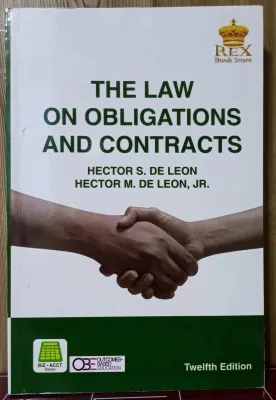
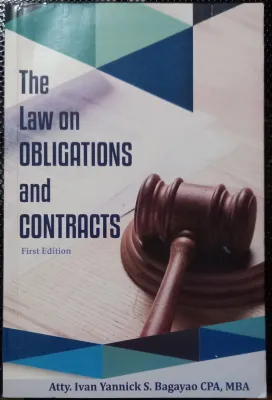
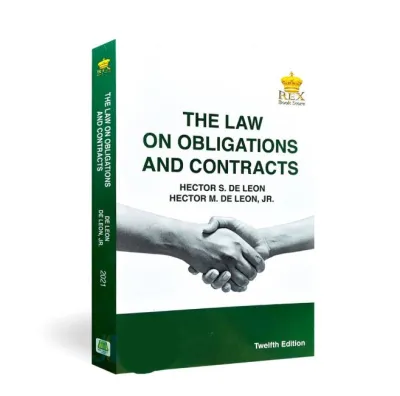

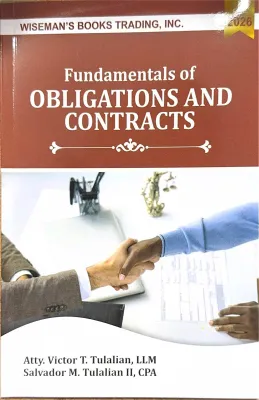
Prices are valid at publication and may change. Please refer to the product page for the latest price.
Align the Edition With Your Specific Learning Goal
For university business law students, the primary focus should be the standard textbook edition explicitly required by the course syllabus. Instructors often structure their lectures, quizzes, and exams around a specific author’s commentary and chapter sequence. Attempting to use an alternative version can make it difficult to follow classroom discussions or locate assigned reading materials. Furthermore, standard textbooks provide comprehensive explanations of codal provisions, which are essential for building a strong foundational understanding of legal concepts.
If you are preparing for the CPA board exam, prioritizing the most recent editions is critical for integrating updated Supreme Court rulings and current Professional Regulation Commission (PRC) exam coverage. The Regulatory Framework for Business Transactions (RFBT) portion of the licensure exam is highly dynamic. It frequently tests candidates on recent legal precedents and statutory interpretations. Studying from an outdated volume can result in learning obsolete rules, which directly jeopardizes your exam performance.
Young professionals and entrepreneurs, meanwhile, will benefit most from annotated versions, practical guides, or editions focusing heavily on contract drafting and business compliance. When your goal is to protect your business interests or understand employment agreements, memorizing dense academic theories is rarely necessary. Instead, you require a reference book that translates complex legal jargon into actionable business advice. Look for editions that include sample contracts, step-by-step compliance checklists, and practical explanations of breach of contract remedies.
Key Factors to Compare Before Purchasing
When comparing available editions in the market, the publication year and the inclusion of recent legal updates should be your first consideration. While the core text of the Civil Code does not change overnight, the Supreme Court continuously issues new rulings that clarify how these laws are applied. An edition published within the last few years will reflect these crucial jurisprudential shifts. Always check the preface or the copyright page to confirm the publication date and see if the author has incorporated recent legal developments.

You must also distinguish between a comprehensive textbook and a condensed reviewer format. Textbooks are designed for deep, conceptual learning, offering detailed explanations, historical context, and illustrative scenarios for every article of the law. Reviewers, on the other hand, are optimized for rapid exam preparation and quick recall. They often present information in bullet points, comparative tables, and practice multiple-choice questions, making them excellent for revision but less suitable for initial learning.
Physical condition and authenticity are equally critical when selecting your book. The market contains numerous unauthorized, pirated copies that are prone to missing pages, binding failures, and severe printing errors. In tropical climates with high humidity, low-quality counterfeit books degrade rapidly, leading to loose pages and faded text. Purchasing authentic copies from authorized publishers guarantees that you receive complete, accurate content and supports the creators who maintain these vital educational resources.
Edition Selection Matrix for Different Learners
To help you quickly identify the most suitable option for your current path, the following matrix outlines the recommended edition types and key verification points for different learner profiles.
| Learner Profile | Recommended Edition Type | Key Feature to Verify | Potential Limitation |
|---|---|---|---|
| Undergraduate Business Student | Standard Syllabus-Compliant Textbook | Matches professor's assigned reading and chapter exercises | May contain more theoretical detail than needed for quick review |
| CPA Board Exam Reviewee | Condensed Reviewer or Codal with MCQs | Includes recent PRC syllabus updates and Supreme Court jurisprudence | Lacks the deep, foundational explanations found in full textbooks |
| Practicing Professional / Entrepreneur | Annotated Practical Guide or Business Law Reference | Focuses on contract drafting, business compliance, and real-world scenarios | Does not follow academic syllabi or board exam structures |
Verify Syllabus and Board Exam Requirements First
Before finalizing your purchase, always consult your official course syllabus or contact your assigned professor directly. Academic departments often coordinate to use a single, standardized textbook across all class sections to maintain grading consistency. Buying a book prematurely can lead to unnecessary expenses if your instructor requires a specific commentator’s work. A quick check of the required reading list in your student portal can save you both time and money.
For licensure candidates, checking the latest PRC CPA board exam coverage guidelines is a mandatory step. The Board of Accountancy periodically updates the list of testable laws and specifies the cut-off dates for relevant jurisprudence. Ensure the reviewer or textbook you select explicitly states that it covers the updated RFBT syllabus. This verification prevents you from studying outdated legal doctrines that are no longer testable on the actual exam.
Finally, confirm that you are purchasing through authorized bookstore channels and official university suppliers in the Philippines. Genuine legal textbooks are distributed by established publishing houses and their verified retail partners. Buying from these authorized sources ensures that you receive the correct, uncorrupted edition. It also grants you access to any official errata sheets or digital supplements that publishers release to correct printing errors or update legal citations.
Frequently Asked Questions (FAQ)
Can I use an older, second-hand edition for my university classes?
Using an older, second-hand edition is generally acceptable if the core syllabus has not changed and your professor permits it. The fundamental principles of obligations and contracts remain relatively stable over time, meaning the basic definitions and legal concepts will still be accurate. If you are on a tight student budget, a well-preserved second-hand textbook can be a highly cost-effective way to complete your required readings.
However, using an older book carries the risk of missing updated jurisprudence, new legal interpretations, or specific case digests required by your instructor. If your professor assigns homework based on specific page numbers or end-of-chapter discussion questions, an older edition may have different page layouts or outdated exercises. To mitigate this risk, you should cross-reference your second-hand copy with a classmate’s newer edition and supplement your studies using reliable online legal databases.
Do I need to buy a new book if the Civil Code hasn't been amended recently?
While the statutory text of the Civil Code regarding obligations and contracts does not undergo frequent amendments, the application of these laws is constantly refined by Supreme Court decisions. These judicial rulings clarify ambiguities in contract enforcement, interest rates, and liability clauses. Therefore, a book that relies solely on older interpretations may lack the nuance required for advanced academic work or professional practice.
For general reference or introductory business courses, an older edition that is a few years old is often practically sufficient for understanding basic legal concepts. However, for board exam preparation or professional legal compliance, investing in a new edition is highly recommended. The latest editions ensure you are studying the most current legal standards and help you avoid making critical errors based on outdated legal precedents.
Community discussion
Share your experience or ask a question. Comments are reviewed before publication.