
Finding the right place to keep your drumsticks within arm’s reach is a common hurdle for new drummers. Dropping sticks on the floor or losing them in a crowded practice space disrupts your flow and damages your gear. The ideal drumstick holder depends entirely on whether you play a stationary acoustic kit, a compact electronic setup, or need to transport your gear to lessons and jam sessions. This guide breaks down the main types of holders available and helps you match the right design to your current hardware and practice routine.
When you are first learning to maintain a steady beat, the last thing you want is to stop mid-song because a stick slipped from your hands. In a warm, humid climate, sweat is an inevitable part of drumming, making dropped sticks a frequent occurrence. Having a reliable backup stick positioned exactly where your hand naturally falls can save your practice session from constant interruptions.
Choosing a holder is not just about finding a container; it is about understanding how your physical space and hardware interact. A holder that works perfectly on a heavy-duty acoustic stand might cause a lightweight electronic kit to wobble. By evaluating your specific setup, you can avoid common purchasing mistakes and find a solution that keeps your focus entirely on the music.
Products mentioned in this guide
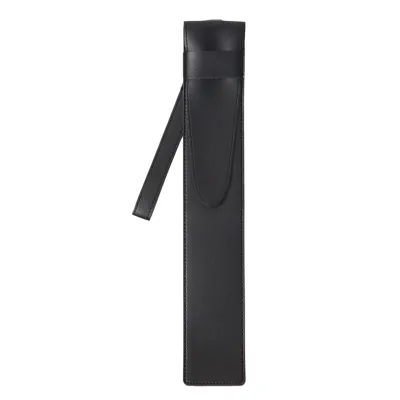
Prices are valid at publication and may change. Please refer to the product page for the latest price.
Understanding the Three Main Types of Drumstick Holders
Selecting the right accessory begins with understanding the physical designs available on the market. Drumstick holders generally fall into three categories: clamp-on mounts, cymbal stand attachments, and portable floor bags. Each type serves a distinct purpose and requires specific hardware compatibility to function safely and effectively.
Mounted Drumstick Holders (Clamp-On)
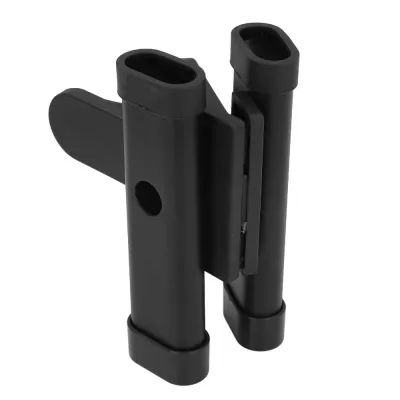
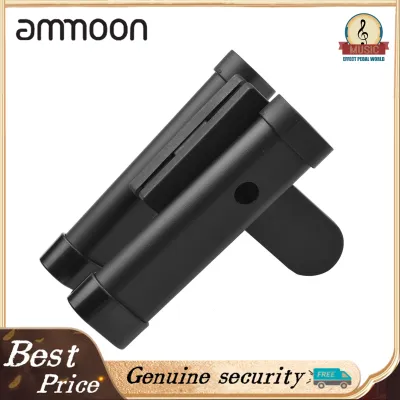
Mounted drumstick holders are rigid containers, often made of heavy-duty plastic, metal, or reinforced fabric, that attach directly to your existing drum hardware. They typically feature a built-in clamp designed to grip cylindrical metal tubes, such as those found on snare drum stands or hi-hat stands. This direct attachment ensures that your sticks remain completely stationary and highly accessible, even during intense practice sessions.
Before choosing a clamp-on holder, you must verify the tube diameter of your stands. Most entry-level drum kits come with lightweight, single-braced hardware that has thinner tubing than professional, double-braced stands. If the clamp is designed solely for thick tubes, it will slip down your stand, potentially scratching the chrome finish or spilling your sticks onto the floor. Conversely, a clamp that is too small will not close securely around wider tubes.
For stationary setups, these holders offer excellent stability. They keep your backup sticks at a consistent height and angle, allowing you to grab a replacement stick using muscle memory alone. This is particularly useful for beginners who are still developing their spatial awareness around the drum kit.
Cymbal Stand Attachments and Multi-Clamps
Cymbal stand attachments and multi-clamps are designed to integrate seamlessly with your existing cymbal booms or vertical stands. Instead of requiring their own dedicated floor space, these holders utilize the unused middle or upper sections of your cymbal stands. This design is highly efficient for drummers who want to keep their floor area clear of extra clutter and tripod legs.
These attachments often feature a mounting rod that fits into a multi-clamp, or they may screw directly onto the threaded top of a cymbal tilter. While they are excellent space-savers, you must carefully plan where to position them. Placing a heavy holder loaded with multiple pairs of sticks too high on a lightweight cymbal stand can make the entire assembly top-heavy and prone to tipping over when you play forcefully.
Additionally, you must consider physical interference. A poorly positioned cymbal stand attachment can restrict the natural swing of your cymbals or block your access to stand adjustment wing nuts. When using these attachments, ensure they are mounted low enough to maintain the stand’s center of gravity while still keeping the sticks within comfortable reaching distance.
Portable Stick Bags and Pouches
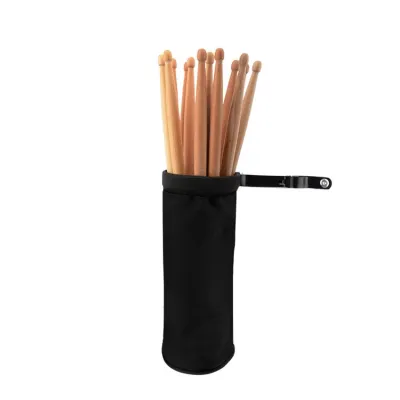
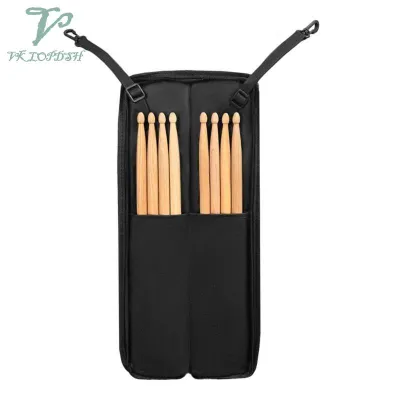
Portable stick bags and pouches offer a flexible, travel-friendly alternative to rigid, hardware-mounted holders. These accessories range from simple, lightweight fabric pouches with basic hanging straps to structured, multi-pocket bags featuring rigid bases and heavy-duty zippers. They are designed to hold your entire stick collection, along with essential tools like tuning keys and dampening gels.
The primary advantage of a portable bag is its mobility. If you regularly travel to music schools, jam sessions, or shared rehearsal studios, a portable bag allows you to carry your own sticks securely. Once you arrive, you can hang the bag directly onto your floor tom tension rods using the built-in straps, or stand a rigid-bottomed pouch upright on the floor next to your throne.
However, portable bags require a different set of considerations than mounted holders. Soft, unstructured pouches can sag or swing when hung from a drum, which might distract you while playing. If you choose to place a bag on the floor, it must have a stable, non-slip base to prevent it from tipping over on uneven surfaces or getting caught under your pedals.
Matching the Holder to Your Specific Drum Setup
Your playing environment and the physical characteristics of your drum kit should dictate which holder type you choose. A mismatch can lead to damaged gear, unstable stands, or general frustration during practice.

If you own a traditional acoustic drum kit, your primary goal is to keep your backup sticks off the floor and away from your foot pedals. Acoustic kits offer plenty of sturdy, double-braced hardware options, making clamp-on holders an excellent choice. Mounting a dual-stick holder to your hi-hat stand or the vertical tube of a cymbal stand keeps your sticks protected from accidental kicks and ensures they do not get lost under the bass drum.
For electronic drum users, the priorities shift toward weight management and space efficiency. Electronic drum racks are often constructed from lightweight aluminum or plastic tubing, which can easily become unbalanced. A heavy, metal-clamped holder filled with multiple pairs of sticks can cause the rack tubes to slip or rotate, potentially misaligning your mesh pads or cymbal triggers. Electronic players should look for lightweight, compact plastic clamps or low-profile pouches that attach securely without adding excessive weight to the rack frame.
If you do not own a permanent kit and instead practice on shared drums at a school or local studio, portability is your main concern. A structured, portable stick bag with built-in hanging hooks is the most practical option. This allows you to pack your sticks, ear protection, and tuning keys at home, carry them easily on your commute, and quickly hang the bag from the floor tom of whatever kit you are using that day.
In space-constrained setups, such as a small bedroom or a shared apartment, minimizing your hardware footprint is essential. Every extra tripod leg on the floor makes cleaning more difficult and increases the risk of tripping. In these scenarios, utilizing a cymbal stand attachment or a low-profile pouch that hangs directly from your drum tension rods keeps your floor space completely clear, allowing you to maximize your limited practice area.
Essential Features to Verify Before You Buy
To ensure your new drumstick holder serves you well for years, you should verify several physical specifications and build qualities before making a purchase. Taking a few minutes to check these details will save you from the hassle of returning incompatible gear.
First, verify the clamp sizing and tube compatibility. Do not guess the thickness of your drum stands. Use a tape measure or calipers to find the outer diameter of the tube where you plan to mount the holder. Cross-reference this measurement with the manufacturer’s specifications for the clamp’s minimum and maximum opening range. If your stand tube is 19 millimeters wide, ensure the clamp is rated to grip tubes of that size securely without slipping.
Second, evaluate the capacity and pocket layout of the holder. As a beginner, you do not need to carry dozens of sticks, but your holder should comfortably fit at least two to three pairs of your primary practice sticks. Look for designs that include separate, smaller slots or zippered compartments. These are incredibly useful for holding small, easily lost items like drum keys, spare felt washers, or earplugs.
Third, inspect the material and durability specifications. In tropical environments where humidity is high, metal components are susceptible to rust, and cheap fabrics can develop mold if left in damp bags. Look for holders made from high-impact plastics, anodized aluminum, or heavy-duty, water-resistant synthetic fabrics like nylon. If you are buying a bag, check for reinforced stitching around the hanging straps and robust, smooth-gliding zippers that will not catch or break under tension.
Finally, consider angle adjustability. A fixed, vertical holder forces you to reach straight down to grab a stick, which can be awkward mid-song. Look for clamp-on holders that feature adjustable ball-and-socket joints or tilting mechanisms. This allows you to angle the opening of the holder toward your body, making it much easier and faster to slide a replacement stick out without breaking your playing posture.
Common Purchasing Mistakes Beginners Should Avoid
Many new drummers rush into buying accessories without considering how they fit into their overall setup. Avoiding these common pitfalls will keep your practice space safe and your gear functioning properly.
One of the most frequent mistakes is buying a clamp-on holder without checking the tube diameter, only to find it slips constantly during play. The vibrations from hitting your drums will quickly loosen any clamp that does not fit perfectly. A slipping holder can slide down into the path of your hi-hat pedal or bass drum pedal, creating a serious safety hazard and disrupting your timing.
Another error is overloading lightweight electronic drum racks. It can be tempting to buy a large, heavy-duty metal holder and fill it with six pairs of sticks, mallets, and brushes. However, the cumulative weight can easily cause a lightweight rack joint to slip, leading to sagging pads or even a partial collapse of your electronic kit. Keep your electronic accessories as light and streamlined as possible.
Choosing a cheap, unstructured fabric pouch that lacks a rigid base is another common source of frustration. When placed on the floor, these pouches easily tip over, spilling your sticks across the room. If you prefer a floor-standing option, always verify that the product description specifies a reinforced, flat, or weighted bottom designed to keep the pouch upright.
Lastly, do not ignore the need for a multi-clamp if you plan to attach a secondary holder to an already occupied stand. Trying to force two clamps onto the same small section of tubing can damage the metal or prevent either clamp from securing properly. If your stands are crowded, look for dedicated multi-clamps designed to hold multiple accessories from a single mounting point, or opt for a simple hanging bag instead.
Frequently Asked Questions (FAQ)
Can I use a regular backpack or tote instead of a dedicated drumstick bag?
While you can use a standard backpack or tote bag to transport your sticks temporarily, it is not a suitable long-term solution for active drummers. Regular bags lack the internal structure and specialized pockets required to keep sticks organized and protected. Without dedicated slots, your sticks will roll around loose, which can cause the wooden tips to chip or wear down prematurely as they rub against other items.
Furthermore, standard backpacks do not have built-in hanging straps designed to attach to drum hardware. This means you cannot easily access your sticks while sitting at the kit. There is also a risk that the sharp, narrow tips of your drumsticks will eventually poke holes through the thin fabric of a standard school backpack, especially if the bag is carried frequently. Investing in a dedicated stick bag ensures your gear remains organized, protected, and easily accessible during every practice session.
How many pairs of sticks should a beginner keep in their holder during practice?
As a beginner, you do not need to overload your active holder with an excessive number of sticks. Keeping two to three primary pairs of your preferred size (such as 5A or 7A) in your holder is ideal. This capacity ensures you have a quick replacement readily available if a stick slips out of your hand or breaks mid-groove, without making your stand top-heavy or cluttered.
Any additional backup pairs, specialty sticks like hot rods or brushes, and maintenance tools should be stored in a separate, larger stick bag kept nearby on the floor or in your gear locker. Keeping your active holder lightweight and streamlined prevents your stands from wobbling and ensures you can grab a replacement stick quickly and cleanly without fumbling through a crowded container.
Community discussion
Share your experience or ask a question. Comments are reviewed before publication.