
To begin reading Cormac McCarthy, your best entry point is either All the Pretty Horses for a lyrical, traditional narrative, or No Country for Old Men if you prefer a fast-paced, cinematic thriller. While his reputation as a formidable giant of American literature can be intimidating, choosing the right gateway book allows you to acclimate to his unique style without feeling overwhelmed. His bibliography spans over half a century, shifting from the lush, decaying landscapes of the American South to the stark, sun-bleached deserts of the Southwest, and finally to the ash-covered wastes of a post-apocalyptic world.
Because McCarthy’s novels vary in difficulty, tone, and structure, a reader’s first experience often dictates whether they will continue exploring his work. Some readers are drawn to his profound philosophical inquiries, while others seek his unmatched ability to build tension. By matching your current reading preferences with the appropriate novel, you can appreciate his mastery of language on your own terms.
What to Expect From McCarthy's Writing Style
Before purchasing your first McCarthy novel, it is essential to understand the stylistic choices that define his prose. Most famously, McCarthy eschewed standard punctuation. You will not find quotation marks to denote dialogue, nor will you find semicolons or colon-heavy structures. He believed that punctuation only cluttered the page, preferring to let the natural rhythm of speech and narrative flow guide the reader. This can initially cause friction, as you must rely on paragraph breaks and contextual cues to determine who is speaking.
Products mentioned in this guide

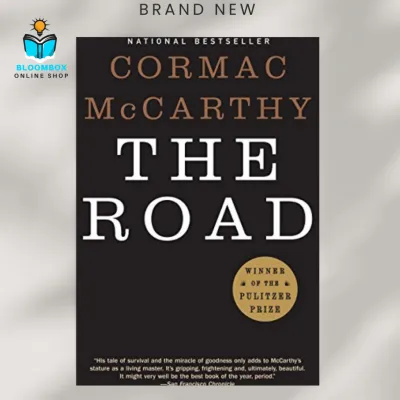
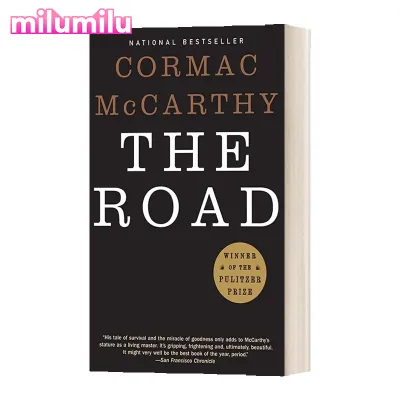


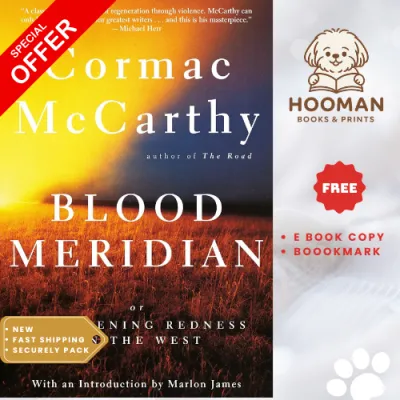
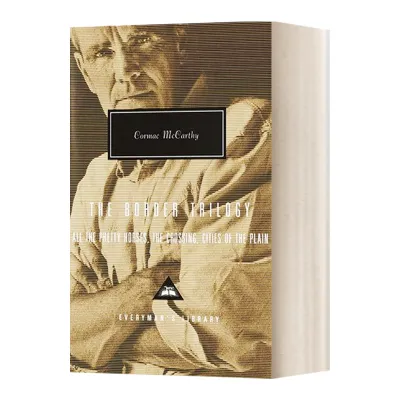
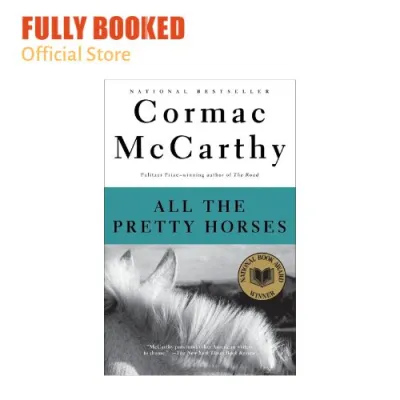
Prices are valid at publication and may change. Please refer to the product page for the latest price.
In addition to his minimalist punctuation, McCarthy’s prose operates on a fascinating contrast. His dialogue is often incredibly sparse, realistic, and unadorned, capturing the quiet cadence of working-class characters. Conversely, his descriptive passages are highly detailed, majestic, and frequently utilize polysyndeton—the repetition of conjunctions like “and” to link clauses. This technique creates a relentless, biblical rhythm that elevates ordinary landscapes into mythic spaces.
Thematically, McCarthy’s work is not for the faint of heart. He explores a world stripped of easy moral binaries, where survival is a constant struggle and violence is an elemental force of nature. His characters often confront vast, indifferent landscapes that mirror their own internal isolation. Understanding these stylistic and thematic hallmarks beforehand will help you approach his books with the right mindset, transforming what might seem like frustrating quirks into a deeply immersive literary experience.
The Most Accessible Starting Points for New Readers
For those who prefer a narrative with strong plot momentum and relatively traditional structures, two novels stand out as the most logical entry points.

All the Pretty Horses, the first volume of his acclaimed Border Trilogy, is perhaps the most gentle introduction to McCarthy’s world. Set in 1949, it follows sixteen-year-old John Grady Cole as he rides south into Mexico after his family’s Texas ranch is sold. The novel functions as a classic coming-of-age story, filled with romance, horse-breaking, and the bittersweet loss of youth. While it does not shy away from violence or hardship, its tone is significantly more nostalgic and lyrical than his other works. The narrative pacing is steady, and the beauty of the prose makes it an incredibly rewarding experience for those who appreciate vivid nature writing and classic Western themes.
If you prefer a modern setting and a story that moves with the relentless speed of a freight train, No Country for Old Men is the ideal choice. Originally conceived as a screenplay, this novel features a highly cinematic structure with fast-paced action and minimal descriptive digressions. The plot centers on Llewelyn Moss, a welder who stumbles upon a desert shootout gone wrong and walks away with a suitcase containing millions of pesos. He is pursued by Anton Chigurh, an unstoppable, psychopathic hitman who represents fate and chaos. The book’s chapters are interspersed with the philosophical reflections of Sheriff Ed Tom Bell, offering a perfect balance of high-stakes suspense and thematic depth. Its straightforward prose style makes it McCarthy’s most accessible work by a wide margin.
The Challenging Masterpieces for Prepared Readers
If you are an experienced reader of literary fiction and want to dive straight into the works that cemented McCarthy’s status as a master of the craft, you should look toward his more intense and philosophically dense masterpieces.
The Road is a devastatingly beautiful post-apocalyptic novel that won the Pulitzer Prize for Fiction. It tells the story of an unnamed father and his young son walking through a burned, ash-choked landscape toward the coast, carrying only what they can scavenge. The world is dead, and hope is a scarce commodity. Despite its incredibly bleak setting, the novel is ultimately a profound exploration of parental love, goodness, and the preservation of humanity in the face of total annihilation. The prose is sparse and poetic, utilizing short, fragmented sentences that mirror the barren environment. It is a deeply moving book that, while emotionally heavy, remains highly readable due to its simple vocabulary and singular focus.
For those who want to experience McCarthy at his most uncompromising, Blood Meridian is widely considered his magnum opus. Set in the mid-nineteenth century along the Texas-Mexico border, it follows a teenage runaway known only as “the kid” as he joins the historical Glanton gang, a group of scalp hunters who terrorized the region. The novel is infamous for its extreme, graphic violence and its dense, archaic vocabulary. The prose is majestic and biblical, evoking the grand scale of an epic tragedy. At the center of the novel is Judge Holden, a terrifying, highly intellectual figure who argues that war is the ultimate ritual of human existence. Blood Meridian is a difficult, exhausting read, but it offers unparalleled literary rewards for those prepared to navigate its dark waters.
Novels to Save for Later in Your Reading Journey
While McCarthy’s entire bibliography is worth exploring, certain books are best left until you have fully acclimated to his voice and thematic preoccupations.
His early Southern Gothic works, such as Child of God and Suttree, can be incredibly jarring for beginners. Child of God explores the life of Lester Ballard, a violent, isolated outcast in the Appalachian mountains whose descent into depravity is deeply unsettling. Suttree, on the other hand, is a massive, semi-autobiographical novel set in Knoxville, Tennessee. It is a dense, stream-of-consciousness character study filled with eccentric characters, dark humor, and complex vocabulary. While brilliant, its lack of a traditional plot makes it a challenging starting point.
Similarly, his final two novels, The Passenger and Stella Maris, should be saved for later. Published shortly before his death, this interconnected diptych deals heavily with quantum physics, mathematics, philosophy, and the nature of consciousness. Stella Maris is written entirely in dialogue, consisting of therapy sessions between a brilliant mathematician and her psychiatrist. These works are deeply intellectual and self-referential, making them far more rewarding once you understand the trajectory of McCarthy’s lifelong philosophical inquiries.
How to Match Your Preferences to the Right Book
To help you decide which book to pick up first, consider your typical reading habits and what you look for in a story. If you enjoy fast-paced crime dramas and suspense, start with No Country for Old Men. If you love sweeping historical epics and classic coming-of-age tales, choose All the Pretty Horses. For those who appreciate emotional depth and speculative fiction, The Road is the perfect fit. Finally, if you are a seasoned reader of challenging classics like Melville or Faulkner, you may want to go straight to Blood Meridian.
The following table summarizes the key characteristics of these four primary entry points to help you make an informed decision:
| Book Title | Genre | Primary Theme | Difficulty Level |
|---|---|---|---|
| No Country for Old Men | Crime Thriller / Neo-Western | Fate, Morality, and the Changing World | Beginner |
| All the Pretty Horses | Western / Coming-of-Age | Honor, Loss of Innocence, and Adventure | Beginner to Intermediate |
| The Road | Post-Apocalyptic / Drama | Parental Love, Hope, and Survival | Intermediate |
| Blood Meridian | Historical Fiction / Epic Western | The Nature of Evil, War, and Destiny | Advanced |
Practical Tips for Reading Cormac McCarthy
Navigating McCarthy’s prose for the first time requires a slight adjustment in how you read. To make your transition smoother, keep these practical strategies in mind.
First, do not panic when encountering dialogue without quotation marks. Instead of trying to analyze every line, read the text at a natural, conversational pace. McCarthy structured his dialogue so that speakers alternate with each paragraph break. If you lose track of who is speaking, simply trace the conversation back to its starting point, paying attention to the distinct voices and speech patterns of the characters.
Second, keep a dictionary handy, or read his work on an e-reader where you can easily look up definitions. McCarthy had an extraordinary vocabulary, frequently using archaic, regional, or highly technical terms—especially regarding horses, desert geography, and historical tools. Rather than letting these unfamiliar words disrupt your reading flow, view them as opportunities to appreciate the precise texture of his world-building.
Finally, allow yourself to sink into the atmosphere of the prose. McCarthy’s long, descriptive passages are meant to be experienced rather than merely decoded. If you find yourself struggling with a particularly dense paragraph, read it aloud. Hearing the rhythm of his words can often clarify their meaning and help you appreciate the musicality of his writing.
Frequently Asked Questions (FAQ)
Should I read the Border Trilogy in order?
While it is highly recommended to read the Border Trilogy in order, it is not strictly necessary for the first two books. All the Pretty Horses and The Crossing feature different protagonists and operate as standalone narratives. However, the final book, Cities of the Plain, brings the protagonists of both previous novels together, making it essential to have read both before finishing the trilogy. Starting with All the Pretty Horses remains the best path.
Are the movie adaptations worth watching before reading the books?
Yes, the major film adaptations of McCarthy’s work are exceptionally well-made and can provide valuable visual context. The Coen brothers’ adaptation of No Country for Old Men is incredibly faithful to the book’s dialogue and tone, while John Hillcoat’s film version of The Road captures the bleak, emotional atmosphere of the novel. Watching these films first can help you visualize the settings and understand the plot, making the books easier to navigate.
Where can I buy authentic copies of his books in the Philippines?
In the Philippines, you can find authentic English editions of Cormac McCarthy’s novels at major national bookstore chains such as Fully Booked or National Book Store, particularly in their larger branches or online storefronts. They are also widely available through established online marketplaces and specialized independent bookshops. A standard paperback edition typically ranges from ₱500 to ₱1,200, depending on the publisher and whether it is a special edition. Always verify the seller’s ratings and reviews when purchasing online to ensure you receive a genuine, high-quality print.
Community discussion
Share your experience or ask a question. Comments are reviewed before publication.