
Quick Answer: Which 88-Key Piano Cover Should You Choose?
Choosing the right 88 keys piano cover depends entirely on where your instrument stays and how often it travels. If your digital piano remains permanently on its stand in your living room or home studio, a simple fabric dust cover is all you need to keep the keys clean. If you frequently transport your keyboard to local rehearsals, church services, or gigs in your personal vehicle, a padded gig bag provides the necessary balance of impact protection and portability. For touring professionals, musicians flying with their gear, or anyone loading their instrument into shared cargo trucks, a heavy-duty hard flight case is an absolute necessity to prevent crushing damage.
An 88-key digital piano is a significant investment, characterized by its substantial length—often exceeding 1.3 meters—and considerable weight, which typically ranges from 12 to over 30 kilograms. Selecting the wrong type of protection risks costly structural damage to your keyboard’s keybed and internal electronics. By matching your daily usage patterns to the correct level of shielding, you can preserve both your instrument’s playability and your own peace of mind.
Assessing Your Piano Protection Needs
To determine the ideal protection for your keyboard, you must first analyze your typical routine, your immediate environment, and how often you move the instrument. A stationary piano faces very different threats than one that is constantly loaded into vehicles. If your keyboard rarely leaves your room, your primary enemies are environmental. In tropical climates like the Philippines, high humidity levels can cause internal contacts to degrade over time, while fine dust particles can settle between the keys, leading to sticky or unresponsive key actions. Additionally, exposure to direct sunlight through windows can warp plastic casings and fade key finishes, making a basic barrier essential even for home-bound instruments.
Products mentioned in this guide
Prices are valid at publication and may change. Please refer to the product page for the latest price.

If you are a gigging musician, a music student, or a church keyboardist, your transport logistics dictate your protection level. Moving an 88-key instrument through tight hallways and into the back of a car exposes it to constant bumps against door frames and walls. Furthermore, the physical dimensions of a full-sized keyboard mean it cannot be easily carried by one person without proper handles or straps. When you are solely responsible for your gear, you can handle a lighter, padded option with care; however, if your keyboard is stacked alongside heavy amplifiers or PA speakers in a shared transport van, passive soft padding is rarely enough to prevent structural damage.
Dust Covers: Lightweight Protection for Home Use
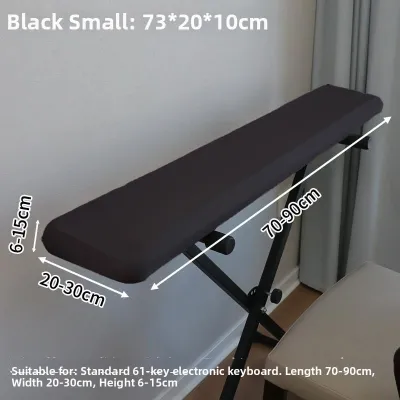
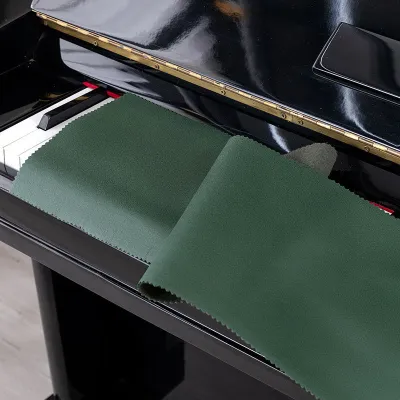
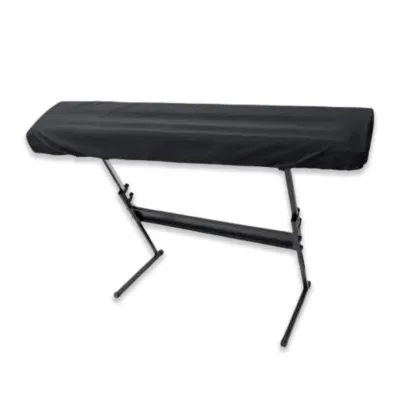
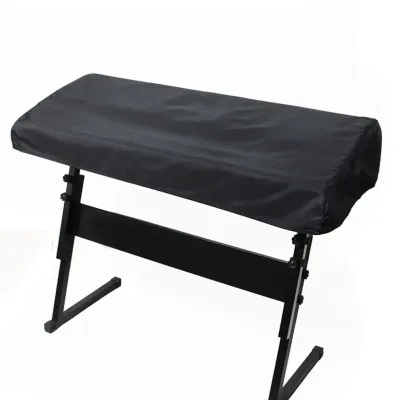
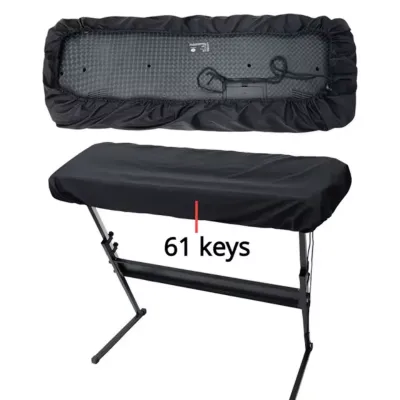
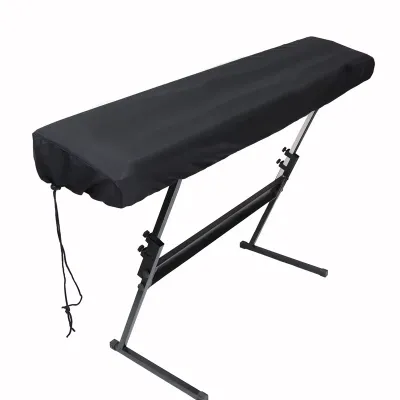
For keyboards that spend their lives on a dedicated stand, a high-quality dust cover is the most practical and cost-effective solution. These covers are specifically designed to shield your instrument from daily hazards while remaining incredibly easy to put on and take off.
- Primary Use Case: Home living rooms, dedicated music studios, school classrooms, and church sanctuaries where the keyboard is permanently set up on an X-stand, Z-stand, or wooden furniture console.
- Protection Level: Typically constructed from lightweight, breathable materials such as spandex, nylon, or velvet. These fabrics are excellent at blocking dust, pet hair, lint, and minor liquid splashes. They also provide a crucial barrier against ultraviolet (UV) rays, which can yellow white keys and degrade plastic chassis components over time. However, they offer absolutely zero protection against drops, heavy impacts, or crushing forces.
- Design Features: Many modern dust covers utilize highly stretchable spandex blends with elasticized hems, allowing them to fit snugly over various 88-key models. Some premium designs feature a zippered split or a fold-over flap that allows you to play the keyboard without completely removing the cover, which is highly convenient for quick practice sessions.
- Limitations and Risks: A dust cover should never be used as a standalone transport solution. Because they lack any form of foam padding, rigid structural support, or carrying handles, attempting to move a heavy 88-key piano using only a dust cover is highly dangerous. The fabric can easily slip, leading to a dropped instrument, cracked casing, or broken keys.
Padded Gig Bags: Flexible Transport for Local Gigs
When your music takes you outside the home, a padded gig bag offers a highly versatile and portable compromise between lightweight dust protection and heavy-duty armor.
- Primary Use Case: Local commuting, weekly church services, band rehearsals, music lessons, and small-scale gigs where you personally transport your keyboard in a private car, taxi, or ride-sharing vehicle.
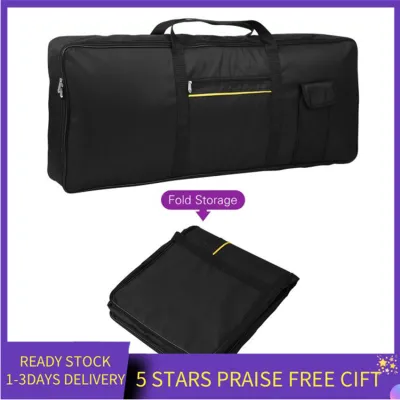
- Protection Level: Padded gig bags rely on thick layers of high-density foam—usually ranging from 10mm to 20mm in thickness—sandwiched between a rugged, water-resistant outer shell (often made of heavy-duty polyester or nylon like 600D Cordura) and a soft inner lining. This padding is designed to absorb the shock of minor bumps, light scrapes, and accidental knocks against doorways or car trunks during transit.
- Design Features: Because 88-key keyboards are heavy, ergonomics are a vital feature of any good gig bag. Look for bags equipped with heavily reinforced, padded carry handles and adjustable, padded shoulder straps or backpack-style straps that help distribute the weight evenly across your shoulders. Exterior accessory pockets are incredibly useful for organizing your sustain pedal, power adapter, music stand, and patch cables. Internally, adjustable Velcro straps hold the keyboard securely in place, preventing it from sliding back and forth inside the bag during transport.
- Limitations and Risks: While padded bags are excellent for personal transport, they have clear structural limitations. Because the sides are soft, they cannot withstand heavy crushing forces. If a heavy bass amplifier or a set of metal speaker stands is stacked on top of a soft gig bag in a vehicle, the pressure will transfer directly to your keyboard's delicate keys and sliders. Additionally, while the outer fabric is often water-resistant, most gig bags are not completely waterproof; prolonged exposure to heavy tropical downpours can allow moisture to seep through the seams and zippers, potentially damaging the internal circuitry.
Hard Cases: Maximum Security for Touring and Air Travel
For professional musicians, touring bands, and anyone whose gear is subjected to rough handling, a hard flight case is the ultimate insurance policy for an 88-key keyboard.
- Primary Use Case: Commercial air travel, long-distance touring in trucks or trailers, and situations where road crews or third-party cargo handlers manage your equipment. It is also the safest option for long-term storage in damp or high-risk environments.
- Protection Level: Hard cases are built like tanks, utilizing outer shells made of heavy-duty ABS plastic, molded polyethylene, or traditional ATA-spec plywood reinforced with aluminum edging and steel ball corners. Inside, the case is lined with high-density, shock-absorbing foam that is often customizable or pre-cut to fit the exact contours of your keyboard, completely immobilizing the instrument and isolating it from external vibrations.
- Design Features: Professional hard cases feature heavy-duty recessed butterfly latches that will not accidentally pop open, spring-loaded carry handles, and built-in inline skate wheels. Wheels are an absolute necessity for an 88-key hard case, as the combined weight of the keyboard and the case can easily exceed 45 kilograms. Some premium cases also include automatic pressure-release valves, which equalize air pressure changes during flights to prevent the case from warping or becoming sealed shut.
- Limitations and Risks: The primary trade-offs of a hard case are its extreme weight, bulky dimensions, and high financial cost. A quality hard case can weigh 15 to 25 kilograms on its own, making it difficult for a single person to lift into a car trunk or carry up stairs. Furthermore, their rigid, oversized dimensions mean they may not fit into the back seat of standard sedans or smaller vehicles common in local transport. Before purchasing, it is vital to verify that the external dimensions of the case will actually fit inside your vehicle and comply with airline cargo weight limits to avoid exorbitant oversize baggage fees.
Feature Comparison: Dust Cover vs. Padded Bag vs. Hard Case
To help you visualize how these three distinct protection styles stack up against one another, the following table compares their key performance characteristics across the most critical decision-making dimensions.
| Feature | Dust Cover | Padded Gig Bag | Hard Case |
|---|---|---|---|
| Primary Use Case | Stationary home or studio storage | Local transport in personal vehicles | Air travel, touring, and cargo transport |
| Impact Protection | None (scratches only) | Moderate (absorbs minor bumps) | Maximum (crush and drop resistant) |
| Weather/Dust Resistance | High (excellent dust barrier) | Moderate (water-resistant fabric) | High to Waterproof (sealed gaskets) |
| Weight Added to Piano | Negligible (under 1 kg) | Low to Moderate (2 to 5 kg) | Heavy (15 to 25 kg) |
| Portability & Carrying | No handles or straps | Padded handles, shoulder/backpack straps | Heavy-duty handles, built-in wheels |
| Relative Cost | Budget-friendly | Moderate | Premium investment |
When deciding which option to purchase, it is highly recommended to match your choice directly to your primary use case rather than over-investing in unnecessary protection. For instance, buying an expensive, heavy hard case for a keyboard that never leaves your bedroom will only make the instrument more difficult to access and play, while using a flimsy dust cover for a gigging keyboard is a recipe for a costly repair bill.
How to Verify Fit and Compatibility for an 88 Keys Piano Cover
An ill-fitting cover can be just as problematic as having no cover at all. A bag that is too tight can put constant, damaging pressure on your keyboard’s keys and control knobs, while a bag that is too loose will allow the heavy instrument to slide around inside, leading to unbalanced carrying and potential impact damage.
- Measure Your Instrument Accurately: Never buy a cover based solely on the generic '88-key' label. While almost all 88-key keyboards share the same number of keys, their physical dimensions vary wildly. A slim, minimalist digital stage piano might measure only 130 cm in length and 28 cm in depth, whereas a professional synthesizer workstation with extensive control panels, wooden side cheeks, and built-in speakers can easily exceed 145 cm in length, 40 cm in depth, and 15 cm in height. Always use a tape measure to record the exact dimensions of your specific keyboard model.
- Account for Clearances and Protrusions: When measuring, do not forget to factor in any elements that stick out from the main chassis. This includes protruding pitch-bend or modulation wheels, physical volume sliders, rear-facing connection ports with cables plugged in, and the mounting brackets for your music rest. If you prefer to leave your sheet music rest attached to the keyboard, you will need to search for specialized dust covers designed with a dedicated rear slot to accommodate it.
- Understand Interior vs. Exterior Dimensions: When shopping for padded gig bags and hard cases, pay close attention to the manufacturer's specified internal dimensions rather than the external dimensions. The internal dimensions represent the maximum size of the keyboard that can safely fit inside the padded compartment. The external dimensions are also important, but primarily for verifying whether the case will fit into your car's trunk, back seat, or an airplane's cargo hold.
- Check Weight Capacity and Hardware Ratings: Because 88-key keyboards are heavy, the structural integrity of the carrying bag or case is paramount. Before purchasing a gig bag, check the manufacturer's maximum weight rating to ensure that the zippers, handle stitching, and strap D-rings are rated to support your keyboard's weight. For hard cases, look for heavy-duty metal rivets and reinforced wheel housings, as these are the common failure points when transporting heavy musical instruments over rough pavement or cobblestones.
Frequently Asked Questions (FAQ)
Can I use a 76-key or 61-key cover for an 88-key piano?
No, you should never attempt to use a smaller cover designed for a 76-key or 61-key keyboard on a full-sized 88-key piano. An 88-key piano is significantly longer—often by 20 to 40 centimeters—and deeper than its smaller counterparts. Trying to stretch a smaller soft cover over an 88-key keyboard will leave the ends completely exposed to dust, moisture, and physical impacts. Furthermore, stretching a fabric cover beyond its intended limit puts excessive tension on the seams and can apply constant, damaging downward pressure on the keys at the outer edges of your instrument. Always select a cover specifically sized to match the physical dimensions of your 88-key keyboard.
Do I need a hard case if I only transport my piano in my car?
If you are the only person handling your keyboard and you transport it exclusively in your personal vehicle, a high-quality padded gig bag is generally more than sufficient. A padded bag is much lighter, easier to maneuver into a back seat or trunk, and offers plenty of protection against the typical minor bumps encountered during personal transport. A hard case is only necessary if you plan to stack heavy equipment (like amplifiers or PA speakers) on top of the keyboard, if you are transporting it in a crowded band van driven by others, or if you are traveling by commercial airline where baggage handlers will manage your gear. For personal car transport, the added weight and bulk of a hard case often outweigh its protective benefits.
How do I clean and maintain my piano cover?
To keep your piano cover in optimal condition, always check the manufacturer’s care label first for specific instructions. Generally, spandex or nylon dust covers can be machine-washed on a gentle, cold-water cycle and hung up to air dry; avoid using high heat in a dryer, as this can ruin the elastic fibers. For padded gig bags, avoid machine washing, which can waterlog and degrade the internal protective foam; instead, spot-clean the exterior fabric with a damp cloth, mild soap, and lukewarm water. Hard cases can be wiped down with a damp microfiber cloth to remove dust and dirt, and you can occasionally apply a small amount of silicone lubricant to the metal latches and hinges to keep them operating smoothly and prevent rust in humid environments.
Community discussion
Share your experience or ask a question. Comments are reviewed before publication.