
Finding a digital copy of the Ethiopian Bible in the Philippines requires navigating a unique intersection of digital publishing rights, translation differences, and platform availability. Because the Ethiopian biblical canon is significantly broader than standard Western versions, locating a complete and authorized digital edition is not as simple as searching a standard bookstore. Fortunately, readers in the Philippines can access these rare texts through major global eBook platforms, specialized academic databases, and theological software providers. By understanding how to bypass regional storefront limitations and verify the contents of a digital edition, you can secure a reliable copy for study or devotion on your preferred e-reader or tablet.
Reading digitally offers distinct practical advantages in the Philippines. The country’s tropical climate, characterized by high relative humidity and seasonal rains, can make preserving physical books—especially rare, imported theological volumes—a constant battle against mold, paper degradation, and insect damage. A digital library solves this preservation challenge, allowing you to store and study complex texts without worrying about environmental wear. However, because digital distribution rights are often segmented by country, Philippine readers must take specific steps to ensure the eBook they purchase is fully accessible, properly formatted, and contains the exact books of the Ethiopian canon they intend to study.
Identifying the Right Edition and Canonical Scope
Before beginning your search on digital storefronts, it is essential to understand what the “Ethiopian Bible” actually comprises, as the term can refer to several distinct collections of texts. The Ethiopian Orthodox Tewahedo Church recognizes a broader canon of up to 81 books, which is divided into the narrow canon and the broader canon. This collection includes books that are not found in standard Protestant or Catholic Bibles, such as the Book of Enoch (Metsahafe Henok), the Book of Jubilees (Metsahafe Kufale), and the books of Meqabyan. If your goal is to study these specific, unique texts, you must ensure that the digital edition you purchase actually contains them, rather than just the standard 66 books of the Western canon under an Ethiopian-themed cover.
Products mentioned in this guide
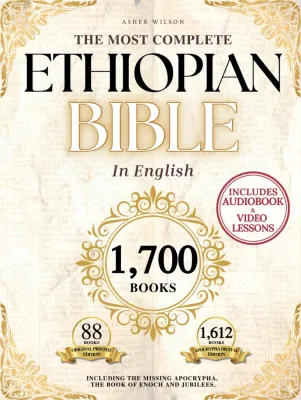
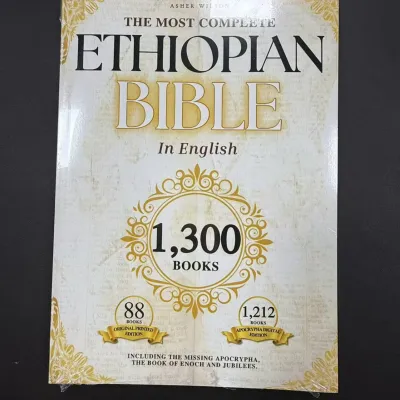
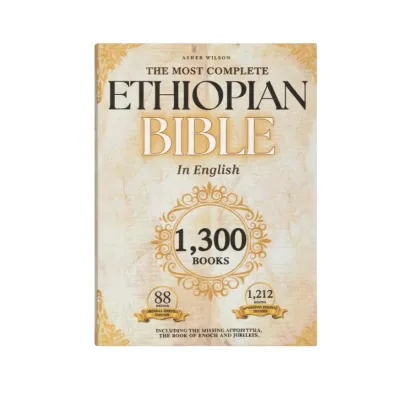
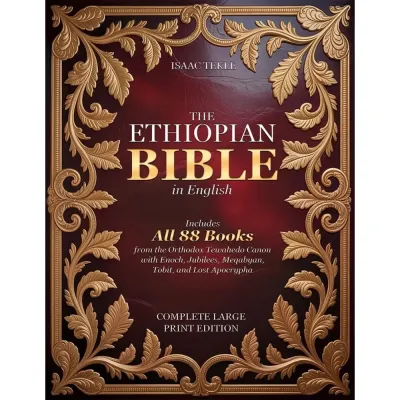
Prices are valid at publication and may change. Please refer to the product page for the latest price.
Language is another critical factor when selecting a digital edition. The original liturgical texts of the Ethiopian Church are written in Ge’ez, an ancient Semitic language, while modern translations used in Ethiopia are typically in Amharic. For readers in the Philippines, English translations are generally the most practical choice for study. However, English translations of the complete 81-book canon are relatively rare and often published in separate volumes rather than a single, massive eBook. You will frequently find scholarly translations of individual books, such as Enoch or Jubilees, published by academic presses, alongside devotional translations of the broader canon compiled by independent scholars.
Because of this fragmentation, digital availability is highly variable. Mainstream publishers rarely offer a single, comprehensive “Ethiopian Orthodox Bible” in English that matches the official 81-book canon perfectly. Instead, digital storefronts often feature compilations of the Ethiopian Apocrypha or specific academic translations of the pseudepigrapha. When browsing, you must carefully read the product description and look for scholarly introductions that explain which manuscripts were used for the translation. This step prevents the common disappointment of purchasing an eBook only to find it is a standard Western translation with a few poorly translated apocryphal chapters appended.
Searching Mainstream eBook Platforms and Navigating Region Locks
For most readers in the Philippines, the first stop when looking for an eBook is a mainstream digital bookstore, such as Amazon Kindle, Apple Books, or Kobo. These platforms host a variety of digital editions of the Ethiopian Bible, ranging from inexpensive self-published compilations to highly regarded academic translations. To find these titles, use precise search terms in the platform’s search bar. Instead of searching broadly for “Ethiopian Bible,” try specific queries like “Ethiopian Orthodox Bible English,” “Book of Enoch academic translation,” or “Jubilees Ethiopian canon.” This helps filter out unrelated historical novels or generic study guides.

However, digital shoppers in the Philippines frequently encounter the hurdle of region locks and geographical restrictions. Publishers often secure distribution rights only for specific territories, such as North America, Europe, or the United Kingdom. When a publisher does not secure global rights, the eBook may be completely hidden from search results on the Philippine storefront, or it may display a frustrating “not available for purchase in your region” message. This is particularly common with niche theological texts published by smaller, regional presses that lack the resources to manage global digital distribution.
To navigate these regional restrictions, you must verify how your account is configured on your chosen platform. On platforms like Kobo or Apple Books, your available catalog is determined by your billing address and the country associated with your payment method. If a specific scholarly edition of the Ethiopian Bible is unavailable on the local Philippine storefront, you may need to look for alternative platforms that offer global distribution, or check if the publisher sells DRM-free ePub files directly from their own website. When purchasing through mainstream platforms, transactions are typically processed in Philippine Pesos (₱) or converted automatically by your local bank, but always check the final checkout screen to confirm the total cost and ensure no unexpected international transaction fees are applied by your card issuer.
Exploring Specialized Theological and Academic Digital Stores
When mainstream consumer bookstores fall short, specialized theological platforms and academic digital libraries offer an excellent alternative. Dedicated Bible study software, such as Logos Bible Software, Accordance, and Olive Tree, are designed specifically for deep textual analysis. These platforms do not just sell eBooks; they sell interactive digital modules. If you purchase an Ethiopian biblical text or a translation of the Book of Enoch through these services, the text integrates directly with your study tools, allowing you to perform word studies, compare translations side-by-side, and access scholarly commentaries instantly.
In addition to specialized software, academic presses and theological publishers often maintain their own direct-to-consumer digital storefronts. Publishers like Brill, the Society of Biblical Literature (SBL), and various Orthodox Christian publishing houses frequently offer digital editions of ancient texts in PDF or ePub formats. Purchasing directly from an academic publisher ensures that you are getting a peer-reviewed, highly accurate translation with comprehensive scholarly footnotes and historical context. While these academic editions can sometimes be more expensive than self-published versions on mainstream platforms, they provide the level of textual accuracy required for serious theological study.
Before making a purchase, it is worth evaluating whether a subscription-based digital library or a one-time purchase best suits your study needs. Some academic platforms and digital archives offer subscription models that grant temporary access to thousands of theological texts, including rare translations of Eastern Christian literature. If you only need to reference the Ethiopian Bible for a specific research project or a short-term course, a monthly subscription to an academic database may be more cost-effective than buying multiple expensive volumes. However, if you intend to use the text for ongoing personal devotion or long-term study, investing in a one-time purchase of a high-quality, downloadable eBook is the more practical and permanent solution.
Essential Pre-Purchase Checks for Format and Content
Because digital editions of niche religious texts can vary wildly in quality, performing a thorough pre-purchase check is essential to avoid formatting issues and incomplete content. The first and most critical step is to verify the exact table of contents. Many digital editions of the “Ethiopian Bible” sold online are misleadingly titled. Some may only contain the standard Protestant canon with the Book of Enoch added as an appendix, while others might omit key books of the Ethiopian New Testament or the unique historical books of the Old Testament. If the digital storefront offers a “Look Inside” or sample download feature, use it to scroll through the table of contents and confirm that the specific books you wish to study are fully included.
The second check involves understanding the Digital Rights Management (DRM) restrictions and file formats associated with the eBook. Some academic publishers apply strict DRM to their digital files, which can limit your ability to read the text offline, copy passages for study notes, or transfer the file between different devices. If you prefer to read on a dedicated e-ink e-reader, ensure the eBook is delivered in a compatible format, such as a standard ePub or a reflowable PDF. Avoid proprietary formats that lock you into a single, poorly designed reading application, especially if you plan to study the text in areas with unreliable internet connectivity, where offline access is crucial.
Finally, take the time to read user reviews and feedback, focusing specifically on comments regarding formatting, navigation, and font rendering. Niche texts are often digitized using automated scanning software, which can result in numerous typographical errors, broken sentences, and non-functional hyperlinks in the table of contents. A poorly formatted eBook can make navigating an 81-book canon incredibly frustrating, as you may have to scroll through hundreds of pages just to find a specific chapter. Look for reviews that confirm the digital index is fully interactive and that the text is clean, readable, and free of distracting scanning artifacts.
Frequently Asked Questions (FAQ)
Are free public domain versions reliable for study?
Free public domain versions of the Ethiopian Bible or its individual books are widely available on open-source archives and theological websites, but they come with significant limitations. Most of these free digital copies are based on outdated 19th-century translations or raw, unedited scans of older academic works. While they can be useful for quick reference, they often lack the accuracy of modern translations that benefit from more recent manuscript discoveries. Furthermore, free public domain files frequently suffer from severe formatting issues, missing verses, and a complete lack of modern study notes or cross-references, making them less reliable for serious theological or historical study.
Will standard e-readers display Ge'ez or Amharic scripts correctly?
Displaying non-Latin scripts like Ge’ez or Amharic on standard e-ink e-readers can be highly problematic. Many entry-level e-readers do not have pre-installed system fonts capable of rendering Ethiopic characters, which can result in the text displaying as blank boxes, question marks, or distorted symbols. If you plan to read the Bible in its original Ge’ez or modern Amharic, you must ensure the eBook file has the necessary fonts embedded directly within it, or use a modern tablet or smartphone with a reading app that supports custom font installation. Always download a free sample of the text to test your device’s rendering capabilities before purchasing a full digital edition.
Community discussion
Share your experience or ask a question. Comments are reviewed before publication.