
Securing an authentic copy of the Ordo 2026 in the Philippines is essential for priests, liturgists, sacristans, and lay faithful who want to follow the daily liturgical rhythm of the Catholic Church. The Ordo serves as the official liturgical calendar, detailing the daily Mass readings, proper prayers, liturgical colors, and feast days. To ensure you purchase the correct edition, you should source it through official diocesan chanceries, established Catholic publishing houses, or verified online storefronts of recognized religious organizations.
Navigating the procurement process requires an understanding of the specific editions available and the unique demands of the local liturgical landscape. Because the liturgical year does not align perfectly with the civil calendar, planning your purchase well in advance prevents disruptions in parish administration and personal devotional planning.
Identifying the Right Ordo 2026 Edition for Your Parish or Personal Use
Before initiating a search for a seller, it is important to determine which specific edition of the Ordo 2026 fits your needs. The primary distinction lies between the national Ordo and localized diocesan or religious order directories. The national Ordo for the Philippines contains the general Roman Calendar as adapted for the country, incorporating national feasts such as the Solemnity of the Santo Niño and the feast of San Lorenzo Ruiz.
Products mentioned in this guide
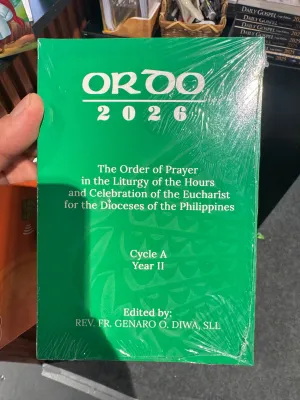
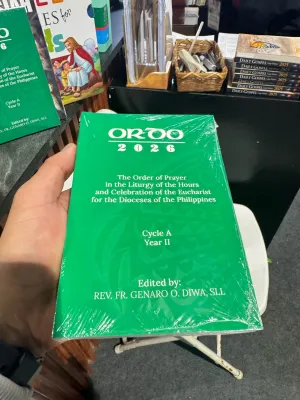
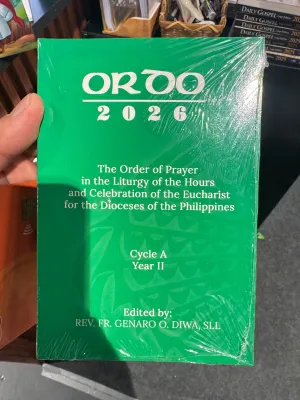
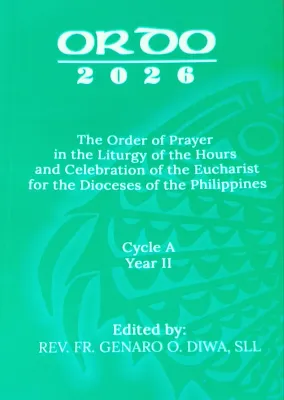
Prices are valid at publication and may change. Please refer to the product page for the latest price.
In contrast, many dioceses and religious orders publish their own proper directories. A diocesan directory includes specific local patronal feasts, dedication anniversaries of the cathedral, and proper masses unique to that territory. Religious families, such as the Dominicans, Jesuits, or Franciscans, also use proper calendars that highlight their own saints and blesseds. If you are purchasing for a parish or a specific religious community, verify whether you need the standard national edition or a specialized local supplement.
Language and format preferences also dictate your choice. While the standard liturgical directions in the Ordo are typically published in English, some regional guides may offer supplementary pastoral notes in local languages. Physical formats vary widely, ranging from compact pocket-sized booklets designed for personal travel and daily reading to larger desk-sized volumes or loose-leaf binder inserts. Sacristies generally require larger, durable formats that can lay flat on a desk or ambo during preparation.
Finally, keep in mind the specific timeline covered by the 2026 edition. The liturgical year 2026 does not begin on January 1; rather, it commences on the First Sunday of Advent in late 2025 and concludes just before Advent in late 2026. This means the Ordo 2026 is an active reference tool starting in late November 2025, making early identification of your required format highly practical.
Reliable Channels to Buy the Ordo 2026 in the Philippines
The most secure way to obtain an authentic Ordo 2026 is through official ecclesiastical channels. Diocesan chanceries, cathedral bookshops, and parish offices serve as the primary distribution points for official liturgical publications. Chanceries often coordinate bulk orders directly with the national printing offices, making them the most reliable source for parishes seeking multiple copies for their clergy and staff.

Established Catholic bookstores and recognized religious publishers in the Philippines represent another highly dependable channel. Renowned publishers such as St. Pauls, Paulines, Claretian Publications, and Word & Life Publications regularly print or distribute liturgical directories. Visiting their physical branches, which are widely distributed across major cities in Luzon, Visayas, and Mindanao, allows you to inspect the print quality and binding before making a purchase.
If physical visits are not feasible, online marketplaces and ecommerce platforms offer a convenient alternative, provided you exercise strict verification. When browsing online, prioritize official brand stores or shops explicitly affiliated with recognized Catholic dioceses, parishes, or religious congregations. Look for official store badges, high seller ratings, and detailed product descriptions that confirm the book’s ecclesiastical origin. Avoid unverified third-party sellers, as they may distribute unauthorized photocopies, outdated editions, or mislabeled calendars.
What to Verify Before Buying Your Liturgical Calendar
To avoid purchasing an incorrect or unauthorized edition, several key elements must be verified prior to checkout. First, check the exact liturgical year and cycle printed on the cover and title page. For the liturgical year 2026, the Sunday readings follow Cycle B, while the weekday readings follow Cycle II. Ensuring these details are correct prevents the accidental purchase of leftover stock from previous years.
Second, look for the imprimatur and the obstat or official ecclesiastical approval. An authentic Ordo must carry the approval of the Catholic Bishops’ Conference of the Philippines (CBCP) or a local ordinary. This ecclesiastical endorsement guarantees that the calendar aligns perfectly with the universal and national liturgical laws, ensuring doctrinal and rubrical accuracy for daily celebrations.
Third, assess the physical specifications of the book, keeping the local climate in mind. The high humidity and tropical temperatures in the Philippines can cause low-quality paper to warp, curl, or degrade quickly. For a book that will be handled daily in a sacristy or carried in a bag, look for durable binding—such as Smyth-sewn or sturdy spiral binding—and high-opacity paper that prevents ink bleed-through. If purchasing online, read the product specifications carefully or contact the seller to confirm these physical details.
When calculating your budget, remember to factor in shipping costs and local taxes. While a single booklet may have a modest cover price, ordering from remote provinces can increase the total cost. Verify the final price in Philippine Pesos (₱) on your selected platform before confirming the transaction.
When to Order and Prepare for the Liturgical Year
Timing is critical when purchasing liturgical directories. Because the liturgical year 2026 begins on the First Sunday of Advent (November 30, 2025), parishes and individuals should ideally place their orders during the third quarter of 2025, specifically between August and October. This timeline allows ample time for printing, processing, and shipping.
Parishes planning bulk orders must coordinate with their local chanceries or publishers even earlier. Bulk printing runs are often calculated based on pre-orders, and late requests can result in stockouts, leaving a parish without an official guide at the start of the new liturgical year. For individual buyers, ordering early ensures that your copy arrives well before the busy Advent and Christmas seasons, when shipping networks experience heavy congestion.
If your physical copy is delayed due to shipping bottlenecks or printing backlogs, interim solutions are available. Many diocesan liturgical commissions and national offices publish temporary digital calendars or weekly liturgical sheets on their official websites. While these resources can bridge the gap for the first few weeks of Advent, they should be viewed as temporary measures until your official printed Ordo 2026 arrives.
Frequently Asked Questions (FAQ)
Can I use a digital Ordo instead of a printed book?
Digital versions of the Ordo, such as mobile applications or downloadable PDFs, offer excellent convenience for personal prayer, sermon preparation, and travel. They allow you to search for specific feasts quickly and carry the calendar wherever you go. However, for actual liturgical celebrations in the sanctuary, a printed book remains the standard. Printed directories do not suffer from battery depletion, screen glare, or technical glitches, ensuring a dignified and uninterrupted flow during Mass. If you choose to use a digital version for planning, ensure it is officially approved by the CBCP or your local diocese to guarantee its accuracy.
What should I do if my local diocese has a specific calendar?
If your diocese observes unique feast days, patronal solemnities, or local anniversaries that are not listed in the national Ordo, you must supplement the national edition with your local diocesan directory. Most dioceses publish a local calendar insert or a complete proper directory that integrates these local celebrations into the national framework. You can request these local additions directly from your diocesan chancery, parish office, or the office of the diocesan liturgical commission. Keeping both the national Ordo and your local directory on hand ensures that all parish celebrations remain fully compliant with both national and local liturgical laws.
Community discussion
Share your experience or ask a question. Comments are reviewed before publication.