
Finding a reliable Bible in the Philippines requires knowing where to look, whether you are searching for the classic English King James Version (KJV) or a local language translation like Bisaya (Cebuano). You can purchase these Bibles through national bookstore chains, specialized Christian bookshops, regional Bible society offices, and verified online marketplaces. Because these two translations serve different linguistic and study purposes, understanding how to source them safely ensures you receive a durable, accurate edition that will withstand daily use and the local tropical climate.
Identifying Your Exact KJV and Bisaya Edition Requirements
Before beginning your search, it is essential to clarify the specific translation and physical format that best suits your reading habits. The King James Version is a historic English translation first published in 1611, celebrated for its majestic, formal language and word-for-word translation philosophy. When shopping for a KJV Bible, you will encounter various editions, including the classic Authorized Version, the New King James Version (NKJV) which modernizes the vocabulary while retaining the original sentence structure, and specialized study editions containing extensive cross-references and historical notes.
For Bisaya translations, the landscape is highly diverse because the language is spoken across various regions in the Visayas and Mindanao, leading to distinct dialectal preferences and translation styles. The most traditional translation is Ang Biblia, which utilizes a formal-equivalence approach similar to the KJV, making it a favorite among older generations and liturgical churches. Conversely, the Maayong Balita Biblia employs a dynamic-equivalence approach, translating the ancient texts into contemporary, conversational Bisaya that is highly accessible for younger readers, personal devotions, and community study groups. Verifying the publication year and the specific translation committee behind the text will help ensure the language aligns with your church community or personal study goals.
Products mentioned in this guide
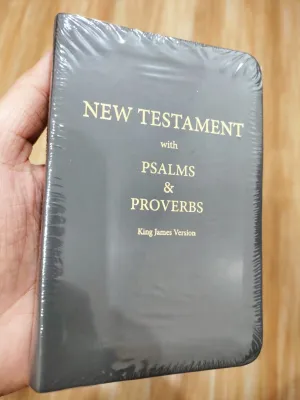
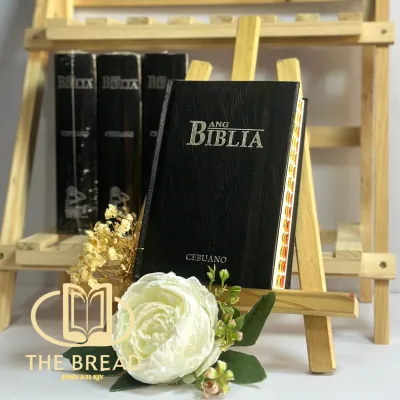
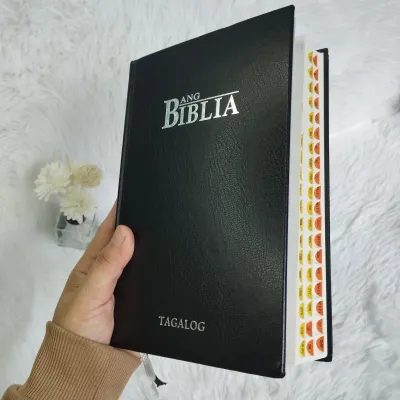
Prices are valid at publication and may change. Please refer to the product page for the latest price.
Physical format is another critical consideration, particularly given the tropical climate of the Philippines. High humidity, heat, and seasonal rains can take a toll on printed books. If you plan to use your Bible for deep study, look for editions with wide margins for note-taking, built-in concordances, and clear maps. For daily travel or church services, a compact, lightweight edition is highly practical. Senior readers or those who read in low-light environments will benefit significantly from large-print or giant-print editions.
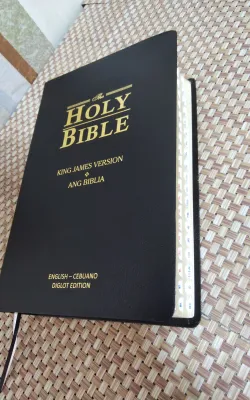
Furthermore, it is important to understand that KJV and Bisaya texts are rarely bound together in a single bilingual volume. While bilingual English-Tagalog Bibles are relatively common, parallel KJV-Bisaya Bibles are exceptionally rare in standard print. Consequently, serious students of scripture should plan to purchase two separate volumes—one high-quality KJV Bible and one accurate Bisaya Bible—to facilitate side-by-side comparison and study.
Sourcing Physical Copies at Local Bookstores and Religious Shops
Visiting a brick-and-mortar store allows you to physically inspect a Bible’s print size, paper quality, and binding before making a purchase. Major national bookstore chains located in shopping malls across the country are the most accessible starting points. These stores typically dedicate a specific section to religious, inspirational, and spiritual books. While they usually carry standard English Bibles, their stock of local language translations like Bisaya may be limited depending on the branch’s location. If you cannot find the exact edition on the shelves, do not hesitate to approach the customer service desk. Most national chains have integrated digital catalog systems that allow staff to check stock levels at other branches or place a special order to have your desired Bible shipped to your nearest store.

For a more comprehensive and specialized selection, dedicated Christian and bookshops are invaluable resources. These specialized retailers are often situated near historic churches, diocesan pastoral centers, or Christian school campuses in major urban areas. Outlets operated by established religious organizations and Bible societies carry a wide array of local language translations, including various Bisaya editions. The staff in these shops are usually highly knowledgeable about different translation histories, denominational preferences, and physical formats, allowing them to provide personalized recommendations based on your specific spiritual or academic needs.
Additionally, local church bookstores and ministry outlets are excellent physical sources. Many larger parishes, cathedral offices, and independent ministry headquarters operate small book kiosks or gift shops on their premises. These outlets curate their inventory specifically to match the liturgical and study needs of their congregation, making them highly reliable places to find authorized Bisaya translations. Purchasing from these church-affiliated shops also ensures that your money directly supports local parish ministries, community outreach programs, and religious education initiatives.
Safely Navigating Online Marketplaces and Authorized Publishers
Online shopping offers unparalleled convenience, particularly for readers living in provincial areas far from major urban retail centers. However, navigating online marketplaces requires a strategic approach to avoid low-quality prints, unauthorized reproductions, or incorrect translations. When searching on major e-commerce platforms, use highly specific search terms such as “Cebuano Bisaya Bible hardcover” or “King James Version study Bible leather” rather than broad keywords. Always examine the seller’s profile carefully, looking for high overall ratings, positive customer feedback, and real photos uploaded by previous buyers. Be cautious of listings that feature only generic stock images, contain vague product descriptions, or list prices in ₱ that are significantly lower than standard retail rates.
To significantly reduce the risk of purchasing counterfeit or poorly printed Bibles, the most reliable method is to buy directly from official publisher websites and authorized online Christian bookstores. Established Bible societies and religious publishing houses in the Philippines maintain active, verified storefronts on major e-commerce platforms as well as their own independent websites. Purchasing directly from these authorized channels helps ensure you receive an authentic, complete text. It also provides you with detailed, accurate specifications regarding the Bible’s physical attributes, such as paper thickness, font size, binding type, and translation source, which are often missing or inaccurate on third-party listings.
When ordering Bibles online, shipping and packaging policies deserve special attention. The Philippine climate presents unique challenges for book delivery, as packages can be exposed to intense tropical heat, high humidity, and sudden heavy downpours during transit, especially for inter-island shipping. Before placing your order, review the seller’s packaging standards or send a direct message requesting secure packaging. Reputable sellers will wrap the Bible in multiple layers of bubble wrap and place it inside a sturdy cardboard box or a waterproof courier bag to protect the delicate pages and cover from moisture, bent corners, and rough handling by logistics personnel.
Verifying Authenticity and Print Quality Before Purchase
Ensuring the physical durability and textual accuracy of your Bible is crucial for a book intended for daily reading and long-term use. When inspecting a Bible in person or upon receiving an online delivery, start by examining the copyright page. A genuine Bible will clearly display the publisher’s official imprint, the copyright year, the translation license details, and a unique International Standard Book Number (ISBN). You can easily verify this ISBN online through official bibliographic databases to confirm that the physical book matches the registered publication details.
Next, evaluate the paper and binding quality, which are primary indicators of a Bible’s longevity. High-quality Bibles are printed on specialized, lightweight Bible paper that balances thinness with opacity. Check for “ghosting,” which occurs when text from the reverse side of the page bleeds through and interferes with readability; genuine publishers select paper weights that minimize this issue. Examine the spine to determine the binding method. Durable Bibles utilize Smyth-sewn binding, where signatures of pages are stitched together with thread before being secured to the cover. This method allows the Bible to lay completely flat when opened and prevents pages from loosening over time. In contrast, cheaply glued bindings tend to dry out, crack, and lose pages rapidly when exposed to tropical humidity and frequent use.
Finally, learn to recognize the red flags of counterfeit Bibles, which are increasingly common on unauthorized digital platforms. Counterfeit editions often suffer from poor quality control, resulting in misaligned text, faded ink, frequent typographical errors, and in severe cases, missing verses or entire chapters. If a premium leather-bound KJV study Bible is offered at an incredibly low price in ₱, it is highly likely a counterfeit printed on low-grade photocopy paper with a cheap glued spine. Investing in an authentic edition from a reputable source ensures that you receive an accurate, beautifully crafted text that will serve as a reliable companion for years to come.
Frequently Asked Questions (FAQ)
Are there bilingual KJV and Bisaya Bibles available in a single volume?
Single-volume bilingual editions featuring both the King James Version and a Bisaya translation are extremely rare or non-existent in standard print runs. Because these two translations serve distinct linguistic communities and historical traditions, publishers almost always print them as separate volumes. For accurate study and comparison, it is highly recommended to purchase a dedicated KJV English Bible and a separate Bisaya Bible. This approach also allows you to choose the most suitable physical format, print size, and binding style for each individual book.
How can I request a specific Bisaya Bible translation if it is out of stock?
If a specific Bisaya translation is out of stock at your local bookstore, you can contact regional Bible society branches, diocesan pastoral offices, or specialized religious publishers directly. These organizations often maintain archives or can provide information on upcoming reprints, pre-order options, or alternative authorized translations that match your requirements. Many religious publishers are highly responsive to direct inquiries from individuals and local congregations seeking specific language editions.
Do online sellers offer bulk discounts for church groups or ministries?
Yes, many authorized Christian bookstores and religious publishers offer bulk discounts, but these are rarely available through standard retail checkout processes on general e-commerce platforms. If you are purchasing Bibles for a church group, youth ministry, or community outreach program, you should contact the publisher or distributor directly through their official website or customer service channels. They can provide wholesale pricing, customized shipping arrangements, and tax-exempt processing where applicable.
Community discussion
Share your experience or ask a question. Comments are reviewed before publication.