
The Ethiopian Bible stands out as one of the most expansive collections of Christian scripture, differing significantly from the standard Bibles used in Western Catholic and Protestant traditions. While a standard Protestant Bible contains 66 books and a Catholic Bible includes 73, the Ethiopian Orthodox Tewahedo Church recognizes a canon of 81 books.
This unique collection preserves ancient texts like the Book of Enoch and the Book of Jubilees, which were excluded or lost in the West but kept alive for centuries in the Horn of Africa. For readers exploring spiritual literature, understanding these differences is the first step in deciding whether this ancient canon aligns with their personal study goals.
The Core Differences in the Biblical Canon
To understand the Ethiopian Bible, one must first look at how its structure differs from Western collections. The standard Western Protestant canon was finalized during the Reformation, focusing strictly on Hebrew texts for the Old Testament and Greek texts for the New Testament, resulting in 66 books.
Products mentioned in this guide

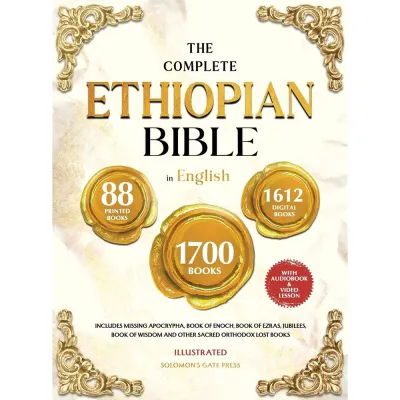
Prices are valid at publication and may change. Please refer to the product page for the latest price.
The Catholic Church, following the Vulgate tradition, includes the Deuterocanonical books, bringing its total to 73. In contrast, the Ethiopian Orthodox tradition holds to an 81-book canon, which is divided into two distinct categories: the Narrower Canon and the Broader Canon.
The Narrower Canon is the version most commonly printed and referenced in modern discussions. It contains books familiar to Western readers, alongside several unique additions integrated directly into the Old and New Testaments.
The Broader Canon includes additional liturgical, historical, and disciplinary texts that are highly revered but less frequently printed in standard commercial editions. This distinction is crucial, as many printed editions sold online may only contain the Narrower Canon or a selection of the unique books rather than the entire historical library.
The structural grouping of these books also differs from Western norms. While Western Bibles group books by genre—such as law, history, poetry, and prophets—the Ethiopian tradition organizes its scriptures in a way that reflects its unique liturgical history.
The Old Testament is expanded with texts that provide deeper historical context, while the New Testament includes early Christian writings on church order. This structural difference means that reading the Ethiopian Bible is not just about reading extra books, but about experiencing a completely different theological framework that has remained unbroken for over fifteen hundred years.
Key Unique Books: Enoch, Jubilees, and Others
The inclusion of specific books absent from Western Bibles is the primary reason many readers seek out the Ethiopian canon. Chief among these is the Book of Enoch, also known as 1 Enoch.

This text, highly influential in Second Temple Jewish literature, details the fall of the Watchers (angels who rebelled against God) and provides elaborate apocalyptic visions of the cosmos. While the New Testament Epistle of Jude quotes Enoch directly, Western churches eventually excluded it from their official canons.
The Ethiopian Church, however, preserved the text in its entirety, viewing it as an essential prophetic work. This continuous preservation has made the Ge’ez manuscript of Enoch a vital resource for modern biblical scholars.
Another cornerstone of the Ethiopian Old Testament is the Book of Jubilees. Often referred to as the “Little Genesis,” Jubilees provides a detailed, chronological retelling of events from creation to the revelation at Mount Sinai.
What makes Jubilees unique is its division of history into 49-year periods, or “jubilees,” and its strict adherence to a solar calendar. The text offers additional details about the lives of early biblical figures, such as Adam and Eve’s daughters, and emphasizes the eternal nature of the divine law.
Beyond Enoch and Jubilees, the Ethiopian Bible contains several other unique texts. These include the books of Meqabyan, which are distinct from the Maccabees found in Catholic Bibles.
The Meqabyan books tell the stories of martyrs who stood firm in their faith against oppressive rulers, offering a unique perspective on suffering and divine deliverance. Additionally, the canon includes the Sinodos, a collection of early church orders attributed to the Apostles, and the Reps, which deals with ecclesiastical discipline.
Language, Translation, and Edition Verification
The original liturgical language of the Ethiopian Orthodox Church is Ge’ez, an ancient Semitic language. Ge’ez serves as the linguistic foundation for these texts, and many unique books, including Enoch and Jubilees, survived into the modern era only because they were preserved in Ge’ez manuscripts.
When looking for an English translation, it is vital to understand that translating from Ge’ez requires specialized linguistic expertise. Some modern English editions are translated directly from these ancient manuscripts, while others rely on intermediate translations or older Western scholarly reconstructions.
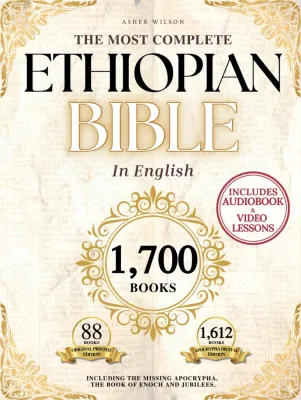
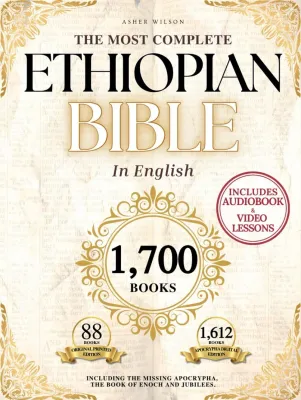
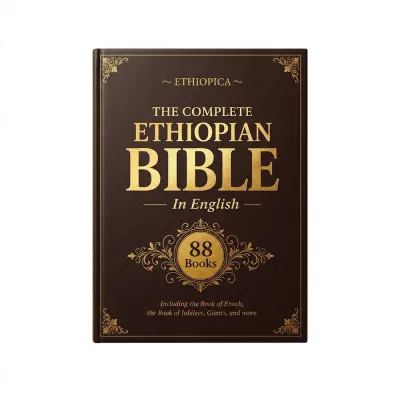
Because of the complexity of translating such a vast canon, readers must exercise caution when purchasing an edition. Many books available on online marketplaces are marketed as “The Ethiopian Bible” but may only contain a subset of the unique books, such as Enoch and Jubilees, bound together with a standard Protestant translation.
To verify the authenticity of an edition, readers should carefully examine the publisher’s notes, the translator’s credentials, and the table of contents. A reliable edition will clearly state its source texts and specify whether it represents the Narrower or Broader Canon.
Is the Ethiopian Bible Right for Your Spiritual Reading?
Deciding whether to integrate the Ethiopian Bible into your spiritual reading depends largely on your personal goals and theological background. For readers interested in early Christian history, the development of biblical canons, or the rich heritage of African Christianity, this Bible offers an unparalleled resource.
It provides a direct link to the faith of the ancient Aksumite Empire, which adopted Christianity in the fourth century. Reading these texts can broaden your spiritual perspective and deepen your appreciation for the diversity of the global church.
However, there are practical limitations to consider if you are accustomed to standard Western church practices. If your spiritual life is centered around a specific Catholic or Protestant lectionary, the readings in the Ethiopian Bible will not align with your weekly church services.
The unique books are not read in Western liturgies, and their theological emphasis on apocalyptic visions and strict calendar systems may feel unfamiliar without proper historical context. Therefore, it is best approached as a supplementary study tool rather than a replacement for your primary devotional Bible.
Before purchasing a printed copy, which can vary in its cost in ₱ depending on the publisher and binding quality, it is helpful to use a practical checklist to evaluate your options. First, verify the exact list of books included to ensure you are getting the specific texts you want to study.
Second, check the translation source to confirm it is derived from authentic Ge’ez manuscripts. Third, consider the physical layout; a high-quality binding is essential for a book of this size, especially if you plan to use it for daily study in a tropical climate where humidity can affect paper quality. By taking these steps, you can find an edition that truly enriches your spiritual library.
Frequently Asked Questions (FAQ)
Why is the Book of Enoch excluded from standard Western Bibles?
The Book of Enoch was excluded from standard Western Bibles primarily because early Jewish and Christian authorities in the Mediterranean basin debated its apostolic authorship and theological consistency. While highly regarded in the early church and quoted in the New Testament, Western councils in the fourth and fifth centuries ultimately chose not to include it in the official biblical canon. Over time, the Greek and Latin manuscripts of Enoch were largely lost in Europe. In contrast, the Ethiopian Church, geographically isolated and culturally distinct, continuously preserved the text in Ge’ez, viewing it as inspired scripture that aligned perfectly with their theological tradition.
Can I read the complete Ethiopian Bible in English?
Finding a single, complete English translation of all 81 books of the Ethiopian Bible can be challenging. While individual books like Enoch and Jubilees are widely available in high-quality English translations, comprehensive editions that compile the entire Ethiopian canon into a single volume are relatively rare. Many books marketed as the complete Ethiopian Bible actually contain only the unique books or the Narrower Canon. To ensure you are getting what you expect, always read the product description and table of contents carefully to verify which books are included before making a purchase.
Does the Ethiopian Bible change the core message of the New Testament?
No, the Ethiopian Bible does not change the core message of the New Testament. The 27 books of the New Testament that form the foundation of Christian faith—including the Gospels, the Acts of the Apostles, and the Epistles—are identical in their core message across Protestant, Catholic, and Ethiopian traditions. The unique books in the Ethiopian canon, such as Enoch and the various books of Meqabyan, primarily expand on Old Testament history, apocalyptic prophecy, and early church order. They do not introduce doctrines that contradict the central Christian message of salvation through Jesus Christ.

Community discussion
Share your experience or ask a question. Comments are reviewed before publication.