
The primary distinction of the Ethiopian Bible lies in its expansive canon, which contains 81 books—significantly more than the standard Western versions. For readers exploring the historical development of scripture, the ethopian bible offers a unique window into an ancient, unbroken Christian tradition that preserved texts other traditions set aside. Rather than viewing these additional books as mere historical curiosities, the Ethiopian Orthodox Tewahedo Church regards them as fully inspired, canonical scripture.
Understanding this unique collection requires looking beyond the familiar boundaries of Western theology. By examining how this canon was formed and what its unique books contain, you can decide whether incorporating these ancient texts into your personal study will enrich your spiritual and historical understanding.
The Structure of the Ethiopian Orthodox Canon
The biblical canon of the Ethiopian Orthodox Tewahedo Church consists of 81 books, a number that stands in sharp contrast to Western traditions. For comparison, standard Protestant Bibles contain 66 books, while Catholic Bibles include 73 books. This difference is not merely a matter of adding extra pages; it reflects a fundamentally different approach to historical preservation and ecclesiastical authority.
Products mentioned in this guide
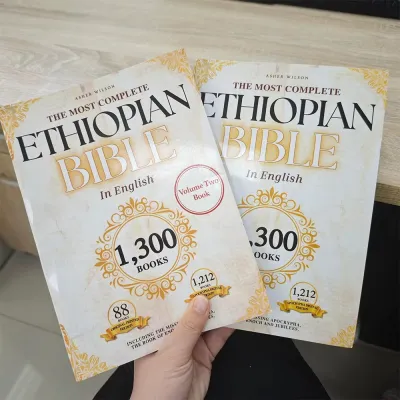
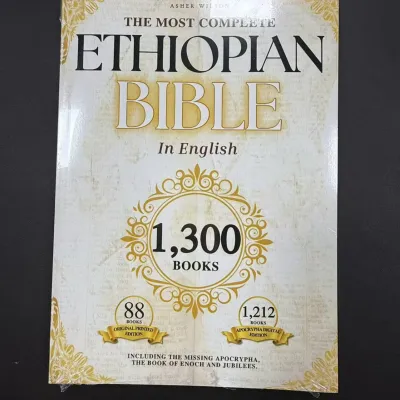
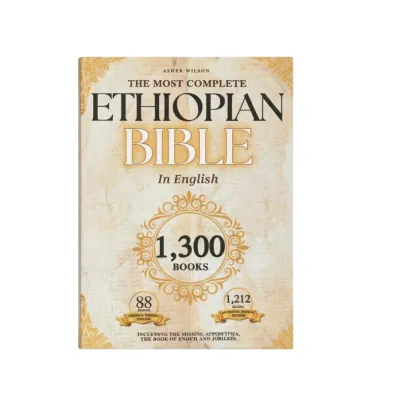
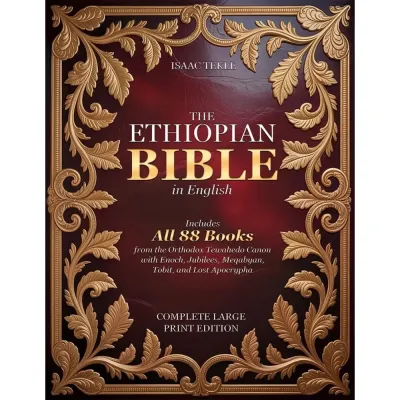
Prices are valid at publication and may change. Please refer to the product page for the latest price.
The historical roots of the Ethiopian canon are deeply intertwined with the early Christian centers of Alexandria and Antioch. When Christianity was adopted as the state religion of the Aksumite Empire in the fourth century, translation efforts began using the local Semitic language, Ge’ez. Because the early Ethiopian Church did not participate in the later Western councils that finalized and restricted the Roman Catholic or Protestant canons, it preserved a broader array of ancient Jewish and early Christian writings.
To navigate this structure, scholars distinguish between the “Narrow Canon” (Mäshafä Qeddus) and the “Broader Canon.” The Narrow Canon consists of the books most commonly printed and read during public liturgies, while the Broader Canon includes additional writings on church order, early Christian history, and covenantal laws. Both categories are viewed as authoritative within the Ethiopian Orthodox tradition, rather than being relegated to the status of secondary or apocryphal texts.
Exploring the Unique Books of the Ethiopian Bible
The most distinctive feature of the Ethiopian canon is the inclusion of several books that are absent from both the Hebrew Bible and Western Christian canons. These texts provide invaluable insights into the theological landscape of the Second Temple period and the early centuries of the Christian era.

The Book of Enoch (1 Enoch)
The Book of Enoch, or 1 Enoch, is perhaps the most famous text preserved exclusively in its entirety within the Ge’ez language. The book presents a complex tapestry of apocalyptic visions, detailed angelology, and explanations for the origins of cosmic evil. It attributes its revelations to the biblical patriarch Enoch, the great-grandfather of Noah, describing his journeys through the heavens and his interactions with angelic beings.
A major theme of 1 Enoch is the story of the Watchers—angels who fell from grace by mating with human women, resulting in a race of giants known as the Nephilim. This narrative serves to explain the rapid spread of wickedness on earth before the Great Flood. Additionally, the book outlines a highly developed cosmic order, detailing the movements of the sun, moon, and stars through heavenly portals.
For modern readers, 1 Enoch is highly significant because of its clear influence on early Christian thought. The New Testament Book of Jude explicitly quotes a prophecy from Enoch (Jude 14-15), demonstrating that early Jewish-Christian communities valued and utilized this text. Studying Enoch helps readers understand the development of concepts like the “Son of Man,” the final judgment, and the nature of the afterlife during the centuries leading up to the ministry of Jesus.
The Book of Jubilees
Another vital text preserved in the Ethiopian Bible is the Book of Jubilees, locally referred to as Kufale or “Division.” This book presents itself as a revelation given to Moses on Mount Sinai by an “angel of the presence.” It retells the narratives of Genesis and the first half of Exodus, but frames them within a strict chronological and legal structure.
The defining feature of Jubilees is its division of history into 49-year periods, known as “jubilees.” Every event, from the creation of the world to the arrival of the Israelites at Sinai, is calculated down to the exact year, week, and jubilee. This chronological precision is paired with a strong emphasis on keeping covenantal laws, such as the Sabbath, circumcision, and specific festival dates, which the book claims were observed by the patriarchs long before the law was formally given to Moses.
Jubilees also advocates for a strict 364-day solar calendar, contrasting with the lunar calendars used by other ancient Jewish groups. This calendar debate was highly contentious in antiquity, as evidenced by the discovery of numerous Hebrew copies of Jubilees among the Dead Sea Scrolls at Qumran. Reading Jubilees allows students of history to appreciate the intense debates over sacred time, ritual purity, and covenantal identity that shaped early Judaism.
The Books of Meqabyan and Sinodos
Beyond Enoch and Jubilees, the Ethiopian canon contains unique historical and ecclesiastical texts. The Books of Meqabyan (I, II, and III) are often confused with the Greek Books of Maccabees found in Catholic and Eastern Orthodox Bibles, but they are entirely distinct works. The Ethiopian Meqabyan tells the story of local martyrs—such as a father named Akor and his sons—who chose death over worshiping pagan idols, emphasizing themes of absolute faithfulness, personal piety, and divine deliverance.
The Sinodos, or the Books of the Synod, is a collection of early Christian canons, regulations, and liturgical instructions. This work is divided into several sections attributed to the Apostles or early church councils, focusing on church administration, the moral qualifications of clergy, and the daily discipline of the Christian community.
Together, these texts offer a rare window into the early African Christian experience. They demonstrate how the Aksumite Church integrated theological concepts, historical narratives, and practical community rules into a cohesive scriptural tradition that sustained the Ethiopian faithful through centuries of isolation from the Mediterranean world.
Comparing the Ethopian Bible with Western Canons
To understand how the Ethiopian canon differs from Western versions, it is helpful to look at a direct comparison of the books included in each tradition. The differences are concentrated primarily in the Old Testament and the unique ecclesiastical additions of the New Testament.
| Canon Type | Total Books | Key Unique Books Included | Primary Language of Preservation |
|---|---|---|---|
| Protestant | 66 | None (Standard Hebrew and Greek texts) | Hebrew, Aramaic, Greek |
| Catholic | 73 | Tobit, Judith, Wisdom, Sirach, Baruch, 1 & 2 Maccabees | Hebrew, Aramaic, Greek |
| Eastern Orthodox | 76 to 78 | 3 & 4 Maccabees, Psalm 151, Prayer of Manasseh | Greek, Church Slavonic, etc. |
| Ethiopian Orthodox | 81 | Enoch, Jubilees, Meqabyan, Sinodos, Mäshafä Kidan | Ge'ez (ancient Ethiopic) |
In the New Testament, while the core 27 books are shared across all major Christian traditions, the broader Ethiopian canon can include works like the Mäshafä Kidan (Book of the Covenant) and the Ethiopic Clement (Qelementos). These texts focus on church order and post-resurrection instructions given by Jesus to the Apostles, reinforcing the liturgical and administrative life of the church.
A common misconception is that the Ethiopian Bible contains “lost” or “hidden” gospels that present a radically different view of Jesus, similar to Gnostic texts like the Gospel of Thomas. In reality, the unique books of the Ethiopian tradition do not contradict the core theological narrative of the Western New Testament. Instead, they expand on apocalyptic history, moral discipline, and liturgical order while remaining firmly rooted in traditional Christian monotheism and Christology.
Deciding if the Ethiopian Bible Fits Your Spiritual Reading
Determining whether to read the Ethiopian Bible depends largely on your personal study goals and spiritual interests. For those who enjoy church history, ancient Jewish literature, and understanding the diverse ways Christianity has flourished globally, these texts offer an incredibly rich resource.
From a theological perspective, non-Orthodox readers should approach these books with the understanding that they belong to a specific, ancient liturgical tradition. Reading them does not require adopting them as binding dogma, but rather appreciating how they have shaped the faith of millions of Christians in East Africa for over a thousand years.
The spiritual value of books like Enoch and Jubilees lies in their deep reflections on the reality of spiritual warfare, the sovereignty of God, and the sacredness of covenantal commitments. For instance, Enoch’s vivid descriptions of the final judgment and the ultimate triumph of righteousness can provide a powerful sense of encouragement and hope in the face of worldly injustice.
However, readers should set realistic expectations regarding the literary style of these ancient texts. Some books, particularly Jubilees, feature highly repetitive legal codes, complex genealogies, and ancient cosmological frameworks that can be challenging to navigate without study guides. Approaching these texts with patience and an open mind is essential for a rewarding reading experience.
Practical Guide to Finding and Reading English Translations
Sourcing a complete English translation of the Ethiopian Bible can be a challenging task. Unlike standard Western Bibles, there is rarely a single, widely available, authorized one-volume edition of the entire 81-book canon, as many of these texts are translated from Ge’ez in separate academic or religious volumes.
Before purchasing any edition, you must carefully verify the edition, translation language, medium or file format, regional restrictions, device compatibility, content completeness, and the authorized source. Never infer the exact contents of an edition simply from its cover art or a generic title, as some publications may only contain specific books like Enoch or the New Testament while claiming to be the complete Bible.
If you are beginning your study, starting with standalone academic translations of individual books is often the most practical route. The classic translations of 1 Enoch and the Book of Jubilees by R.H. Charles remain widely accessible, though modern academic editions by scholars such as George W.E. Nickelsburg or James C. VanderKam offer updated commentary and textual analysis.
For readers in the Philippines, physical copies of these specialized theological works can be imported through academic bookstores or online marketplaces, typically ranging in price from ₱500 to over ₱3,500 depending on the binding, translation, and publisher. Because of the local tropical climate and high humidity, physical books must be stored carefully on well-ventilated shelves away from direct sunlight, utilizing silica gel packets to prevent mold and page deterioration. Digital editions (e-books) are a highly practical alternative, avoiding shipping delays and environmental wear, though you should verify file compatibility with your e-reader before buying.
When beginning your reading journey, it is best to start with the unique books rather than attempting to read the entire 81-book canon from cover to cover. Focus on the Book of Watchers within 1 Enoch or the narrative portions of Jubilees, and utilize academic commentaries or study guides to provide the necessary historical and cultural context.
Frequently Asked Questions (FAQ)
Why are books like Enoch not in the standard Western Bible?
The exclusion of Enoch from the standard Western Bible stems from early canonical decisions in both Jewish and Christian history. During the late first century, the Jewish community standardized its biblical canon (the Masoretic Text), excluding Enoch because no complete Hebrew or Aramaic version was widely accepted by rabbinic authorities at the time. Later, early Western church councils and Protestant reformers aligned their Old Testament canons strictly with the Hebrew Bible, leaving out texts that were preserved primarily in Ge’ez and Greek translation.
Is the Ethiopian Bible the oldest complete Bible?
It is important to distinguish between the age of the canon list and the age of physical manuscripts. The Ethiopian canon’s structure is exceptionally ancient, preserving texts from the early centuries of Christianity. However, while the Ethiopian tradition has kept these ancient texts alive, the physical Ge’ez manuscripts available today generally date from the medieval period, making them comparable in age to or younger than major Western codices like Codex Sinaiticus or Vaticanus.
Do I need to be Orthodox to read the Ethiopian Bible?
No, you do not need to be a member of the Ethiopian Orthodox Church to read or study these texts. Anyone can read the Ethiopian Bible for historical, literary, or spiritual enrichment. However, it is highly recommended to read these books with an understanding of their specific theological and cultural context, rather than treating them as binding doctrine for non-Orthodox traditions.
Community discussion
Share your experience or ask a question. Comments are reviewed before publication.