
A heavy-duty guitar stand is defined by its structural resilience, material density, and tip-resistant geometry. Unlike lightweight, budget stands that easily wobble under the weight of a solid-body electric guitar or a heavy bass, a true heavy-duty stand uses thick-walled metal tubing, reinforced joints, and a wide base footprint to keep your instrument secure. In tropical climates where high humidity can affect both instrument finishes and stand materials over time, choosing a robust stand is essential for protecting your investment.
When shopping for a reliable support system, relying on vague marketing terms like “strong” or “durable” is rarely enough. To find a stand that truly offers heavy-duty protection, you must evaluate specific physical characteristics, from the alloy composition of the frame to the chemical stability of the protective padding.
Evaluating Frame Material and Tube Thickness
The core strength of any guitar stand lies in its metal frame. Most heavy-duty stands are constructed from steel tubing, which provides the necessary weight and rigidity to resist bending under load. While aluminum alloy stands are lighter and easier to transport, they generally offer less resistance to accidental impacts and can dent or deform more easily if subjected to heavy pressure.
Products mentioned in this guide
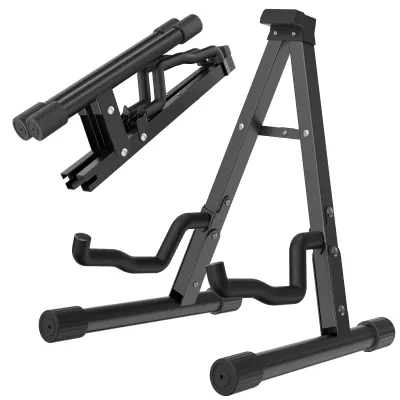
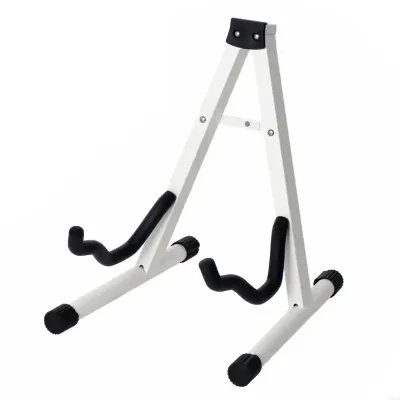



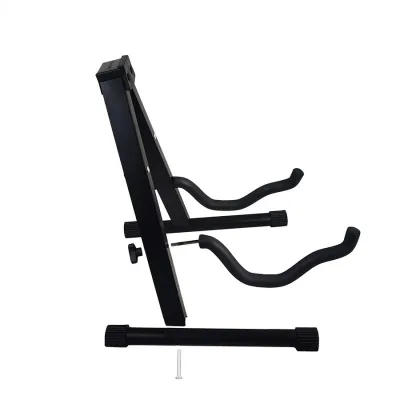
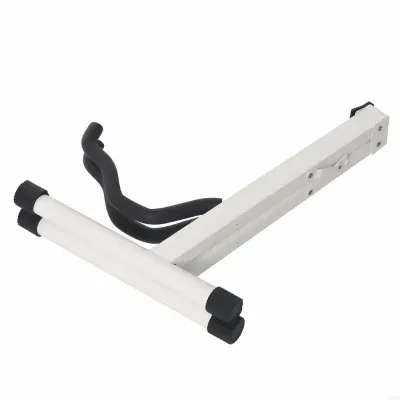
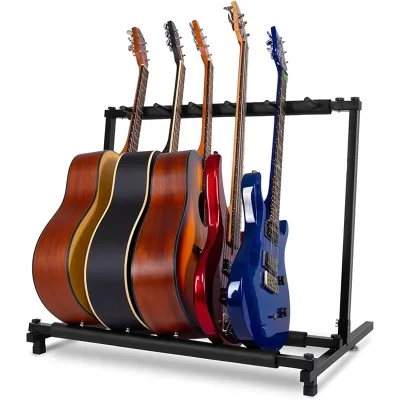
Prices are valid at publication and may change. Please refer to the product page for the latest price.
To assess the durability of a frame, look closely at the tube thickness and diameter. High-quality stands typically feature thicker-walled tubing that prevents the metal from crimping or buckling at stress points. When physical inspection is possible, try applying moderate hand pressure to the main shaft; a heavy-duty frame will not flex or yield.
Welding quality at the joints is another critical indicator of structural integrity. Look for clean, continuous welds where the tubes meet, rather than small spot welds. Spot welds are prone to cracking over time under the constant stress of supporting heavy instruments, whereas full welds distribute the load evenly across the joint.
Analyzing Base Design and Weight Distribution
A stand’s base design directly determines its stability and resistance to tipping. Tripod bases are highly effective because three points of contact naturally adapt to slightly uneven floor surfaces. A-frame designs offer a more compact footprint, making them excellent for tight spaces, but they require a completely flat surface to remain perfectly stable.

In tropical environments where tiled, polished concrete, or wooden floors are common, the quality of the stand’s feet is paramount. Heavy-duty stands feature thick, non-slip rubber or thermoplastic feet that grip the floor securely. These feet prevent the stand from sliding when you place or remove your guitar, and they cushion the frame against floor vibrations.
The physical relationship between the base’s spread width and the stand’s center of gravity is simple: a wider base footprint creates a more stable foundation. When a heavy instrument is placed on the stand, the combined center of gravity must remain well within the footprint of the base. A narrow base increases the risk of the stand tipping over if it is accidentally bumped.
Checking Contact Points and Finish Protection
The materials that make contact with your guitar are just as important as the metal frame. Standard foam padding can degrade rapidly in warm, humid conditions, often becoming sticky, crumbling, or transferring chemical residues to your instrument. Heavy-duty stands utilize high-density rubber, medical-grade silicone, or specially formulated polyurethane padding that resists environmental degradation.
Ensure that the cushioning material completely covers all potential contact points, including the neck yoke and the lower support arms. The padding should be thick enough to prevent the instrument’s body from bottoming out against the underlying metal frame, especially when placing the guitar down quickly.
If your guitar has a sensitive finish, such as nitrocellulose lacquer, you must exercise extra caution. Nitrocellulose is highly reactive and can discolor or soften when in contact with certain plastics and rubbers. Always verify that the manufacturer explicitly states the padding material is finish-safe or nitro-safe before purchasing.
Matching Weight Capacity and Instrument Compatibility
To ensure long-term safety, you must align the stand’s rated weight capacity with the actual weight of your instruments. A solid-body electric guitar or a five-string bass can weigh significantly more than a standard acoustic guitar. Placing a heavy instrument on a stand designed for lighter acoustic models can cause the frame to sag or the adjustment collars to slip.
Always maintain a generous safety margin between the manufacturer’s stated maximum load and the weight of your guitar. If your heaviest instrument weighs 5 kilograms, look for a stand rated for at least 10 kilograms. This safety buffer ensures the locking mechanisms and joints are not operating at their absolute physical limits.
Instrument compatibility also depends on the physical dimensions of the lower support arms. Standard cradles may not securely hold offset body shapes, deep-bodied acoustic guitars, or thin-bodied ukuleles. Check whether the lower arms are adjustable or deep enough to cradle your specific instrument shape without allowing it to twist or slide sideways.
Verifying Heavy Duty Claims Before Checkout
Before making a final purchase on an ecommerce platform or at a local music store, scrutinize the product specifications and detailed images. Look for concrete measurements, such as tube diameter in millimeters and maximum load capacity in kilograms. Avoid listings that rely solely on subjective adjectives without providing verifiable technical data.
Pay close attention to the adjustment mechanisms, such as locking collars, clutch grips, and safety pins. Heavy-duty stands often feature metal locking pins or robust, threaded metal collars rather than thin plastic friction knobs, which can strip or crack over time under repeated tightening.
Finally, cross-reference user reviews for real-world feedback on long-term durability. Look for comments regarding how well the stand holds up in humid climates, whether the joints loosen after repeated folding, and if the rubber components show signs of premature wear. This feedback provides valuable insight into how the stand will perform in daily use.
Frequently Asked Questions (FAQ)
Are multi-guitar stands considered heavy duty?
Multi-guitar stands and racks can be heavy duty, but they distribute weight across a wider frame rather than a single vertical shaft. When evaluating a multi-guitar stand, check the thickness of the base rails and the strength of the connection joints. Ensure the frame is designed to prevent individual instruments from knocking against each other, and verify that the total weight capacity comfortably exceeds the combined weight of all the instruments you plan to store.
Is a heavy duty guitar stand practical for gigging and travel?
While heavy-duty stands offer maximum stability, they are typically heavier and bulkier than lightweight travel stands. If you frequently travel to gigs, look for a heavy-duty stand that features a fully folding design with secure locking hinges. This allows you to benefit from robust stage stability without sacrificing too much portability during transport.
Community discussion
Share your experience or ask a question. Comments are reviewed before publication.