
When you search for an “original” copy of the Book of Enoch, you are embarking on a journey through ancient languages, lost manuscripts, and complex historical preservation. There is no single, surviving master copy written by the biblical patriarch himself. Instead, what modern readers call the “original” Book of Enoch is a composite ancient work, primarily preserved in its entirety only in classical Ethiopic (Ge’ez). To find a complete and unabridged version, you must look for translations of 1 Enoch that draw from these Ethiopic manuscripts while incorporating insights from older, fragmented Aramaic and Greek discoveries.
Understanding this textual history is essential before purchasing any edition. Many books sold on online marketplaces or in local bookstores claim to be the “original” or “lost” version, yet they may contain heavily edited, abbed, or modernized paraphrases that strip away the historical context. By learning how to identify complete translations, you can ensure that your reading material aligns with genuine historical and academic scholarship rather than sensationalized modern adaptations.
What "Original" Actually Means for the Book of Enoch
To understand what you are buying, you must first distinguish between the three different texts that bear the name of Enoch. The widely recognized and read version is 1 Enoch, often referred to simply as the Book of Enoch. This is the text that contains the accounts of the Watchers, the Nephilim, and cosmic journeys. Two other distinct texts, known as 2 Enoch (preserved in Old Church Slavonic) and 3 Enoch (written in Hebrew), are entirely different works composed centuries later. If a publisher does not specify which version they are printing, or if they blend them together without explanation, they are presenting a highly modified product.
Products mentioned in this guide

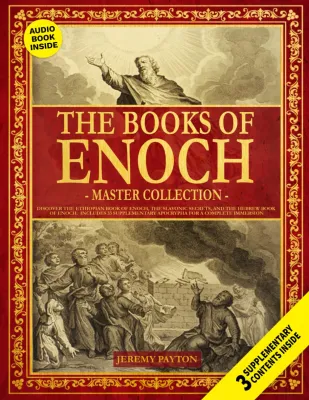
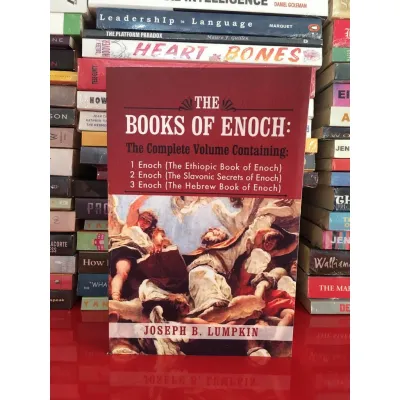

![[Audible and ebook in CDs] The Book of Giants The Watchers Nephilim and the Book of Enoch](https://img.lazcdn.com/g/p/00979f6b6e5ea320f1770fb1ebe0cce4.jpg_400x400q80.jpg_.webp)
Prices are valid at publication and may change. Please refer to the product page for the latest price.
The search for the earliest version of 1 Enoch leads to the Dead Sea Scrolls discovered in Qumran. These scrolls contain fragments of the text written in Aramaic, proving that parts of the book date back to at least the third century BCE. However, these Aramaic scrolls are highly damaged and incomplete, leaving massive gaps in the narrative. There are also ancient Greek translations of certain portions, but these too are fragmented and do not cover the entire work.
The only tradition that preserved the entire Book of Enoch as a continuous, complete manuscript is the Ethiopian Orthodox Tewahedo Church. Written in Ge’ez, an ancient South Semitic language, these Ethiopic manuscripts represent the only surviving path to reading the full text from beginning to end. Therefore, when a modern publisher labels a translation as “complete” or “original,” they are referring to a translation based on these Ethiopic manuscripts, ideally cross-referenced with the Aramaic and Greek fragments to resolve difficult passages.
A truly “critical” edition is one where scholars have compared multiple surviving Ge’ez manuscripts alongside the Greek and Aramaic fragments. These editions do not claim to be a direct translation of a single, complete ancient scroll. Instead, they represent a meticulous reconstruction of the text, using footnotes to show where different manuscripts disagree or where a word’s meaning is uncertain. Understanding this distinction helps you avoid sensationalized claims of “undiscovered” or “secret” texts.
Signs Your Edition Is Abridged or Modified
With the rise of self-publishing and digital printing, online marketplaces are flooded with low-quality editions of the Book of Enoch. Many of these versions are heavily modified, abridged, or repackaged without any editorial oversight. One of the common signs of an altered edition is the complete omission of entire sections. The complete 1 Enoch is not a single narrative but an anthology of five distinct books. If your edition lacks the Book of Parables or the Astronomical Book, you are reading an incomplete text.

Another major red flag is the lack of clear translator credentials. Translating ancient Ge’ez, Greek, or Aramaic requires years of specialized linguistic and historical training. If a book’s cover or introduction does not clearly state who translated the text from the source languages, it is highly likely a copy-pasted version of an old, public-domain translation. Some publishers simply take nineteenth-century translations, run them through modern spelling software, and market them as “new” or “original” editions without giving credit to the historical translators.
You should also watch out for overly modernized paraphrasing. While readable language is helpful, some editions rewrite complex theological or cosmological passages to fit modern spiritual trends or specific theological agendas. This process often strips away the historical and cultural context of the Second Temple period. If the text reads like a modern self-help book or a contemporary fantasy novel rather than an ancient apocalyptic text, it has likely been heavily edited.
Furthermore, beware of editions that artificially merge the Book of Enoch with unrelated apocryphal writings. Some publishers bundle 1 Enoch with the Book of Jasher, the Book of Jubilees, or various gnostic texts under sensational titles like “The Forgotten Books of the Bible.” While these texts are historically interesting, merging them into a single volume without clear boundaries can confuse readers. This practice often obscures where one ancient book ends and another begins, making it difficult to study the text in its proper historical context.
Finally, a complete lack of academic footnotes or introductory material is a strong indicator of a substandard edition. Ancient texts are full of idioms, obscure cultural references, and wordplay that do not translate directly into modern English. A reliable, unabridged edition will include footnotes explaining these difficulties, pointing out where the Ethiopic text differs from the Greek fragments, and explaining why certain translation choices were made. Without these notes, you are left in the dark about the accuracy of what you are reading.
How to Verify a Translation Is Complete and Unabridged
Before purchasing a copy of the Book of Enoch, you can perform a quick diagnostic check to verify its completeness. The first step is to examine the table of contents. A complete translation of 1 Enoch must contain all five of its traditional subdivisions. These are the Book of the Watchers (Chapters 1–36), the Book of Parables of Enoch (Chapters 37–71), the Astronomical Book (Chapters 72–82), the Book of Dream Visions (Chapters 83–90), and the Epistle of Enoch (Chapters 91–108). If any of these sections are missing or combined under different names without explanation, the edition is incomplete.
Next, research the background of the translator and the reputation of the publisher. Academic publishers, such as university presses or established theological houses, adhere to strict peer-review standards. Translations by recognized scholars in Semitic languages or Second Temple Judaism are highly reliable. If you are looking at a self-published book with a generic cover, search for the translator’s name online to see if they have academic credentials or if they are simply republishing public-domain material for profit.
A reliable edition will always feature a transparent introduction. This section should explain which manuscripts were used for the translation. The translator should explicitly state whether they relied on the standard Ethiopic critical texts, such as those compiled by historical scholars, and how they integrated the Dead Sea Scroll fragments. If the introduction focuses more on sensational conspiracy theories about why the book was “hidden” rather than the linguistic realities of translating Ge’ez, you should look for a different edition.
You can also check for the presence of a verse-numbering system that aligns with standard scholarly references. The Book of Enoch is traditionally cited by chapter and verse, much like biblical texts. If an edition presents the text as continuous prose without chapter divisions or verse numbers, it will be incredibly difficult to use for study, cross-referencing, or comparing with other translations. A structured layout is a hallmark of a carefully prepared, unabridged edition.
Choosing the Right Edition for Your Reading Goals
Your choice of edition should depend heavily on your primary reading goals. If you are reading for academic study, historical research, or deep theological inquiry, a modern critical translation is highly valuable. These editions are translated directly from standard surviving Ge’ez manuscripts and incorporate the latest findings from the Dead Sea Scrolls. While they may require more effort to read due to the dense academic footnotes, they provide a highly reliable representation of what the ancient authors actually wrote.
For those reading out of general historical curiosity or spiritual interest, an older public-domain translation might seem appealing because they are often cheaper or freely available online. However, keep in mind the trade-offs. Older translations, such as those from the nineteenth or early twentieth centuries, often use archaic language that can make the text difficult to comprehend. Furthermore, these older translations were completed before the discovery of the Dead Sea Scrolls, meaning they lack the vital insights and corrections that those Aramaic fragments provided to modern scholarship.
If you already own an edition of the Book of Enoch, you must decide whether to keep it or replace it. If your current copy lacks footnotes, does not name the translator, or omits major sections like the Astronomical Book, it is highly recommended to replace it with a complete scholarly edition. Keeping an abridged or poorly translated version for casual reading can lead to misunderstandings of the text’s historical meaning. A comprehensive, well-annotated translation will provide a far more rewarding and accurate reading experience.
When shopping, look for standalone volumes rather than massive, unannotated anthologies of apocryphal texts. While anthologies can be convenient, they rarely provide the space needed for detailed introductions and explanatory footnotes for each individual book. A dedicated volume focused solely on 1 Enoch is well-positioned to offer the depth, clarity, and completeness required to truly understand this influential ancient work.
Frequently Asked Questions (FAQ)
Is the Book of Enoch included in the standard biblical canon?
The Book of Enoch is not included in the biblical canon of most modern Jewish and Christian denominations. It is considered part of the pseudepigrapha—ancient writings attributed to historical figures but not accepted as divinely inspired scripture by the mainstream Western church. However, there is a major exception: the Ethiopian Orthodox Tewahedo Church and the Eritrean Orthodox Tewahedo Church canonized 1 Enoch, preserving it as an official part of their Old Testament scriptures. For these communities, the book has been a continuous part of their living religious tradition for centuries.
Why do some editions of the Book of Enoch have different chapter counts?
Variations in chapter and verse numbering usually stem from the different manuscript traditions and translation methodologies used by scholars over the years. Some early translators divided the Ethiopic text based on the chapter divisions found in specific medieval manuscripts they had access to at the time. Modern critical editions often adjust these divisions to better align with the natural thematic shifts in the text or to match standard academic reference systems. When comparing translations, looking at the sub-book titles (such as the Book of the Watchers) is often a practical way to track your place than relying solely on chapter numbers.
Can I read the Book of Enoch in its original Aramaic?
You cannot read the entire Book of Enoch in Aramaic because a complete Aramaic manuscript does not exist. The Dead Sea Scrolls contain only fragmented portions of the text, representing roughly a small percentage of the entire work. While these fragments are incredibly valuable for linguistic study and verifying the antiquity of the text, they are too damaged and incomplete to form a continuous narrative. To read the Book of Enoch from beginning to end, you must rely on translations of the Ethiopic version, which is the only tradition that preserved the complete text through the centuries.
Community discussion
Share your experience or ask a question. Comments are reviewed before publication.