
The Ethiopian Bible stands out globally for its expansive collection of scriptures, containing up to 88 books in its broader canon. This is significantly larger than the 66 books found in standard Protestant Bibles and the 73 books of the Catholic Bible, which is the most familiar translation for the majority of readers in the Philippines. Understanding these differences requires looking back at how early Christian communities preserved and translated sacred texts.
For those interested in biblical history, theology, or spiritual literature, the Ethiopian canon offers a unique window into ancient traditions that developed independently of Western church councils. By comparing these canons, you can better appreciate the diverse ways Christian communities have defined their sacred libraries over the centuries.
Decoding the Ethiopian Canon: Structure and Historical Context
The unique composition of the Ethiopian Bible is deeply tied to the history of the Ethiopian Orthodox Tewahedo Church. Unlike Western churches, which finalized their biblical canons through councils in Rome, Hippo, and Carthage, the Ethiopian church developed its scriptures in relative isolation in the Horn of Africa. The primary liturgical language of this tradition is Ge’ez, an ancient Semitic language into which Greek and Hebrew texts were translated starting around the fourth century.
Products mentioned in this guide
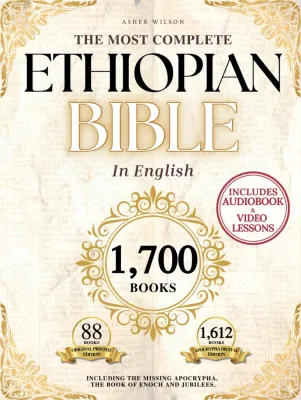
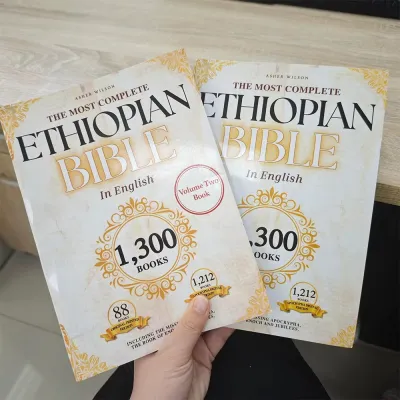

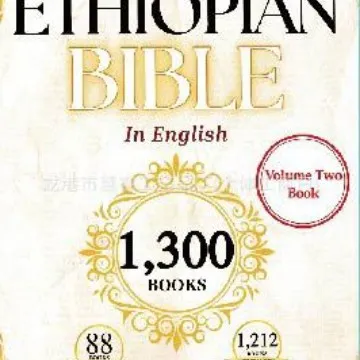
Prices are valid at publication and may change. Please refer to the product page for the latest price.
Within this tradition, scholars distinguish between two versions of the canon: the “narrow” canon (consisting of 81 books) and the “broader” canon (which can expand up to 88 books). The narrow canon is the most commonly referenced official list, while the broader canon includes additional administrative and historical texts. This flexibility exists because the Ethiopian tradition prioritizes the spiritual utility and historical preservation of ancient texts over a rigid, universally closed list.
Local traditions and early textual preservation played a massive role in shaping this collection. Because the Ethiopian church did not participate in the Western debates that excluded certain intertestamental writings, it preserved several ancient works that were lost or rejected elsewhere in the Christian world.
Canon Specifications: Comparing 88, 73, and 66 Books
To understand how these Bibles differ, it helps to look at the exact specifications of each major tradition. The Protestant Bible, which is widely used by evangelical and non-denominational churches, contains 66 books. This canon is divided into 39 Old Testament books (matching the Hebrew Bible) and 27 New Testament books.

The Catholic Bible, which is the standard for millions of Filipino Catholics, contains 73 books. This includes the same 27 New Testament books but features 46 Old Testament books. The seven additional books—referred to as the Deuterocanonicals—include texts like Tobit, Judith, Wisdom, Sirach, Baruch, and 1 and 2 Maccabees.
The Ethiopian Orthodox Bible expands both testaments significantly. In its broader form of 88 books, it includes unique Old Testament writings and several additional books in the New Testament, such as the Synodus (church order documents) and the Clement.
| Canon Tradition | Old Testament Books | New Testament Books | Total Books |
|---|---|---|---|
| Protestant | 39 | 27 | 66 |
| Catholic | 46 | 27 | 73 |
| Ethiopian Orthodox (Narrow) | 46 to 54 | 27 to 35 | 81 |
| Ethiopian Orthodox (Broader) | 54 | 34 | 88 |
Note: The exact division and grouping of books can vary depending on the publisher and the specific translation of the Ge’ez text.
Notable Texts: Unique Books in the Ethiopian Tradition
The most famous book unique to the Ethiopian Bible is the Book of Enoch (1 Enoch). While Western traditions view Enoch as apocryphal, the Ethiopian church considers it canonical scripture. The text is highly significant for its detailed angelology, descriptions of the cosmos, and messianic prophecies, some of which are quoted directly in the New Testament Epistle of Jude.
Another major inclusion is the Book of Jubilees. This text provides a detailed chronology of biblical history from the Creation to the Exodus, framed as a revelation given to Moses. It offers unique insights into early Jewish thought and biblical interpretations that are not found in Genesis.
The Ethiopian canon also includes the Books of Meqabyan (or Ethiopian Maccabees). It is crucial to note that these are entirely different from the 1 and 2 Maccabees found in Catholic Bibles. The Meqabyan focus on different historical figures and theological themes, emphasizing personal faithfulness under persecution.
Because naming conventions, book divisions, and translations vary widely, you should always check the table of contents of any edition you plan to study. Some modern English publications of the “Ethiopian Bible” only print the unique books, while others attempt to compile the entire broader canon.
Selecting and Verifying Bible Editions for Study
If you are looking to purchase an Ethiopian Bible for academic study or personal reflection, careful verification is essential. Many books marketed online as the “Ethiopian Bible” are actually partial collections or low-quality reprints of public domain translations. Always verify the publisher’s official table of contents and canon list before making a purchase.
Pay close attention to the translation language and the source texts. A reliable study edition should clearly state whether it was translated directly from the ancient Ge’ez manuscripts or if it relies on secondary translations. Look for academic publishers or recognized Orthodox presses to ensure textual accuracy.
Keep in mind that complete 88-book English translations are highly specialized academic publications. They are rarely found in standard mass-market bookstores and often carry a premium price, sometimes costing upwards of ₱1,500 to ₱3,000 for imported editions.
For readers in the Philippines, consulting local academic theological libraries or contacting specialized ecumenical networks can help you locate verified study materials. These institutions often have access to scholarly databases and physical copies of rare translations that can aid your research.
Frequently Asked Questions (FAQ)
Is the Ethiopian Bible the oldest complete Bible?
The claim that the Ethiopian Bible is the oldest complete Bible depends on how you define the term. The Ge’ez translation tradition is indeed ancient, dating back to the fourth and fifth centuries. Additionally, physical manuscripts like the Garima Gospels are among the oldest surviving illustrated Christian manuscripts in the world. However, the finalized list of 81 to 88 books was compiled over centuries, meaning other traditions may have older surviving physical copies of their respective, smaller canons.
Where can I buy or read an 88-book Ethiopian Bible in the Philippines?
Finding a physical copy of the complete 88-book Ethiopian Bible in local Philippine bookstores can be challenging. Your best option is to search specialized theological bookstores, academic libraries at major universities, or verified online marketplaces that import academic texts. When ordering online, always read the product description carefully to verify the exact book count, translation notes, and publisher credentials to avoid purchasing incomplete or poorly translated editions.

Community discussion
Share your experience or ask a question. Comments are reviewed before publication.