
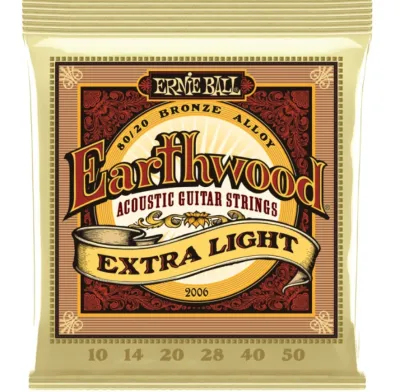
Ernie Ball Earthwood acoustic bass strings achieve their signature warm tone primarily through the physical properties of their 80/20 bronze wrap wire. This alloy, consisting of 80 percent copper and 20 percent zinc, is wrapped around a hexagonal steel core wire to create a string that balances structural tension with acoustic warmth. While brand-new strings of any material often exhibit a bright, metallic edge, the high copper content in 80/20 bronze allows the strings to settle quickly into a mellow, woody voice. This tonal shift is highly valued by acoustic bassists who want their instrument to deliver a deep, supportive low-end that mimics the natural resonance of a traditional upright bass.
In tropical environments like the Philippines, where high humidity and ambient warmth can rapidly alter the physical state of musical instruments, understanding how string materials interact with the air and your instrument is essential. The choice of string material directly influences how your acoustic bass projects in unplugged jam sessions, living room practices, or small acoustic gigs. By exploring the science behind 80/20 bronze, you can determine if this classic alloy aligns with your personal playing style and tonal preferences.
The Material Science Behind 80/20 Bronze Strings
To understand why Ernie Ball Earthwood strings produce a warmer acoustic bass tone, one must look at the metallurgy of the wrap wire. The 80/20 bronze alloy is technically a brass formulation, combining a high concentration of copper with a smaller portion of zinc. Copper is a relatively soft, dense, and highly ductile metal, while zinc adds structural strength and corrosion resistance. When wrapped around a high-carbon steel hex core, this softer outer wrap dampens the high-frequency vibrations that typically produce harsh, metallic overtones.
Products mentioned in this guide
88 Lazada user ratings
I am not familiar with string. I like to order 3x. But from the string was only 1 available in the shop. I asked the seller for similar stri…Read full reviewShow less
I am not familiar with string. I like to order 3x. But from the string was only 1 available in the shop. I asked the seller for similar string. He kindly sent me a selection in the chat. I ordererd but it was the wrong one. I like to change. Packet was still unopened. Their mngt decided that it is not possible. So pitty.
Every guitar player has a favorite string, especially for acoustic electric. For me, there is no better string than the Earthwood extra ligh…Read full reviewShow less
Every guitar player has a favorite string, especially for acoustic electric. For me, there is no better string than the Earthwood extra light. They don't wear down your fingers like sandpaper.And they're great for harmonics
the item is well packed and recieved in good condition. good quality for it's price. thank you seller
207 Lazada user ratings
High-quality materials, Enhances acoustic performance, Great sound quality, Excellent tone,
Great sound quality, Long-lasting strings, Enhances acoustic performance, Durable strings,
goods na goods! sobrang ganda talaga ng tunog pag ernie ball, crispy. ayos na ayos talaga!
Excellent tone, Excellent tone, Easy to play, Easy to play, Great sound quality,
💰Price:High-quality materials, Enhances acoustic performance,
Prices are valid at publication and may change. Please refer to the product page for the latest price.
The density of the copper-zinc alloy also plays a major role in how the string vibrates. Because copper is denser than the iron found in steel strings, an 80/20 bronze string of the same gauge carries more mass. This increased mass requires a specific amount of tension to bring the string up to pitch, resulting in a strong, stable fundamental vibration. However, because the outer wrap is physically softer than stainless steel or nickel, it does not reflect high-frequency energy as efficiently, naturally filtering out the bright, clattering transients that can make an acoustic bass sound thin.
Furthermore, the physical flexibility of the 80/20 wrap wire affects how the string responds to the player’s touch. The softer metal allows the string to bend and vibrate with a slightly rounder wave pattern when plucked. This physical behavior directly limits the production of upper-harmonic overtones, which are responsible for the metallic ring associated with electric bass strings. Instead, the energy of the pluck is concentrated into the lower-order harmonics, establishing a solid tonal foundation that supports the overall acoustic mix.
What Defines a "Warm Tone" on Acoustic Bass
In the context of acoustic bass performance, a warm tone is characterized by a strong emphasis on the fundamental pitch and the lower midrange frequencies. This frequency range, typically sitting between 80 Hz and 250 Hz, provides the body and depth of the bass note. A warm acoustic profile ensures that when you pluck a note, the listener hears a round, pillowy cushion of sound rather than a sharp, percussive click.

Another defining element of a warm tone is the natural roll-off of high-end frequencies. In electric bass playing, bright treble is often prized for slap techniques or cutting through dense rock mixes. For an acoustic bass, however, excessive high-end frequencies can sound brittle and expose finger noise, fret buzz, and pick clicks. A warm tone tames these sharp initial transients, smoothing out the attack phase of the note so that the transition from silence to sound is gentle and organic.
Finally, warm tones are associated with a specific decay and sustain profile. Rather than a long, ringing, metallic sustain, a warm acoustic bass note decays gracefully, leaving behind a woody resonance that mimics the natural acoustic properties of the instrument’s wooden body. This rapid decay of high-frequency overtones allows the fundamental note to remain clear and distinct, preventing the muddy buildup of frequencies when playing complex basslines or chordal passages.
Assessing Ernie Ball Earthwood Strings for Your Instrument
Before purchasing a set of Ernie Ball Earthwood strings, it is crucial to verify their physical specifications to ensure compatibility with your specific acoustic bass. Start by checking the product packaging for the exact string gauge, which typically ranges from light to medium sets. A heavier gauge will exert more tension on the neck but can yield a fuller, warmer tone, while a lighter gauge is easier on the fingers but may produce a slightly brighter sound with less acoustic projection.
You must also consider how your instrument’s construction will interact with these strings. The body size of your acoustic bass, the type of wood used for the soundboard (such as solid spruce or mahogany), and the internal bracing pattern all play a massive role in shaping the final sound. For instance, a large-bodied jumbo acoustic bass will naturally amplify the deep, warm characteristics of 80/20 bronze strings, whereas a compact, short-scale travel bass may require a heavier string gauge to achieve a similar level of low-end warmth and projection.
Once you install the strings, plan a practical play-test over several days to evaluate their performance. New 80/20 bronze strings will initially sound quite bright out of the box, but they will begin to settle and warm up after a few hours of active playing. During your test, pay close attention to the balance of volume across all four strings, the accuracy of the intonation up the neck, and how the physical texture of the roundwound wrap feels under your fingers. This trial period will help you decide if the physical response and evolving tonal profile match your musical requirements.
Comparing 80/20 Bronze to Other Common Bass String Alloys
To make an informed decision, it helps to compare 80/20 bronze against other common acoustic and electric bass string materials. The most common alternative is phosphor bronze, which includes a small amount of phosphorous in the alloy. Phosphor bronze strings generally deliver a brighter, more modern tone with a sharper high-end response that lasts longer than 80/20 bronze. If your goal is ultimate warmth and a vintage, woody character, 80/20 bronze is typically the preferred choice because it loses its initial metallic bite much faster.
If your acoustic bass is equipped with a magnetic pickup system—similar to those found on electric guitars—rather than a piezo pickup under the saddle, you must exercise caution. Bronze alloys are non-magnetic, meaning they will not interact efficiently with magnetic pickups, resulting in a weak, unbalanced output through an amplifier. In this specific scenario, nickel-plated steel or pure nickel strings are necessary to ensure proper signal projection, even though they lack the organic acoustic warmth of true bronze strings when played unplugged.
Your playing style should also dictate your choice of string material. Fingerstyle players who use the pads of their fingers generally benefit from the soft attack and rich low-end of 80/20 bronze, as it complements their natural touch. Conversely, if you prefer to play with a plectrum or pick, the sharp attack of the pick can sometimes clash with the mellow nature of worn-in 80/20 strings. Understanding these material trade-offs ensures you select the string that best supports your technique and your instrument’s pickup configuration.
Frequently Asked Questions (FAQ)
Do 80/20 bronze strings corrode faster than other alloys?
Yes, copper-zinc alloys like 80/20 bronze are highly susceptible to oxidation when exposed to moisture, sweat, and skin oils. In the humid tropical climate of the Philippines, this oxidation process can occur much faster, causing the strings to tarnish and lose their tone more quickly than they would in dry climates. To maximize the lifespan of your strings, always wipe them down thoroughly with a clean, dry microfiber cloth after every playing session, and store your acoustic bass in a high-quality gig bag or case with a silica gel pack to control humidity. Investing in a basic string cleaner or a set of replacement strings, which typically cost around ₱1,200 to ₱1,800 at local music stores, is a standard part of maintaining your instrument’s voice.
Will Earthwood strings fit a standard scale acoustic bass guitar?
Whether a set of Earthwood strings will fit your instrument depends entirely on your bass’s scale length and bridge design. Standard acoustic bass guitars typically feature a long scale length of 34 inches, but many models use medium or short scales. Always check the scale length specifications printed on the Ernie Ball packaging to ensure the strings are long enough to reach the tuning pegs. Additionally, verify that your bass uses standard ball-end strings, which are held in place by bridge pins, rather than tie-on strings, to avoid installation issues.
Community discussion
Share your experience or ask a question. Comments are reviewed before publication.