
The traditional gangsa, a flat-surfaced gong integral to the cultural identity and rituals of the Cordillera region in the northern Philippines, is more than a simple musical instrument. It is a vessel of history, community, and ancestral connection. When evaluating these gongs for purchase, study, or performance, the journey begins with understanding the raw metals from which they are forged. The two primary alloys used in contemporary and historical gangsa production are bronze and brass, each offering vastly different physical properties, cultural values, and acoustic profiles. The choice between these materials, combined with traditional hand-hammering techniques, directly dictates the instrument’s resonance, pitch stability, and suitability for authentic ensemble playing.
Understanding the Core Materials: Bronze vs. Brass in Gangsa Gongs
Bronze is an alloy composed primarily of copper combined with tin. Historically, this metal was highly prized and sourced through complex regional trade networks, making bronze gongs symbols of immense wealth, prestige, and social standing among families in the Cordillera. The addition of tin to copper increases the hardness of the metal, creating a rigid crystalline lattice structure. This physical rigidity is crucial because it allows sound waves to propagate efficiently through the material, giving bronze its signature structural durability and deep, carrying resonance. For authentic ceremonial ensembles, where gongs are played during vital rituals such as the peshit or community celebrations, bronze remains the traditional and culturally mandated standard.
In contrast, brass is an alloy of copper and zinc. It emerged as a more accessible and cost-effective alternative to bronze, particularly as global trade and industrial manufacturing made brass sheets and scrap metal more readily available. Zinc is a softer and less dense alloying element than tin, which significantly alters how the metal behaves under a hammer and how it vibrates when struck. While brass gongs are significantly easier to produce and far more affordable—making them excellent choices for school dance troupes, educational demonstrations, casual practice, or decorative display—they lack the deep cultural heritage and structural longevity of their bronze counterparts.
Products mentioned in this guide
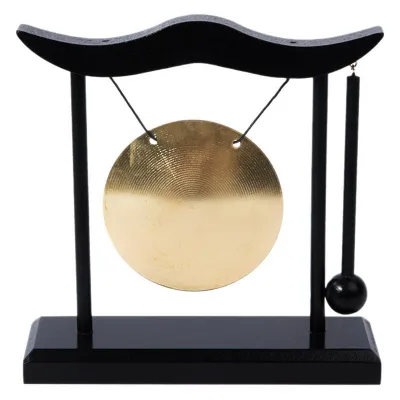
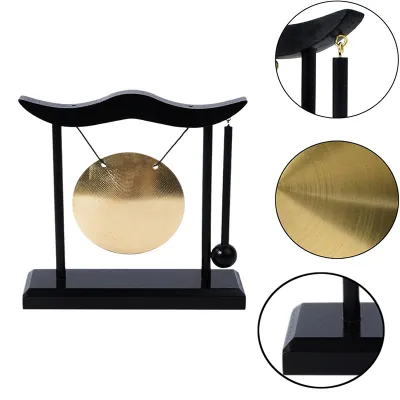
Prices are valid at publication and may change. Please refer to the product page for the latest price.
When navigating the market for a gangsa, buyers must exercise caution and look beyond basic product listings. Material names are frequently used loosely or inaccurately by general sellers, particularly on online marketplaces. An instrument labeled as a “traditional bronze gangsa” may actually be made of brass or a low-grade composite alloy. To ensure you are investing in a genuine instrument that matches your expectations, it is essential to verify the alloy composition through direct communication with the artisan, detailed product specifications, or documentation from reputable cultural institutions.
How Material Choices Shape the Sound and Resonance
The physical differences between bronze and brass translate directly into how these metals vibrate, shaping the unique voice of each gangsa gong. When a gangsa is struck, the energy of the impact sends vibrational waves rippling from the point of contact to the outer rim. The speed, decay, and frequency of these waves are entirely dictated by the density, stiffness, and internal friction of the chosen alloy, creating two highly distinct acoustic profiles.

A bronze gangsa is celebrated for its warm, deeply resonant, and complex acoustic signature. When struck with a wooden stick in the pat-tong style or slapped with the palm in the toppaya style, bronze produces a clear, powerful fundamental pitch accompanied by a rich tapestry of shimmering overtones. These overtones decay slowly, creating a long, singing sustain that fills the air. This complex sound profile is not merely an aesthetic preference; it is a functional necessity in traditional Cordillera music. In a standard ensemble, multiple gongs play interlocking rhythmic patterns, and the warm, sustained overtones of bronze blend harmoniously, creating a unified, hypnotic wall of sound rather than a collection of clashing notes.
A brass gangsa, on the other hand, delivers a much brighter, sharper, and more aggressive sound. The attack is immediate and metallic, but the sustain is noticeably shorter, with the sound decaying rapidly. The overtones produced by brass tend to be less complex and more directional, resulting in a thin, piercing timbre that stands out rather than blending. While this bright, punchy sound can be useful for solo practice or rhythmic drills where clarity of individual strikes is desired, it can sound jarring and discordant when mixed into an authentic ensemble of bronze gongs, disrupting the delicate acoustic balance of the group.
The density and elastic modulus of the alloy also dictate the instrument’s pitch stability and volume threshold. Bronze, being denser and more structurally resilient, can handle incredibly powerful strikes without detuning or distorting. It maintains its fundamental pitch even under the energetic physical demands of outdoor ritual dancing. Brass, being softer, can deform slightly over time under heavy, repetitive impacts, which can lead to pitch drift and a gradual degradation of the gong’s overall tonal quality. Understanding these acoustic boundaries allows you to select an instrument that aligns perfectly with your intended use, whether that involves professional performance, cultural preservation, or basic educational training.
The Role of Hand-Hammering and Traditional Forging Techniques
While the raw alloy provides the chemical foundation for a gangsa’s sound, the method of construction is what breathes life into the metal. Traditional gangsa making is a labor-intensive, highly specialized art form passed down through generations of blacksmiths, notably in specialized forging communities like those in Kalinga. The stark contrast between hand-hammered, hot-forged gongs and modern, factory-cast or machine-stamped alternatives represents the divide between a masterfully crafted musical instrument and a mass-produced novelty.
The traditional forging process begins by heating the alloy in a charcoal-fired hearth until it reaches a glowing, malleable orange state. Working quickly before the metal cools, the blacksmith and their apprentices use heavy iron hammers to beat the glowing disc, gradually drawing out the flat face and folding the outer edge to form the characteristic shallow rim. This cycle of heating and hammering is repeated dozens of times. This intense mechanical working does not just shape the gong; it fundamentally alters the metal on a molecular level. The repeated hammer blows compress the metal grains, eliminating microscopic air pockets and casting voids while aligning the crystalline structure of the alloy. This grain refinement increases the density and internal tension of the metal, which dramatically improves the gong’s resonance, projection, and structural durability.
In comparison, modern factory-cast gongs are made by pouring molten metal directly into a mold, leaving the metal to cool without any mechanical working. Cast metal retains a loose, unrefined grain structure that acts as a dampener to sound waves, resulting in a flat, dead tone that lacks complex overtones. Machine-stamped gongs, which are pressed out of cold, uniform sheets of commercial metal, lack the variable thickness and internal structural tension that a skilled blacksmith intentionally hammers into a traditional gangsa. These mass-produced pieces may look visually flawless and perfectly symmetrical, but they are acoustically sterile and lack the dynamic responsiveness required for traditional performance.
Identifying an authentic, hand-hammered gangsa requires a keen eye and a tactile appreciation for craftsmanship. Genuine hand-forged gongs display subtle, organic asymmetries and visible, overlapping hammer marks across their surfaces. These marks are not defects; they are the physical signature of the artisan’s hammer, showing how the metal was carefully coaxed into shape. The thickness of a hand-hammered gong will vary slightly from the center to the rim, a deliberate design feature that helps balance the distribution of high and low frequencies. When you run your hand across the surface, you should feel a varied, textured landscape that tells the story of its creation.
Evaluating Authenticity and Quality Before You Buy
Purchasing a traditional gangsa gong is a significant cultural and financial investment. Because these instruments are handcrafted by individual artisans rather than manufactured to rigid industrial standards, each piece is entirely unique. To ensure you receive a high-quality, authentic instrument that will perform beautifully and endure for years, you must approach the buying process with a structured evaluation framework.
Visual Inspection Begin by closely examining the physical surface of the gong under bright, indirect light. Look for the characteristic signs of hand-forging: organic, concentric, or radiating hammer facets across the face and rim. The transition where the flat face folds down into the shallow rim should be smooth and structurally continuous, showing no signs of cracking or thinning. Inspect the outer and inner surfaces for casting seams, mold lines, or perfectly uniform, mirror-like finishes, which are clear indicators of mass production or cold-stamping. Additionally, check the suspension holes on the rim; they should be cleanly drilled or punched, with smoothed edges to prevent the hanging cord from fraying.
Tactile Check Pick up the gangsa and hold it by its suspension cord to assess its weight and physical balance. A high-quality, hand-forged bronze gong should feel remarkably heavy and substantial for its size, reflecting the high density of the compressed metal. Pay close attention to how the instrument hangs. It should balance evenly, suspended straight down without tilting awkwardly to one side. An unbalanced gong is difficult to play, particularly in active dance styles where the performer must hold and strike the instrument while moving dynamically.
Sound Test The ultimate test of any gangsa is its voice. If you are inspecting the instrument in person, suspend it freely and strike it using a traditional wooden beater or the palm of your hand. Strike the center of the face first, then move outward toward the rim, listening carefully to the transition of tones. You are listening for a clear, resonant fundamental pitch accompanied by a rich, shimmering cloud of overtones that decay slowly and smoothly. There should be absolutely no buzzing, rattling, or sudden “dead spots” where the sound abruptly cuts out. If you are purchasing online, do not rely on generic audio samples; request a dedicated, unedited video of the seller striking the specific gong you intend to buy, showing both sides of the instrument during the test.
Seller Verification Engage the seller with specific, detailed questions about the instrument’s origin. Ask for the name of the artisan or the specific municipality in the Cordillera where the gong was forged. Inquire about the exact alloy composition and the specific forging techniques used. A reputable dealer or cultural advocate who works directly with indigenous smiths will be able to provide clear, detailed answers and may even offer documentation or photographs of the making process. Be highly wary of listings that use vague phrases like “indigenous style” or “traditional design” while failing to provide concrete details about the materials, the smith, or the geographic origin of the piece.
Caring for Your Gangsa to Preserve Its Tone
A traditional hand-forged gangsa is incredibly durable, but its acoustic properties and physical appearance are highly sensitive to environmental conditions and handling. Because these instruments are made of copper-rich alloys like bronze and brass, they are susceptible to oxidation, especially in the warm, humid tropical climate of the Philippines. Implementing a regular, gentle maintenance routine is essential to protect the metal and preserve the instrument’s rich resonance for generations.
For routine maintenance, the most effective tool is a clean, dry, lint-free microfiber cloth. After every playing session, gently wipe down the entire surface of the gong, including the inner rim. This simple step removes dust, environmental moisture, and the natural oils and acids left behind by human skin. If left on the metal, these skin oils can etch into the surface, leaving permanent, dark fingerprints that can eventually lead to localized corrosion and alter the surface tension of the playing area.
You must strictly avoid using commercial metal polishes, abrasive scrubbers, steel wool, or harsh chemical cleaners on your gangsa. While these products may temporarily make the metal shiny, they strip away the natural patina—the dark, protective layer of oxidation that naturally develops on bronze and brass over time. This patina is highly valued by cultural practitioners; it acts as a barrier against deeper, destructive corrosion and actually sweetens the tone of the instrument by dampening harsh, unwanted high-frequency metallic ring. Avoid using acidic home remedies like vinegar, calamansi juice, or lemon juice, as these can cause uneven chemical etching and permanently degrade the acoustic properties of the metal. If your gong develops severe green corrosion (verdigris) or structural damage, check the manufacturer’s care instructions if available, or stop and consult a professional instrument restorer before attempting any aggressive cleaning.
Proper storage is equally critical in preventing humidity-related damage. Store your gangsa in a dry, temperature-stable indoor environment away from direct sunlight, open windows, or concrete walls, which can transfer moisture. In highly humid regions, wrap the gong in a clean, dry cotton cloth or place it in a padded gig bag with several desiccant silica gel packets to absorb excess moisture. Always handle the instrument by its suspension cord or wooden grip rather than touching the primary playing surface, ensuring that the metal remains clean, dry, and acoustically vibrant.
Frequently Asked Questions (FAQ)
Is a brass gangsa suitable for traditional Cordillera ensemble playing?
While a brass gangsa is an excellent, cost-effective tool for individual practice, school demonstrations, or display, it is generally not suitable for authentic traditional Cordillera ensemble playing. Brass produces a much brighter, sharper sound with a rapid decay and thin overtones that do not blend harmoniously with the deep, warm, and sustained resonance of traditional bronze gongs. In an interlocking ensemble, a brass gong will often sound discordant and piercing, disrupting the collective acoustic tapestry. For authentic ensemble participation, cultural rituals, or professional performance, investing in a traditional hand-forged bronze gangsa is highly recommended to ensure proper harmonic balance.
How do I clean a bronze gangsa without ruining its natural patina?
To clean a bronze gangsa safely, stick to dry, non-abrasive methods. Use a soft, dry microfiber cloth to gently wipe away dust, moisture, and fingerprints after each use. Never use commercial brass or bronze polishes, steel wool, or acidic household ingredients like lemon juice, vinegar, or calamansi, as these harsh agents will strip away the protective patina and can permanently alter the metal’s acoustic properties. If the instrument has accumulated heavy dirt or green verdigris that cannot be removed with a dry cloth, check the maker’s care instructions first. If instructions are unavailable or if the corrosion is severe, stop and consult a professional instrument restorer to avoid causing irreversible damage to the metal’s surface tension and tone.
Community discussion
Share your experience or ask a question. Comments are reviewed before publication.