
Navigating the modern professional landscape in the Philippines requires more than just technical expertise. With the rapid rise of remote work, a booming business process outsourcing (BPO) sector, and highly competitive corporate environments in major urban hubs, professionals must constantly refine their soft skills to stand out. While formal education provides a foundation, continuous self-directed learning is often the key to climbing the corporate ladder or successfully transitioning into leadership roles. Reading a well-chosen career book can serve as a highly accessible and practical form of mentorship, offering structured frameworks to solve complex workplace challenges.
For many local professionals, the primary obstacle to career advancement is not a lack of ambition, but rather a lack of clear strategies to navigate workplace dynamics, manage heavy workloads, and build long-term financial security. By selecting the right books, you can systematically address these bottlenecks. This guide explores some of the most impactful self-help literature available, contextualizing their strategies for the local corporate environment and providing actionable advice on how to choose, purchase, and apply these concepts to your professional journey.
How to Choose the Right Career Book for Your Goals
Selecting the right career book requires a clear understanding of your current professional stage and the specific challenges you face. Purchasing a book simply because it is a bestseller often leads to unfinished reading or mismatched expectations. To make an informed decision, you should first assess whether you are in an entry-level position, a mid-management role, or preparing for executive leadership.
Products mentioned in this guide


Prices are valid at publication and may change. Please refer to the product page for the latest price.
Entry-level professionals generally benefit most from books focused on execution, fundamental productivity, and basic workplace communication. At this stage, the goal is to establish reliability and master daily tasks. Mid-level managers, on the other hand, face the friction of “managing up” to executives while simultaneously guiding their own teams. For these professionals, books on delegation, conflict resolution, and strategic communication are essential. Executive-level readers should prioritize high-level strategy, organizational psychology, and long-term vision.
Beyond your career stage, you must identify your specific skill gaps. If you consistently find yourself working late due to poor time management, a book on habit formation or deep focus is appropriate. If you struggle to voice your opinions in meetings or negotiate salary increases, prioritize literature on communication and negotiation. Clarifying these objectives beforehand prevents the accumulation of unread volumes and ensures that the time you invest in reading translates directly into professional growth.
Your daily routine and commute habits in the Philippines should also dictate the format of the book you choose. Urban professionals often face long, exhausting daily commutes in heavy traffic or on public transportation. If you spend hours transit-bound, audiobooks can transform idle time into productive learning sessions. However, if your goal is to study complex frameworks, highlight key passages, and take detailed notes, physical books or e-books are far more practical. Consider your daily environment and select a format that fits seamlessly into your lifestyle without adding unnecessary friction.
Best Self-Help Books for Key Career Challenges
To help you identify the most relevant reading material, the following selections are categorized by the primary professional challenges they address. Each recommendation includes an analysis of how its core concepts apply to local workplace dynamics, along with its practical limitations.

Building Consistent Productivity and Focus
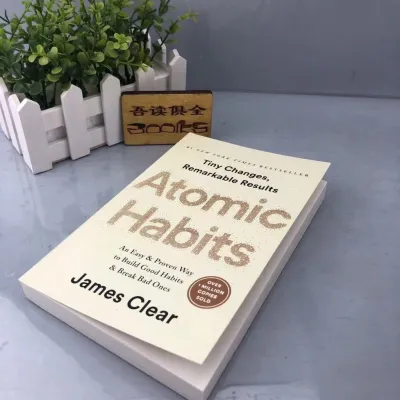
Managing demanding workloads while maintaining a healthy work-life balance is a significant challenge for local professionals, particularly those working in high-pressure industries or night-shift BPO roles. To build sustainable professional habits and protect your mental well-being, Atomic Habits by James Clear serves as an exceptional resource.
Clear’s framework focuses on the power of making small, 1% improvements daily, compounding into massive professional growth over time. He introduces the four laws of behavior change: make it obvious, make it attractive, make it easy, and make it satisfying. In a local corporate setting, where administrative overhead and sudden task reassignments can easily disrupt your schedule, these principles help you establish resilient routines. For instance, you can design your workspace to minimize digital distractions or pair a tedious administrative task with a rewarding habit, such as enjoying your favorite local coffee afterward.
While highly practical, the book does have limitations. Implementing these systems requires a high level of personal autonomy and consistent self-tracking. In highly micromanaged work environments where shift schedules fluctuate constantly, maintaining rigid daily habits can be exceptionally difficult. Nevertheless, the book is highly recommended for individual contributors and remote professionals who need to build self-discipline and structure their workdays independently.
Mastering Workplace Communication and Negotiation
Local workplace culture heavily values interpersonal harmony, often referred to as pakikisama. While this fosters a collaborative atmosphere, it can also make direct communication, conflict resolution, and salary negotiation highly challenging. Professionals often choose silence over healthy confrontation to avoid causing offense. To navigate these delicate dynamics, Crucial Conversations: Tools for Talking When Stakes Are High by Kerry Patterson, Joseph Grenny, Ron McMillan, and Al Switzler offers invaluable guidance.
The book provides a step-by-step methodology for handling high-stakes discussions where opinions vary and emotions run high. It teaches readers how to create psychological safety, monitor their own emotional reactions, and express controversial opinions persuasively without provoking defensiveness. For a professional in a hierarchical corporate structure, these tools are essential when managing up, presenting ideas to senior leaders, or addressing performance issues within a team.
However, readers should note that the structured, highly verbal dialogues presented in the book are modeled on Western corporate communication styles. In some traditional local environments, applying these techniques too rigidly may still be perceived as overly direct or confrontational. To succeed, you must adapt the book’s core principles—such as establishing mutual purpose and mutual respect—while maintaining a tone that respects local cultural norms. This book is ideal for anyone who finds themselves avoiding difficult workplace discussions or struggling to advocate for their career progression.
Developing Leadership and Strategic Thinking
Transitioning from an individual contributor to a management role is one of the most difficult steps in a professional career. In the Philippines, this transition is often complicated by the need to manage former peers, which requires balancing personal friendships with professional authority. The Making of a Manager by Julie Zhuo provides a highly practical roadmap for navigating this shift.
Zhuo, a former tech executive, demystifies the managerial role by breaking it down into three core dimensions: people, process, and purpose. She offers concrete advice on how to run effective meetings, deliver constructive feedback, hire and mentor junior staff, and align team goals with broader organizational objectives. Her empathetic, structured approach helps new leaders overcome imposter syndrome and understand that management is a distinct skill set that must be learned, rather than an innate talent.
The primary limitation of this book is its strong orientation toward modern, fast-paced technology companies. Some of the agile frameworks and rapid feedback loops discussed may require significant modification before they can be successfully implemented in highly bureaucratic corporate environments, family-owned conglomerates, or government offices. Despite this, the foundational lessons on human management and team alignment make it an essential read for newly promoted team leads and aspiring managers.
Navigating Career Transitions and Financial Growth
True career advancement is closely linked to personal financial stability. As professionals earn higher salaries, they often face lifestyle inflation or significant pressure to financially support extended family members, which can limit their professional flexibility and prevent them from taking calculated career risks. The Psychology of Money by Morgan Housel bridges the gap between professional growth and long-term financial security.
Housel explores how personal behavior, emotions, and unique life experiences drive financial decisions, rather than mathematical formulas. He emphasizes that doing well with money is less about intelligence and more about behavior. Key concepts include understanding the difference between being rich (having a high current income) and being wealthy (having unspent assets that offer freedom and flexibility). For a professional considering a major career pivot, starting a side business, or negotiating a contract, having a robust financial cushion provides the ultimate leverage: the control over your own time.
It is important to clarify that this book focuses strictly on behavioral mindsets and high-level financial frameworks. It does not provide specific local investment advice, tax strategies, or guides to local financial instruments. Readers must take these universal psychological principles and apply them to local financial options. This book is highly recommended for mid-career professionals who want to ensure their rising income translates into genuine, long-term financial independence.
Quick Comparison of Recommended Career Books
To help you quickly identify which book best aligns with your current professional needs, the table below summarizes the key focus areas, ideal reader profiles, and primary takeaways for each recommended title.
| Book Title | Primary Focus Area | Ideal Reader Profile | Key Actionable Takeaway |
|---|---|---|---|
| Atomic Habits by James Clear | Habit formation, productivity, and personal systems | Professionals struggling with consistency, time management, or burnout | Focus on designing systems that make positive habits easy and negative habits difficult. |
| Crucial Conversations by Patterson et al. | High-stakes communication and conflict resolution | Professionals navigating difficult team dynamics or salary negotiations | Establish psychological safety first to allow for honest, constructive dialogue. |
| The Making of a Manager by Julie Zhuo | Team leadership, delegation, and feedback systems | Newly promoted managers and aspiring team leaders | Shift your focus from individual output to maximizing the collective outcome of your team. |
| The Psychology of Money by Morgan Housel | Behavioral finance, wealth building, and mindset | Professionals seeking to align career success with financial freedom | Prioritize building wealth over displaying riches to gain control over your time. |
Buying Guide: Formats, Editions, and Where to Shop
Once you have identified the right book for your career goals, the next step is ensuring you purchase an authentic, complete edition in a format that suits your learning style. The local book market offers several options, each with distinct advantages and trade-offs.
- Physical Books (Paperback or Hardcover): These provide a tactile reading experience that aids retention and allows for easy physical annotation. However, physical books are susceptible to tropical humidity, which can cause paper yellowing or mold over time. They typically retail between ₱500 and ₱1,500 in major local bookstores.
- E-books: Highly portable and resistant to environmental damage, e-books are ideal for professionals who read during their daily commute. They allow for instant dictionary lookups and digital highlighting. Ensure your e-reader or tablet is compatible with standard file formats such as EPUB or PDF before purchasing.
- Audiobooks: Perfect for multitasking during long commutes or household chores, audiobooks allow you to absorb concepts without screen fatigue. However, they make active note-taking and referencing specific diagrams or frameworks highly difficult.
When purchasing, always verify that you are buying the latest revised edition. Authors frequently update their work to include modern case studies, digital workplace trends, and updated research. This is particularly important for books focusing on leadership and communication, where modern remote-work dynamics may have been integrated into newer editions.
To ensure you receive an authentic copy, purchase exclusively from established, authorized local physical bookstores or their verified official online storefronts. The local digital marketplace is heavily flooded with unauthorized, pirated physical reprints and illegal PDF distributions. These counterfeit copies are often priced suspiciously low (e.g., under ₱200) and frequently suffer from blurry text, missing pages, poor binding, and incorrect formatting. Buying from authorized sellers guarantees that you receive a complete, high-quality text while supporting the authors and publishers.
Finally, if you prefer digital formats or audiobooks, pay close attention to regional licensing restrictions. Some international digital storefronts restrict access to certain titles based on your billing address or IP location. Verify that your digital accounts are correctly configured for the local region to avoid purchase failures or compatibility issues with your devices.
Frequently Asked Questions (FAQ)
Are audiobooks as effective as physical books for career learning?
Audiobooks are highly effective for absorbing high-level conceptual frameworks, motivational content, and narrative-driven business case studies. They are particularly valuable for maximizing productivity during long daily commutes or routine tasks. However, for books that feature complex diagrams, step-by-step exercises, or dense strategic frameworks, physical books or e-books are generally superior. These visual formats allow you to easily pause, highlight, take notes, and refer back to previous chapters, which is essential for deep study and long-term retention of complex concepts.
How can I apply global self-help concepts to a local corporate environment?
Applying international career advice to a local workplace requires careful cultural translation. Many Western self-help books advocate for direct assertiveness, individualistic promotion, and flat organizational structures, which can clash with traditional local values like pakikisama (interpersonal harmony) and respect for hierarchical authority. To adapt these concepts successfully, start by testing small, low-risk changes. For instance, when implementing assertive communication, frame your feedback as collaborative problem-solving aimed at supporting the team’s collective goals, rather than an individual confrontation. Focus on building strong, trust-based professional relationships first, as personal trust is the foundation of professional influence in the local corporate landscape.
Community discussion
Share your experience or ask a question. Comments are reviewed before publication.