
Finding the right marching drumsticks is a critical first step for any aspiring percussionist joining a school drumline or community band in the Philippines. For beginners, the promark marching stick lineup offers some of the most reliable, durable, and scientifically matched options on the market. Selecting the ideal pair depends on your specific playing environment, your physical build, and the material composition of the sticks.
To get started immediately, the ProMark Systematic Approach Series stands out as the best overall choice for snare drum beginners due to its balanced weight distribution and educator-approved specifications. For heavy outdoor rehearsals under the tropical sun, the robust ProMark Standard Hickory series provides unmatched durability. Meanwhile, younger players or those practicing primarily indoors will benefit from the lightweight, responsive feel of ProMark Maple marching sticks.
Why ProMark Is a Trusted Choice for Beginning Marching Percussionists
ProMark, a brand under the D’Addario family, has earned a global reputation among marching percussionists for its rigorous manufacturing standards and technological innovation. When you are first learning to play, consistency is your most valuable asset. If your left stick feels heavier or sounds lower in pitch than your right stick, your brain will struggle to develop a balanced, symmetrical hand technique.
Products mentioned in this guide
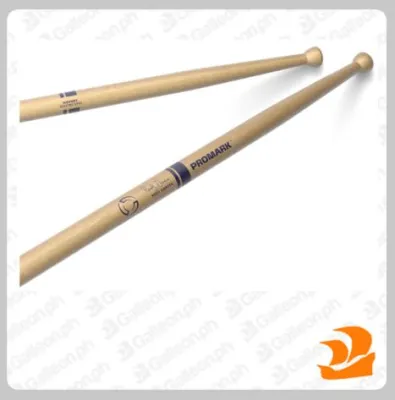
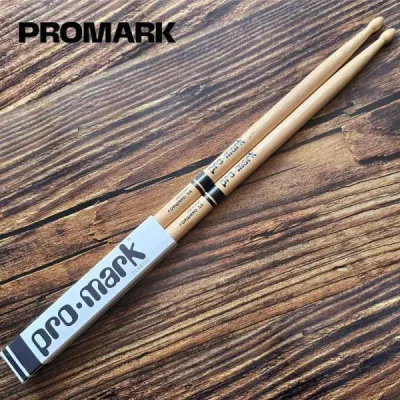
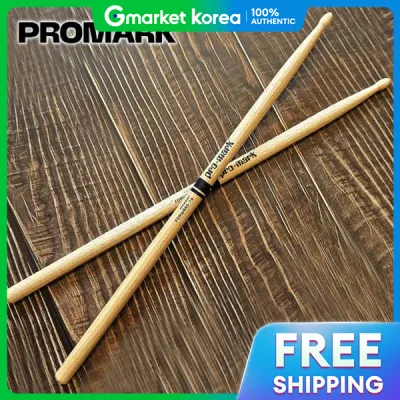
Prices are valid at publication and may change. Please refer to the product page for the latest price.
ProMark addresses this challenge by utilizing state-of-the-art weight-sorting and pitch-matching processes in their production facilities. Every single pair of ProMark marching sticks is matched within incredibly tight tolerances before being packaged. The company uses advanced sensors to measure the natural resonant frequency of each wood dowel, grouping sticks that sound identical.
They also weigh each stick to ensure that the physical balance remains uniform across the pair. For a beginner practicing complex rudiments like double-stroke rolls or paradiddles, this means both hands receive identical sensory feedback. You can focus entirely on your grip, stroke height, and timing without compensating for physical discrepancies in your gear.
Key Factors to Consider When Choosing Your First Marching Stick
Before purchasing your first pair of marching sticks, it is essential to understand how physical dimensions influence playability. Marching sticks are significantly larger and heavier than standard drum set sticks because they must project sound across open athletic fields and cut through the noise of brass and woodwind sections. The primary specifications to evaluate are weight, balance, taper length, and bead shape.

Weight and wood density determine how much effort is required to initiate a stroke and control the rebound. Heavier sticks produce a fuller, more robust tone from high-tension marching snare heads, but they can quickly fatigue a beginner’s wrists if the player’s grip strength is not yet fully developed. Balance refers to where the center of gravity lies along the shaft; a front-heavy stick naturally falls into the drumhead with more force, aiding in volume, whereas a rear-heavy stick feels lighter in the hand and offers quicker maneuverability.
The taper is the sloping section of the stick that narrows from the shaft down to the neck. A short taper keeps more weight toward the front of the stick, maximizing power and durability, which is excellent for loud outdoor performances. A long taper allows for a more delicate, springy rebound, making it easier to execute fast, quiet passages, though it is slightly more susceptible to breaking under heavy rimshots.
Bead shape plays a vital role in defining the stick’s sonic footprint. Round beads produce a bright, highly consistent sound regardless of the angle at which the stick strikes the head. Barrel and acorn beads provide a larger contact area, yielding a deeper, warmer tone with massive projection. For beginners, a round or large oval bead is highly recommended because it is more forgiving of slight variations in hand angles during early technical development.
Top ProMark Marching Stick Recommendations for Beginners
Selecting the perfect stick requires matching these technical specifications to your physical needs and musical environment. ProMark offers tailored solutions designed to support beginners through their initial learning stages while surviving the demanding conditions of marching rehearsals.
Best Overall for Snare Drum Beginners: ProMark Systematic Approach Series
The ProMark Systematic Approach Series, featuring models like the PS101, is engineered specifically to meet the pedagogical needs of marching percussion students. These sticks feature a highly balanced profile that encourages proper hand mechanics and traditional grip development. By avoiding extreme weight distributions, they allow beginners to feel the natural rebound of the drumhead without forcing their wrists to do excessive work.
Educators frequently recommend this series for entire school drumlines because of its predictable performance. The medium taper and comfortable diameter provide a secure grip for students of varying hand sizes. This uniformity makes it easier for instructors to teach clean, synchronized hand movements across the entire snare line.
However, players should note that these balanced sticks are optimized primarily for technical development and indoor or mid-volume practice. If your marching band performs exclusively on massive outdoor fields without amplification, you may find that the Systematic Approach series lacks the raw, heavy projection of specialized outdoor sticks. For early training and technical precision, though, they remain unmatched.
Best for Durability and Outdoor Projection: ProMark Standard Hickory Marching Sticks
For beginners who find themselves practicing on high-tension Kevlar heads during long, grueling outdoor rehearsals, the ProMark Standard Hickory Marching Sticks are the ultimate workhorse. Hickory is the most popular wood choice for drumsticks due to its natural resilience, density, and exceptional shock absorption. When you are learning to play rimshots or executing high-velocity accent patterns, hickory dampens the vibration traveling back into your hands, reducing physical fatigue and the risk of strain.
Models within this category, such as the TXDC17 or TXDC12, feature robust profiles with short, thick tapers designed to withstand heavy impact. The added weight of hickory helps beginners pull a deep, resonant sound out of stiff marching drumheads without having to over-exert their arms. This natural power makes it much easier to project your playing to the press box during halftime shows.
The primary trade-off with heavy hickory sticks is their physical weight. Beginners with smaller hands or limited wrist strength may find them tiring to play for extended periods. It is crucial to monitor your hand tension when using these sticks; if you find yourself gripping too tightly to control the extra weight, you may need to switch to a lighter pair temporarily to avoid developing bad habits or wrist strain.
Best for Indoor or Lighter Playing: ProMark Maple Marching Sticks
If you are a younger student, have smaller hands, or primarily perform in indoor drumlines and concert band crossovers, ProMark Maple Marching Sticks offer an excellent alternative. Maple is significantly less dense than hickory, resulting in a stick that is roughly 15 to 20 percent lighter while maintaining the same large physical diameter. This allows beginners to practice proper marching stick grip and finger control without struggling against heavy physical weight.
The lighter weight of maple provides a very fast, agile response and a brighter, more delicate tone on the drumhead. This makes it much easier to play intricate, fast-tempo rudiments indoors where acoustics can easily become muddy. It is also a fantastic transitional tool for students moving from standard drum set sticks to the larger dimensions of marching gear.
The main limitation of maple is its durability. Because it is a softer wood, maple marching sticks will wear out, chip, and splinter much faster than hickory, especially when subjected to consistent rimshots on hard Kevlar heads. If you are practicing outdoors or playing in a high-impact drumline, maple sticks should be reserved for low-volume technical practice rather than full-force field rehearsals.
Navigating Wood Choices in the Philippine Tropical Climate
The tropical climate of the Philippines presents unique challenges for wooden musical instruments, and marching drumsticks are no exception. High relative humidity, which regularly exceeds 80 percent throughout the year, combined with sudden temperature shifts, can drastically alter the physical properties of your sticks. Wood is a hygroscopic material, meaning it naturally absorbs and releases moisture to match its surrounding environment.
Hickory is relatively resilient to these changes due to its dense, tight grain structure. While it handles humidity well and retains its structural integrity, prolonged exposure to moisture can still cause hickory sticks to feel slightly heavier and lose some of their crisp, bright resonance. Maple, being a softer and more porous wood, is highly sensitive to moisture absorption. In high-humidity environments, maple sticks are much more prone to warping, which ruins their straightness and makes them unusable for precise marching play.
To protect your investment and ensure your sticks last as long as possible, proper storage is essential. Never leave your drumsticks in a hot car, tricycle sidecar, or school band room that lacks climate control, as extreme heat will bake the moisture out of the wood unevenly, leading to severe warping and cracking. Always store your sticks in a dedicated, padded stick bag when not in use, and keep them in a cool, dry room inside your home. If your sticks do get damp from an outdoor rehearsal during the rainy season, wipe them down thoroughly with a dry microfiber cloth and let them air-dry slowly at room temperature away from direct sunlight.
Where to Buy and What to Verify Before Purchasing
When shopping for ProMark marching sticks in the Philippines, it is crucial to purchase from authorized local music retailers, established physical music shops, or reputable online marketplaces. Because ProMark is a premium brand, counterfeit sticks made from cheap, low-grade woods are common in unauthorized online listings. These counterfeits look identical at a glance but break easily, lack proper weight matching, and can cause hand fatigue due to poor balance.
Before you finalize your purchase or as soon as your package arrives from an online order, run through a quick quality verification checklist:
- The Roll Test: Place both sticks on a completely flat surface, such as a glass table or a smooth counter, and roll them gently with your hand. If a stick wobbles, hops, or shows any visible gap between the wood and the surface as it turns, it is warped and should be returned immediately.
- Grain Inspection: Look closely at the wood grain running down the shaft of the stick. The grain lines should run straight from the butt end all the way to the tip. Grain that runs diagonally or exits the side of the stick (known as grain run-out) creates weak points that are highly susceptible to splitting during rimshots.
- Surface Finish: Run your fingers along the entire length of the stick. The finish should be completely smooth, free of rough patches, splinters, or deep grain pits. A smooth lacquer or active-grip finish prevents blisters and ensures a comfortable, secure hold during long playing sessions.
Frequently Asked Questions (FAQ)
How often should a beginner replace their marching sticks?
A beginner should replace their marching sticks as soon as they show signs of structural compromise, such as deep chipping along the shoulder from rimshots, a cracked or flattened bead, or a noticeable change in the stick’s pitch and balance. For a student practicing three to five hours a week, a high-quality pair of hickory sticks will typically last between two to four months of regular use. Continuing to play with cracked or severely worn sticks is highly discouraged, as it ruins your rebound control, alters your muscle memory, and can easily puncture or damage expensive marching drumheads.
Can I use regular drum set sticks for marching band practice?
While you can technically use drum set sticks (like a standard 5A or 7A) to practice rudiments on a rubber pad, you should never use them for actual marching band rehearsals or performances. Drum set sticks are much smaller, thinner, and lighter, meaning they cannot produce the volume or projection required to cut through an outdoor band. Furthermore, using thin sticks on high-tension marching snare drums can cause immediate wrist fatigue because the sticks lack the mass needed to absorb the intense shock of the rebound. This mismatch can lead to poor technique development and even physical injury over time.
Community discussion
Share your experience or ask a question. Comments are reviewed before publication.