
Quick Answer: Which Book Should You Read First?
If you want to overcome limiting beliefs, build mental discipline, and establish a clear purpose in life, you should read the Think and Grow Rich book first. If you already have the drive to succeed but lack practical knowledge about how money works, how to read a basic financial statement, or how to build cash-flowing assets, you should start with Rich Dad Poor Dad.
Napoleon Hill’s Think and Grow Rich focuses almost entirely on the psychological foundation of wealth, arguing that all achievement begins with a burning desire and a structured mindset. Conversely, Robert Kiyosaki’s Rich Dad Poor Dad introduces the fundamental mechanics of financial literacy, contrasting the habits of those who work for a salary with those who acquire income-generating assets.
These two books are not competing philosophies but rather complementary phases of a complete financial education. Developing a wealth-building mindset is necessary to sustain the discipline required for long-term financial planning, while understanding financial mechanics ensures that your ambition is channeled into productive, risk-managed investments.
Products mentioned in this guide
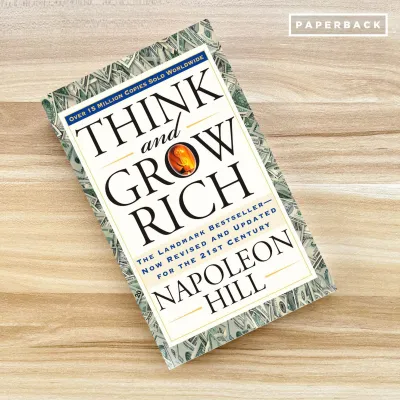
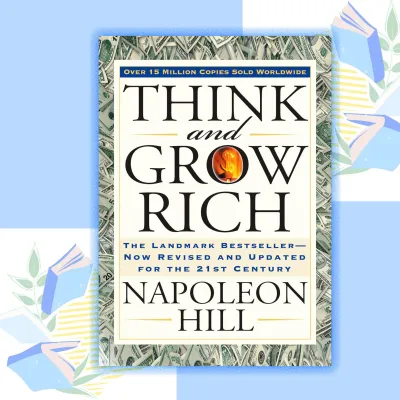
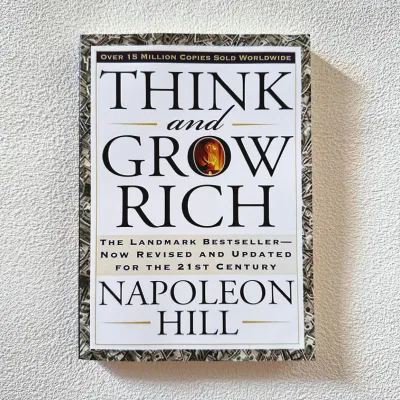
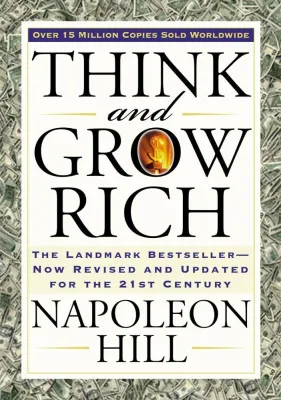
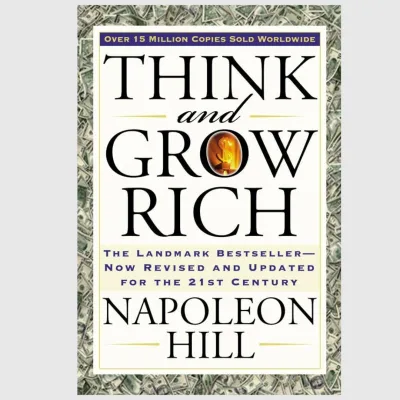
Prices are valid at publication and may change. Please refer to the product page for the latest price.
Core Philosophies: Mindset vs. Financial Mechanics
The foundational premise of the Think and Grow Rich book is that thoughts are physical forces capable of shaping your material reality. Napoleon Hill outlines a philosophy centered on thirteen principles, which include cultivating a definite major purpose, utilizing autosuggestion to program the subconscious mind, and forming a mastermind alliance with like-minded individuals. The book argues that financial poverty or abundance is primarily a reflection of one’s internal mental state, requiring deep self-analysis to root out fear, indecision, and doubt before any physical wealth can accumulate.

This psychological approach emphasizes that without a clear, unwavering goal, any attempt to build wealth will falter at the first sign of adversity. Hill teaches readers to view temporary defeat not as failure, but as an instruction to refine their plans, making persistence a core pillar of his philosophy.
In contrast, Rich Dad Poor Dad shifts the focus from the subconscious mind to the balance sheet. Robert Kiyosaki centers his philosophy on a simple, unconventional definition of assets and liabilities: an asset is anything that puts money into your pocket, whereas a liability is anything that takes money out of your pocket. He challenges traditional societal expectations, such as the belief that a primary residence is a financial asset, arguing instead that it is a liability due to the continuous cash outflows required for maintenance, taxes, and mortgage payments.
Kiyosaki’s core message is that the wealthy do not work for money; instead, they make money work for them by acquiring assets like real estate, businesses, and paper investments. He criticizes the traditional educational system for failing to teach basic financial literacy, leaving individuals trapped in a cycle of working harder to pay rising taxes and debts.
These two philosophies complement each other by addressing different stages of personal growth. A reader must first adopt the persistence and clarity of purpose taught by Hill to withstand the risks and setbacks associated with acquiring the assets recommended by Kiyosaki. Without the mental fortitude to manage fear, the practical financial strategies of asset accumulation are rarely executed successfully.
Readability and Actionability for Beginners
The reading experience of these two classics differs significantly due to their historical contexts and writing styles. Written in 1937, Think and Grow Rich employs a formal, academic, and slightly archaic prose style characteristic of early 20th-century American literature. The sentence structures are dense, requiring focused concentration, and the historical anecdotes focus on industrial-era figures like Andrew Carnegie and Henry Ford.
The actionable steps in Hill’s book are highly structured but abstract, focusing on mental exercises. For example, readers are instructed to write down a precise statement of the amount of money they intend to acquire, establish a strict target date, and recite this statement aloud twice daily to influence their subconscious mind.
Rich Dad Poor Dad, published in 1997, offers a highly accessible, conversational narrative. Kiyosaki uses the story of his two fathers—his biological father, an educated school superintendent who struggled financially, and his friend’s father, an entrepreneurial high school dropout who became wealthy—to illustrate complex financial concepts. The book uses simple diagrams of income statements and balance sheets, making it exceptionally easy for beginners to grasp how cash flows through different financial structures.
The action steps in Kiyosaki’s work are more tangible, encouraging readers to immediately begin tracking their personal cash flow, reducing unnecessary liabilities, and seeking out educational opportunities in real estate or small business. However, some of the specific investment strategies mentioned, such as complex real estate transactions, are highly simplified and require significant caution and further study before execution.
Beginners may find the historical examples in Hill’s book outdated, as they do not account for modern digital careers or contemporary financial systems. Meanwhile, Kiyosaki’s conversational tone can sometimes lead to oversimplification, meaning readers must treat his anecdotes as conceptual guides rather than literal, step-by-step investment instructions.
Applying the Lessons in the Philippines
Translating these Western financial concepts to the local economic and cultural landscape of the Philippines requires careful adaptation. For instance, Kiyosaki’s heavy emphasis on real estate investment must be viewed through the lens of local property laws, high interest rates, and financing structures. Acquiring rental properties in the Philippines involves navigating specific legal frameworks like the Condominium Act, paying local transfer taxes, and managing property maintenance in a tropical climate prone to humidity and seasonal weather disruptions.
Similarly, starting a business to build assets requires understanding the local regulatory environment, which involves registering with the Department of Trade and Industry (DTI) for sole proprietorships or the Securities and Exchange Commission (SEC) for corporations, alongside securing local barangay and municipal permits.
When applying the mindset principles of the Think and Grow Rich book, Filipino readers must balance individual ambition with deep-seated cultural values. The concept of utang na loob (debt of gratitude) and strong family financial expectations often mean that personal wealth accumulation is intertwined with supporting extended family members. While Hill advocates for individual focus and personal desire, local readers can successfully adapt this by aligning their “definite major purpose” with the welfare of their family and community, turning the cultural spirit of bayanihan (communal unity) into a collaborative mastermind alliance.
Additionally, the high cost of borrowing and the volatility of local investment markets mean that financial decisions carry significant consequences. Readers should never treat the general advice in these books as a substitute for professional guidance.
Before executing any specific investment strategy, business venture, or tax-planning method described in either book, always verify current local financial regulations and tax laws. Consult a licensed financial planner, a certified public accountant, or a qualified legal professional in the Philippines to ensure compliance with local statutes.
Decision Framework: How to Choose Your Starting Point
To determine which book best fits your immediate needs, consider your current financial literacy level and personal development goals.
Choose Think and Grow Rich if:
- You struggle with self-doubt, procrastination, or a lack of clear direction in your career or personal life.
- You want to build a resilient mental attitude, improve your self-discipline, and learn how to focus your thoughts on a single, long-term objective.
- You appreciate classic, philosophical literature and do not mind reading dense, formal prose with historical references.
Choose Rich Dad Poor Dad if:
- You want a straightforward, easy-to-understand introduction to basic accounting, cash flow, and financial literacy.
- You are looking to challenge traditional assumptions about employment, homeownership, and the difference between assets and liabilities.
- You prefer a modern, conversational writing style that uses storytelling and simple diagrams to explain financial concepts.
Read both if:
- You want to build a comprehensive foundation for your financial journey. The most effective sequence is to read Think and Grow Rich first to establish the necessary drive, discipline, and mental clarity, followed by Rich Dad Poor Dad to learn the practical financial rules and asset-building strategies needed to channel that drive.
When purchasing these books, it is essential to verify the edition, language, and authorized source to ensure you receive a complete and accurate text. Unregulated online marketplaces often host unauthorized, poorly printed, or heavily abridged versions that omit crucial chapters or contain numerous typographical errors. Look for reputable, authorized physical bookstores or verified digital platforms to make your purchase.
If you prefer digital formats, verify the file format, device compatibility (such as Kindle or specific e-reader applications), and any regional restrictions that might apply to digital editions in Southeast Asia. For those who choose physical copies, keep in mind that the tropical climate in the Philippines brings high humidity; store your books in well-ventilated areas away from direct sunlight to prevent the pages from yellowing, warping, or developing mold over time.
Frequently Asked Questions (FAQ)
Is the Think and Grow Rich book still relevant today?
Yes, the core psychological and behavioral principles of the book remain highly relevant. While the historical examples focus on early 20th-century industrial magnates, the fundamental concepts of goal setting, persistence, autosuggestion, and overcoming fear are timeless. Modern readers should focus on extracting the underlying mental frameworks and behavioral disciplines rather than trying to replicate the specific historical business models described in the text.
Do I need a business background to understand Rich Dad Poor Dad?
No, you do not need any prior business or financial background to understand the book. It was specifically written for beginners and laypersons, using simple analogies, personal anecdotes, and basic diagrams to explain financial concepts. The book serves as an introductory primer to shift your perspective on money, rather than an advanced technical manual on accounting or corporate finance.
Community discussion
Share your experience or ask a question. Comments are reviewed before publication.