
Quick Answer: Which Wealth Book Should You Read First?
Choosing between these two classic wealth-building books depends on your current financial literacy and immediate personal goals. If you are starting from scratch and need to transform how you view money, assets, and daily spending, you should read Rich Dad Poor Dad first. Robert Kiyosaki’s work provides a straightforward framework that dismantles traditional ideas about employment and teaches the basic mechanics of cash flow.
If you already understand basic budgeting, saving, and the difference between an asset and a liability, but you struggle with execution, self-doubt, or lack a clear long-term vision, you should start with Think and Grow Rich. Napoleon Hill’s masterpiece focuses on the psychological resilience, goal-setting discipline, and entrepreneurial mindset required to scale a business or achieve massive financial targets. For most readers, starting with Kiyosaki builds the practical vocabulary of money, while following up with Hill provides the mental drive to execute those financial concepts.
Core Philosophies: Psychological Mindset vs. Financial Mechanics
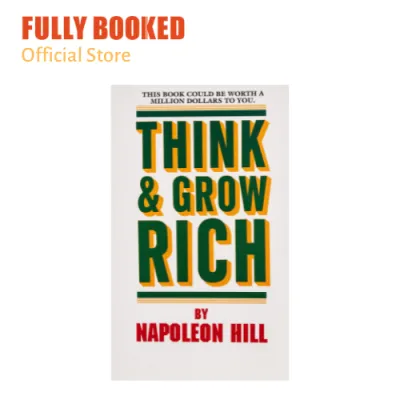
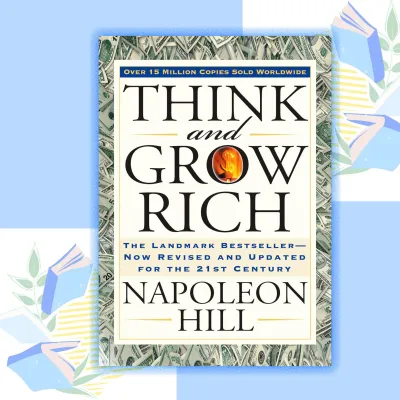
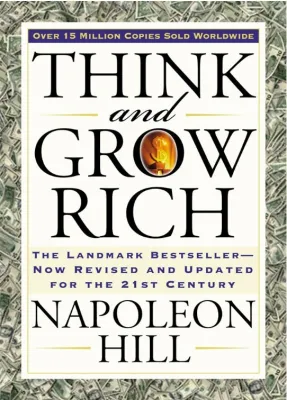
To choose the right book, you must understand the distinct philosophical foundations of each author. Napoleon Hill’s Think and Grow Rich, first published in 1937, operates on the premise that wealth begins as a state of mind. Hill spent over two decades studying the most successful individuals of his era to distill their achievements into thirteen core principles. The book argues that thoughts are physical forces capable of attracting material wealth when combined with a definite purpose and persistent action.
Products mentioned in this guide
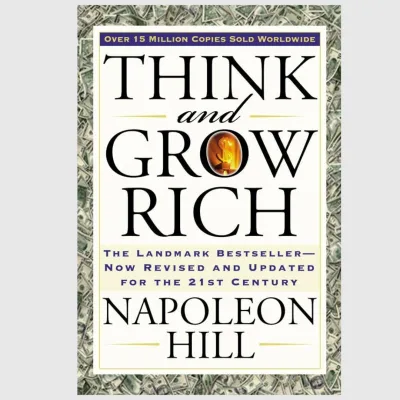
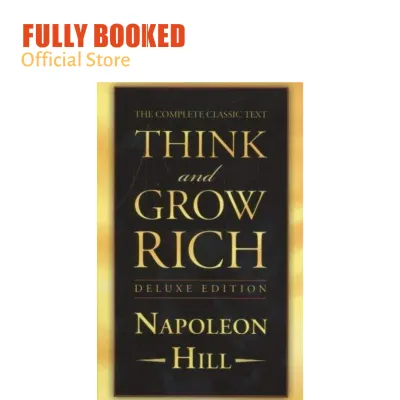
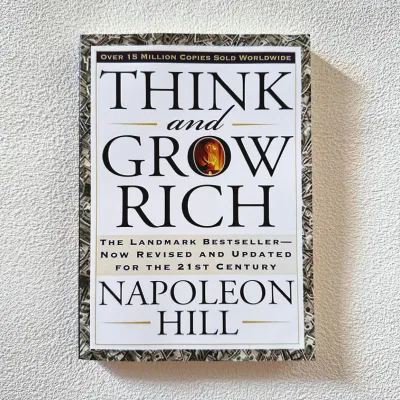
Prices are valid at publication and may change. Please refer to the product page for the latest price.

Key themes in Hill’s philosophy include the “Definiteness of Purpose,” which requires you to identify an exact financial goal and create a detailed plan to achieve it. He also introduces “Autosuggestion,” the practice of reprogramming your subconscious mind to believe in your eventual success. Additionally, Hill emphasizes the concept of the “Master Mind,” which is the coordination of knowledge and effort between two or more people working toward a definite end. The entire text functions primarily as a psychological manual, asserting that internal alignment must precede external accumulation.
In contrast, Robert Kiyosaki’s Rich Dad Poor Dad focuses on external financial literacy and structural mechanics. Published in 1997, the book uses a narrative style to contrast the financial philosophies of Kiyosaki’s two parental figures. His biological father, the “Poor Dad,” is highly educated but struggles financially because he relies solely on a traditional salary. His friend’s father, the “Rich Dad,” is an entrepreneur who understands how money works and uses it to acquire income-generating assets.
Kiyosaki’s core contribution is his simple definition of assets and liabilities. He argues that an asset is anything that puts money into your pocket, while a liability is anything that takes money out of your pocket. While traditional accounting might classify a personal residence or a car as an asset, Kiyosaki challenges this by focusing strictly on cash flow. His philosophy centers on breaking free from the “Rat Race”—the cycle of working harder to pay off mounting personal liabilities—by building a portfolio of businesses, real estate, paper assets, or commodities that generate passive income.
Ultimately, the contrast between the two books lies in their focus areas. Hill targets your internal belief system, helping you overcome the fear of failure and build the psychological stamina needed to pursue ambitious goals. Kiyosaki targets your external financial habits, teaching you how to analyze cash flow and structure your finances so that your money works for you. One provides the psychological fuel, while the other provides the mechanical engine.
Reading Experience: Language, Style, and Accessibility
The historical eras in which these books were written heavily influence their tone, accessibility, and structure. Because Think and Grow Rich was written during the Great Depression, its language is formal, mid-Atlantic, and occasionally dense. Hill uses elaborate sentence structures and vocabulary that may feel archaic to modern readers. The book is organized systematically around thirteen distinct principles, supported by historical anecdotes of early 20th-century American industrialists like Andrew Carnegie and Henry Ford.
Conversely, Rich Dad Poor Dad is written in a conversational, highly accessible, and anecdotal style. Kiyosaki uses simple language, personal stories, and visual diagrams to explain complex financial concepts. A key structural tool in his writing is the Cashflow Quadrant, which categorizes income earners into four groups: Employees (E), Self-Employed (S), Business Owners (B), and Investors (I). This visual and narrative approach makes the book easy to digest, even for those who have never read a personal finance book before.
When purchasing or borrowing these titles, readers must pay close attention to edition verification. Because Think and Grow Rich was published decades ago, older public-domain versions are widely circulated. Some cheap, unauthorized prints or digital versions are heavily abridged, omitting critical chapters or original annotations. Before buying, verify the publisher and check if the edition is unabridged, or look for authorized modern revisions that preserve Hill’s original text while providing contemporary context. For Rich Dad Poor Dad, look for the updated anniversary editions, which contain modern sidebars and commentary from Kiyosaki reflecting on how his principles have held up in the 21st century.
Additionally, consider the medium and file format if you prefer digital reading. Ensure that e-book versions are purchased from authorized distributors to avoid poorly formatted files that distort Kiyosaki’s diagrams or Hill’s structured tables. Check for device compatibility, especially if you plan to read on a dedicated e-reader or mobile application where formatting errors can disrupt the reading flow.
Real-World Application: Adapting the Lessons in the Philippines
Applying American personal finance principles to the daily realities of life in the Philippines requires careful adaptation. One of the most significant cultural adjustments involves Kiyosaki’s definition of a home as a liability. In traditional Filipino culture, owning a primary family home is viewed as the ultimate mark of financial stability and success. Many families prioritize long-term housing loans through bank financing or the Pag-IBIG Fund.
To apply Kiyosaki’s lesson locally, you do not need to abandon the dream of homeownership, but you must view it through a cash-flow lens. A primary residence requires monthly amortization, maintenance, insurance, and real property tax (milyar), meaning it actively takes money out of your pocket. Recognizing this prevents you from overextending your budget on a massive home loan that drains your monthly cash flow, leaving you with no capital to invest in true cash-generating assets.
Similarly, Hill’s principles of specialized knowledge and organized planning are highly relevant to the local entrepreneurial landscape. The Philippines has a vibrant community of small enterprises, online sellers, and freelance professionals. To succeed in these highly competitive sectors, you cannot rely on general skills alone. Applying Hill’s teachings means identifying a highly specialized niche—such as local manufacturing, specialized digital services, or niche agricultural products—and building a dedicated team or “Master Mind” alliance to execute your business plan systematically.
Cultural dynamics also play a major role in how you manage debt and savings. The collectivist nature of Filipino families often creates a “sandwich generation” scenario, where young professionals are expected to financially support extended family members, pay for siblings’ education, or cover medical emergencies. This reality makes strict cash-flow management even more critical. Both authors advise against high-interest consumer debt, such as credit card balances or high-interest personal loans used for lifestyle inflation. Managing family obligations requires setting clear financial boundaries, building a robust emergency fund, and prioritizing investments that can eventually support both you and your loved ones.
Finally, you must localize the specific financial vehicles mentioned in both books. Kiyosaki frequently references US-specific tax codes, 401(k) retirement plans, and real estate investment trusts (REITs). Filipino readers should map these concepts to local equivalents. For retirement savings, look into the Personal Equity and Retirement Account (PERA) or make voluntary contributions to the Social Security System (SSS). For low-risk, passive cash flow, programs like the Pag-IBIG Modified Pag-IBIG II (MP2) savings program offer tax-free, government-backed dividends.
If you want to venture into real estate or corporate structures as Kiyosaki suggests, research local registration processes through the Department of Trade and Industry (DTI) for sole proprietorships, or the Securities and Exchange Commission (SEC) for corporations. Understanding local tax compliance through the Bureau of Internal Revenue (BIR) is essential to safely utilizing corporate structures for asset protection. Always consult a registered financial planner (RFP) in the Philippines to ensure your investment strategies align with local laws and your personal risk profile.
Decision Framework: Which Book Fits Your Current Stage?
To help you decide which book to pick up first, evaluate your current financial situation, habits, and psychological barriers using this conditional framework.
Choose Rich Dad Poor Dad if:
- You struggle with basic budgeting: You find it difficult to save money at the end of the month or do not understand where your salary goes.
- You view a high salary as wealth: You believe that earning a larger income is the only way to solve your financial problems, without considering how to manage or invest that income.
- You want to unlearn traditional advice: You are ready to challenge the conventional path of getting a secure job, saving money in a low-interest bank account, and relying solely on a single source of income.
- You prefer simple, narrative-driven writing: You want an easy-to-read story with clear diagrams and practical definitions of financial terms.
Choose Think and Grow Rich if:
- You already understand financial basics: You have established an emergency fund, know how to budget, and are familiar with basic investment options, but you struggle to take massive action.
- You lack a clear direction or purpose: You have the desire to build wealth but have not defined a specific, measurable goal or a concrete plan to achieve it.
- You struggle with fear and self-doubt: You find yourself paralyzed by the fear of failure, criticism, or poverty, preventing you from starting a business or pursuing a major career pivot.
- You enjoy structured, philosophical texts: You appreciate a systematic, principle-based approach to self-improvement and do not mind reading older, more formal literature.
The Ideal Reading Order
If you plan to read both, the most effective sequence is to start with Rich Dad Poor Dad. This book will help you build a solid foundation of financial literacy, clarify your understanding of cash flow, and help you identify which assets you want to acquire. Once you have a clear financial vocabulary and a basic strategy, transition to Think and Grow Rich. Hill’s principles will then provide the mental fortitude, creative thinking, and psychological discipline required to execute your financial plans over the long term.
Frequently Asked Questions (FAQ)
Is Think and Grow Rich too outdated for modern readers?
While the book was written in 1937 and features examples from the industrial era, its core psychological principles remain highly applicable today. The human brain, fear responses, and the mechanics of motivation have not changed. However, the specific business landscapes Hill describes—such as steel manufacturing and early railroad expansion—are very different from today’s digital economy. To make the reading experience smoother, look for modern, annotated editions that explain these historical references or provide contemporary parallels.
Should I read the sequels to Rich Dad Poor Dad first?
No, you should always start with the original Rich Dad Poor Dad. The original book introduces the foundational concepts of assets, liabilities, and cash flow that all subsequent books in the series build upon. Sequels like The Cashflow Quadrant or Rich Dad’s Guide to Investing dive into much more specific, advanced topics like corporate tax structures and real estate syndication. Attempting to read these advanced guides first can easily overwhelm a beginner who has not yet mastered the core vocabulary.
Are audiobooks effective for these specific books?
The effectiveness of the audiobook format depends heavily on the writing style of each book. Rich Dad Poor Dad adapts exceptionally well to audio because of its conversational tone, narrative structure, and personal anecdotes, making it easy to follow while commuting or doing household chores. On the other hand, Think and Grow Rich is a dense, principle-heavy text that often requires active study. Many readers find that a physical book or an e-reader is better for Hill’s work, as it allows you to highlight key passages, take detailed notes, and pause frequently to reflect on the exercises.
Community discussion
Share your experience or ask a question. Comments are reviewed before publication.