
Choosing between The Richest Man in Babylon and Rich Dad Poor Dad is not a matter of finding which book is objectively superior, but rather identifying which financial philosophy matches your current financial stage and long-term goals. If you are struggling to control your spending, living paycheck to paycheck, or need a straightforward, low-risk roadmap to build your very first savings cushion, The Richest Man in Babylon provides the timeless, disciplined habits you need. On the other hand, if you already have stable savings and want to transition from earning a salary to building active income streams through investments, real estate, or business ownership, Rich Dad Poor Dad offers the paradigm-shifting mindset required to scale your wealth.
Before purchasing either book from an online marketplace or local bookstore, verify the edition, language, and format. Ensure you are buying an authorized, complete edition rather than an abridged summary to get the full value of the author’s original lessons. Whether you prefer a physical paperback to highlight or a digital version for your e-reader, checking the publisher details and seller reviews will help you avoid low-quality bootlegs and ensure a complete reading experience.
Core Philosophies: Steady Accumulation vs. Active Leverage
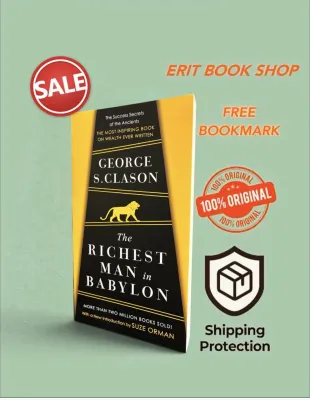
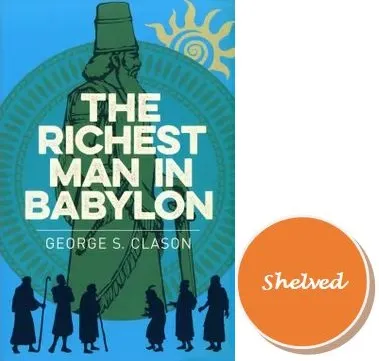
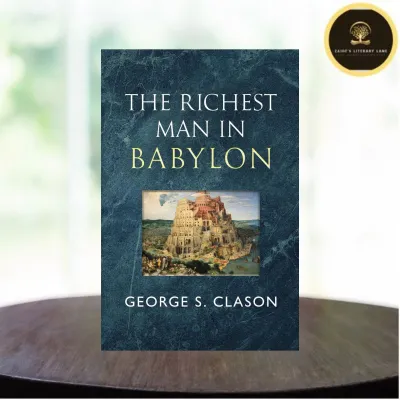
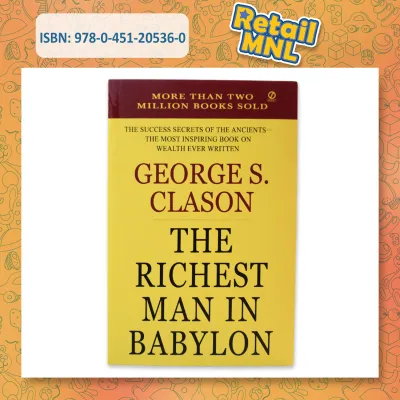
The Richest Man in Babylon, written by George S. Clason, uses ancient parables to teach the foundational rules of personal finance. Its core philosophy centers on the “pay yourself first” principle, which dictates that a portion of all the money you earn belongs to you to keep. The book advocates for consistent, disciplined saving—specifically keeping at least ten percent of your income—and allowing that capital to compound safely over time. Clason emphasizes the importance of seeking counsel only from those who are experienced and successful in conservative wealth management, warning readers against high-risk schemes that promise quick riches.
Products mentioned in this guide
137 Lazada user ratings
I have not yet started reading this book since I read first the “Rich Dad Poor Dad”. 5/5 because the seller bubble-wrapped my orders, thus I…Read full reviewShow less
I have not yet started reading this book since I read first the “Rich Dad Poor Dad”. 5/5 because the seller bubble-wrapped my orders, thus I received them without damage. I hope to finish reading them before September.q Quality: 5/5 Leaves have a smoothly rough texture and cream color.
Received my new books today. Hope to get more from your store. The store is very recommendable. The quality of the books sold here are great…Read full reviewShow less
Received my new books today. Hope to get more from your store. The store is very recommendable. The quality of the books sold here are great you'll never get disappointed. This is my nth book that I purchased from the seller. To more books transactions😃🤗
Inspiring and motivating book, Well-researched and informative, Easy-to-understand concepts for wealth-building, Inspiring and motivating bo…Read full reviewShow less
Inspiring and motivating book, Well-researched and informative, Easy-to-understand concepts for wealth-building, Inspiring and motivating book,
Will try to start reading it next week. :) I saw a video of Mr. Rohn and he recommended this hence the resson why I purchased it 🙂
Good quality at reasonable price! So worth it! Books were also packed well, very secured. Thanks, seller!
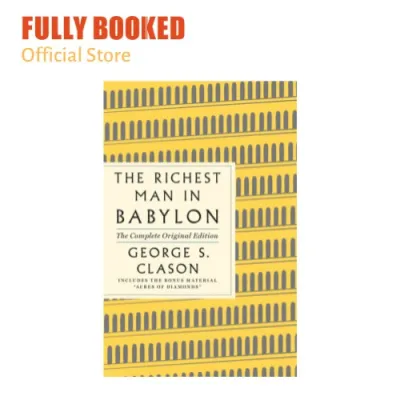
17 Lazada user ratings
My 4th order. so i decided to pay for it via GCash for a hassle free payment with 0 worries. and look! got it in less than 3 days with the s…Read full reviewShow less
My 4th order. so i decided to pay for it via GCash for a hassle free payment with 0 worries. and look! got it in less than 3 days with the same best quality of packaging and item
I haven't read this book, but I'm excited to learn a lot from it. Just want to mention the shipping duration medyo matagal sya
delivery 1 day delayed but seller is responsive and made sure that the item is delivered as promised on our chat
9/10 Great guide to achieving financial goals, Clear and concise financial principles,
29 Lazada user ratings
Just received my order and I'm very happy with it! The item is exactly as described and arrived sooner than expected. Thanks for the smooth …Read full reviewShow less
Just received my order and I'm very happy with it! The item is exactly as described and arrived sooner than expected. Thanks for the smooth transaction.
Beautifully designed cover., Easy to read and understand., Great for learning about financial literacy., Excellent choice for fiction enthus…Read full reviewShow less
Beautifully designed cover., Easy to read and understand., Great for learning about financial literacy., Excellent choice for fiction enthusiasts.,
Engaging storyline!, Highly recommended for book lovers., Excellent choice for fiction enthusiasts., Great for learning about financial lite…Read full reviewShow less
Engaging storyline!, Highly recommended for book lovers., Excellent choice for fiction enthusiasts., Great for learning about financial literacy.,
Excellent choice for fiction enthusiasts., Great for learning about financial literacy., Engaging storyline!, Well-written and captivating.,
packaged well and fast delivery thanks seller i recommend your store and products
8 Lazada user ratings
Effective habits and money tips, Great life-changing insights... but I am not totally happy with the quality of prints. its just a low quali…Read full reviewShow less
Effective habits and money tips, Great life-changing insights... but I am not totally happy with the quality of prints. its just a low quality reprint
well packed and brand new. thank you seller
Okay nman ang quality

75 Lazada user ratings
there is a very minimal damage at the edges. but it is good overall for its price. very cheap
Great wrapping, no dents found in the edges of books. 👍👍👍
there are some typographical errors
Prices are valid at publication and may change. Please refer to the product page for the latest price.
In contrast, Robert Kiyosaki’s Rich Dad Poor Dad challenges traditional mindsets regarding employment, education, and security. Kiyosaki argues that the conventional path of getting a secure job, buying a home, and saving money in a bank is a financial trap that keeps individuals stuck in the “rat race.” His philosophy centers on the critical distinction between assets and liabilities, defining an asset as anything that puts money into your pocket and a liability as anything that takes money out. Instead of relying solely on a salary, this approach encourages readers to use leverage—such as utilizing other people’s money (debt) and other people’s time—to acquire cash-flowing assets.
These two philosophies align with very different levels of risk tolerance. The Richest Man in Babylon champions a low-risk, highly predictable path to wealth that relies on patience, budgeting, and steady compounding. It is designed for individuals who value financial security and want to build a solid, unbreakable foundation. Rich Dad Poor Dad appeals to those with a higher risk tolerance who are willing to embrace entrepreneurial thinking, navigate complex financial systems, and take calculated risks to achieve rapid wealth expansion and financial independence.
Key Financial Concepts and Strategies Compared
To determine which book fits your current capabilities and resources, it is helpful to compare the specific, actionable tactics each author advocates. Their approaches to income generation, debt management, and financial education differ significantly, reflecting their contrasting views on wealth accumulation.

In terms of income generation, The Richest Man in Babylon assumes you will earn a steady wage through your labor or trade. The primary strategy is to manage your expenses so that you can consistently save a fixed percentage of that wage, which is then invested in safe, interest-bearing vehicles. Rich Dad Poor Dad, however, views a wage as a temporary tool rather than a long-term wealth builder. Kiyosaki advocates for transitioning away from selling your time for money, focusing instead on building businesses, purchasing investment real estate, or acquiring paper assets like stocks and bonds that generate passive cash flow.
Their views on debt management are equally distinct. Clason’s parables advise readers to avoid consumer debt entirely and to pay off existing debts systematically while continuing to save. In the Babylonian philosophy, borrowing is viewed with extreme caution, acceptable only when the return is virtually guaranteed and the risk is minimal. Kiyosaki introduces a more nuanced view by separating debt into “bad debt” and “good debt.” While he agrees that consumer debt (like credit card balances for personal luxury items) is destructive, he argues that good debt—such as a mortgage on a rental property where the tenant’s rent covers the loan payment and leaves a profit—is a powerful tool for accelerating wealth.
Financial education also takes different forms in each text. The Richest Man in Babylon focuses on basic money management, self-discipline, and simple budgeting techniques to control expenditures. Rich Dad Poor Dad demands a broader, more active commitment to financial literacy. Kiyosaki emphasizes the need for continuous self-education in accounting, investing, understanding market trends, and navigating tax laws to protect and grow your wealth legally.
| Feature | The Richest Man in Babylon | Rich Dad Poor Dad |
|---|---|---|
| Primary Focus | Disciplined saving and wealth preservation | Asset acquisition and financial literacy |
| Core Rule | Save at least 10% of everything you earn | Acquire assets that put money in your pocket |
| Debt Philosophy | Avoid debt; pay off obligations systematically | Use "good debt" to leverage investment returns |
| Risk Profile | Low risk, slow and steady compounding | Moderate to high risk, entrepreneurial leverage |
| Primary Vehicles | Conservative investments, trusted partnerships | Real estate, businesses, intellectual property |
| Target Audience | Beginners needing foundational money habits | Intermediate savers looking to scale wealth |
Decision Framework: Which Book Aligns With Your Goals?
Choosing the right book depends heavily on your current financial situation and immediate objectives. If you are just starting your financial journey, struggle with monthly budgeting, or carry high-interest consumer debt, The Richest Man in Babylon is your ideal starting point. Its simple, narrative-driven lessons will help you cultivate the self-discipline needed to live below your means, establish a consistent savings habit, and build a secure emergency fund without feeling overwhelmed by complex financial jargon.
If you already possess basic financial stability, have eliminated high-interest consumer debt, and want to transition from being a traditional employee to an active investor or entrepreneur, Rich Dad Poor Dad is the better match. This book will help you break free from conventional financial assumptions, encouraging you to look at tax advantages, corporate structures, and real estate opportunities with a critical eye. It is designed for those who are ready to take calculated risks and actively manage their investment portfolios to scale their wealth.
However, neither book should be your immediate priority if you are currently facing severe financial distress. If you are struggling to cover basic necessities like food and utilities, or if you are dealing with aggressive collection agencies, reading about long-term wealth philosophies can feel discouraging and impractical. In these situations, your immediate focus should be on crisis management, securing stable basic income, and seeking professional debt counseling or local community support before attempting to implement advanced investment strategies.
Combining Both Philosophies for Long-Term Wealth
Rather than viewing these two books as mutually exclusive, you can integrate their principles into a powerful, multi-phase roadmap for long-term financial success. By treating them as sequential stages of your financial evolution, you can build a secure foundation before taking on the risks associated with active investing.
In Phase 1, apply the disciplined habits of The Richest Man in Babylon. Focus on saving at least ten percent of your monthly income, creating a strict budget to control your expenditures, and building a robust emergency fund. For example, you might aim to accumulate a safety net of ₱50,000 to ₱100,000 in a secure, high-yield savings account. During this phase, focus on eliminating high-interest personal loans or credit card balances, ensuring that your financial base is entirely stable and free from destructive liabilities.
Once your foundation is secure, transition to Phase 2 by adopting the asset-building mindset of Rich Dad Poor Dad. Instead of leaving all your accumulated savings in low-yield bank accounts where inflation can erode its purchasing power, redirect a portion of your saved capital toward financial education and cash-flowing assets. This is the stage where you begin researching investment vehicles, learning how to analyze market opportunities, and understanding how to make your money work actively for you.
When applying these global concepts to the Philippine context, it is important to adapt them to local economic realities. For instance, while Rich Dad Poor Dad heavily emphasizes US-centric real estate and tax laws, local investors must navigate domestic regulations, property taxes, and financing options unique to the Philippines. You might start your asset-building phase by exploring accessible, low-risk local options such as the PAG-IBIG MP2 program, cooperative savings, or low-cost domestic index funds. If you choose to start a small local business or invest in physical inventory, remember to account for tropical weather disruptions, high utility costs, and local licensing requirements to ensure your venture remains profitable and resilient.
Frequently Asked Questions (FAQ)
Is The Richest Man in Babylon still relevant today?
Yes, the core principles of The Richest Man in Babylon remain highly relevant today. While modern financial systems rely on digital banking, online investment platforms, and complex financial instruments, the human behaviors driving wealth accumulation have not changed. Habits such as saving a fixed percentage of your income, living below your means, avoiding lifestyle inflation, and protecting your principal from high-risk scams are timeless strategies that protect your wealth against modern inflation and economic volatility.
Does Rich Dad Poor Dad provide specific investment advice?
No, Rich Dad Poor Dad does not provide specific, step-by-step investment advice or concrete stock recommendations. Instead, the book is designed to shift your financial mindset and improve your overall financial literacy. It teaches you how to think like an investor and business owner, but it requires you to seek out further technical education, local market research, and professional advice before executing specific real estate transactions or business ventures.
Can I read both books at the same time?
While you can read both books simultaneously, it is generally more effective to read The Richest Man in Babylon first, followed by Rich Dad Poor Dad. Reading them sequentially helps prevent the cognitive dissonance that can arise from their contrasting views on debt and saving. Mastering the basic saving discipline of Babylon first ensures you have the capital and stability required to safely implement the active, higher-risk leverage strategies discussed in Rich Dad.

Community discussion
Share your experience or ask a question. Comments are reviewed before publication.