
Starting your journey into Gillian Flynn’s dark, psychological landscapes with her debut novel, Sharp Objects, is an excellent choice that establishes her signature thematic depth. Because Flynn’s three major novels are entirely standalone works with no shared characters, recurring settings, or chronological plotlines, there is no single mandatory reading sequence. Instead, the ideal path forward depends entirely on what narrative elements you wish to explore after finishing her debut.
If you prefer to transition into a story that shares a similar gritty, investigative atmosphere and focuses on deep-seated family trauma, your next step should be Dark Places. However, if you are ready to shift toward a faster, media-saturated, and highly structured psychological chess match, Gone Girl is the perfect follow-up. By understanding how each book builds upon Flynn’s evolving style, you can customize a reading order that maximizes your suspense and engagement.
Understanding Your Starting Point: What to Expect From Sharp Objects
As Gillian Flynn’s debut novel, Sharp Objects introduces readers to Camille Preaker, a troubled journalist who returns to her hometown of Wind Gap, Missouri, to cover the unsolved murders of two young girls. This book establishes the foundational elements of Flynn’s literary identity: a deeply flawed and unreliable female protagonist, a suffocating small-town atmosphere, and a profound exploration of generational family trauma. The narrative is a slow-burn psychological study rather than a high-speed chase, drawing its tension from the toxic relationships between Camille, her cold mother Adora, and her enigmatic half-sister Amma.
Products mentioned in this guide
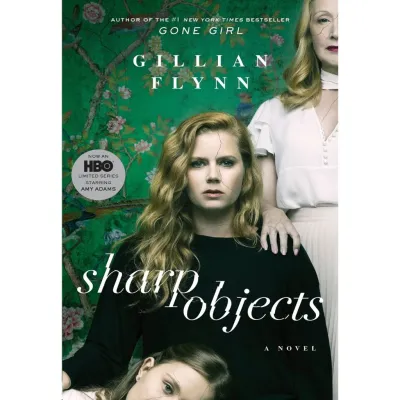
Prices are valid at publication and may change. Please refer to the product page for the latest price.
Unlike the rapid-fire plot twists that define modern mainstream thrillers, Sharp Objects relies on a heavy, Southern Gothic atmosphere where the environment itself feels like a character. The book deals intensely with themes of self-harm, memory distortion, and the dark undercurrents of female violence. Understanding this deliberate, character-driven pacing is crucial because it sets a baseline. While it showcases Flynn’s mastery of psychological dread, her subsequent novels expand on these themes with different structural complexities and significantly faster narrative momentum.
Choosing Your Second Book: Dark Places or Gone Girl?
Once you turn the final page of Sharp Objects, you face a pivotal choice that will shape your experience of Flynn’s bibliography. Your decision should align with which aspects of Camille’s story resonated with you the most.

If you were captivated by the bleak, rural setting, the weight of past family tragedies, and a gritty investigative plot, you should choose Dark Places as your second read. This novel follows Libby Day, the sole survivor of a horrific family massacre in a rural Kansas farming community, who is forced to revisit the tragedy decades later. Dark Places shares a similar structural DNA with Sharp Objects, focusing on how childhood trauma infects adult life. However, it expands the narrative scope by utilizing multiple perspectives and dual timelines, shifting between Libby’s cynical present-day investigation and the desperate actions of her family members in the hours leading up to the 1985 murders. It is a dark, complex puzzle that appeals to fans of true-crime dynamics and rural noir.
Conversely, if you are ready for a dramatic shift in pacing, structure, and thematic focus, Gone Girl is the ideal second step. This novel moves away from childhood and family-of-origin trauma to dissect the performative, toxic nature of modern marriage. Following the mysterious disappearance of Amy Dunne on her fifth wedding anniversary, the story is told through the alternating, highly unreliable perspectives of her husband, Nick, and Amy’s own diary entries. Gone Girl is a masterclass in narrative manipulation, featuring sharp social satire, media criticism, and some of the most famous plot twists in contemporary fiction. It is significantly faster and more polished than Sharp Objects, making it a thrilling contrast to the slow-burn atmosphere of your first read.
Completing the Trilogy: Reading the Final Major Novel
Whichever path you choose for your second book, your third read will naturally be the remaining major novel, serving as a fascinating capstone to Flynn’s trio of psychological thrillers. If you read Dark Places second, finishing with Gone Girl allows you to experience Flynn’s chronological evolution as a writer, tracing her path from raw, atmospheric character studies to highly sophisticated, commercially explosive plotting. If you chose Gone Girl second, wrapping up with Dark Places offers a grounded, gritty descent back into the dark, investigative roots that made Sharp Objects so compelling.
Because there is no shared universe or overarching lore connecting these three books, reading the final novel in either sequence is entirely valid and will not spoil any plot points. Each book stands completely on its own merits, yet together they form a cohesive exploration of the darker sides of human nature, particularly the complexities of female anger, manipulation, and survival. Completing all three novels reveals how Flynn consistently challenges traditional thriller tropes, leaving you with a comprehensive appreciation of her contribution to the genre.
Integrating Short Fiction Into Your Reading Journey
To round out your experience of Gillian Flynn’s bibliography, you can easily integrate her shorter fiction into your reading schedule. Her most notable short work is “The Grownup” (originally published under the title “What Do You Do?” in a popular multi-author anthology). This quick, clever novella follows a nameless young woman working as a fake psychic who gets caught up in a seemingly haunted Victorian house and a deeply dysfunctional family.
Because of its brief length and self-contained plot, “The Grownup” serves as an excellent palate cleanser between the heavy, emotionally taxing themes of her full-length novels. You can read it at any point—either as a quick break between Sharp Objects and your second novel, or as a fun, twisted epilogue after completing the main trilogy. While “The Grownup” features Flynn’s signature sharp wit and unexpected twists, readers should manage their expectations; its shorter format means it lacks the deep character development and sprawling, multi-layered mysteries found in her major novels. It is available in standalone digital formats, physical pocket-sized hardcovers, and as part of various audio collections.
Sourcing Your Books: Formats, Editions, and Availability
When building your Gillian Flynn collection in the Philippines, selecting the right format and edition is essential for a seamless reading experience. The original English editions are widely preferred and readily available, allowing you to experience Flynn’s precise, razor-sharp prose exactly as she wrote it. When choosing physical formats, keep in mind that the local tropical climate and high humidity can cause paperback pages to warp, yellow, or develop foxing over time. If you prefer physical books, consider storing them in a cool, dry place away from direct sunlight, or opt for durable hardcover editions.
For readers with busy lifestyles or long daily commutes through metropolitan traffic, unabridged audiobooks are an exceptional alternative. Psychological thrillers rely heavily on tone, pacing, and voice acting to convey the nuances of unreliable narrators. Listening to a skilled narrator bring Camille Preaker or Amy Dunne to life can significantly enhance the suspense. Alternatively, e-books offer a convenient, space-saving option that is completely immune to humidity damage.
To ensure you receive complete, high-quality texts, always purchase your books from authorized local physical bookstores, established online book retailers, or legitimate digital platforms. Whether you are budgeting around ₱500 for a standard paperback or investing in a premium hardcover, avoid purchasing suspiciously cheap copies from unauthorized sellers on online marketplaces. These pirated editions are frequently plagued by missing chapters, severe formatting errors, and distracting typos that can completely ruin the pacing and critical reveals of a complex mystery. Investing in legitimate editions guarantees an authentic and satisfying reading journey.
Frequently Asked Questions (FAQ)
Are there any hidden connections or Easter eggs between the novels?
No, there are no direct narrative connections, shared characters, or crossover locations between Sharp Objects, Dark Places, and Gone Girl. Each novel takes place in its own distinct version of the American Midwest, focusing on entirely separate events. The only unifying threads across the books are thematic, such as Flynn’s exploration of psychological trauma, unreliable narration, media sensationalism, and complex female protagonists. You can read them in any order without worrying about missing crucial background information or spoiling other stories.
Should I watch the screen adaptations before or after reading?
It is highly recommended to read the novels before watching their screen adaptations. The suspense and major plot twists in Sharp Objects, Gone Girl, and Dark Places rely heavily on the internal monologues and subjective perceptions of the main characters, which are difficult to translate fully to the screen. Experiencing the mysteries fresh on the page preserves the shock value of the reveals. Once you have finished reading, the critically acclaimed HBO miniseries adaptation of Sharp Objects and the feature film adaptation of Gone Girl offer excellent visual companions that honor the dark tone of the source material.
Will future books connect to the characters in Sharp Objects?
It is highly unlikely that any future works by Gillian Flynn will connect to the characters or events of Sharp Objects. Flynn has consistently focused on writing standalone psychological thrillers, and Camille Preaker’s story is widely considered by both the author and readers to be complete. While the open-ended nature of the novel’s conclusion leaves room for imagination, the thematic arc of generational trauma and personal survival has been fully realized, making a direct sequel or shared universe highly improbable.
Community discussion
Share your experience or ask a question. Comments are reviewed before publication.