
Choosing between the Tank Pro and similar instrument accessories requires looking past marketing claims and focusing on verifiable specifications. Because the ideal option depends entirely on your specific instrument, signal chain, and physical setup, there is no single universal winner. This guide breaks down the core comparison dimensions, specification checks, and value factors you need to evaluate to determine which accessory truly earns a spot in your gear collection.
In the local music scene, where live gigs range from air-conditioned indoor venues to humid outdoor stages, gear reliability is paramount. Musicians must balance portability with robust performance, ensuring that any new addition to their signal chain does not introduce unwanted noise or compatibility issues. By understanding the technical parameters of your equipment, you can make an informed decision that enhances your tone without complicating your setup.
Identifying the Tank Pro and Its Accessory Category
To make an accurate comparison, you must first define what the Tank Pro is and where it fits within the broader landscape of instrument accessories. The Tank Pro is generally categorized as a multi-effects pedal and portable preamp accessory, primarily designed for stringed instruments such as acoustic or electric guitars. It serves as an all-in-one hub that combines signal modulation, spatial effects, amplifier modeling, and direct-output capabilities into a single, compact enclosure.
Products mentioned in this guide
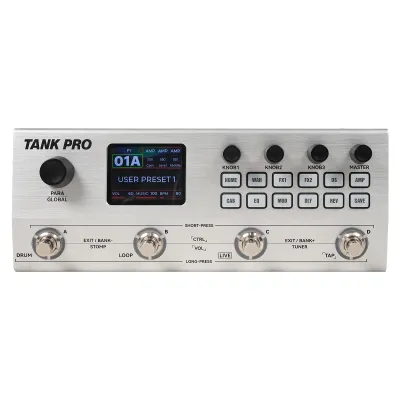
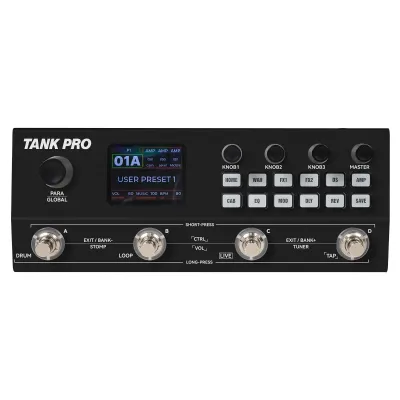
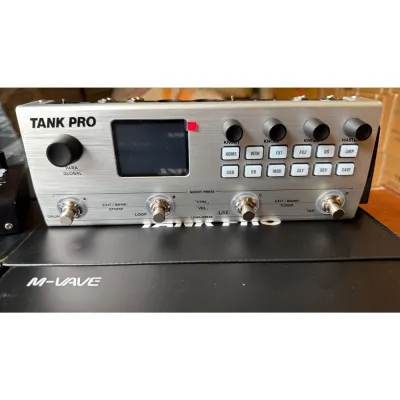
Prices are valid at publication and may change. Please refer to the product page for the latest price.
This category of accessory is designed to streamline a musician’s rig by replacing several individual components. Instead of carrying a separate preamp, a dedicated direct input (DI) box, and multiple single-effect stompboxes, players use this type of device to handle multiple stages of signal processing. This consolidation is particularly appealing for gigging musicians who need to travel light or set up quickly during tight stage transitions.
When looking for alternatives, you will find a wide variety of options in the instrument accessory market. These include traditional single-effect pedals, dedicated analog preamps, larger multi-effects processors, and software-based modeling interfaces that run on external devices. Each alternative offers a different balance of control, sound customization, and physical footprint, meaning you must identify your primary performance goals before choosing a specific path.
Key Dimensions for Comparing Instrument Accessories
Evaluating instrument accessories requires a systematic approach based on technical specifications rather than subjective sound descriptions. The first critical dimension is compatibility and connectivity. You must examine the input and output (I/O) configurations, such as whether the device features standard 1/4-inch TS inputs for passive pickups, balanced XLR outputs for direct connection to a mixing console, or auxiliary inputs for backing tracks. Additionally, verify the power requirements, including voltage, current draw measured in milliamperes (mA), and plug polarity, to ensure compatibility with your existing power supply brick.

The second dimension is performance and functional stability. For electronic accessories like preamps and multi-effects, this involves assessing signal transparency, latency, and the noise floor. A high-quality accessory should process your instrument’s signal without introducing noticeable hiss or digital artifacts, especially when using high-gain settings. Mechanical stability is also vital; switches, knobs, and jacks must withstand repeated physical use during live performances.
The third dimension is build quality and physical footprint. The material of the enclosure—typically aluminum alloy, steel, or heavy-duty plastic—directly impacts the device’s durability and weight. For pedalboard integration, the physical dimensions and the placement of the jacks (top-mounted versus side-mounted) determine how much space the unit will occupy. In tropical environments characterized by high humidity, choosing accessories with robust, corrosion-resistant metal enclosures and sealed switches is highly recommended to prevent premature component failure.
Tank Pro vs. Alternatives: Feature and Specification Breakdown
To understand how the Tank Pro compares to standard alternatives in the accessory market, it is helpful to analyze their typical specifications side by side. Because exact features can vary depending on the specific production run or model edition, you should always cross-reference these general parameters with the official manufacturer manuals of the devices you are considering.
| Feature / Specification | Tank Pro Category Standard | Standard Alternative Accessories | Verification Check |
|---|---|---|---|
| Chassis Material | Aluminum alloy or molded metal | Plastic, steel, or hybrid materials | Inspect physical casing and weight specs |
| Power Source | USB-C rechargeable or 9V DC input | Standard 9V DC external power only | Check power supply inclusion and mA draw |
| Output Connections | Balanced XLR, 1/4-inch TS, Headphone out | Standard 1/4-inch TS mono/stereo out | Verify mixer or amplifier input compatibility |
| Signal Processing | Digital modeling with integrated DSP | Analog circuitry or dedicated digital DSP | Check latency and sampling rate specifications |
| Physical Footprint | Compact, single-unit multi-effect | Variable (modular single pedals or large boards) | Measure pedalboard space and jack clearance |
The integration of a built-in rechargeable battery in the Tank Pro category represents a significant departure from traditional alternatives, which almost exclusively rely on external power adapters or individual 9V batteries. This design feature offers greater setup flexibility, especially in venues with limited power outlets. However, it also introduces a battery lifespan consideration that does not exist with purely passive or externally powered gear.
Furthermore, the inclusion of a balanced XLR direct output allows the device to function as a DI box, sending a low-impedance signal directly to a PA system. Many standard alternative accessories, particularly basic multi-effects or single stompboxes, only offer unbalanced 1/4-inch outputs, requiring you to purchase a separate DI box to achieve the same connectivity. Before finalizing your purchase, verify whether your existing mixing console or amplifier can accept these specific signal levels.
Evaluating Value and Pricing for Your Rig
When assessing the cost-to-benefit ratio of the Tank Pro versus alternative accessories, you must look at the total investment required to integrate the device into your rig. Prices in the local market should be compared in Philippine Pesos (₱) across authorized dealers, official brand stores, and reputable local music shops. Be sure to factor in the cost of any necessary add-ons, such as high-quality patch cables, external power supplies, or protective carrying cases, which may not be included in the base price.
Long-term value is closely tied to durability, warranty coverage, and manufacturer support. A slightly cheaper alternative might seem attractive initially, but if it lacks a local warranty or is constructed from fragile materials, it may cost more in repairs or replacements over time. Look for products that offer at least a one-year local warranty and have established customer service channels in the country to handle potential technical issues.
Musicians should exercise caution when browsing online marketplaces. Suspiciously low prices often indicate counterfeit products, grey-market imports that do not qualify for local warranty service, or refurbished units sold as new. To protect your investment, always verify the seller’s authorized status and read customer feedback regarding packaging quality and shipping reliability before committing your funds.
Decision Framework: Which Accessory Should You Choose?
Making the final choice between the Tank Pro and alternative instrument accessories requires aligning the technical capabilities of the gear with your specific playing style and performance environment.
Choose the Tank Pro if:
- You need a highly portable, lightweight setup that fits easily into a gig bag for quick travel.
- You require direct-to-PA connectivity via a balanced XLR output without carrying an extra DI box.
- You prefer the convenience of a built-in rechargeable battery to simplify cable management on stage.
- You want a consolidated set of basic effects and amp models in a single, cost-effective unit.
Choose an Alternative if:
- You demand highly specific, premium analog drive tones or specialized modulation effects that digital modelers cannot fully replicate.
- You require complex signal routing, such as stereo effects loops or extensive MIDI control integration.
- You prefer a modular pedalboard setup where you can easily swap individual components without replacing your entire signal processor.
- You already own a dedicated power distribution system and high-quality DI boxes, making the Tank Pro's integrated features redundant.
Verify First if:
- Your current amplifier or audio interface has specific input impedance requirements that might conflict with the accessory's output.
- Your instrument's pickups (active versus passive) require specific input gain adjustments to prevent signal clipping.
- The physical dimensions of your pedalboard can accommodate the unit alongside your existing patch cables and power connectors.
Frequently Asked Questions (FAQ)
Is the Tank Pro compatible with all instrument setups?
No, compatibility is not universal and depends heavily on your existing equipment. You must verify that the input impedance of the accessory matches your instrument’s pickups and that its output levels are compatible with your amplifier or mixing console. Always consult the manufacturer’s user manual and your existing gear documentation to confirm voltage, current draw, and signal level compatibility before connecting new devices.
How do I verify if an instrument accessory is an official product?
To ensure you are purchasing a genuine product, buy exclusively from authorized local distributors or official brand stores on reputable ecommerce platforms. Inspect the physical packaging for official holographic seals, clear branding, and intact serial numbers. You can often verify the serial number directly on the manufacturer’s official website, and high-quality construction—such as clean solder joints, robust metal jacks, and precise labeling—is a strong indicator of an authentic unit.
Community discussion
Share your experience or ask a question. Comments are reviewed before publication.