
Choosing the right piano pedal depends entirely on your keyboard’s rear ports, your musical genre, and your playing technique. If you are practicing classical pieces that require delicate expression, a triple pedal unit or a continuous sustain pedal is essential. For electronic music, synth leads, or organ emulations, an expression pedal gives you real-time control over volume and effects. Meanwhile, casual players and pop keyboardists will find that a standard, single sustain pedal is more than enough to hold notes and blend chords.
Quick Diagnostic: Which Pedal Type Matches Your Needs?
To find your ideal setup, start by looking at your current repertoire and instrument. If you are a student or an advanced pianist practicing classical or jazz pieces, you likely need to replicate the nuanced pedaling of an acoustic grand piano. This requires either a triple pedal unit or a high-quality sustain pedal that supports half-damper techniques, allowing you to control how much the notes ring out rather than just turning the sustain on or off.
If your musical focus leans toward modern production, sound design, or live band performances using synthesizers and organs, your hands are often busy tweaking knobs. An expression pedal acts as a foot-controlled modifier, letting you sweep filters, swell volume, or adjust modulation depth without taking your hands off the keys.
Products mentioned in this guide
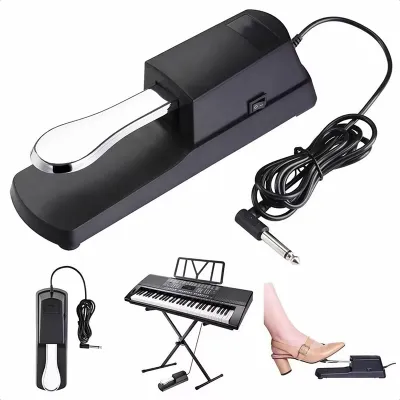
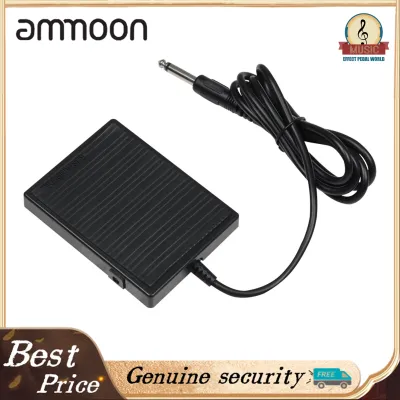
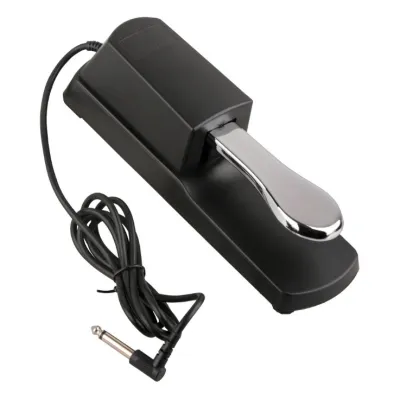
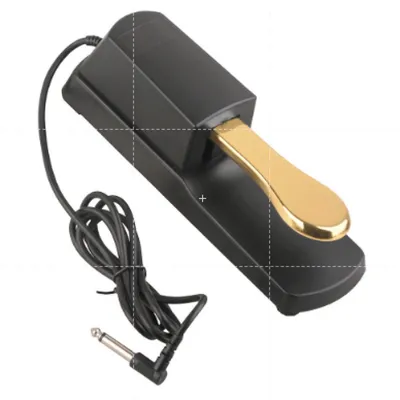
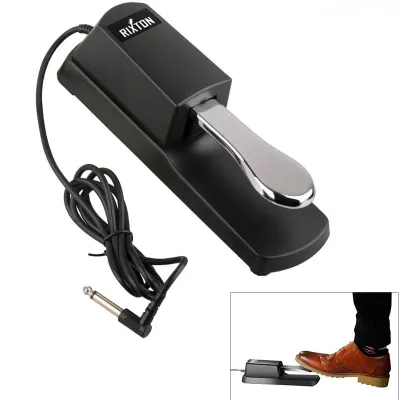
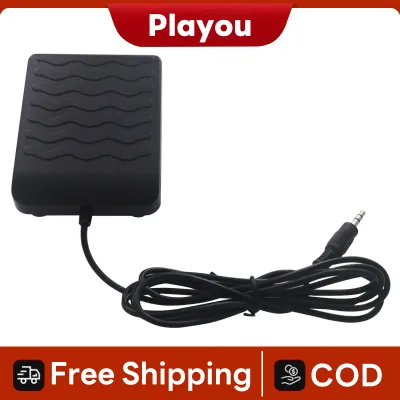
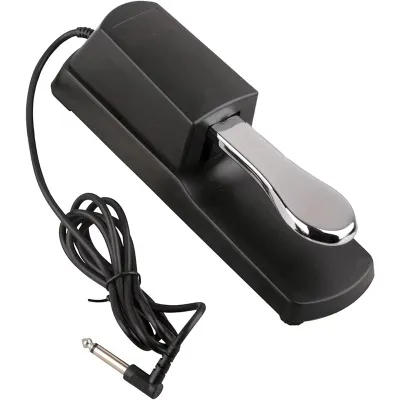
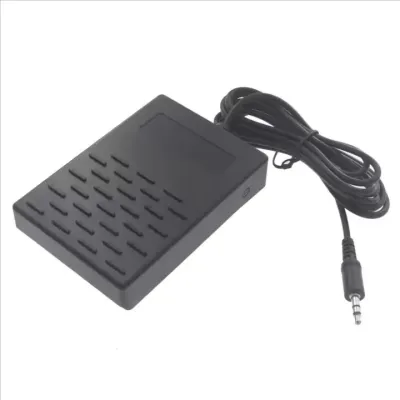
Prices are valid at publication and may change. Please refer to the product page for the latest price.
For those who own a portable keyboard or a basic MIDI controller and simply want to prevent notes from cutting off abruptly when changing hand positions, a standard single sustain pedal is the most practical choice. It connects via a simple cable and instantly makes your playing sound smoother and more connected, which is perfect for pop ballads, church worship music, or casual home practice.
Understanding Sustain, Expression, and Triple Pedal Units
Sustain pedals, also known as damper pedals, are the most common keyboard accessories. Physically, they come in two main styles: a flat plastic foot-switch or a heavy, metal piano-style lever that mimics an acoustic piano pedal. Functionally, a basic sustain pedal acts as a simple binary switch—when pressed, it sends a signal to hold all played notes, and when released, the notes stop. Advanced sustain pedals function as continuous controllers, sending a range of values (from 0 to 127) to simulate the gradual lifting of felt dampers from acoustic strings, a feature known as half-pedaling.

Expression pedals look and operate differently, featuring a rocker-style design similar to a guitar wah-wah pedal. Instead of springing back up when you lift your foot, an expression pedal stays in the exact position you leave it. Internally, it uses a potentiometer to sweep through a continuous range of control change (CC) values. It connects using a Tip-Ring-Sleeve (TRS) cable, which carries the control voltage back and forth between the keyboard and the pedal to dynamically alter volume, filter cutoff, or effects mix in real time.
Triple pedal units combine three distinct pedals into a single physical housing: the soft pedal (una corda) on the left, the sostenuto pedal in the middle, and the sustain pedal on the right. These units are designed to replicate the complete pedal lyre of an acoustic grand piano. Because they manage three separate control signals, they typically require a sturdy physical stand or a matching wooden furniture frame to keep them from sliding. They also use proprietary multi-pin connectors rather than standard phone jacks, meaning they are usually built for specific digital piano models.
Matching the Pedal to Your Playing Style and Gear
For classical and jazz pianists, the nuance of your performance relies heavily on foot control. In pieces by Chopin or Debussy, a simple on/off switch will make your performance sound muddy or dry. Half-pedal support allows you to partially clear the notes, keeping the bass register clean while letting the higher melodies sing. If your digital piano is mounted on a matching wooden stand, adding a compatible triple pedal unit provides the physical stability needed for intense practice sessions, ensuring the pedals do not slide across smooth tiled floors common in tropical homes.
If you play pop, rock, or electronic music, your requirements are usually much simpler. Pop songs rarely, if ever, utilize the soft or sostenuto pedals, making a single high-quality sustain pedal the most efficient and portable option. For keyboardists performing in live bands or managing a home studio setup in the Philippines, an expression pedal is incredibly versatile. It allows you to execute smooth volume swells for ambient pad sounds or control the rotary speaker speed of a virtual tonewheel organ, adding professional polish to your live sets.
Before making any purchase, you must inspect the physical hardware limitations of your keyboard. Turn your instrument around and look at the rear connection panel. A standard keyboard might only feature a single jack labeled “Sustain” or “Damper.” If you do not see a dedicated “Expression” port or a multi-pin proprietary socket, your keyboard cannot physically support those pedal types, regardless of your playing style.
Compatibility and Setup Checks Before Purchasing
The most common issue buyers face is electrical polarity incompatibility. Sustain pedals operate as either “normally open” or “normally closed” switches. If you connect a pedal with the wrong polarity to your keyboard, your notes will sustain when your foot is off the pedal and cut off when you press down. To avoid this frustration, look for a sustain pedal that features a physical polarity switch on the bottom or side. This small switch allows you to toggle the pedal’s electrical behavior, ensuring compatibility with almost any keyboard brand on the market.
For expression pedals, you must verify the connector type and the internal resistance of the potentiometer. Most expression pedals use a 1/4-inch TRS plug, but different keyboard manufacturers design their ports to expect specific resistance values (such as 10k ohms or 50k ohms). Using an incompatible expression pedal can result in an uneven sweep, where the volume or effect jumps suddenly instead of changing smoothly. Always consult your keyboard’s user manual to verify the recommended pedal specifications and to confirm if your keyboard’s firmware supports continuous controller data.
If you are purchasing a triple pedal unit, compatibility is highly restrictive. These units are rarely cross-compatible between different brands, and often do not even work across different models from the same manufacturer. You must check if your digital piano has the specific multi-pin port required for the unit and whether your current keyboard stand has the pre-drilled mounting holes and brackets to secure the pedal board. In humid tropical climates like the Philippines, ensure that any pedal you choose has robust rubber feet to prevent slipping on tiled floors, and store your gear away from direct moisture to protect the internal electronic contacts from corrosion.
Frequently Asked Questions (FAQ)
Can I use a sustain pedal as an expression pedal?
Generally, no. A standard sustain pedal is a simple momentary switch that only registers two states: fully on or fully off. An expression pedal relies on a potentiometer that sweeps through a continuous range of values to control parameters like volume or filter frequency. Connecting a standard sustain pedal to an expression jack will usually result in the effect jumping instantly from minimum to maximum with no smooth transition. However, some advanced keyboards can be configured to accept continuous sustain pedals in their expression ports, but you must check your instrument’s manual to confirm this capability.
Why is my sustain pedal working in reverse?
This happens because of a polarity mismatch between your keyboard and the pedal. Keyboards detect the state of the pedal switch when they are powered on; if you press the pedal while turning on the instrument, or if the pedal’s default electrical state (normally open vs. normally closed) does not match what the keyboard expects, the behavior reverses. You can easily fix this by turning off your keyboard, releasing the pedal completely, and turning the keyboard back on. If that does not work, look for a physical polarity switch on the bottom of your pedal and flip it to the opposite position.
Do I need a triple pedal unit if I only play pop songs?
For the vast majority of pop, rock, and contemporary music, a triple pedal unit is unnecessary. Pop arrangements almost exclusively use the sustain (damper) pedal to blend chords and create a smooth flow. The soft pedal (una corda) and the sostenuto pedal are specialized tools used primarily in advanced classical repertoire to alter tone color or sustain specific bass notes while leaving other keys unaffected. A single, high-quality sustain pedal is more portable, affordable, and perfectly suited for pop music.
Community discussion
Share your experience or ask a question. Comments are reviewed before publication.