
When building an entry-level audio setup, choosing between Sonicake, FiiO, and SMSL depends entirely on whether you are setting up a desktop listening station, looking for portable high-fidelity sound on the go, or integrating instrument-focused audio routing into your creative workflow. While FiiO and SMSL are household names in the traditional audiophile community, Sonicake carves out a distinct niche that appeals to musicians and creators. Understanding how these brands differ in design philosophy, connectivity, and intended use is the key to making an informed purchase.
Selecting the right entry-level amplifier requires looking past brand names and focusing on the physical realities of your listening environment. A device that excels on a quiet, air-conditioned office desk in Manila may not be the right choice for a daily commute on public transit. By evaluating your primary listening habits, your existing headphones, and the specific technical requirements of your gear, you can narrow down these options to find the perfect match.
Understanding the Core Focus of Sonicake, FiiO, and SMSL
Sonicake focuses heavily on utility, performance tools, and compact audio solutions. Often recognized for their multi-effects pedals and micro-amplifiers, their entry-level audio gear is designed with musicians, practice setups, and creative routing in mind. They prioritize rugged, gig-ready or desktop-friendly form factors that serve practical monitoring needs rather than pure, measurement-driven audiophile decoding. This makes their amplifiers highly functional for those who need to blend instrument inputs with standard audio playback.
Products mentioned in this guide
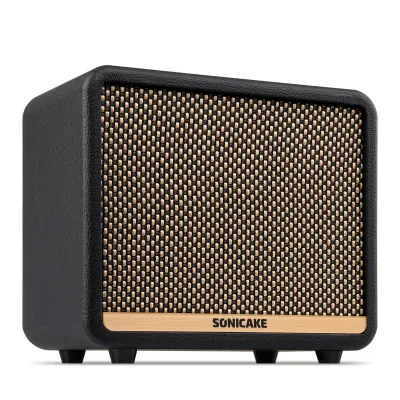
Prices are valid at publication and may change. Please refer to the product page for the latest price.
FiiO represents a massive, highly versatile ecosystem in the portable and desktop audio space. Their product lineup spans from ultra-compact USB dongle DAC/amps that draw minimal power from a smartphone to robust, feature-rich desktop units. FiiO’s design philosophy centers on high-resolution audio decoding, wide device compatibility, and user-friendly interfaces. They cater heavily to headphone enthusiasts, particularly those using sensitive in-ear monitors (IEMs) or portable over-ear headphones who require clean power on the move.
SMSL, or Sanskrit Magnetic Audio Electronics, is renowned for its desktop-bound, measurement-first audio engineering. They specialize in stationary digital-to-analog converters (DACs), headphone amplifiers, and integrated desktop stacks. SMSL products are designed to sit permanently on a desk, prioritizing ultra-low distortion, high signal-to-noise ratios, and substantial power output. Their engineering focus is on delivering pristine, uncolored sound reproduction, making them a favorite for stationary home listening setups.
While these general brand philosophies provide a helpful starting point, they do not replace the need to check individual model specifications. Every manufacturer produces a wide variety of devices, and a brand’s reputation for desktop gear does not guarantee that their portable options will suit your specific needs. Always verify the exact capabilities of the specific model you are considering before making a final decision.
Essential Specifications to Check on the Product Label
Power output is the first and most critical specification to verify on any amplifier’s product label or official specification sheet. This rating is typically listed in milliwatts (mW) at a specific impedance level, such as 32 ohms or 300 ohms. To ensure compatibility, you must match this output with your headphones’ impedance and sensitivity requirements. High-impedance headphones require higher voltage to reach listening volumes, while low-sensitivity planar magnetic headphones demand substantial current to perform optimally.

If you are looking at a combined DAC and amplifier unit, pay close attention to the digital-to-analog converter chip architecture. The specifications should clearly state the supported digital audio formats and maximum sample rates, often expressed in kilohertz (kHz) and bits (such as 24-bit/192kHz or 32-bit/768kHz). Ensure the device supports the file formats you listen to most, whether that includes standard lossless PCM, high-resolution DSD, or specialized streaming formats.
Physical connectivity options dictate how easily the amplifier will integrate into your existing setup. Check the output panel for balanced versus single-ended connections; balanced outputs (such as 4.4mm Pentaconn or 2.5mm jacks) typically offer higher power output and better channel separation than standard 3.5mm or 6.35mm single-ended jacks. On the input side, verify whether the unit accepts digital signals via USB-C, optical, or coaxial connections, or if it relies solely on analog RCA inputs.
Power supply requirements and the physical footprint of the device are equally important, especially in a tropical environment where desk space and heat dissipation matter. Desktop units often require dedicated external power bricks or direct AC power, which can generate heat and require careful cable management. Portable units, on the other hand, either run on internal rechargeable batteries or draw bus power directly from your source device, which will impact your smartphone or laptop’s battery life during extended use.
Decision Framework: Which Brand Fits Your Listening Setup?
If your primary listening scenario involves commuting, frequent travel, or moving around a shared workspace, a portable-focused brand like FiiO is highly suitable. Their compact, battery-powered or bus-powered dongles are optimized for driving sensitive in-ear monitors without introducing distracting background hiss. These portable units slip easily into a pocket or bag, allowing you to maintain a high-quality audio experience outside of the home.
For a stationary desktop setup where you listen exclusively at a desk using demanding over-ear headphones, a desktop-focused brand like SMSL is the logical choice. These units provide the clean, continuous power required to drive high-impedance dynamic or planar magnetic headphones to their full potential. Additionally, desktop units offer multiple input options, allowing you to connect your computer, a CD player, or a dedicated streamer simultaneously.
If your setup involves practicing a musical instrument, routing audio between creative devices, or requiring a rugged utility amplifier, Sonicake’s specialized entry-level models offer unique practical advantages. These devices are built to handle the dynamic peaks of active music production and instrument monitoring, bridging the gap between traditional consumer audio and practical performance gear. They are ideal for creators who need a reliable, hard-working tool on their desk or in their gig bag.
Keep in mind that none of these entry-level brands may fit your needs if you use highly specialized audio equipment. For example, electrostatic headphones require dedicated high-voltage energizers rather than standard solid-state headphone amplifiers. Furthermore, if your budget does not currently meet the minimum threshold for a dedicated external DAC/amp, utilizing your source device’s built-in headphone jack or a basic utility adapter remains a perfectly valid starting point while you save for an upgrade.
Verifying Authenticity and Local Support in the Philippines
When shopping for entry-level audio gear on major e-commerce platforms and online marketplaces in the Philippines, identifying authorized local distributors is crucial. Look for official flagship stores or highly rated local audio specialty shops that display clear proof of authorization. Purchasing from unverified third-party sellers increases the risk of receiving counterfeit goods or units intended for other regional markets.
Before finalizing your purchase, carefully verify the local warranty terms, return policies, and after-sales support options. A genuine local warranty ensures that if your amplifier experiences a hardware failure, you can access repair or replacement services without the high cost and long wait times associated with shipping the unit back to an overseas manufacturer. Always keep your official receipt and original packaging, as these are typically required to claim warranty support.
For desktop units that plug directly into the wall, you must check the voltage compatibility and plug types to ensure safe operation with local power standards. The Philippines primarily uses a 220V 60Hz electrical standard with Type A or Type B plugs. Using a desktop amplifier designed strictly for 110V without a proper step-down transformer can permanently damage the internal circuitry and pose a serious safety hazard.
Additionally, the tropical climate and high humidity in the Philippines require extra care when setting up desktop audio gear. Ensure your amplifier is placed in a well-ventilated area away from direct sunlight and moisture to prevent overheating and internal condensation. Be alert to common red flags when browsing online listings, such as prices listed in ₱ that are suspiciously lower than the manufacturer’s suggested retail price, missing serial numbers, or generic, unbranded packaging.
Frequently Asked Questions (FAQ)
Can I use these entry-level amps with active desktop speakers?
Yes, you can use many entry-level headphone amplifiers with active desktop speakers, but you must verify the physical outputs on the rear panel of the device. Headphone outputs on the front of the unit are specifically impedance-matched for headphones, whereas active speakers require line-level or pre-amplifier outputs, typically found as RCA or balanced TRS connections on the back. Connecting a headphone output directly to active speakers can lead to signal clipping, distortion, or mismatched volume levels. When setting up this connection, always start with the amplifier’s volume control turned down low, gradually increasing it to find a clean, balanced signal level that does not overdrive your active speakers’ built-in amplifiers.
Do I need a separate DAC if I buy an entry-level amp from these brands?
Whether you need a separate digital-to-analog converter (DAC) depends entirely on the specific model of amplifier you choose. A pure headphone amplifier only amplifies an existing analog signal and does not have the ability to decode digital audio files from a USB, optical, or coaxial source. Many entry-level models from FiiO and SMSL are combined DAC/amp units, meaning they feature built-in digital inputs and internal decoding chips. If you purchase a pure amplifier, you will need to connect it to an external DAC, a dedicated audio interface, or use a high-quality analog cable from your computer or phone’s built-in headphone jack to feed the amplifier a clean analog signal.
Community discussion
Share your experience or ask a question. Comments are reviewed before publication.