
Starting out on your musical journey is an exciting milestone, but it quickly introduces a practical challenge: where to place your instrument when you are not playing. The choice between a single guitar stand and a multi-instrument rack depends primarily on the size of your current collection, your immediate plans to expand it, and the physical space available in your practice area. A single stand is ideal for beginners starting with one instrument who need quick access and portability, while a multi-instrument rack is the most space-efficient and stable solution for those managing two or more instruments or planning a rapid expansion.
Selecting the wrong storage setup can lead to cluttered rooms, accidental damage, or finish degradation. By evaluating your current instruments, analyzing your room layout, and planning for future purchases, you can make an informed decision that keeps your gear safe and ready to play. This guide breaks down the key factors to consider so you can choose the setup that best supports your learning journey.
Assess Your Current Beginner Collection
Begin by taking an inventory of what you currently own. A single acoustic guitar has a deep body that requires a wider lower cradle, whereas an electric guitar or a bass has a much thinner profile but carries significantly more weight. If your collection already consists of a mix of instruments—such as a standard acoustic, a slim electric, and a small ukulele—a one-size-fits-all storage solution may not work without careful adjustment.
Products mentioned in this guide
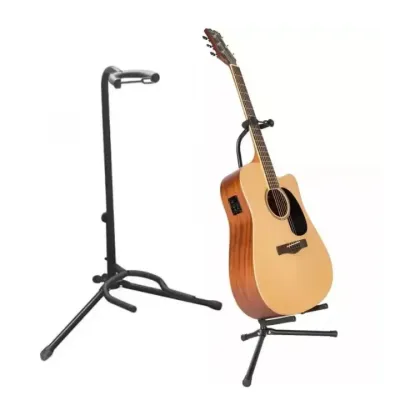
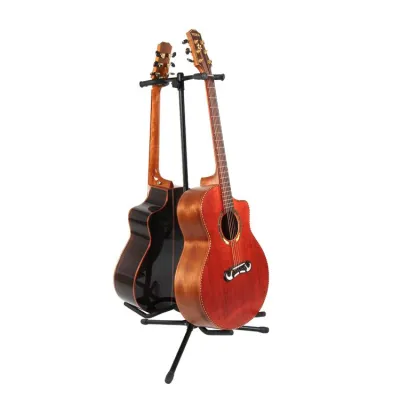
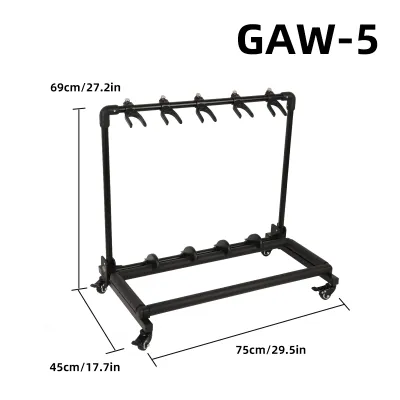
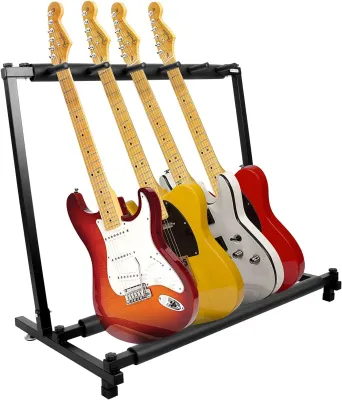
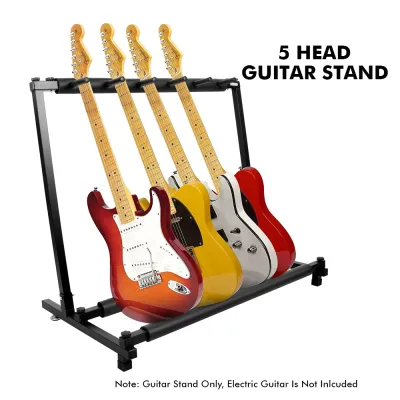
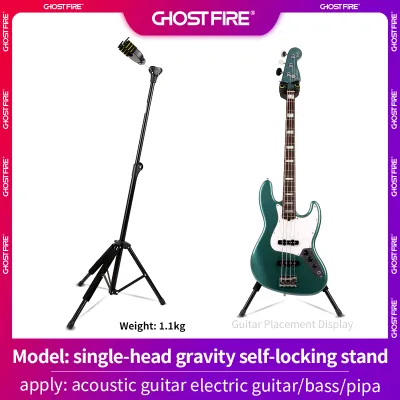
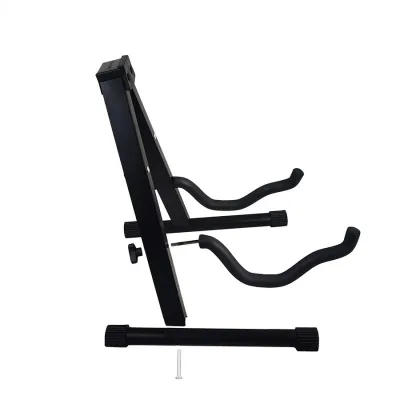
Prices are valid at publication and may change. Please refer to the product page for the latest price.
Pay close attention to the headstock and neck designs of your instruments. Symmetrical headstocks hang easily on neck-suspension stands, but asymmetrical or headless designs might slip or sit crookedly if the cradle is not adjustable. Ukuleles present a unique challenge because their short scale length prevents them from reaching the lower supports of standard full-sized stands, meaning they require specialized cradles or dedicated smaller slots to remain secure.
Consider how often you practice. If you pick up your guitar multiple times a day, keeping it on an open stand encourages consistency and eliminates the friction of unpacking it. However, if you only practice once a week, leaving an instrument exposed to dust and ambient air might not be the best approach, especially if you do not have a dedicated, climate-controlled room to protect the wood and hardware.
Evaluate Your Practice Space and Environment
The physical layout of your room dictates what kind of support system is practical. A standard A-frame or tripod single stand occupies a relatively small, concentrated footprint on the floor, but it can easily be tipped over if placed in a high-traffic area. In contrast, a multi-instrument rack distributes weight across a wider, rectangular base, making it inherently more stable but requiring a dedicated stretch of wall space to accommodate its length.

Environmental hazards are a major consideration for home setups. In active households with pets, young children, or high-velocity cooling fans, a single stand sitting in the middle of a room is highly vulnerable to accidental bumps. Placing a multi-instrument rack flat against a wall or in a quiet corner minimizes the risk of tipping and keeps your instruments out of the main household pathways.
Do not forget to inspect your flooring. Hard surfaces like tile or polished wood can cause lightweight stands to slide when you place or remove an instrument. Check the manufacturer’s specifications to ensure the stand features non-slip rubber feet that grip the floor securely without leaving scuff marks or chemical stains on your flooring material.
Plan for Future Instrument Additions
Many beginners start with a single acoustic guitar but quickly find themselves wanting to explore new sounds. A common progression is adding an electric guitar and a small amplifier within the first year, or perhaps picking up a ukulele for casual strumming. If you anticipate adding even one more instrument to your setup soon, buying a multi-instrument rack from the start can save you both space and money.
From a financial perspective, purchasing three individual single stands over time often costs more than investing in a single, high-quality three-space or five-space guitar rack stand upfront. Multiple single stands also create visual clutter and consume disjointed patches of floor space, making your practice area feel disorganized and cramped.
However, there is a limit to floor-based storage. Once your collection grows beyond four or five instruments, even a compact multi-rack can dominate a small room. At this threshold, you will need to consider transitioning to wall-mounted hangers to free up floor space, or keeping your less-frequently played instruments tucked away in protective hard cases.
Decision Guide: When to Choose a Single Stand vs. a Multi-Rack
A single guitar stand is the logical choice if you are working with a strict budget (often keeping gear costs under ₱1,000), own only one instrument, and have limited floor space. It is also the preferred option for musicians who travel frequently for lessons, jam sessions, or casual gigs, as a folding single stand fits easily into a car trunk or a gear bag.
A multi-instrument rack is highly recommended if you already own two or more instruments, have a dedicated practice corner, or want to keep a mixed collection of acoustics, electrics, and basses organized in one place. Racks keep your instruments aligned side-by-side, which dramatically reduces the total floor area required compared to placing multiple single stands next to each other.
| Feature | Single Guitar Stand | Multi-Instrument Rack |
|---|---|---|
| Best Suited For | Single-instrument owners, mobile players | Multi-instrument collections, permanent spaces |
| Floor Footprint | Small but easily crowded if multiplied | Wide but highly space-efficient per instrument |
| Stability | Moderate; prone to tipping if bumped | High; wide rectangular base prevents tipping |
| Portability | High; usually collapsible and lightweight | Low; bulky to transport once assembled |
| Average Capacity | 1 instrument | 3 to 7+ instruments |
Pre-Purchase Compatibility and Safety Checklist
Before finalizing your purchase on any online marketplace or at a local music store, verify the physical dimensions of the stand’s cradles. Ensure the lower cradle is deep enough to support the thick body of an acoustic guitar without forcing it to lean at an unsafe angle, and check that the neck cradle is wide enough for your instrument’s neck profile.
Pay close attention to the materials used for the contact padding. Standard foam or rubber padding can chemically react with certain guitar finishes—particularly nitrocellulose lacquer, which is found on some premium or vintage-style instruments—causing permanent discoloration or softening of the finish. Always check the product labels to confirm if the padding is explicitly rated as safe for your guitar’s specific finish.
Evaluate the physical stability of the setup by checking the product’s weight and base dimensions. A top-heavy instrument, such as a long-scale electric bass guitar, requires a stand with a low center of gravity and a wide, stable base to prevent it from tipping forward or sideways during storage.
Frequently Asked Questions (FAQ)
Can I use a standard guitar stand for a ukulele or bass?
A standard guitar stand can usually accommodate an electric or acoustic bass, provided the stand is tall enough to support the longer neck and stable enough for the extra weight. However, standard stands are generally too large for a ukulele. The narrow neck of a ukulele will slip through a standard neck cradle, and its short body will not rest securely on the lower supports, making a dedicated ukulele stand or an adjustable multi-rack with customizable spacing a much safer choice.
How do I prevent my guitar from falling off the stand?
To ensure your instrument remains secure, always use the built-in safety straps or neck gates if your stand features them. Position the stand on a flat, level surface away from high-traffic walkways, open windows, or swinging doors. When placing the guitar on the stand, double-check that the body is fully seated in the lower cradle and that the neck is centered in the upper support before letting go.
Is it safe to leave my guitar on a stand long-term?
While stands are excellent for keeping your instrument ready to play, long-term open storage comes with risks, especially in tropical climates. High humidity can cause wood to swell and warp, while dust can accumulate in the electronics and corrode the strings. For daily practice, a stand is perfectly fine, but if you plan to leave your guitar unplayed for weeks at a time, storing it inside a high-quality hard case with a humidity control pack is the safest way to preserve its structural integrity.
Community discussion
Share your experience or ask a question. Comments are reviewed before publication.