
Constant connectivity, demanding work schedules, and the persistent pressure to always be “on” have made burnout an all-too-familiar reality for many professionals in the Philippines. In a culture that often equates busyness with worth and success, stepping off the treadmill of constant productivity can feel like a risk. However, chronic exhaustion, emotional detachment, and a declining sense of personal accomplishment are clear signals that your current pace is unsustainable. To reclaim your time and mental well-being, turning to structured, insightful literature can provide the perspective shift and practical tools needed to dismantle the habits of overwork.
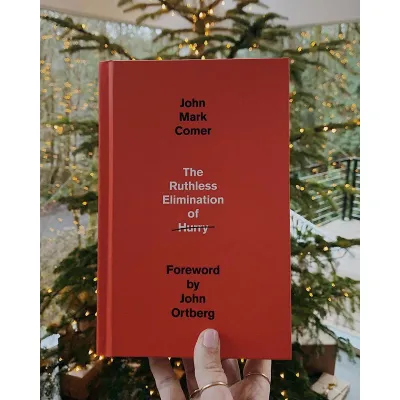
Among the most impactful resources for this journey is The Ruthless Elimination of Hurry by John Mark Comer, which offers a profound critique of modern busyness alongside practical spiritual disciplines. Alongside other highly regarded titles focusing on biological stress, philosophical time management, and professional prioritization, this guide curates the best self-help books to help you navigate and overcome the toxic cycles of hustle culture. By understanding the distinct methodologies of these books, you can choose the exact reading path that aligns with your current state of exhaustion and your personal goals for recovery.
How to Choose the Right Book for Your Burnout Recovery
Selecting the right book to aid your recovery requires an honest assessment of where your exhaustion is concentrated. Burnout is rarely a one-dimensional issue; it manifests physically, emotionally, and mentally, and different authors address these dimensions through distinct lenses. If you find yourself physically wired, unable to sleep despite being exhausted, or constantly feeling a sense of dread, you likely need a science-backed approach that addresses the physiological toll of stress. Conversely, if your struggle is more existential—such as feeling that your life is slipping away in a blur of endless tasks—a philosophical or spiritual guide that redefines your relationship with time and ambition will be more beneficial.
Products mentioned in this guide

Prices are valid at publication and may change. Please refer to the product page for the latest price.
Your personal reading preferences and current cognitive capacity should also dictate your choice. When you are deeply burned out, digesting a dense, academic text can feel like an additional chore. If your energy is low, look for books that offer narrative-driven reflections or highly structured, bite-sized chapters that you can read in short intervals. If you prefer clear, actionable frameworks with step-by-step instructions, a practical guide on boundary-setting and prioritization will yield immediate benefits for your daily routine.
Finally, consider how the book’s format fits into your daily life. For those navigating long, exhausting daily commutes in heavy traffic or on public transit, audiobooks can transform stressful travel time into a space for reflection and decompression. E-books offer the convenience of instant access and adjustable text sizes, which is ideal if you prefer reading during brief breaks or in low-light environments. If you find that screens contribute to your mental fatigue, a physical book provides a tactile, screen-free ritual that can help you wind down in the evening, away from the digital notifications that fuel hustle culture.
Recommended Self-Help Books for Slowing Down and Healing
To help you navigate the vast landscape of personal development literature, we have curated four exceptional books that target different facets of burnout and hustle culture. Each of these titles offers a unique pathway to recovery, ranging from spiritual pacing and biological stress management to philosophical acceptance and practical workplace boundaries. Rather than offering superficial quick-fixes, these books challenge the underlying assumptions of the hustle mentality, helping you build a more sustainable and fulfilling lifestyle.

The Ruthless Elimination of Hurry by John Mark Comer
John Mark Comer’s The Ruthless Elimination of Hurry serves as a gentle yet urgent wake-up call for those caught in the relentless cycle of modern busyness. Comer argues that hurry is the great enemy of spiritual and emotional health, systematically eroding our capacity for love, joy, and deep connection. Drawing heavily on Christian theology and the historical practices of monastic life, the book outlines four primary disciplines to combat chronic rush: silence and solitude, Sabbath, simplicity, and slowing down. Comer’s writing is conversational, deeply reflective, and highly critical of the cultural obsession with optimization and accumulation.
It is important to note that this book is written from a distinct Christian perspective, making it highly resonant for readers who find comfort and guidance in spiritual frameworks. If you are feeling spiritually depleted, disconnected from your values, or exhausted by the constant noise of digital life, Comer’s insights offer a compelling blueprint for a quieter, more intentional existence. Even for readers who may not fully align with the theological aspects, the practical advice on digital minimalism, setting strict limits on screen time, and intentionally choosing slower daily paces provides invaluable tools for reclaiming mental clarity.
Burnout: The Secret to Unlocking the Stress Cycle by Emily and Amelia Nagoski
For those whose burnout is deeply felt in the body, Burnout: The Secret to Unlocking the Stress Cycle by Emily and Amelia Nagoski offers an essential, science-backed exploration of how stress affects human physiology. The authors introduce a critical distinction that is often overlooked: the difference between dealing with stressors (the external factors causing stress, such as work deadlines or financial pressures) and completing the biological stress cycle itself. They explain that even if you successfully resolve a stressful situation, your body remains in a state of physiological fight-or-flight until you actively signal to your nervous system that you are safe.
To complete the stress cycle, the Nagoski sisters recommend concrete, physical strategies such as physical movement, deep breathing, positive social interaction, laughter, crying, and creative expression. This book is particularly suited for readers who feel physically wired, chronically tense, or emotionally volatile, even after taking a weekend off or going on a brief vacation. By focusing on the biological reality of stress, the book empowers you to prioritize physical recovery and emotional connection as non-negotiable components of your daily routine, rather than viewing them as optional luxuries.
Four Thousand Weeks: Time Management for Mortals by Oliver Burkeman
Oliver Burkeman’s Four Thousand Weeks: Time Management for Mortals takes a radically different approach to productivity by confronting the ultimate limitation of human existence: our extremely brief lifespan. Assuming an average life expectancy of eighty years, we have roughly four thousand weeks on Earth. Burkeman argues that traditional time-management hacks and productivity systems are actually counterproductive; they create the illusion that we can eventually “do it all,” which only drives us to take on more commitments and feel more anxious about what we are missing.
Instead of offering tips to squeeze more tasks into your day, Burkeman advocates for a philosophy of active acceptance of our limitations. He encourages readers to embrace the pain of choosing what to neglect, to let go of the impossible standards of optimization culture, and to find joy in the ordinary, unoptimized moments of life. This book is an ideal read for those who are deeply exhausted by the constant pressure to maximize every minute of their day and are ready to trade the anxiety of infinite possibilities for the peace of finite reality.
Essentialism: The Disciplined Pursuit of Less by Greg McKeown
If your burnout is primarily driven by workplace overcommitment, scope creep, and an inability to say no, Greg McKeown’s Essentialism: The Disciplined Pursuit of Less provides a highly practical and structured framework for reclaiming control over your choices. McKeown’s core philosophy is centered on the concept of “less but better.” He argues that by systematically identifying what is truly essential and ruthlessly eliminating everything else, we can channel our limited energy into making significant progress on the things that matter most, rather than making millimeter progress in a million different directions.
The book offers actionable strategies for evaluating opportunities, saying no gracefully to colleagues and managers, and designing a life where execution becomes almost effortless. It is particularly valuable for professionals, managers, and entrepreneurs who struggle with people-pleasing or find themselves constantly reacting to other people’s agendas. By teaching you how to set firm boundaries and protect your time, Essentialism helps you transition from a state of constant overwhelm to a life of deliberate, high-impact contribution.
Comparing Core Approaches to Beating Hustle Culture
To help you determine which book best addresses your current needs, it is helpful to compare their core methodologies and target audiences side by side. Each author approaches the problem of hustle culture from a different angle, meaning that the book that resonates with one person might not be what another person needs right now. Use the comparison table below to match your specific symptoms of burnout with the most appropriate literary remedy.
| Book Title | Primary Focus | Ideal Reader Profile | Core Actionable Takeaway |
|---|---|---|---|
| The Ruthless Elimination of Hurry | Spiritual pacing and digital minimalism | Readers feeling spiritually depleted, disconnected, and overwhelmed by digital noise | Intentionally slow down your daily pace through silence, solitude, and regular rest days. |
| Burnout: The Secret to Unlocking the Stress Cycle | Biological stress relief and nervous system regulation | Readers experiencing physical exhaustion, chronic tension, and emotional volatility | Complete the physical stress cycle daily through movement, deep breathing, and connection. |
| Four Thousand Weeks: Time Management for Mortals | Philosophical acceptance of human limitations | Readers exhausted by productivity hacks and the pressure to optimize every minute | Accept that you cannot do everything, and consciously choose what to let go of. |
| Essentialism: The Disciplined Pursuit of Less | Practical prioritization and boundary-setting | Professionals and managers struggling with overcommitment and workplace scope creep | Ruthlessly eliminate non-essential tasks to focus your energy on what truly matters. |
By analyzing this comparison, you can see that recovery often requires a multi-faceted approach. You might start with physical recovery before moving on to structural changes in your schedule or a deeper philosophical shift in how you view your life’s purpose.
Where and How to Buy Books in the Philippines
When sourcing these titles in the Philippines, it is crucial to prioritize authorized, reputable sellers to ensure you receive high-quality, complete editions. The local market has seen a significant influx of counterfeit books, particularly on general online marketplaces and unverified third-party storefronts. These unauthorized reproductions are often printed on low-grade paper, feature blurry or illegible text, and frequently suffer from missing pages, binding failures, or severe formatting errors that can ruin your reading experience.
To guarantee you are purchasing authentic copies, look for established physical bookstores and their official online channels. Major local chains like Fully Booked and National Book Store are reliable sources for imported self-help and personal development titles. When shopping online, always verify that the seller is an official brand store or an authorized distributor. Authentic paperbacks of these popular titles typically range in price from ₱400 to ₱900, depending on the publisher and edition. If you encounter a listing offering a brand-new copy for an unusually low price, such as ₱100 or ₱150, it is highly likely to be an unauthorized counterfeit.
Before finalizing your purchase, carefully check the product specifications. Verify the language of the edition, the binding format (paperback vs. hardcover), and whether the book is currently in stock or listed as a pre-order. If you prefer digital formats, ensure that the e-book or audiobook file is compatible with your specific reading device or application, and purchase only through authorized global digital platforms. Taking these precautions ensures that your investment supports the authors and publishers while providing you with a durable, legible copy that you can return to throughout your recovery journey.
Frequently Asked Questions (FAQ)
Can reading self-help books actually cure clinical burnout?
While self-help books provide invaluable psychoeducation, practical coping strategies, and mindset shifts, they are not a substitute for professional medical or psychological treatment. Burnout can sometimes escalate into severe clinical depression, anxiety disorders, or chronic physical health conditions that require personalized intervention. If you are experiencing persistent feelings of hopelessness, severe physical exhaustion that does not improve with rest, or a complete inability to function in your daily life, it is essential to consult a qualified healthcare professional, counselor, or therapist. Use these books as supportive tools alongside professional guidance to build a comprehensive recovery plan.
Should I read these books in a specific order?
There is no single correct order, but a sequential approach based on your current energy levels can make your recovery more manageable. If you are currently in a state of acute, physical exhaustion, it is highly recommended to start with Burnout: The Secret to Unlocking the Stress Cycle to learn how to regulate your nervous system and find immediate physical relief. Once you have restored some baseline energy, you can transition to The Ruthless Elimination of Hurry or Four Thousand Weeks to address the deeper philosophical and lifestyle habits that contributed to your burnout. Finally, read Essentialism when you are ready to implement practical, long-term boundaries and restructure your professional commitments.

Community discussion
Share your experience or ask a question. Comments are reviewed before publication.