
Improving your cognitive performance and learning speed is one of the most valuable investments you can make, especially in a fast-paced academic and professional environment. While many self-help books promise to unlock your mental potential, finding the right guide requires matching your specific learning challenges with proven, actionable methodologies. For readers in the Philippines, this journey often involves balancing busy schedules, long daily commutes, and the practical need for highly structured study systems that can be applied in real-world scenarios.
A popular starting point for many is the concept of a “limitless brain booster,” a term often associated with Jim Kwik’s framework for mental expansion. However, a single book rarely serves as a universal solution for every cognitive bottleneck. To truly enhance your memory, reading speed, and focus, you must learn how to evaluate these texts critically, apply their exercises systematically, and select formats that fit your daily lifestyle and study environment.
How to Match Brain-Boosting Books to Your Learning Bottlenecks
Before purchasing any personal development book, you must diagnose the specific cognitive hurdles that slow down your progress. Learning bottlenecks generally fall into three distinct categories: memory retention, reading speed, and deep focus. If you find yourself forgetting key details shortly after reading a chapter, your primary need is memory retention, which requires books focused on mnemonics, active recall, and spaced repetition. If you struggle to get through your academic or professional reading list, speed-reading guides are more appropriate. For those who constantly battle distractions during study sessions, books on deep focus and attention management should take priority.
Products mentioned in this guide
Prices are valid at publication and may change. Please refer to the product page for the latest price.
Once you identify your primary bottleneck, evaluate how a book presents its solutions. Effective cognitive development books balance theoretical explanations with structured, actionable exercises. Look for titles that include step-by-step drills, worksheets, or daily practice prompts rather than those that rely solely on motivational anecdotes. A book that explains the neuroscience of memory without providing a practical system to practice it will do little to improve your daily performance.
It is equally important to manage your expectations when starting a new cognitive training program. Many popular titles use enthusiastic marketing language that suggests immediate, effortless transformation. In reality, cognitive improvement is a gradual process that requires consistent mental effort and repetition. Avoid books that promise overnight genius status, and instead look for authors who emphasize the necessity of daily practice, incremental progress, and lifestyle adjustments.
To get the most out of your chosen book, consider keeping a dedicated learning journal. Documenting your progress, tracking your reading speed, and writing down your mnemonic associations can help solidify the concepts. This active engagement transforms passive reading into a practical workshop, ensuring that the strategies you learn are successfully integrated into your daily study or work routines.
Evaluating Limitless as a Comprehensive Learning System
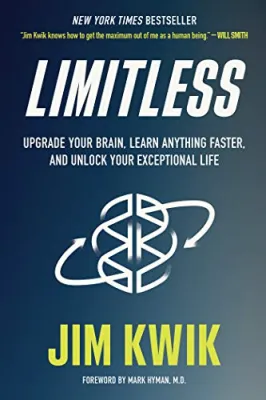
Jim Kwik’s Limitless has gained significant popularity as a comprehensive guide to cognitive enhancement, often sought after by those looking for a structured “limitless brain booster.” The core of this system is built around the expanded 4M model, which categorizes personal growth into four distinct pillars: Mindset, Motivation, Methods, and Mastery. For students and professionals in the Philippines, this framework offers a holistic approach to learning by addressing not just the technical skills of study, but also the psychological barriers that prevent academic or career advancement.

The Mindset and Motivation pillars focus on dismantling limiting beliefs and establishing a clear purpose for your learning goals. This is particularly relevant for individuals preparing for rigorous board exams or professional certifications, where mental fatigue and self-doubt can be major obstacles. The Methods pillar introduces practical techniques for speed reading, memory improvement, and focused study. Finally, the Mastery pillar encourages readers to integrate these skills into their daily routines until they become second nature, allowing for continuous self-improvement.
However, implementing the Limitless system requires a significant commitment of time and energy. The memory drills and speed-reading exercises described in the book are not passive reading material; they demand daily repetition and active mental engagement. If you have a demanding schedule, you will need to dedicate specific blocks of time each day to practice these techniques. Without this consistent application, the concepts remain theoretical and are unlikely to produce noticeable changes in your cognitive speed.
Furthermore, readers should recognize the inherent limitations of general self-help books. While Limitless provides excellent tools for typical academic and professional development, it is designed as a general-purpose guide. It does not replace clinical interventions or specialized educational strategies for individuals with diagnosed learning disabilities or cognitive conditions. If you face specific learning challenges that require professional support, these books should be viewed as supplementary tools rather than complete solutions.
Expanding Your Reading List: Complementary Books for Cognitive Growth
To build a well-rounded cognitive toolkit, you should look beyond a single methodology and explore complementary topics that support brain health and learning. Foundational subjects such as neuroplasticity, habit formation, and deep work provide the necessary infrastructure for speed-reading and memory techniques. For instance, understanding how habits are formed helps you stick to your daily memory drills, while mastering the principles of deep work ensures you can maintain the intense focus required for rapid learning.
When expanding your reading list, always verify the credentials and scientific backing of the authors. The field of cognitive science is constantly evolving, making it essential to choose books written by reputable researchers, educators, or practitioners. Check the publication dates and bibliography of a book to ensure the concepts are supported by modern scientific consensus rather than outdated theories or debunked myths about the brain.
To ensure a book’s teaching style aligns with your personal learning preferences, take advantage of online previews, sample chapters, and detailed reader reviews. Some readers prefer highly technical, data-driven explanations, while others learn best through narrative-driven guides with practical summaries. Reading a sample chapter beforehand can help you determine if the author’s tone and formatting will keep you engaged throughout the book.
Additionally, consider how different authors approach the concept of cognitive energy. Some books focus heavily on mental techniques, while others emphasize the physical foundations of brain power, such as sleep hygiene, hydration, and stress management. Integrating books from both perspectives ensures that your mind has the physical support it needs to perform the high-level cognitive tasks you are training it to do.
Buying and Formatting Guides for Readers in the Philippines
Choosing the right format for your self-help books can significantly impact how well you retain and apply the information. In the Philippines, where daily commutes can be long and study environments may vary, print, e-books, and audiobooks each offer distinct advantages. Print books are ideal for active study, allowing you to easily highlight text, write notes in the margins, and complete visual exercises without digital distractions. However, physical books require careful storage in tropical climates to protect them from high humidity and moisture damage.
To preserve physical books in humid conditions, store them in well-ventilated areas away from direct sunlight. Using silica gel packets on your bookshelves can help absorb excess moisture and prevent the growth of mold or the yellowing of pages. If space is limited or you travel frequently, e-books offer a highly portable and space-saving alternative, allowing you to carry an entire library on a single device. This is particularly useful for students who need to study during transit or in shared living spaces.
When purchasing books, it is crucial to buy from authorized sellers to ensure you receive authentic, high-quality editions. The local market has seen a rise in pirated, poorly printed copies on various online marketplaces. These counterfeit books often contain missing pages, illegible text, and formatting errors that can ruin your reading experience. To avoid this, purchase directly from established physical bookstores, official publisher storefronts, or verified distributors on major e-commerce platforms.
Before making a purchase, compare prices in ₱ across different retailers and look for authorized bundled deals. Many local bookstores offer discounts during seasonal sales or book fairs, which can make building your library more affordable. Additionally, check the regional availability of specific editions, as some updated or expanded versions of cognitive guides may take longer to arrive in local physical stores, making authorized digital platforms a faster option.
Frequently Asked Questions (FAQ)
Can audiobooks replace physical books for learning speed and memory techniques?
Audiobooks are highly effective for understanding broad concepts, gathering inspiration, and learning through storytelling while multitasking. However, they are generally less effective than physical books or e-books when it comes to mastering specific technical skills like speed-reading or memory mapping. These techniques often rely on visual charts, spatial exercises, and active note-taking that are difficult to replicate in an audio-only format. For books that contain practical drills, it is best to use a print or digital text format, or use the audiobook as a companion guide alongside a physical copy.
How long does it typically take to see results from brain-boosting books?
The timeline for seeing noticeable improvements in your learning speed and memory depends entirely on your level of consistent practice. While you can understand a new memory technique or reading strategy almost immediately, translating that understanding into a permanent cognitive habit requires time. Developing new neural pathways through neuroplasticity typically takes several weeks of daily, deliberate practice. Most readers begin to notice improvements in their retention and reading efficiency after three to four weeks of consistent application, provided they actively track their progress and refine their techniques.
Community discussion
Share your experience or ask a question. Comments are reviewed before publication.