
Learning how to argue like a lawyer is not about winning shouting matches or dominating conversations during a warm family gathering. Instead, it is about mastering structured critical thinking, analyzing evidence objectively, and presenting persuasive points with calm precision. The legal profession relies on a systematic approach to problem-solving that strips away emotional noise to focus on facts, rules, and logical applications.
To acquire these skills through self-study, you must look beyond sensationalist titles that promise quick tricks for winning every debate. High-quality self-help and educational books on this topic teach you how to dissect complex situations, identify logical vulnerabilities, and construct arguments that can withstand rigorous cross-examination. This guide provides a structured framework to help you identify, evaluate, and select the right books that genuinely develop these professional-grade cognitive abilities.
Core Skills to Look for in Argumentation Books
When browsing online marketplaces or local bookstore shelves, you will encounter hundreds of titles promising to sharpen your mind. To filter out superficial guides, you must look for books that cover specific core cognitive and rhetorical modules. A truly effective book on argumentation must address the mechanics of reasoning rather than just the delivery of speeches.
Products mentioned in this guide
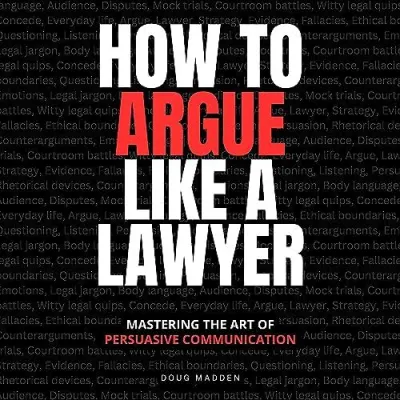
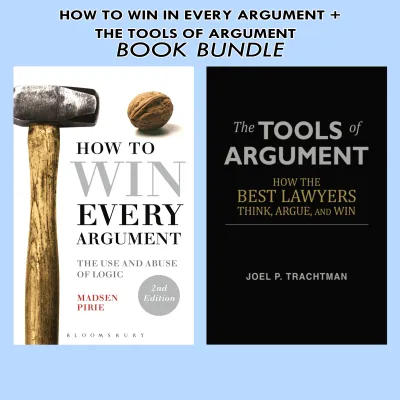
Prices are valid at publication and may change. Please refer to the product page for the latest price.
First, a foundational text must thoroughly cover logical fallacies and cognitive biases. In daily discussions, people frequently rely on flawed reasoning, such as attacking a person’s character instead of their argument or misrepresenting an opponent’s position to make it easier to attack. A high-quality book will teach you to recognize these patterns instantly, allowing you to dismantle weak arguments calmly without getting drawn into emotional traps.
Second, look for content dedicated to evidence evaluation and fact-checking. In an era dominated by rapid social media sharing and unverified online claims, the ability to distinguish between anecdotal stories, circumstantial evidence, and verifiable facts is invaluable. Legal minds are trained to assess the credibility of sources, identify gaps in data, and understand the weight of different types of proof. Your chosen reading material should offer clear guidelines on how to perform this level of scrutiny in your personal and professional life.
Third, the book must teach you how to structure claims and premises systematically. Strong arguments are built like sturdy structures, where each premise directly supports the final conclusion. You need to learn how to separate objective facts from subjective interpretations, ensuring that your core message remains logically sound even under intense scrutiny. Look for chapters that explain how to organize your thoughts sequentially so that your audience can easily follow your line of reasoning.
Finally, emotional detachment and objective framing are critical components of legal argumentation. When discussions become heated, especially in high-pressure environments or warm tropical offices where tempers can flare, maintaining your composure is a distinct advantage. A good book will provide psychological strategies to help you separate your personal identity from the topic under debate, enabling you to focus entirely on the issue at hand.
Matching Book Categories to Your Specific Goals
Not every reader seeks to apply argumentation skills in the same way, meaning a single book may not suit everyone. To make an efficient choice, you should match the category of the book to your immediate practical needs, whether you are preparing for corporate negotiations, academic research, or daily discussions.

If you are a beginner looking to build a solid mental foundation, focus on books categorized under foundational logic and critical thinking. These texts introduce you to the basic rules of formal and informal logic, teaching you how to analyze information systematically. They are highly beneficial for anyone who wants to improve their overall decision-making and avoid falling victim to manipulative rhetoric in daily life.
For those who need to influence others in professional settings, books on persuasion psychology and rhetoric are highly suitable. These works go beyond pure logic to explore how the human brain processes information, makes decisions, and responds to emotional appeals. You will learn how to frame your arguments to align with your audience’s values, making your proposals much more appealing during workplace negotiations, client pitches, or public presentations.
If your goal is to understand the precise structural thinking used in courtroom settings, look for titles that focus on legal reasoning and case analysis. These books often introduce readers to structured frameworks such as the IRAC method, which stands for Issue, Rule, Application, and Conclusion. Learning this method helps you dissect complex problems by identifying the core question, applying the relevant rule or standard, analyzing the facts in light of that rule, and drawing a logical conclusion.
Lastly, if you frequently find yourself in fast-paced debates or high-pressure meetings, prioritize books on debate tactics and rebuttal strategies. These guides focus on quick thinking, active listening, and cross-examination techniques. They teach you how to defend your position against aggressive counterarguments, ask targeted questions that expose weaknesses in the opposing view, and deliver concise, impactful responses under tight time constraints.
Pre-Purchase Checks for Books and Editions
Before finalizing your purchase on an online platform or at a local bookshop, performing a few practical checks will ensure you receive a high-quality, usable resource. Books on logic and legal reasoning require careful study, making the physical or digital format of the book highly important to your learning experience.
First, verify the edition and publication year of the book. While the core principles of formal logic have remained unchanged for centuries, the examples, case studies, and cultural references used to explain them can become outdated. A newer edition often contains revised exercises, modern real-world examples, and clearer explanations that make complex concepts much easier to grasp.
Second, pay close attention to language and translation quality. Logic and legal reasoning rely heavily on precise terminology, where a single mistranslated word can completely alter the meaning of an argument. If you are purchasing a translated version of a foreign text, read sample pages or customer reviews to ensure the translation maintains conceptual accuracy; otherwise, opting for the original English edition is often the safer choice for preserving logical clarity.
Third, consider how the format and device compatibility align with your study habits. Physical paperbacks are excellent for active reading, allowing you to write notes in the margins and highlight key passages easily, though you must store them carefully in humid tropical climates to prevent the pages from warping or yellowing. If you prefer digital reading, ensure the e-book format is fully compatible with your e-reader or tablet, allowing for seamless highlighting and search functions. Audiobooks can be highly convenient for long commutes through busy metropolitan traffic, but they may make it more difficult to study complex logical diagrams or complete written exercises.
Finally, check for the inclusion of supplementary materials. The best way to master argumentation is through active practice rather than passive reading. Look for books that include practical workbooks, review quizzes, case libraries, or access to online companion resources where you can test your understanding of the concepts and apply them to realistic scenarios.
Evaluating the Author's Background and Teaching Approach
The market for self-help and personal development books is vast, and not all authors possess the necessary expertise to teach advanced argumentation skills. To ensure you are investing your time and money wisely, you must evaluate the author’s credentials and their specific approach to teaching.
Begin by verifying the author’s professional background. Look for writers who have formal training or extensive practical experience in fields that demand rigorous logical reasoning, such as law, academic philosophy, cognitive psychology, or professional debate coaching. An author who has spent years practicing law or teaching logic at a university level is far more likely to provide accurate, structured, and deeply researched content than a generalist self-help writer.
Next, assess the book’s teaching methodology. A book that relies solely on abstract philosophical theory may leave you feeling inspired but unable to apply the concepts in real life. Instead, look for authors who balance theory with actionable frameworks, step-by-step guides, and real-world case studies. The content should guide you through the process of building an argument, analyzing a text, or responding to a fallacy, providing clear examples of what successful communication looks like in practice.
Finally, learn how to filter reader reviews on online marketplaces to gauge the book’s actual utility. Avoid relying on superficial five-star ratings that only praise the fast delivery, the neat packaging, or the aesthetic appeal of the cover. Instead, look for detailed, written reviews from readers who discuss how the book helped them improve their thinking, which chapters were the most challenging, and whether the exercises were practical. These analytical reviews will give you a much more accurate picture of the book’s depth and whether it aligns with your personal learning goals.
Frequently Asked Questions (FAQ)
Can reading self-help books replace formal legal training?
No, reading self-help books cannot replace formal legal training. While these books are excellent resources for improving your daily logic, critical thinking, and persuasive communication skills, they do not provide the comprehensive education required to practice law. Formal legal training involves years of rigorous study covering specific jurisdictional laws, civil and criminal procedures, constitutional frameworks, and ethical responsibilities. Additionally, practicing law requires passing a professional licensing exam and adhering to strict regulatory standards. Self-help books should be viewed as tools for personal and professional development, helping you think more clearly in everyday situations, rather than a substitute for a formal legal degree.
How long does it take to see improvements in argumentation skills?
Improving your argumentation and logical reasoning skills is a gradual process that depends on deliberate practice and consistent application. While you may learn to identify basic logical fallacies within a few weeks of reading, mastering the ability to construct complex, bulletproof arguments under pressure takes months or even years of active effort. To see meaningful progress, you must actively apply the techniques you read about in your daily life, such as during workplace discussions, writing professional emails, or analyzing news articles. Regular self-reflection, where you review your past conversations to identify areas where your logic or composure faltered, will also accelerate your development.

Community discussion
Share your experience or ask a question. Comments are reviewed before publication.