
Selecting a Catholic deliverance handbook for prayer ministry in the Philippines requires a careful balance of spiritual zeal and theological caution. Because deliverance ministry directly touches upon spiritual warfare, choosing the right resource is not merely a matter of personal preference, but one of spiritual safety and ecclesiastical alignment. The ideal handbook must serve as a reliable guide that respects the boundaries of lay participation while remaining deeply rooted in the liturgical and pastoral traditions of the Catholic Church.
For lay practitioners, parish intercessors, and clergy alike, the primary goal of a deliverance manual is to facilitate healing, freedom, and spiritual protection in a manner consistent with Church teachings. Navigating the wide array of spiritual warfare literature available locally can be challenging, especially with the influx of non-Catholic or unapproved materials. By focusing on books that carry official ecclesiastical approvals and clear pastoral guidelines, you can ensure your prayer practice remains safe, orderly, and spiritually fruitful.
Understanding Catholic Deliverance and Church Guidelines
To safely engage in deliverance prayer, you must first understand the theological boundaries established by the Catholic Church. The Church draws a sharp distinction between major exorcism and minor deliverance prayers. A major exorcism is a solemn liturgical rite intended to expel demons or deliver from demonic possession. This rite can only be performed by a bishop or a priest who has received a specific, express mandate from the local ordinary. Laypeople are strictly prohibited from performing major exorcisms, commanding demons directly, or using prayers reserved exclusively for ordained exorcists.
Products mentioned in this guide
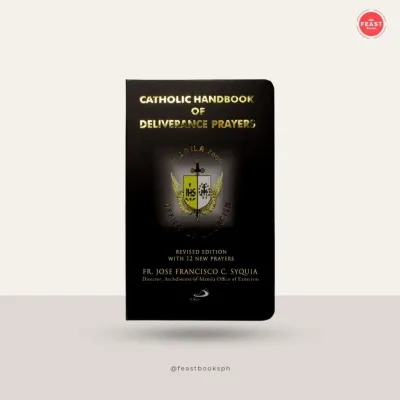
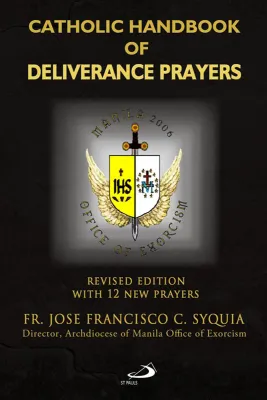
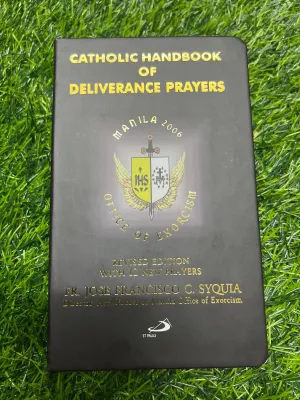
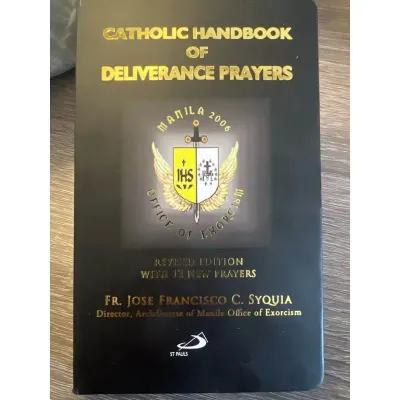
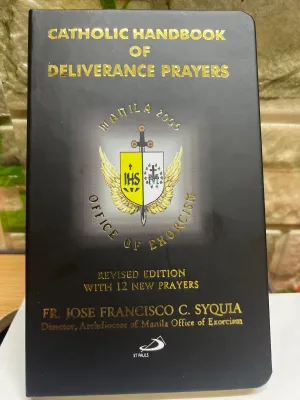
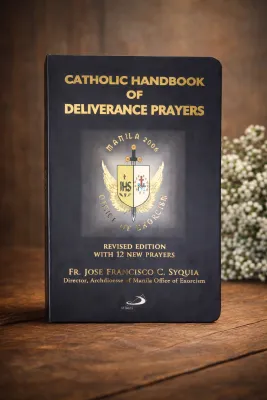
Prices are valid at publication and may change. Please refer to the product page for the latest price.
Minor deliverance prayers, conversely, are prayers of petition and intercession aimed at overcoming demonic influence, oppression, or temptation. These prayers are accessible to laypeople for personal use or within structured, approved parish ministries. In the Philippines, where spiritual warfare is often viewed through a mix of traditional devotions and cultural beliefs, adhering to the Roman Ritual (Rituale Romanum) and local diocesan guidelines is essential. Many local dioceses have established offices of exorcism and deliverance that provide clear protocols for lay intercessors to ensure all ministry activities remain under pastoral supervision.
When selecting a handbook, you must be vigilant against warning signs of syncretism, New Age influences, or unauthorized spiritual practices. Some unofficial prayer books may blend Catholic devotions with superstitious rituals, automatic formulas, or esoteric concepts that contradict Christian theology. For instance, any resource that encourages laypeople to engage in direct dialogue with spirits or to use imprecatory (commanding) prayers against demonic forces should be avoided. Authentic Catholic deliverance always centers on the authority of Jesus Christ, the intercession of the Blessed Virgin Mary and the saints, and the active sacramental life of the Church.
Key Criteria for Evaluating a Catholic Deliverance Handbook
Evaluating the orthodoxy and safety of a deliverance manual requires a systematic check of its ecclesiastical credentials. The most reliable indicator of a book’s alignment with Catholic doctrine is the presence of official ecclesiastical approvals on the copyright page. Look for the Nihil Obstat, which indicates that a designated censor has found the text free of doctrinal or moral error, and the Imprimatur, which represents the bishop’s formal permission to publish the work. In addition, endorsements from local bishops or diocesan offices of exorcism provide an extra layer of pastoral assurance for books distributed within the Philippines.

The credentials of the author are equally critical when choosing a handbook. Prioritize works written by formally trained Catholic theologians, officially appointed diocesan exorcists, or members of recognized religious orders who specialize in spiritual theology. These authors possess the necessary canonical, theological, and pastoral training to navigate the complexities of spiritual warfare without falling into sensationalism. Books written by independent, unverified authors or those lacking formal ecclesiastical standing often lack the theological rigor required for safe ministry.
Furthermore, you should ensure that the prayers and methods outlined in the handbook are deeply rooted in Scripture, Sacred Tradition, and the Magisterium. Authentic Catholic deliverance resources do not rely on novel techniques or unapproved private revelations. Instead, they draw from the rich treasury of the Church’s liturgical heritage, including the Psalms, traditional prayers of protection, and the teachings of the Church Fathers. By verifying that a handbook’s content aligns with the Catechism of the Catholic Church, you protect yourself and your ministry from theological errors and spiritual imbalances.
Identifying the Right Type of Handbook for Your Ministry Needs
Choosing the right deliverance handbook depends heavily on your specific role and the context in which the prayers will be offered. For personal prayer and spiritual warfare, you should look for resources that focus on daily protection, interior healing, and personal spiritual growth. These handbooks are designed to help individuals overcome personal temptations, break negative spiritual patterns, and foster a deeper relationship with God. They typically feature prayers of petition, acts of consecration, examinations of conscience, and reflections that encourage a consistent sacramental life, particularly regular Confession and attendance at the Holy Mass.
If you are involved in parish-based intercession or covenant communities, you require a handbook tailored for group ministry. These resources must include structured protocols, safety guidelines, and clear steps for group discernment. In a group setting, lay intercessors must never act independently or attempt to diagnose spiritual afflictions. A proper group handbook will emphasize the use of deprecatory prayers—asking God to deliver the individual—rather than direct commands to spiritual forces. It should also outline the roles of team members, the importance of confidentiality, and the necessity of operating under the authority of the parish priest.
For clergy, deacons, and highly trained lay pastoral counselors, advanced manuals focusing on pastoral guidance and counseling are necessary. These comprehensive resources deal with complex spiritual cases that require a careful distinction between psychological distress and genuine spiritual oppression. Such handbooks provide frameworks for spiritual counseling, guidelines for collaborating with mental health professionals, and formal referral procedures to diocesan exorcists. They serve as essential tools for pastoral leaders who must shepherd individuals through deep spiritual healing while maintaining strict canonical order.
Sourcing and Verifying Authentic Editions in the Philippines
Acquiring authentic Catholic books in the Philippines requires utilizing trusted distribution channels to avoid counterfeit or altered texts. Established Catholic bookstores, such as those run by the Paulines, St. Pauls, Word & Life, or local diocesan book centers, are the most reliable sources. These institutions curate their inventory carefully, ensuring that the books they sell carry the necessary ecclesiastical approvals. When purchasing online, it is best to order directly from the official digital storefronts of these recognized Catholic publishers rather than unverified third-party sellers on generic online marketplaces.
Upon receiving a handbook, you should perform a physical verification of the book to ensure its authenticity. Check the copyright page carefully to confirm the presence of the Nihil Obstat and Imprimatur, along with the names of the approving authorities and the publication dates. Authentic editions typically feature high-quality printing, clear typography, and secure binding, whereas pirated copies often exhibit blurred text, poor paper quality, or missing copyright details. Verifying these physical attributes helps guarantee that you are using an unaltered, complete text that has not been compromised by unauthorized edits.
Language is another important consideration when selecting a deliverance handbook for local ministry. While many comprehensive manuals are published in English, Tagalog or bilingual editions are highly valuable for pastoral work in local communities. When choosing a translated edition, verify that the translation itself has received official ecclesiastical approval from the Catholic Bishops’ Conference of the Philippines or a local ordinary. This ensures that the theological precision of the original prayers is preserved, preventing misunderstandings or doctrinal distortions during translation. While authentic, approved editions may require a modest investment—typically ranging from ₱300 to ₱1,500 depending on the size and binding—this cost supports the legitimate Catholic publishers who ensure theological accuracy.
Frequently Asked Questions (FAQ)
Do I need a priest's permission to use a Catholic deliverance handbook?
For personal prayer, daily protection, and spiritual growth, you do not need formal permission from a priest to use approved Catholic deliverance handbooks. These prayers are part of the common priesthood of the faithful, allowing you to pray for your own spiritual well-being and that of your immediate family. However, if you intend to use a handbook to minister to individuals outside your family, or if you are forming a parish-based deliverance team, you must obtain the explicit permission and pastoral supervision of your parish priest or local bishop. If you encounter complex spiritual situations or suspect severe demonic influence during prayer, you must immediately stop personal ministry and refer the individual to a priest or the diocesan office of exorcism.
Are handbooks based on private revelations safe to use?
Handbooks that rely heavily on unapproved private revelations should be approached with extreme caution and are generally not recommended for official ministry. The Catholic Church teaches that public revelation is complete and contained within Scripture and Sacred Tradition. While the Church may recognize certain private revelations as worthy of belief, they do not add to the deposit of faith. For deliverance ministry and group intercession, it is safest to prioritize liturgical prayers, traditional devotions, and prayers that have received formal ecclesiastical approval. Relying on unapproved private revelations can introduce theological errors, sensationalism, or spiritual practices that deviate from established Catholic doctrine.
How can I tell if a religious book is a pirated or unauthorized copy?
You can identify a pirated or unauthorized copy of a religious book by examining its physical quality and copyright details. Counterfeit books often have poor binding, misaligned pages, blurred or uneven text, and low-quality paper that deteriorates quickly in humid tropical climates. Crucially, pirated editions may omit the copyright page entirely, alter the names of the publishers, or lack the official Nihil Obstat and Imprimatur details. Using unauthorized copies poses a spiritual and theological risk, as these texts may contain altered prayers, missing sections, or unapproved additions that compromise the safety and orthodoxy of your prayer ministry.
Community discussion
Share your experience or ask a question. Comments are reviewed before publication.