
Preparing for the Licensure Examination for Certified Public Accountants (LECPA) in the Philippines is a rigorous journey that requires strategic planning, dedication, and the right set of study materials. Among the various subjects covered in the board exam, Advanced Financial Accounting and Reporting (AFAR) is often regarded as one of the most challenging due to its complex conceptual frameworks and intricate computational requirements. Selecting the right advanced accounting textbook is not merely about finding a popular title; it is about identifying a resource that aligns perfectly with the current syllabus prescribed by the Professional Regulation Commission (PRC) and the Board of Accountancy (BOA). The ideal textbook must bridge the gap between theoretical standards and practical application, providing clear explanations, robust practice problems, and reliable alignment with the Philippine Financial Reporting Standards (PFRS).
To make an informed decision, candidates must evaluate textbooks based on specific criteria such as syllabus coverage, pedagogical structure, and standard compliance. This guide provides a comprehensive framework to help you assess, select, and utilize advanced accounting reference books effectively, ensuring your preparation is both efficient and aligned with the expectations of the board examiners.
Essential Criteria for Evaluating Advanced Accounting References
When evaluating potential advanced accounting textbooks, the primary consideration must be the book’s alignment with the latest Philippine Financial Reporting Standards (PFRS). Because accounting standards are dynamic, using a textbook that references outdated standards can lead to critical errors on the exam. Candidates should verify that the textbook incorporates recent updates to standards governing complex transactions, such as business combinations, joint arrangements, revenue recognition, and foreign currency transactions. A reliable textbook will explicitly state which versions of the standards are covered, allowing you to cross-reference them with the official syllabus.
Products mentioned in this guide
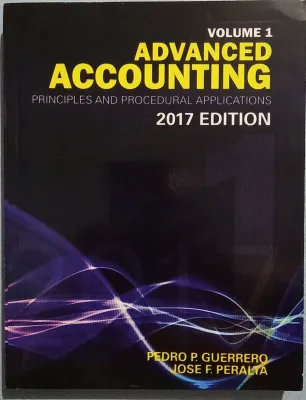
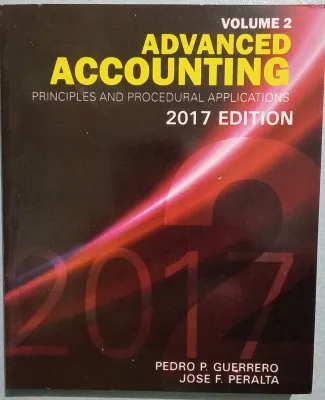
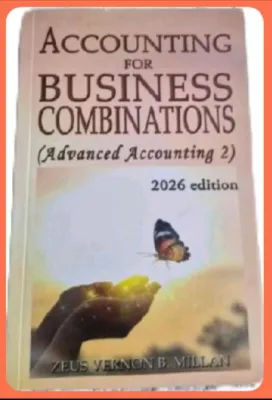
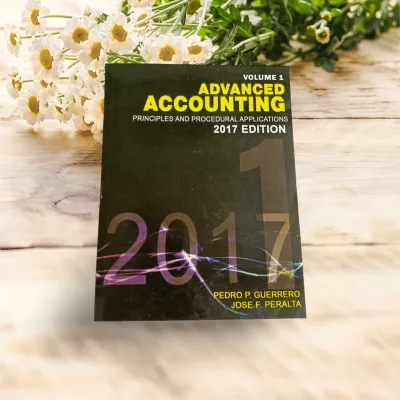
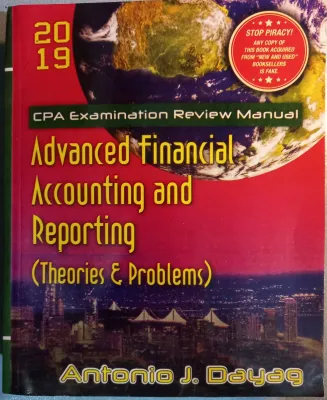
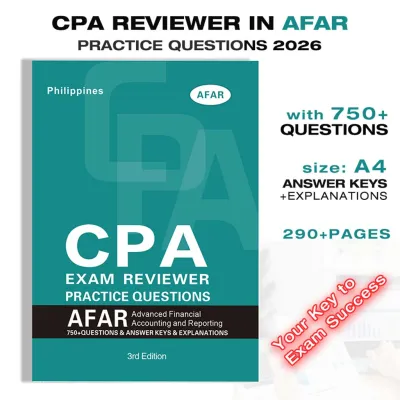
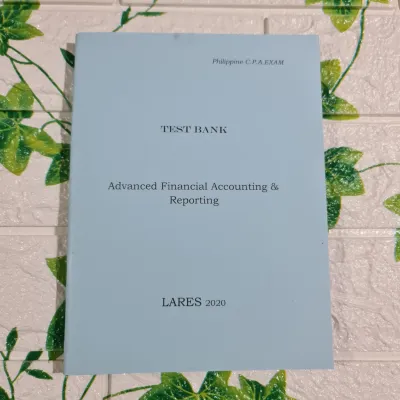
Prices are valid at publication and may change. Please refer to the product page for the latest price.
Another crucial factor is the coverage of the specific PRC CPA board exam syllabus. The AFAR syllabus covers a wide array of topics, including partnership accounting, corporate liquidation, joint ventures, installment sales, consignment, home office and branch accounting, business combinations, consolidated financial statements, foreign currency translation, and government accounting. Before purchasing a textbook, review its table of contents against the official BOA syllabus. A high-quality reference book should not only cover these topics but also present them in a logical sequence that builds your understanding from fundamental concepts to highly complex consolidations.
The academic and professional background of the author is also a strong indicator of a textbook’s utility. In the Philippines, textbooks written by established local educators, university professors, and review school lecturers are highly valuable. These authors possess firsthand experience with the local testing environment and understand the common pitfalls and conceptual hurdles that Filipino accounting students face. Books authored by individuals who are active in the CPA review community often feature explanations tailored to the style of questions typically encountered in the actual board exam, making them indispensable tools for targeted preparation.
Must-Have Features for Effective Board Exam Preparation
An effective advanced accounting textbook must serve as an active learning tool rather than a passive reading resource. The inclusion of comprehensive practice problems with detailed, step-by-step solutions is one of the most critical features to look for. Advanced accounting concepts, such as the elimination of intercompany transactions in consolidated financial statements, cannot be mastered through reading alone; they require repetitive, hands-on practice. Textbooks that provide clear, structured solutions allow you to trace the flow of numbers and understand the underlying accounting entries, which is essential for developing analytical skills.

In addition to standard practice problems, look for textbooks that incorporate past CPA board exam questions or highly realistic simulated mock exams. Exposure to the actual formatting, phrasing, and difficulty level of board exam questions helps demystify the test-taking experience. It trains your mind to identify key information quickly and ignore distracting data, which is a common feature of AFAR exam questions. Textbooks that categorize these practice questions by difficulty level—from basic application to advanced integration—allow you to build confidence gradually as you progress through each chapter.
Furthermore, clear chapter summaries, formula sheets, and mnemonic devices are invaluable for active recall and quick revision. Advanced accounting involves memorizing numerous formulas, such as those used in goodwill calculation, partnership profit distribution, and foreign currency hedging. Textbooks that consolidate these formulas at the end of each chapter or provide handy reference guides save significant study time. Mnemonic aids designed by experienced authors can also help you remember complex rules, such as the classification of joint arrangements or the criteria for revenue recognition under PFRS 15, during high-pressure exam situations.
Managing Editions and Updates for Philippine Standards
The landscape of financial reporting in the Philippines is subject to continuous refinement as the Financial Reporting Standards Council (FRSC) adopts new international standards. Consequently, managing textbook editions is a critical aspect of your exam preparation strategy. Using an outdated edition can result in studying obsolete methods for revenue recognition, lease accounting, or financial instrument classification. Candidates must stay informed about recent PFRS updates and understand how these changes impact the specific topics tested in the AFAR subject.
To ensure your study materials are current, develop a habit of cross-referencing textbook publication dates with official announcements from the PRC, the BOA, and the Philippine Institute of Certified Public Accountants (PICPA). These organizations regularly publish updates regarding the specific standards that will be examinable for a given board exam cycle. If a textbook was published prior to a major standard revision, you must be aware that certain chapters may no longer reflect the rules you will be tested on.
However, purchasing a brand-new textbook for every minor standard update is not always necessary or financially practical. In many cases, you can successfully supplement an older, high-quality edition with official standard updates, transition guides, or supplementary handouts provided by review centers. For instance, if the core principles of partnership accounting or home office transactions remain unchanged, an older textbook remains perfectly valid for those chapters. You can then focus on acquiring updated materials specifically for the chapters affected by new standards, such as business combinations or government accounting, thereby optimizing your study budget without compromising preparation quality.
Sourcing Authentic Textbooks and Avoiding Pirated Copies
Acquiring authentic study materials is essential not only for ethical reasons but also for the quality of your preparation. Candidates should prioritize purchasing textbooks from university bookstores, official publisher branches, and authorized online distributors. Buying directly from legitimate sources ensures that you receive the complete, unaltered content as intended by the author. Many authorized sellers also offer student discounts or package deals, making authentic books more accessible to reviewees.
The risks associated with pirated, photocopied, or unauthorized digital copies of textbooks are substantial and can actively harm your exam performance. Pirated books often suffer from poor print quality, which can lead to eye strain during the long, intense study sessions typical of CPA review. More importantly, unauthorized reproductions frequently contain missing pages, misaligned columns in financial statements, and critical typographical errors in numerical examples or answer keys. In a subject like advanced accounting, where a single misplaced digit can alter an entire consolidation process, relying on flawed materials can lead to confusion and wasted study hours.
For candidates seeking portability and convenience, exploring legitimate digital formats and official e-book platforms is an excellent alternative. Many local and international publishers now offer digital editions of their textbooks through secure, authorized platforms. These e-books often feature search functionalities, digital highlighting, and interactive quizzes, allowing you to study efficiently on tablets or laptops. Utilizing official digital platforms also guarantees that you receive any errata or updates published by the author, keeping your study material accurate and reliable throughout your review period.
Integrating Your Textbook into a Comprehensive Review Strategy
A textbook is most effective when integrated into a structured, comprehensive review strategy rather than used in isolation. To maximize the value of your selected advanced accounting reference, you must balance theoretical reading with active problem-solving and timed practice sessions. Begin by reading the conceptual explanations in the textbook to build a solid foundation, then immediately transition to solving the end-of-chapter problems. As the exam approaches, transition from untimed practice to timed sessions to build the speed and stamina required for the actual board exam.
Your textbook should also serve as a primary reference tool to clarify weak areas identified during review center mock exams. When you encounter difficult questions or commit errors during review school quizzes, resist the temptation to simply memorize the correct answer. Instead, return to the relevant chapter in your textbook to review the underlying principles and formulas. This targeted approach helps reinforce your understanding of difficult concepts, such as the equity method or segment reporting, ensuring that you can handle variations of the same topic on the actual exam.
Finally, establish realistic study milestones based on the textbook’s chapter structure and difficulty progression. Advanced accounting is a vast subject, and attempting to cover too much material too quickly can lead to cognitive overload. Break down the textbook into manageable study units, allocating more time to complex topics like consolidated financial statements and foreign currency transactions. By setting weekly goals and tracking your progress through the textbook, you can ensure comprehensive coverage of the syllabus well before the exam date, leaving ample time for final revisions and comprehensive mock exams.
Frequently Asked Questions (FAQ)
Do I need multiple advanced accounting textbooks for the CPA exam?
Relying on a single, comprehensive advanced accounting textbook is generally sufficient for most candidates, provided the book is up-to-date and aligns well with the PRC syllabus. Using one primary textbook helps maintain a consistent learning structure and prevents the confusion that can arise from differing terminology or pedagogical styles among authors. However, supplementing your primary textbook with review center materials, lecture notes, and practice handouts is highly recommended. If you encounter a specific topic that is exceptionally challenging, such as derivatives and hedging transactions, consulting a second reference book or a specialized reviewer can provide an alternative explanation that may help clarify the concept.
Are local Philippine textbooks better than international advanced accounting books?
For the Philippine CPA board exam, local textbooks are generally preferred as your primary study reference. While international advanced accounting textbooks offer excellent conceptual explanations and high-quality illustrations, they are often written in the context of US GAAP or other international frameworks that may differ slightly from the specific applications of PFRS. Local textbooks are specifically tailored to the PRC syllabus, incorporate Philippine-specific tax laws and government accounting standards, and use formatting that closely mirrors the actual board exam. Therefore, while international books can serve as excellent supplementary references for deep conceptual understanding, local textbooks remain essential for accurate, exam-targeted preparation.

Community discussion
Share your experience or ask a question. Comments are reviewed before publication.