
Choosing your first keyboard is a pivotal step in your musical journey, and the decision often comes down to how you want to interact with the instrument. Roland offers two distinct pathways for beginners: the performance-focused Roland FP-10 and the creative-focused Roland GO:KEYS. While both instruments serve as excellent entry points into the brand’s ecosystem, they are engineered with completely different philosophies. One aims to replicate the physical presence of an acoustic piano, while the other serves as a portable launchpad for modern music creation.
Understanding your personal learning style is the key to making the right investment. If your goal is to learn classical pieces, develop traditional finger strength, and eventually play on an acoustic piano, your needs will differ significantly from someone who wants to write songs, experiment with electronic sounds, and produce beats. By examining how each model handles key action, sound generation, portability, and overall value, you can select the instrument that will keep you motivated to practice every day.
Core Differences in Key Action and Playing Feel
The physical connection between your fingers and the keys is the most critical factor in how an instrument feels and plays. The Roland FP-10 features a fully weighted hammer-action keyboard with 88 keys, designed to mimic the resistance and rebound of a traditional acoustic piano. This action, often referred to as a graded hammer action, is heavier in the lower register and lighter in the high notes, helping beginners build the necessary finger strength and muscle memory for classical training. If you plan to take formal piano lessons or prepare for graded examinations, practicing on a weighted 88-key surface is highly recommended to ensure your technique transfers seamlessly to acoustic instruments.
Products mentioned in this guide
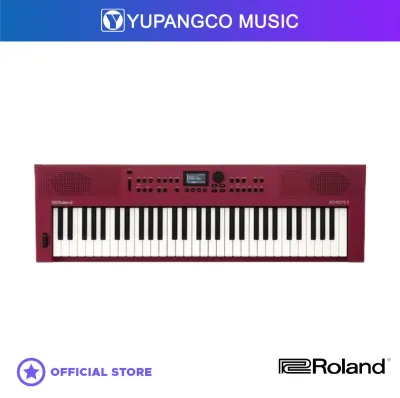
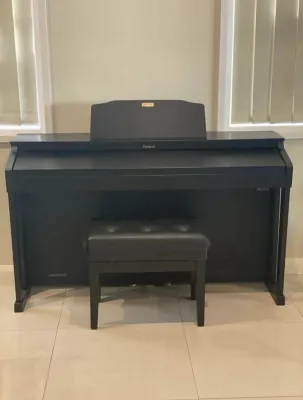
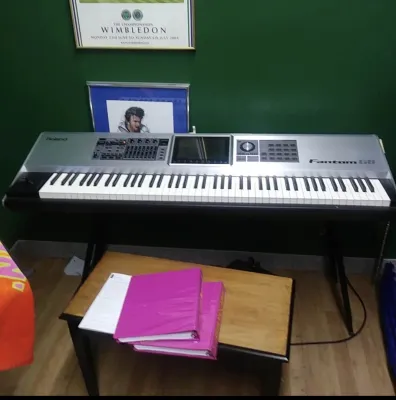
Prices are valid at publication and may change. Please refer to the product page for the latest price.
In contrast, the Roland GO:KEYS offers a lighter, semi-weighted or synth-style keybed with 61 keys. These keys do not use physical hammers to simulate weight, resulting in a much lighter touch that responds quickly to rapid synth leads, organ glides, and drum pad triggering. While this action is incredibly comfortable for casual playing, modern pop music, and electronic production, it does not build the specific finger endurance required for classical piano repertoire. The 61-key layout also limits your range, meaning you may eventually run out of keys when attempting advanced classical pieces that span more than five octaves.
Choosing between these two styles depends on your long-term musical aspirations. Beginners who prioritize expressive dynamics and traditional piano literature will find the weighted keys of the FP-10 indispensable for developing touch sensitivity. On the other hand, those who find heavy keys fatiguing or who want to focus on modern songwriting, synth-heavy genres, and portable jamming will appreciate the effortless playability of the GO:KEYS.
Sound Engine and Built-in Features for Practice
Beyond the physical keys, the internal sound engine dictates how inspiring your practice sessions will be. The Roland FP-10 focuses heavily on acoustic realism, utilizing a dedicated piano sound engine designed to deliver rich, expressive tones that respond dynamically to your playing force. This model also features a realistic polyphony limit, which determines how many notes can ring out simultaneously before older notes are cut off. High polyphony is essential when using a sustain pedal to play complex, fast-moving classical passages, ensuring that your performance sounds natural and undivided.

The Roland GO:KEYS takes a completely different approach, prioritizing sonic variety and creative exploration over singular acoustic realism. It comes loaded with hundreds of diverse sounds, including synthesizers, brass, strings, and drum kits, allowing you to explore different genres right out of the box. It also features built-in loop functions and backing rhythms that let you build full arrangements on the fly, even if you do not yet know how to play complex chords. This makes the GO:KEYS an exceptional tool for beginners who want to understand song structure, arrangement, and music production from day one.
Both keyboards offer essential practice tools to help you stay on track, such as built-in metronomes and compatibility with educational software. You can connect either instrument to proprietary Roland apps or third-party learning platforms to access interactive lessons, sheet music, and progress tracking. However, the way you use these tools will differ: the FP-10 encourages focused, disciplined practice of solo piano pieces, while the GO:KEYS invites playful experimentation with multi-instrument arrangements and modern backing tracks.
Portability, Connectivity, and Daily Setup
How an instrument fits into your home and daily routine is just as important as how it sounds. The Roland FP-10 is a full-sized digital piano, which means it requires a dedicated space in your room and is best paired with a sturdy stand. While it is relatively compact compared to other 88-key digital pianos, its weighted key mechanism makes it heavy enough that you will likely want to keep it in a permanent setup. It relies solely on AC power, meaning you must place it near an electrical outlet to practice.
The Roland GO:KEYS is built for maximum mobility, featuring a lightweight chassis that is easy to carry in a backpack or gig bag. It can run on battery power, allowing you to practice on your bed, take it to a friend’s house, or play outdoors without worrying about power cables. In a tropical climate like the Philippines, where high humidity and sudden rain showers are common, the portability of the GO:KEYS makes it easy to pack away safely in a protective case when not in use, protecting the internal electronics from moisture and dust.
Connectivity is another area where these two models diverge to suit different workflows. Both instruments offer USB connectivity to interface with computers and tablets, as well as Bluetooth MIDI for wireless connection to learning apps. However, you should check the specific model variations, as some editions may offer Bluetooth audio streaming, allowing you to play along with songs directly from your phone through the keyboard’s speakers. Speaking of speakers, the FP-10’s downward-firing speakers are designed to project sound downward and reflect off the floor for a piano-like resonance, whereas the GO:KEYS features front-facing speakers optimized for direct, clear monitoring during casual play.
Pricing and Long-Term Value in the Philippines
Investing in a musical instrument requires balancing your current budget against your long-term commitment. When shopping in the Philippines, you should check the current retail prices in ₱ at authorized local music retailers and official brand stores on major online marketplaces. Because prices can fluctuate based on shipping costs, local taxes, and promotional bundles, comparing multiple authorized sources is the best way to secure a fair deal.
It is also important to budget for essential accessories that may not be included in the basic package. For the FP-10, you will almost certainly need a solid keyboard stand capable of supporting a heavier instrument, a comfortable bench to maintain proper playing posture, and a high-quality sustain pedal. The GO:KEYS, being lighter and more casual, can easily be played on a desk or table, though a basic stand and a simple sustain footswitch can still enhance your playing experience.
Consider the long-term value of each instrument as your skills progress. If you choose the FP-10, its 88 weighted keys ensure that you will not outgrow the instrument for several years, even as you transition to advanced classical or jazz repertoire. If you choose the GO:KEYS, you may eventually find yourself wanting a weighted keyboard if you decide to pursue formal piano studies, but the instrument will always retain its value as a highly portable synthesizer, MIDI controller, and songwriting tool for your home studio.
Decision Framework: Choose Your Ideal Roland Keyboard
To make your final decision, evaluate your primary musical goals and how you plan to practice.
Choose the traditional digital piano model (FP-10) if:
- Your main goal is to learn classical piano, jazz, or traditional keyboard techniques.
- You want to build finger strength and muscle memory that translates directly to an acoustic piano.
- You have a dedicated space in your home for a full-sized, 88-key instrument.
- You plan to take formal lessons or follow a structured, graded curriculum.
Choose the portable creator model (GO:KEYS) if:
- You want to explore songwriting, music production, and a wide variety of instrument sounds.
- You need a highly portable keyboard that can run on batteries and fit into small living spaces.
- You prefer a lighter key touch that is easy on the fingers and suitable for fast synth playing.
- You want to jam along with backing tracks and create loops without needing advanced piano skills.
Before finalizing your purchase, always verify that the specific model you choose natively supports the third-party learning apps, digital audio workstations (DAWs), or software you plan to use. Checking the manufacturer’s official compatibility lists and user manuals online will ensure a smooth, frustration-free setup from the moment you unbox your new keyboard.
Frequently Asked Questions (FAQ)
Do I need to buy a separate sustain pedal for these keyboards?
Most entry-level keyboards, including these Roland models, typically include a basic plastic footswitch in the box to get you started. While this basic switch is sufficient for learning the fundamentals of sustaining notes, it only functions as a simple on/off switch. As you progress, you may want to upgrade to a continuous half-damper pedal, which allows for more nuanced, realistic acoustic piano expression by detecting how far down the pedal is pressed.
Can I use either keyboard with online piano learning apps?
Yes, both keyboards can connect to popular interactive learning applications on tablets and computers. You can establish this connection wirelessly via Bluetooth MIDI or through a wired USB cable connected directly to your device. To avoid any potential wireless latency or connection drops during fast-paced lessons, using a high-quality wired USB connection is often recommended for the most stable learning experience.
Is a dedicated keyboard stand necessary for beginners?
Using a dedicated keyboard stand is highly recommended to ensure proper playing ergonomics and prevent physical strain or injury. A stable stand allows you to adjust the keyboard to the correct height, keeping your elbows and wrists aligned parallel to the floor. While lighter models like the GO:KEYS can temporarily sit on a sturdy table, heavier weighted models like the FP-10 require a robust X-stand, Z-stand, or dedicated wooden stand to prevent wobbling and ensure safety.

Community discussion
Share your experience or ask a question. Comments are reviewed before publication.