
Choosing your first serious digital piano often leads to a direct comparison between two of the most popular entry-level instruments on the market: the Roland FP-10 and the Roland FP-30X. Both of these portable digital pianos are highly regarded for delivering an authentic playing experience, but they cater to slightly different budgets, skill levels, and performance requirements. While they share the exact same physical key action, they diverge significantly when it comes to internal sound processing power, speaker output, wireless connectivity, and physical expansion options.
If your primary goal is to find a compact, budget-friendly instrument for quiet home practice with headphones, the Roland FP-10 offers exceptional value by delivering premium key feel at a lower price point. However, if you plan to perform live, record music directly to a computer, stream backing tracks wirelessly, or require a full three-pedal setup for advanced classical pieces, the Roland FP-30X is the more versatile long-term investment. Understanding how these differences impact your daily practice and musical growth will help you select the model that best fits your specific environment.
Key Action and Playability: Evaluating the PHA-4 Standard Keyboard
For many pianists, the physical feel of the keys is the single most important factor when choosing a digital piano. Fortunately, both the Roland FP-10 and the FP-30X feature the highly acclaimed PHA-4 Standard keyboard. This keybed utilizes a progressive hammer action, meaning the keys in the lower register feel heavier to the touch than those in the higher register, closely mimicking the natural weight distribution of an acoustic grand piano. This design is highly effective for developing proper finger strength and technique, making either model an excellent tool for students and serious beginners.
Products mentioned in this guide
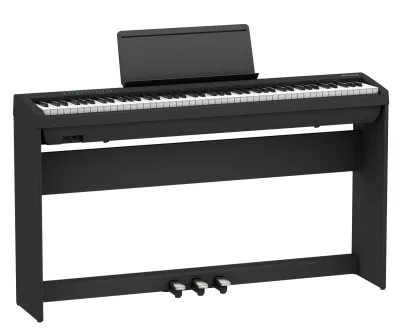
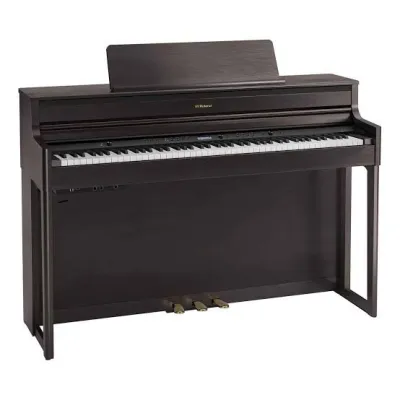
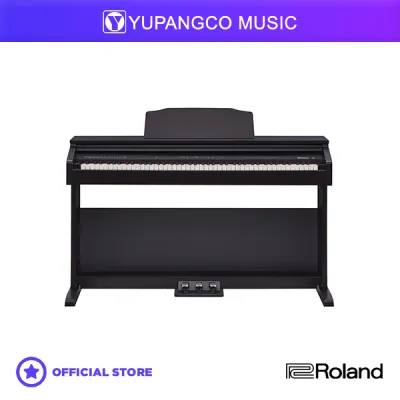
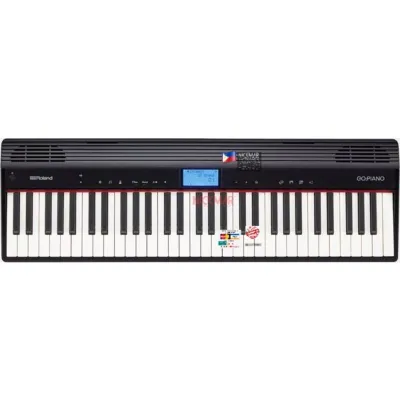
Prices are valid at publication and may change. Please refer to the product page for the latest price.
In addition to progressive weighting, the PHA-4 Standard keyboard includes an escapement mechanism. This feature simulates the subtle “click” or let-off sensation felt when gently pressing an acoustic piano key, allowing for greater control over soft, delicate passages. The key surfaces are finished with an ivory-feel texture that provides a matte, non-slip grip. In tropical climates like the Philippines, where high humidity and warm temperatures can lead to sweaty fingers during long practice sessions, this textured surface is a major advantage over smooth, glossy plastic keys that can become slippery.
While the physical keybeds are identical, the way the keys interact with the internal software differs slightly. The FP-30X offers five distinct levels of touch sensitivity adjustment, allowing you to fine-tune how easily the sound engine responds to your physical keystrokes. The FP-10 also offers adjustable touch response, but the FP-30X provides a slightly more refined pairing with its upgraded sound processor. For pure acoustic piano simulation during silent practice, both instruments perform remarkably well, ensuring that your transition to a traditional acoustic piano in a lesson or recital setting will feel natural and intuitive.
Sound Engine and Polyphony: SuperNATURAL Capabilities
While the physical touch of both pianos is virtually identical, the sound generation capabilities set them apart. Both models utilize Roland’s proprietary SuperNATURAL Piano sound engine, which combines high-resolution sampling with physical modeling to create a dynamic, expressive acoustic piano tone. However, the processing power behind these engines differs. The FP-10 is equipped with a 96-note polyphony limit, whereas the FP-30X boasts an impressive 256-note polyphony.

Polyphony refers to the maximum number of individual notes or voices the instrument can produce simultaneously. When you play fast, complex classical pieces or use the sustain pedal extensively, notes continue to ring out in the background. With the FP-10’s 96-note limit, you may occasionally experience “note drop-off” during highly complex passages where older notes are cut short to make room for new ones. The FP-30X’s 256-note polyphony virtually eliminates this issue, allowing for seamless, uninterrupted sustain even during dense, expressive performances.
Speaker configuration and audio projection also differ significantly between the two models. The FP-10 features a dual 6-watt speaker system firing downward, which is perfectly adequate for a small bedroom or study. The FP-30X, on the other hand, features a much more powerful dual 11-watt speaker system. These speakers project a richer, fuller sound with deeper bass and clearer highs, making the FP-30X capable of filling a medium-sized living room without the need for external amplification. Furthermore, the FP-30X includes a dedicated “Table EQ” setting that optimizes the speaker output when the piano is placed flat on a desk or table, preventing the muddy sound that often occurs when speakers are obstructed.
If you enjoy experimenting with different musical genres, the sound libraries of these instruments are worth comparing. The FP-10 offers a modest selection of built-in sounds, including a few acoustic pianos, electric pianos, organs, and strings. The FP-30X provides a much broader library of high-quality tones, giving you more variety for music production, band practice, or creative exploration.
Connectivity, Features, and Expandability
As you progress in your musical journey, you may want to connect your digital piano to external devices, software, or sound systems. This is where the FP-30X shows its clear superiority as a mid-tier instrument. One of the most significant differences lies in their Bluetooth capabilities. While the FP-10 supports Bluetooth MIDI—allowing you to connect to learning apps or digital audio workstations (DAWs)—it does not support Bluetooth Audio. The FP-30X supports both Bluetooth MIDI and Bluetooth Audio, meaning you can stream backing tracks, lessons, or your favorite songs directly from your smartphone through the piano’s powerful internal speakers, allowing you to play along in real time.
For home recording and music production, the USB connectivity on these models is highly convenient. Both feature a USB Type-B port for computer connection. However, the FP-30X supports onboard USB Audio interface functionality. This means you can send both MIDI data and high-quality digital audio directly to your computer or mobile device over a single USB cable, eliminating the need for an external audio interface. The FP-10 only transmits MIDI data over USB, requiring a separate audio interface if you want to record the actual internal sounds of the piano into your DAW.
External audio routing is another critical factor if you plan to perform live or practice with external monitors. The FP-30X features dedicated 1/4-inch (Left/Mono, Right) line outputs on the rear panel. These allow you to plug directly into a mixing console, PA system, or keyboard amplifier while keeping the piano’s internal speakers active or muted as desired. The FP-10 lacks dedicated line outputs entirely; its only audio output is a shared headphone jack. Plugging an external speaker into the FP-10’s headphone jack automatically mutes the internal speakers and can sometimes result in a weaker, noisier signal due to impedance differences.
Design, Portability, and Included Accessories
If you live in a compact apartment or need an instrument that is easy to transport, physical dimensions and weight are key considerations. The Roland FP-10 is the more compact and lightweight of the two, weighing approximately 12.3 kilograms and featuring a slightly shallower depth. This makes it incredibly easy to slide under a bed, place on a narrow desk, or carry to rehearsals in a standard gig bag. The FP-30X is slightly deeper and heavier at around 14.8 kilograms, but it remains highly portable compared to traditional console digital pianos.
Your choice of stand and pedal configuration will also depend on which model you select. The FP-10 is designed primarily for use with standard portable X-stands or double-X stands, though a matching wooden stand (KSCFP10) is available for a more permanent home setup. However, the FP-10 only supports a single sustain pedal. The FP-30X offers much greater expandability; it is fully compatible with the KSC-70 wooden stand and the KPD-70 three-pedal unit. This setup provides a traditional three-pedal configuration (damper, soft, and sostenuto) with half-damper support, which is essential for students preparing for advanced classical piano examinations.
Out-of-the-box accessories should also be verified before finalizing your purchase. The FP-10 typically ships with a basic, ultra-compact plastic foot switch (DP-2) that can slide around easily on smooth tile or wooden floors. The FP-30X often includes the more robust Roland DP-10 damper pedal, which features a rubber plate that swings out to sit under your heel, preventing the pedal from slipping during intense play. Both models include a music rest and an AC power adapter, but you should always confirm the exact package contents with your retailer.
Price and Value Assessment in the Philippines
When shopping for a digital piano in the Philippines, it is important to evaluate the cost-to-feature ratio based on your specific musical goals. The FP-10 is positioned as an entry-level instrument, making it a highly attractive option for parents buying a first piano for their children, or for hobbyists who want a high-quality weighted keyboard without a major financial commitment. The FP-30X requires a higher investment, but the added features—such as superior speakers, dedicated line outputs, Bluetooth Audio, and three-pedal compatibility—often save you money in the long run by delaying the need for an upgrade.
To ensure a safe purchase, always verify current ₱ pricing and bundle deals through authorized local music distributors or official brand stores on reputable online marketplaces. Purchasing from authorized local dealers guarantees that you receive a genuine product backed by an official local warranty. This warranty is particularly important in tropical environments, where high humidity can occasionally affect electronic components or key sensors over years of continuous use.
Additionally, always check the power specifications of the included AC adapter. The electrical grid in the Philippines operates at 220V at 60Hz, so you must verify that the power supply provided in the box is rated for this voltage to avoid damaging your new instrument. Many local dealers offer bundles that include a sturdy double-X stand, a padded bench, and high-quality headphones, which can provide excellent overall value compared to buying each accessory separately.
Final Verdict: How to Choose Your Roland Digital Piano
Ultimately, the decision between the Roland FP-10 and the FP-30X comes down to how and where you plan to use the instrument. Neither model is universally superior; instead, each excels in meeting different user needs and practice environments.
You should choose the Roland FP-10 if:
- You are working with a strict budget and want the absolute best key action available at this price point.
- You have limited living space and need a highly compact, lightweight keyboard that is easy to store.
- Your practice consists almost entirely of silent study using headphones, making powerful internal speakers and advanced external connectivity unnecessary.
You should choose the Roland FP-30X if:
- You want an instrument that will support your growth from a beginner to an advanced classical or jazz player without needing an upgrade.
- You plan to perform live, jam with friends, or record music, requiring dedicated line outputs and an integrated USB audio interface.
- You want to stream backing tracks or lesson audio wirelessly through the piano's robust 11-watt speakers.
- You require a traditional three-pedal setup for advanced expressive control.
Before completing your purchase, take the time to verify the exact model number, regional power adapter compatibility, and the specific accessories included in your package to ensure a seamless setup from day one.
Frequently Asked Questions (FAQ)
Can I upgrade the FP-10 to match the FP-30X features via software?
No, you cannot upgrade the FP-10 to match the FP-30X through software or firmware updates. The primary differences between the two models are physical hardware components. These include the physical polyphony chip, the internal speaker wattage, the Bluetooth audio receiver hardware, the dedicated 1/4-inch line output jacks, and the physical port required to connect a three-pedal unit. While firmware updates can improve system stability, they cannot add physical ports or increase hardware processing limits.
Do both models support the Roland Piano App for customization?
Yes, both the Roland FP-10 and the FP-30X are fully compatible with the official Roland Piano App, which is available for iOS and Android devices. By connecting your mobile device to the piano via Bluetooth MIDI, you can use the app to easily select different sounds, adjust the metronome, configure touch sensitivity settings, and access built-in masterclasses or sheet music. This app integration is highly recommended for FP-10 users, as it provides a visual interface for adjusting settings that otherwise require complex key-combination shortcuts on the physical keyboard.
Community discussion
Share your experience or ask a question. Comments are reviewed before publication.