
Choosing your first keyboard piano is a balancing act between initial financial investment and the technical features required to support your long-term musical growth. A Rixton keyboard piano offers an ultra-budget-friendly entry point that is highly accessible for casual playing, basic music familiarization, and testing a child’s initial interest in music without a significant upfront cost. However, for beginners who are committed to formal piano lessons, classical repertoire, or long-term skill development, mainstream entry-level brands such as Yamaha, Casio, or Roland generally provide more standardized key action, richer sound engines, and better long-term value. Your final decision should depend on your specific learning goals, the necessity of touch-sensitive keys, and your strict budget constraints.
What Actually Matters: Key Dimensions for Beginner Keyboards
Evaluating a beginner keyboard requires looking past the sheer number of built-in rhythms, flashing lights, or decorative exterior designs. While marketing materials often highlight hundreds of digital sound effects, the actual learning experience of a student relies on a few fundamental hardware specifications. To make an informed choice, you must focus on three critical pillars of keyboard design: sound generation, physical key action, and practical connectivity.
Sound Quality and Tone Generation
Sound quality is not just about how pleasant the instrument sounds; it directly influences how a student develops an ear for pitch, dynamics, and tonal color. The core specification to examine here is polyphony, which represents the maximum number of individual notes or voices that the keyboard’s internal processor can produce at the exact same moment. When you play a complex chord while holding down a sustain pedal, each note continues to ring out; if your keyboard has low polyphony, older notes will be abruptly cut off to make room for new ones, a phenomenon known as note drop-off.
Products mentioned in this guide
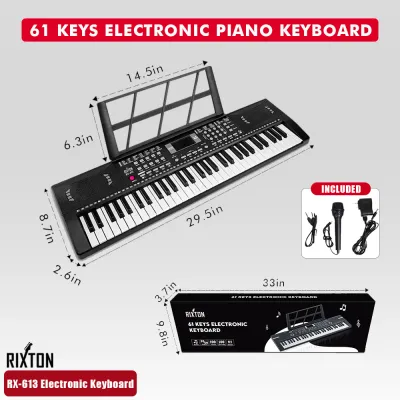
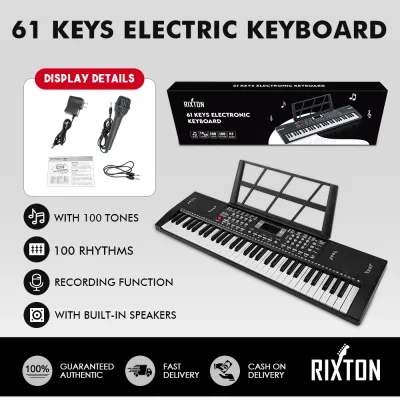
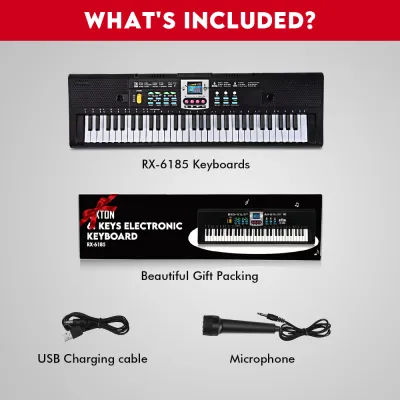
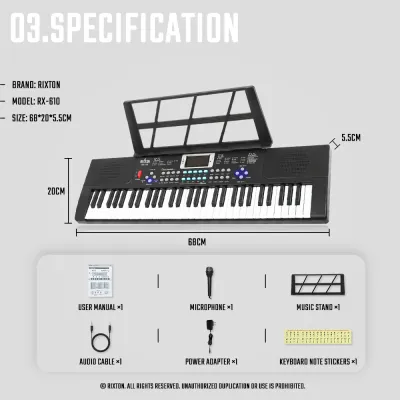
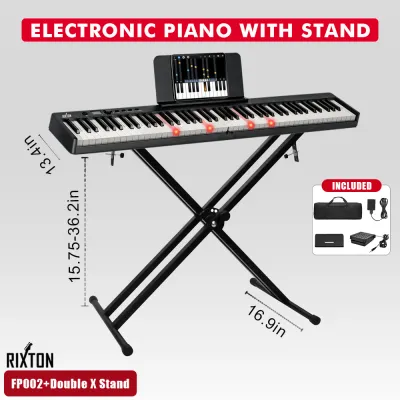
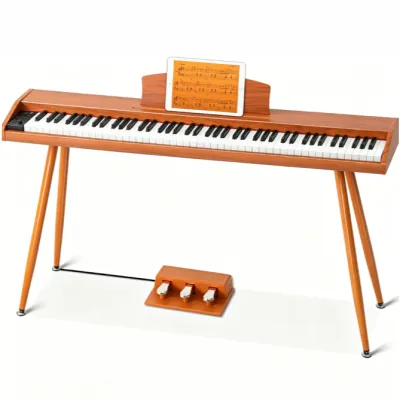
Prices are valid at publication and may change. Please refer to the product page for the latest price.
For a beginner, a 64-note polyphony is the practical minimum required to avoid note drop-off during standard practice sessions. When evaluating any entry-level keyboard, always check the product label, official manual, or manufacturer specification sheet to verify the polyphony rating. Many ultra-budget keyboards do not publish their polyphony specs because they operate on basic, low-polyphony chips (often 8 to 16 notes), which can severely limit your ability to play fluid, expressive passages.
Furthermore, tone generation methods vary wildly across different price points. Mainstream entry-level brands typically utilize proprietary stereo sampling, where real acoustic grand pianos are recorded at multiple volume levels to create a realistic, dynamic sound profile. In contrast, ultra-budget brands often rely on simpler synthesized tones or lower-bitrate samples. These simpler sounds can sound thin, electronic, or artificial, particularly when played through small built-in speakers. To ensure the sound remains clear and undistorted, look for a keyboard with decent built-in speaker wattage (at least 2 to 5 watts per speaker) so that complex chords do not sound muddy or muffled.
Key Action and Physical Build
The tactile feedback of the keys is the most critical factor in developing proper finger strength, muscle memory, and expressive control. If a beginner practices on keys that do not respond to physical nuance, they will struggle to transition to other instruments later. Key action generally falls into three distinct categories:
- Non-weighted (synth-action or spring-loaded): These keys use a simple plastic spring mechanism to return the key to its resting position. They offer very little physical resistance and feel lightweight, similar to an organ or a basic synthesizer.
- Semi-weighted: These keys combine spring tension with light weights attached to the back of each key, offering a slightly firmer feel that bridges the gap between synth action and a real piano.
- Fully-weighted (hammer action): These keys replicate the actual mechanical hammer system found inside an acoustic piano, offering graded resistance where the lower registers feel heavier than the higher registers.
Most ultra-budget keyboards, including typical Rixton models, feature non-weighted or lightly sprung keys. While these lightweight keys are easy for young children to press, they do not build the finger stamina or hand posture required for traditional piano playing.
More importantly, many ultra-budget models lack touch sensitivity (also known as velocity sensitivity). On a touch-sensitive keyboard, striking a key harder produces a louder sound, while striking it gently produces a softer sound. Without touch sensitivity, every key press produces the exact same volume regardless of your touch. Practicing on a non-touch-sensitive keyboard prevents you from learning musical dynamics, making it difficult to progress past basic note-reading exercises.
Essential Features and Connectivity
A beginner’s practice environment requires specific utility features that facilitate daily study and prevent household disruptions. Rather than focusing on hundreds of novelty sound presets, verify that the keyboard includes these practical tools:
- Built-in Metronome: An indispensable tool for developing a steady sense of rhythm and timing. Adjusting the tempo in precise beats per minute (BPM) is essential for gradual speed practice.
- Headphone Jack: A standard 3.5mm or 1/4-inch headphone output is crucial for silent practice. In high-density residential areas or busy households, the ability to practice silently at any hour ensures more consistent study habits.
- USB-MIDI Port: This interface allows the keyboard to communicate with external devices like tablets, smartphones, or computers. With a USB-MIDI connection, a beginner can connect the keyboard to interactive learning applications or digital audio workstations (DAWs) to track their progress or record their playing.
Before finalizing a purchase, carefully inspect the product’s rear connection panel or the official specification sheet. Some ultra-budget keyboards omit USB-MIDI entirely or use non-standard, proprietary ports that are incompatible with modern learning software.
Rixton vs. Mainstream Brands: What to Expect at Different Price Tiers
To understand where a Rixton keyboard piano sits in the broader market, it is helpful to contrast its design philosophy with established brands like Yamaha, Casio, or Roland. Rixton competes primarily on initial price accessibility. It is designed to lower the barrier to entry as much as possible, making it highly attractive for families who want to test a student’s musical interest before committing significant funds.

Mainstream brands, on the other hand, charge a premium for standardized educational compatibility, highly durable chassis materials, and reliable local warranty support. While a mainstream entry-level keyboard requires a larger upfront investment, it is engineered to support a student through several years of formal instruction without needing an immediate upgrade.
The table below outlines the typical differences between these two product profiles to help you evaluate the trade-offs:
| Feature / Specification | Typical Ultra-Budget Profile (e.g., Rixton) | Typical Mainstream Entry-Level Profile (e.g., Yamaha/Casio) | Why It Matters for Beginners |
|---|---|---|---|
| Price Tier | Ultra-budget / Highly accessible | Standard entry-level / Moderate investment | Determines initial financial risk if the student eventually decides not to continue. |
| Key Action | Non-weighted, spring-loaded synth action; often lacks touch sensitivity | Touch-sensitive, semi-weighted, or entry-level hammer action | Directly affects finger strength development, hand posture, and dynamic expression. |
| Sound Engine | Basic synthesized tones, lower polyphony (often unspecified) | Stereo sampled acoustic tones, 48 to 64+ notes of polyphony | Impacts the realism of the piano sound and the ability to play complex, sustained pieces. |
| Build & Chassis | Lightweight, thinner plastics; highly portable but less rigid | Denser plastics, reinforced internal frames, sturdier keybeds | Influences physical durability, stability on a stand, and resistance to wear and tear. |
| Best Use Case | Casual play, young children, basic MIDI input, strict budget limits | Formal music lessons, serious hobbyists, long-term progressive practice | Aligns the capabilities of the instrument with the student's actual commitment level. |
While an ultra-budget keyboard like a Rixton is highly functional for learning basic melodies, chord shapes, and music theory, its physical limitations mean a progressing student may outgrow it within six to twelve months of formal lessons. Mainstream entry-level models, though more expensive, offer the structural and sonic refinement necessary to support a student through intermediate grade levels.
Evaluating Long-Term Value and Buying Safely in the Philippines
When purchasing a keyboard piano in the Philippines, local environmental factors, market dynamics, and shipping practices play a significant role in determining the true value of your purchase. Long-term value is not just about the lowest sticker price; it encompasses durability, resale potential, and overall product completeness.
First, consider the local climate. The high humidity and tropical temperatures in the Philippines can place significant stress on electronic musical instruments. Ultra-budget keyboards often utilize thinner plastics, lower-grade adhesive compounds, and simple rubber membrane contacts under the keys. Over time, high humidity can cause these cheap rubber contacts to degrade, become sticky, or lose responsiveness, leading to keys that fail to trigger sounds. Mainstream brands typically use higher-grade, UV-stabilized plastics and sealed contact strips that offer better resistance to moisture and dust accumulation.
Second, think about your potential upgrade path. If a beginner sticks with the piano, they will eventually need to upgrade to a fully-weighted 88-key digital piano. Mainstream brands like Yamaha or Casio hold their resale value exceptionally well in the local secondhand market. You can easily sell a well-maintained entry-level Yamaha keyboard on local classifieds or social media marketplace groups to recoup a significant portion of your initial investment. Conversely, ultra-budget brands have very low resale value and a much smaller pool of interested buyers.
Third, protect yourself from purchasing incomplete packages. When browsing online marketplaces or local e-commerce platforms, pay close attention to the exact contents of the listing. Many budget keyboards are sold as “bare units” to keep the headline price as low as possible. A bare unit may arrive without a power adapter, music sheet stand, or sustain pedal, forcing you to purchase these items separately.
To avoid unexpected hidden costs, always follow these verification steps before checking out:
- Verify the Power Adapter: Ensure the package includes a power supply compatible with the Philippine electrical grid (220V, 60Hz). Some unverified imported units ship with 110V adapters or incompatible plug types, which can pose a safety hazard or require an expensive voltage converter.
- Check the Accessory List: Read the "What's in the box" section carefully. A complete beginner setup requires a keyboard stand (such as a sturdy double-brace X-stand), a sustain pedal, and a power adapter. Purchasing these accessories individually can easily add ₱1,500 to ₱3,000 to your total expenditure.
- Confirm Seller Authenticity: Buy only from authorized dealers, verified official mall stores, or highly rated merchants on local e-commerce platforms. Avoid suspiciously cheap unbranded listings that lack clear local warranty coverage or access to a dedicated customer support center.
Final Verdict: How to Choose the Right Keyboard for You
To finalize your search, align your purchase with your specific household needs, budget, and musical commitment. Use this direct decision framework to choose the right instrument:
- Choose a Rixton (or similar ultra-budget brand) if: You are operating under a very strict budget limit, you are purchasing for a young child whose long-term interest in music is still highly uncertain, or you simply need a lightweight, portable MIDI controller to connect to a laptop for casual music production. It is an excellent, low-risk tool for basic musical exploration.
- Choose a mainstream entry-level brand if: You or your child are enrolling in formal piano lessons, you want to build proper finger strength and classical technique, or you require touch-sensitive keys to perform expressive pieces. The higher initial investment is offset by superior sound quality, standard key resistance, better physical durability, and strong resale value in the local market.
- Verify first if: You are looking at a specific model and are unsure of its technical capabilities. Always locate the manufacturer's official spec sheet or message the seller directly to confirm the exact polyphony count, whether the keys are touch-sensitive, and what accessories are included in the box before completing your purchase.
Frequently Asked Questions (FAQ)
Can I use an ultra-budget keyboard for classical piano practice?
An ultra-budget keyboard is not recommended for serious classical piano practice. Classical repertoire relies heavily on dynamic nuance, which requires a student to play notes at varying volumes (from very soft pianissimo to very loud fortissimo) based on the force of their finger strike. Because most ultra-budget keyboards lack touch-sensitive, weighted keys, they cannot reproduce these vital volume variations. Practicing classical pieces on non-weighted, non-touch-sensitive keys can lead to poor finger habits, flat hand posture, and a lack of control over key velocity that will be difficult to correct when transitioning to a real acoustic or digital piano.
Do budget keyboards come with a stand and sustain pedal?
Packaging configurations vary significantly depending on the brand and the specific seller on online marketplaces. While mainstream brands usually package their entry-level keyboards with a basic music rest and a compatible power adapter, physical stands and sustain pedals are frequently sold separately or as part of designated premium bundles. Ultra-budget listings often feature multiple bundle options at different price points. To avoid disappointment, do not assume these accessories are included. Always read the detailed product description or contact the merchant to verify if an X-stand, sustain pedal, or bench is included in your specific package.
Community discussion
Share your experience or ask a question. Comments are reviewed before publication.