
Collecting an ateez photocard has become a highly popular hobby, but the rise of high-quality counterfeits on the secondary market means collectors must stay vigilant. To tell if an ATEEZ photocard is official, you must evaluate a combination of print resolution, card stock texture and thickness, and the precision of the back-of-card typography and copyright markings against a verified reference card. In the tropical climate of the Philippines, where high humidity can cause paper to warp or stick, understanding the physical properties of authentic cards is essential for protecting your collection and your hard-earned pesos.
Why Authenticating ATEEZ Photocards Matters in the Secondary Market
The global popularity of ATEEZ and their dedicated fandom, ATINY, has created a robust secondary market for merchandise. Rare items, such as limited-edition album pre-order benefits (POBs), concert broadcast cards, and cards featuring popular members, can command prices ranging from a few hundred to several thousand pesos (₱). This high monetary value unfortunately attracts counterfeiters who produce replica cards to exploit unsuspecting buyers.
When navigating this market, the most important rule of authentication is that no single visual flaw or physical trait can guarantee a card is fake or real on its own. Slight manufacturing variations occur even within official factories. For example, the tiny cutting tabs (often called “dots” or “nubs”) on the edges of cards can vary depending on the print run or the specific factory KQ Entertainment used for that album era.
Products mentioned in this guide


![ATEEZ - Golden Hour Part 4 [ Poca ver. ] Official Photocards](https://img.lazcdn.com/g/p/bc767cdac752b89fcaeba89db418ec52.jpg_400x400q80.jpg_.webp)


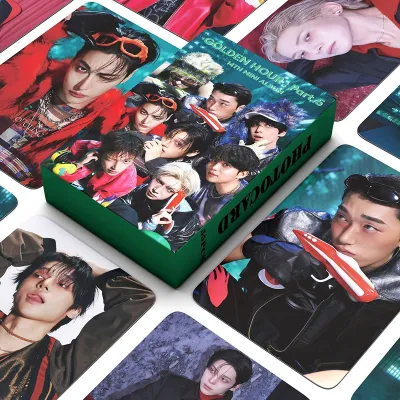
Prices are valid at publication and may change. Please refer to the product page for the latest price.
Therefore, reliable verification requires cross-referencing multiple physical and visual factors against a known authentic baseline. Relying on a single test or a single online photo is rarely enough. Collectors should compare suspect cards with verified official cards from the same album version to make an accurate assessment.
Key Visual and Physical Differences: Real vs. Fake ATEEZ Photocards
To inspect a photocard thoroughly, find a clean, dry, and well-lit workspace. Avoid humid environments, as moisture can temporarily alter the flexibility of the card stock, making physical comparison more difficult. Having a known authentic card from the same album series on hand is the most effective way to spot discrepancies.

Print Quality, Color Accuracy, and Resolution
Genuine ATEEZ photocards feature sharp, high-resolution prints with accurate skin tones, deep blacks, and vibrant, balanced colors. Because official cards are printed directly from the original high-resolution digital files owned by KQ Entertainment, the image details remain incredibly crisp even under close inspection.
Counterfeits, on the other hand, are almost always created by scanning an official card and printing that scan. This secondary printing process introduces noticeable flaws. Replicated cards often suffer from washed-out colors, excessive color saturation, or a loss of shadow detail. Under magnification, you may see a visible dot-matrix or halftone pattern—tiny dots of ink used by commercial printers to recreate scanned images—which is entirely absent on official prints.
Check the edges of the image and the member’s facial features for blurriness or artificial sharpening artifacts. On an authentic card, fine details such as individual hair strands, eye reflections, and background textures are clean and distinct, whereas counterfeits will look slightly muddy or overly digitized.
Card Stock, Thickness, and Texture
Official KQ Entertainment photocards use specific, high-quality cardstock that has a distinct, premium feel. While the finish can vary slightly between album eras—ranging from matte and semi-gloss to textured or holographic laminates—the card stock maintains a consistent weight and rigidity.
Fakes often feel flimsy, overly glossy, or have an incorrect thickness because counterfeiters typically use cheaper, thinner paper stock. In the humid Philippine climate, these lower-grade papers are highly susceptible to warping. They may also react poorly to plastic storage, sometimes sticking to low-quality sleeves or deteriorating faster than official cards.
The community “light test” is a popular comparative tool where you shine a smartphone flashlight through the card to check paper density and internal layers. Official cards generally block more light or show a clean, uniform internal paper structure due to their dense, multi-layered card stock. Fakes often let a significant amount of light pass through or reveal uneven, blotchy paper fibers. However, because paper suppliers can change between print runs, this test should be treated as a supplementary check rather than a definitive proof of authenticity.
Typography, Logos, and Copyright Details
The back of an ateez photocard is often the easiest place to spot a counterfeit, as replica producers frequently overlook the fine details of typography and branding. Closely examine the KQ Entertainment logo, the specific album or merchandise name, and the copyright text usually located on the back or bottom edge of the card.
Counterfeiters often make mistakes in these areas. Look for typos, blurred or pixelated fonts, incorrect letter spacing, missing copyright symbols (©), or misaligned text blocks. On official cards, the text is printed with vector-level precision, meaning the edges of the letters are perfectly sharp and legible, even at microscopic sizes.
Compare the font weight and exact phrasing with a verified authentic card from the same merchandise line. If the copyright text on your card is noticeably thicker, thinner, or positioned slightly differently than the reference card, it warrants closer inspection.
Official Packaging and Merchandise Verification
A common misconception among newer collectors is that individual album photocards contain built-in digital authentication, such as QR codes or NFC chips. In reality, standard ATEEZ album photocards do not feature these digital security measures. You cannot verify an individual card simply by scanning it with a smartphone app.
However, official ATEEZ merchandise collections—such as Season’s Greetings, concert goods, or special Weverse Shop exclusives—often include holographic security stickers on their outer packaging. These stickers feature the KQ Entertainment logo or official platform branding and shift colors when tilted under light. If you are buying a complete, sealed merchandise set, verifying the presence and quality of this holographic sticker is an excellent first step.
If you are purchasing a sealed album on the secondary market, inspect the outer shrink wrap, seal quality, and the included official inserts. Be cautious of sellers who claim an item is “unopened” or “factory sealed” without providing verifiable proof of purchase from an authorized retailer. In the local secondary market, some bad-acting resellers re-shrinkwrap opened albums using heat guns after swapping out the authentic photocards for replicas. Always ask for the original digital invoice or physical receipt from Weverse Shop or an authorized distributor to confirm the source.
Safe Buying Channels for Authentic ATEEZ Merchandise
To minimize the risk of receiving counterfeit items, prioritize purchasing your ATEEZ merchandise through official primary channels. These include Weverse Shop, KQ Entertainment’s official global stores, and authorized local record shops or official K-pop pop-up stores in the Philippines. Buying directly from these sources guarantees that both the albums and the included photocards are 100% authentic.
When navigating the peer-to-peer secondary market—such as local buy-and-sell groups, social media trading circles, or online marketplaces—extra caution is required. Always use trusted community platforms that feature established reputation or feedback systems.
Before committing to a transaction, thoroughly vet the seller. Request clear, unfiltered photos of the actual photocard placed next to a handwritten slip of paper containing the seller’s username and the current date (commonly referred to as a “proof” or “tag”). Ask for a video of the card held under a light source, tilted slowly to show the surface condition and laminate quality. Reliable sellers will gladly provide these details and share their historical customer feedback tags to prove their legitimacy.
What to Do If You Receive a Counterfeit ATEEZ Photocard
If you suspect that a photocard you purchased is a counterfeit, take immediate action to document the issue. Photograph the card in clear, natural light from multiple angles, focusing on the print resolution, the edges, and the back-of-card typography. If possible, take side-by-side photos and videos comparing the suspect card with a known authentic reference card to clearly highlight the discrepancies.
Contact the seller or the customer support team of the platform where the transaction took place. Present your documented evidence clearly and politely, requesting a refund based on the platform’s buyer protection policies. If the transaction was conducted directly via local payment methods like GCash or bank transfers, report the incident to the administrators of the trading group or the platform’s help center to flag the fraudulent account.
While dealing with a scam can be frustrating, avoid publicly shaming or doxxing the seller on social media without concrete proof and official mediation. Focus your efforts on resolving the dispute through the platform’s formal channels, which increases your chances of recovering your funds while maintaining a safe and respectful community environment.
Frequently Asked Questions (FAQ)
Can I use a blacklight or UV light to check if an ATEEZ photocard is real?
While some K-pop agencies or specific limited-edition event items use UV-reactive ink or hidden holograms for authentication, this is not a standard or consistent feature across all ATEEZ album photocards. Most standard album cards will not show any special markings under a UV light. Consequently, relying on a blacklight alone is not a definitive authentication method. It should only be used as a supplementary check if you have confirmed that the specific album era or event card you are evaluating was manufactured with UV-reactive elements.
Are ATEEZ photocards from official album pre-orders always authentic?
Albums and photocards purchased directly from authorized retailers or official platforms during the pre-order period are guaranteed to be authentic. However, buying exclusive pre-order benefits (POBs) from third-party resellers on the secondary market carries a risk. Because these exclusive cards are highly sought after and printed in limited quantities, they are frequent targets for counterfeiters. Always ask the reseller to provide verifiable proof of their original official order, such as a screenshot of their Weverse Shop order history or a shipping invoice, before finalizing your purchase.
Community discussion
Share your experience or ask a question. Comments are reviewed before publication.