
Upgrading your Strat-style guitar with a prewired pickguard is one of the most efficient ways to transform both its tone and reliability. To choose the right prewired pickguard, you must first verify your guitar body’s internal pickup routing (SSS, HSS, or swimming pool) and physical dimensions, such as screw hole patterns and control cavity depth. From there, your decision depends on matching your playing style with the appropriate pickup configuration—whether that is a vintage-style SSS setup, a versatile HSS layout, or a high-output noiseless system—while ensuring the electronic components like potentiometers and capacitors are properly matched to those pickups.
In the Philippines, where high relative humidity and tropical temperatures can accelerate the oxidation of cheap factory electronics, upgrading to a high-quality prewired assembly is particularly practical. Standardizing your setup with premium pots, switches, and shielded wiring not only improves your live performance tone but also safeguards your instrument against the crackling and signal dropouts common in humid environments.
Why Upgrade to a Prewired Pickguard?
A prewired pickguard offers a comprehensive solution for players looking to overhaul their instrument’s electronics without the frustration of building a wiring harness from scratch. The primary benefit of this approach is the drastic reduction in required soldering. Traditional pickup and harness installations require making dozens of precise solder joints, many of which are in tight spaces on the back of delicate potentiometers. Excessive heat from a soldering iron can easily damage internal carbon tracks in pots, melt plastic wire insulation, or ruin pickup bobbins. By purchasing a pre-assembled unit, the complex wiring is already completed in a controlled factory or workshop environment, minimizing the risk of cold solder joints that cause intermittent signal loss.
Products mentioned in this guide
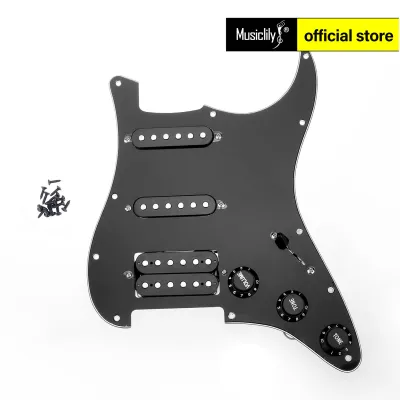
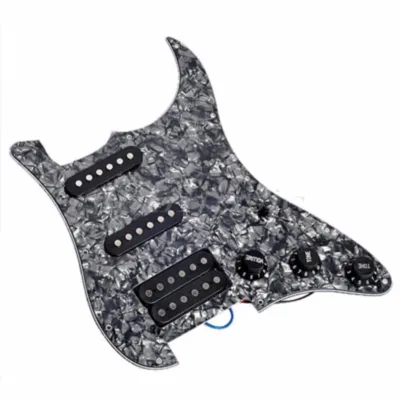
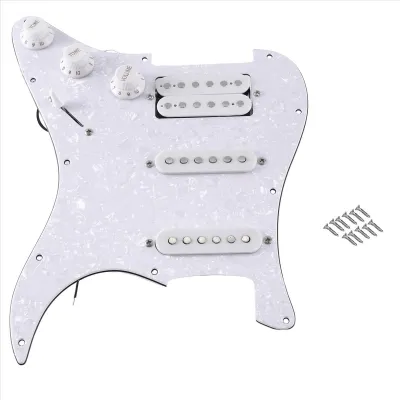
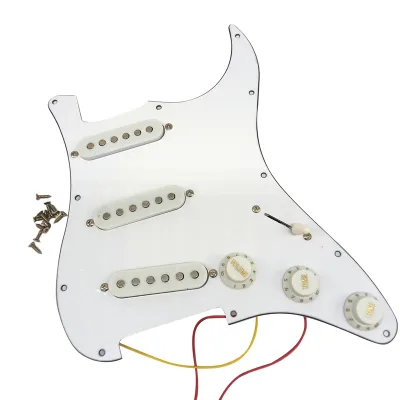
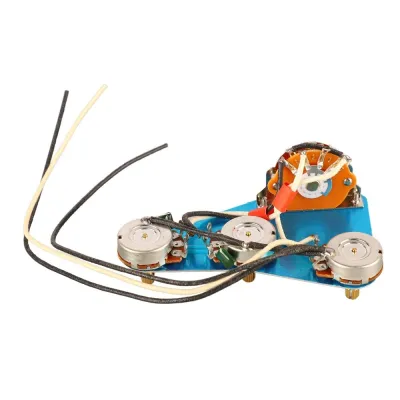
Prices are valid at publication and may change. Please refer to the product page for the latest price.
This “drop-in” convenience means you can upgrade your pickups, potentiometers, tone capacitors, and selector switches simultaneously. Instead of diagnosing why a specific pickup combination is out of phase or why a tone control is not rolling off smoothly, you receive a balanced, pre-tested circuit designed to work cohesively. This is especially advantageous if you are upgrading a budget-friendly instrument with thin, low-grade factory wiring and mini-pots to full-sized, premium components. While high-quality prewired pickguards represent a significant investment—typically ranging from ₱3,500 for reliable entry-level upgrades to over ₱12,000 for boutique, hand-wound assemblies—they save hours of labor and prevent costly mistakes.
Additionally, a prewired pickguard provides excellent reversibility. Because the entire electronic ecosystem of the guitar is contained on a single plastic plate, you can desolder just a few main connections, lift out the entire original assembly, and store it safely. If you decide to sell your guitar in the future, you can easily reinstall the original factory pickguard and keep your premium prewired upgrade for your next project, preserving both the resale value of the instrument and your investment in high-end electronics.
Essential Compatibility Checks for Strat-Style Guitars
Before purchasing any prewired pickguard, you must perform several physical and electrical checks to guarantee the assembly will fit your specific guitar body. Stratocaster-style guitars are produced by hundreds of different manufacturers worldwide, and physical dimensions are rarely identical across brands.

Pickup Routing
The first step is to remove your current pickguard and inspect the routing of the wood cavity underneath. Standard Strat-style bodies generally feature one of three routing configurations: SSS (three distinct single-coil slots), HSS (a humbucker slot in the bridge and single-coil slots in the middle and neck), or a “swimming pool” route (a single large rectangular cavity that can accommodate any pickup configuration). If your guitar body has a strict SSS routing, you cannot install an HSS prewired pickguard without physically routing or chiseling away wood from the bridge position. Attempting to force a humbucker into an SSS cavity will damage both the pickup and the body.
Potentiometer Values
The electrical components on the pickguard must match the pickup types to avoid severe tonal compromises. Potentiometers (pots) act as high-pass filters; their resistance values dictate how much high-end frequency is preserved. Standard single-coil pickups require 250k pots to bleed off excess treble, delivering a warm, balanced tone. If you use 500k pots with single coils, your guitar will sound overly bright, harsh, and piercing. Conversely, humbuckers require 500k pots to allow their natural high-end frequencies to pass through. Using 250k pots with a humbucker will result in a muddy, dark, and muffled sound. When choosing an HSS prewired guard, ensure the harness utilizes specialized wiring—such as auto-split resistors or dual-ganged pots—to ensure the single coils see a 250k load while the humbucker sees 500k.
Switch Types and Depth
The physical depth of the control cavity is another critical variable. Standard 5-way selector switches, particularly heavy-duty USA-spec switches or advanced options like Oak Grigsby and Super Switches, require a deeper cavity than the cheap import switches found in entry-level guitars. Some thin-bodied Strat-style guitars (such as certain budget import series or custom slim-body models) have a shallower control cavity. If your cavity is too shallow, the switch terminals or the tall casings of full-sized pots may bottom out against the wood, preventing the pickguard from sitting flush against the body. Always measure your cavity depth and compare it to the component specifications of the prewired assembly.
Screw Hole Alignment
Do not assume that every 11-hole or 8-hole pickguard will line up perfectly with the existing holes on your guitar body. Modern US and Mexican standard Strats typically use an 11-hole pattern, but the spacing of these holes differs from vintage 11-hole patterns and Japanese or East Asian import models. If you purchase a prewired pickguard without checking the manufacturer’s hole template, you may find that several screw holes are offset by a few millimeters. While you can fill the old holes with wood dowels and drill new ones, verifying the screw pattern beforehand saves significant installation time and preserves the integrity of your guitar’s finish.
Recommended Prewired Pickguard Configurations by Playing Style
Selecting the perfect prewired pickguard requires aligning your tonal goals with the appropriate pickup and electronic configuration. The following categories represent the most common setups available, each tailored to distinct musical genres and performance environments.
Vintage-Style SSS (Single-Single-Single) Setups
This configuration is the quintessential blueprint for traditionalists who want the classic, expressive tones that defined the mid-20th century. Vintage-style SSS setups are designed to replicate the clear, glassy, and dynamic response of early solid-body electric guitars.
- Target Audience: This setup is best suited for blues, funk, soul, country, and clean rhythm players who rely on subtle picking dynamics and expressive touch sensitivity.
- Typical Specs: These assemblies feature three single-coil pickups wound with Alnico magnets (typically Alnico III or V), 250k audio taper potentiometers, a high-quality 0.047uF or 0.022uF tone capacitor, a standard 5-way selector switch, and traditional cloth-covered or PVC push-back hookup wire.
- Tonal Characteristics: You can expect the iconic "quack" and scoop in positions 2 and 4 (bridge/middle and neck/middle combinations), a bright and glassy bridge tone that cuts through a mix, and a warm, woody, and flute-like neck tone perfect for expressive lead lines.
- Limitations: The primary drawback is susceptibility to 60-cycle hum. In venues with poor electrical grounding or under heavy fluorescent lighting—conditions frequently encountered in older performance spaces in the Philippines—these pickups will hum audibly, especially when using overdrive or compression. Additionally, their lower output means they may struggle to push a tube amplifier into heavy saturation without the help of a boost or overdrive pedal.
Modern HSS (Humbucker-Single-Single) Setups
For the working musician who needs to cover everything from top-40 pop hits to heavy rock classics in a single gig, the HSS configuration offers unmatched versatility. It bridges the gap between single-coil clarity and humbucker power.
- Target Audience: This is the ideal choice for rock, hard rock, fusion, and session guitarists who require a single instrument that can transition seamlessly from sparkling cleans to thick, high-gain rhythm and lead tones.
- Typical Specs: This setup pairs a humbucking pickup in the bridge position with single-coil pickups in the middle and neck positions. To handle the mismatched potentiometer requirements, high-quality prewired HSS guards often feature a specialized wiring scheme. This can include a 500k volume pot with a 470k resistor wired in parallel to the single-coil switch positions, effectively dropping the resistance to roughly 250k when those pickups are selected, or an auto-split circuit that splits the bridge humbucker into a single coil when combined with the middle pickup in position 2.
- Tonal Characteristics: The bridge humbucker provides a thick, mid-forward, and high-output tone that handles high-gain distortion without the shrillness or hum of a single coil. Meanwhile, the neck and middle positions retain the classic single-coil chime, warmth, and bell-like clarity for clean passages.
- Limitations: If the prewired assembly does not feature a dedicated resistor network or auto-split balancing circuit, you may experience a significant volume jump when switching from the single coils to the humbucker. Furthermore, coil-split humbuckers rarely sound identical to a true, dedicated single-coil pickup, often sounding slightly thinner or less dynamic.
Noiseless and Active Setups
For players who love the sound of a Strat but cannot tolerate the hum, or those who play modern, high-gain music styles, noiseless and active prewired pickguards provide a quiet, consistent, and high-performance alternative.
- Target Audience: These setups are designed for metal guitarists, progressive rock players, studio musicians who require pristine, silent tracks, and gigging professionals who frequently play in venues with unpredictable electrical wiring.
- Typical Specs: Noiseless setups typically use passive "stacked" humbuckers, which stack a second dummy coil beneath the main coil to cancel hum while maintaining a single-coil footprint. Active setups require low-resistance 25k potentiometers, specialized stereo output jacks, and an onboard active preamp powered by a 9V battery.
- Tonal Characteristics: These configurations offer dead-silent operation, even under extreme high-gain distortion. Active systems provide a highly consistent, compressed, and modern dynamic response with an incredibly low noise floor, allowing every note in fast runs to remain clear and defined. Passive noiseless pickups offer a similar benefit, delivering classic single-coil-like tones without any of the background hiss.
- Limitations: Active systems require a 9V battery to operate. Because standard Strat-style bodies do not have a dedicated battery compartment, you must either route a new cavity in the back of the guitar, store the battery inside the main control cavity (making battery changes inconvenient as you must loosen the pickguard), or tuck it into the tremolo spring cavity on the back of the instrument. Additionally, purists often note that passive noiseless and active pickups can lack some of the organic "airiness," touch sensitivity, and raw dynamic range of traditional single coils.
Quick Comparison of Prewired Configurations
To help you decide which configuration best fits your musical workflow, the table below summarizes the key attributes and trade-offs of each prewired pickguard setup.
| Configuration Type | Best Suited For | Standard Pot Value | Primary Limitation |
|---|---|---|---|
| Vintage-Style SSS | Blues, funk, clean rhythm, traditional rock | 250k | Susceptible to 60-cycle hum and electromagnetic interference |
| Modern HSS | Rock, hard rock, versatile gigging, session work | 500k (with 250k split resistors) | Volume imbalance between pickups if not properly balanced |
| Noiseless (Passive) | Studio recording, high-gain rock, noisy venues | 250k or 500k (spec-dependent) | Slightly less dynamic airiness compared to true single coils |
| Active Systems | Metal, progressive rock, ultra-silent modern lead | 25k | Requires 9V battery power and physical space for battery storage |
Installation Boundaries and Final Verification
While installing a prewired pickguard is significantly easier than building a wiring harness from scratch, it is not a completely solderless process. Understanding the steps and recognizing when to seek professional assistance will protect your instrument from damage.
Required Soldering
Even with a “prewired” assembly, you must complete a few final connections to integrate the pickguard into your guitar. Typically, you will need to solder three wires: the hot wire to the output jack, the ground wire to the output jack, and the main ground wire coming from the guitar’s tremolo claw or bridge. Some modern prewired guards feature solderless terminal blocks where you can screw in these wires, but the vast majority still require a soldering iron to ensure a permanent, gig-ready connection.
Pre-Installation Check
Before you screw the pickguard down and string up the guitar, perform a “dry fit” and a tap test. Place the pickguard gently into the cavity, solder the jack and ground connections, and plug the guitar into an amplifier. Turn the volume up slightly and gently tap the pickup pole pieces with a small screwdriver or metal hex key while switching through the 5-way selector. Verify that the correct pickups are active in each position and that both the volume and tone pots sweep smoothly without crackling. This simple check prevents you from having to remove the strings and unscrew the guard if a wire accidentally came loose during installation.
Pickup Height
Once the pickguard is screwed down and the guitar is tuned to pitch, you must adjust the height of the pickups. Pickups that are set too close to the strings can cause a phenomenon known as “Stratitis,” where the strong magnetic pull of the pickup magnets distorts the physical vibration of the strings, causing unpleasant overtones, tuning instability, and reduced sustain. Conversely, setting them too low results in a weak, thin output. Use a small screwdriver to adjust the mounting screws on either side of the pickups until you achieve a balanced output across all positions.
Safety Boundary
If you encounter resistance when placing the pickguard into the cavity, do not force it down. Forcing a tight fit can crack the pickguard plastic, strip the screw holes in the wood, or pinch wires against the cavity walls, causing an immediate short circuit. If the pickguard does not sit completely flat, or if you are unsure how to wire your specific output jack, stop immediately. Take your guitar and the prewired assembly to a qualified guitar technician. Professional installation ensures your electronics are shielded correctly, preventing ground loops and preserving your components.
Frequently Asked Questions (FAQ)
Do I need to solder anything when installing a prewired pickguard?
Yes, in most cases, you will still need to perform minor soldering. While all the internal connections between the pickups, switches, and pots are pre-soldered on the pickguard, you must solder the main hot and ground output wires to your guitar’s output jack, as well as the bridge ground wire to the tremolo claw. Some premium prewired pickguards utilize solderless terminal connectors that allow you to secure these wires with a small screwdriver, but traditional soldering remains the standard for a secure, long-term connection.
Will a standard Stratocaster pickguard fit all Strat-style guitars?
No, standard pickguards do not fit all Strat-style guitars. While many aftermarket prewired pickguards are built to standard US Fender specifications, import models, budget brands, and boutique guitars often have different dimensions. Variations can include different screw-hole placement, different spacing between the control knobs, or shallower control cavities. To avoid fitment issues, always compare your guitar’s dimensions and screw-hole pattern with the manufacturer’s physical template before making a purchase.
Community discussion
Share your experience or ask a question. Comments are reviewed before publication.