
Choosing the right mixer rack stand depends on whether your audio workflow centers on the constant movement of live performances or the stationary precision of a home recording environment. Portable folding stands prioritize mobility, rapid setup, and lightweight transport, making them the standard for live gigs. Conversely, fixed studio racks prioritize structural stability, heavy load capacity, and permanent cable management, which are essential for home recording setups. Selecting the wrong style can lead to damaged equipment on the road or an ergonomic nightmare in your studio. Understanding these core differences ensures your mixing console remains secure, accessible, and positioned for optimal performance.
Core Design Differences Between Portable and Fixed Stands
Portable stands are engineered for transport, utilizing lightweight materials such as high-tensile aluminum tubing or thin-walled steel. These materials minimize the physical effort required to carry the stand between venues. In contrast, fixed studio racks are built for permanence and mass. They typically feature heavy-gauge steel frames, solid wood panels, or dense medium-density fiberboard (MDF). This heavy construction provides a rigid, vibration-resistant foundation that prevents physical movement when adjusting faders or routing cables.
Portable stands rely on collapsible geometry, such as X-frame, Z-frame, or tripod designs, which fold completely flat to fit into tight storage spaces. They often feature quick-release spring pins or friction clutches, allowing you to adjust the angle of the top mixer platform on the fly. Fixed studio racks occupy a permanent footprint on your floor or desk. They utilize standardized, non-collapsible rack rails—often slanted at a comfortable 10-to-15-degree angle—secured by heavy-duty mounting screws. This ensures that heavy outboard gear and large-format mixers remain completely stationary without any risk of structural shifting.
Products mentioned in this guide
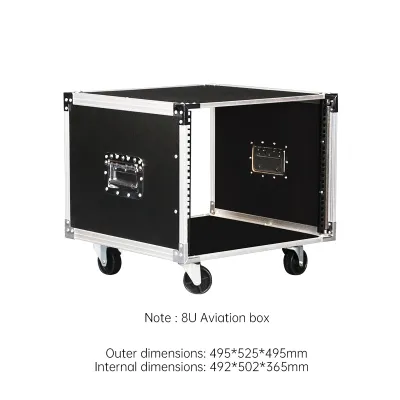
465 Lazada user ratings
worth it for the price kesa gumawa ako eto na lang. may lagayan na ng mic. may kulang lang sa items 2 cables order ko dumating isa lang kaya…Read full reviewShow less
worth it for the price kesa gumawa ako eto na lang. may lagayan na ng mic. may kulang lang sa items 2 cables order ko dumating isa lang kaya chat ko agad seller nkipag communicate naman at nag apology nirefund na lang yung kulang. ok na din for me kasi may action namang ginawa seller kaya goods pa din.
maganda itong item,bilis pa niyang madiliver,well recommend q itong cabinet na ito simpleng i assemble.thank you seller lazada at kay kuyang…Read full reviewShow less
maganda itong item,bilis pa niyang madiliver,well recommend q itong cabinet na ito simpleng i assemble.thank you seller lazada at kay kuyang delivery rider.
Quality:The aluminum-reinforced plywood ensures durability., Spacious enough to fit all my gear., Great design and sturdy construction!,
The product looks sturdy, only the plastic cover that almost full of scratches. as shown in the picture..
Prices are valid at publication and may change. Please refer to the product page for the latest price.
Live Gigs: Why Portable Folding Stands Are the Standard
For gigging musicians and sound engineers, transport logistics dictate equipment choices. Navigating busy venues, narrow stairwells, and limited vehicle cargo space requires gear that is easy to carry. A heavy, rigid studio rack is highly impractical for this lifestyle. Lightweight folding stands reduce physical strain during long carries from the loading dock to the stage, ensuring you conserve your energy for the performance itself.

Time is a luxury during tight changeovers between bands or sets. A folding mixer stand that snaps into place with spring-loaded locking pins allows you to establish your mixing station in seconds. This speed is crucial in high-pressure live environments where every minute of delay can disrupt the event schedule.
Stage floors, particularly in temporary outdoor setups or older venues, are rarely perfectly level. To prevent your mixer from wobbling or sliding, portable stands must feature reliable leveling mechanisms. Look for stands equipped with adjustable rubber feet or locking braces that compensate for uneven ground. This stability is vital to prevent physical fader drift and protect internal components from excessive vibration.
In low-light, high-pressure gig environments, quick troubleshooting is essential. Open-frame portable stands provide unobstructed access to the rear panel of your mixer. This open design allows you to patch cables, trace signal paths, and resolve connectivity issues rapidly without having to squeeze behind a bulky cabinet.
Home Studio Use: The Advantage of Fixed Studio Racks
Home studios often accumulate a dense collection of heavy outboard gear, including multi-channel preamps, hardware compressors, equalizers, and power conditioners, alongside a large-format mixing console. Fixed studio racks are engineered to support this concentrated weight without structural flex or bowing. The rigid frame ensures that your valuable hardware remains securely mounted, preventing physical stress on the chassis of your equipment.
Extended mixing, tracking, and editing sessions require comfortable gear placement to prevent physical fatigue. Fixed racks are designed to position your mixer and outboard processors at an optimal height and angle. This ergonomic alignment reduces back, neck, and shoulder strain, allowing you to focus on your creative work for longer periods without discomfort.
A permanent studio setup involves a complex web of power, line-level, and microphone cables. To prevent electromagnetic interference and signal degradation, these cables must be routed cleanly and kept separate. Fixed studio racks often feature integrated cable management channels, tie-down points, and rear access panels. This organization keeps your signal paths clean, reduces hum, and makes future routing adjustments straightforward.
In an acoustically treated room, the physical placement of furniture and gear affects sound reproduction. Fixed racks can be positioned strategically to avoid blocking acoustic panels or creating unwanted high-frequency reflections. Furthermore, their professional appearance contributes to an organized, inspiring creative environment that looks as good as it sounds.
How to Match the Stand to Your Specific Workflow
To determine the right stand for your workflow, begin by assessing your operational habits. How often do you transport your mixing console? If you move your gear more than once a month, portability should be your primary focus. Next, calculate the total weight of your current mixer and any planned outboard gear, and measure your available floor space. A fixed cabinet requires a dedicated, permanent area, whereas a folding stand can be collapsed and stored in a closet when not in use.
Before purchasing, verify the physical compatibility of your specific mixer model with the stand’s mounting system, as brand and category terms do not guarantee a proper fit. Does your mixer require standard 19-inch rack rails, and how many rack units (U) does it occupy? Ensure the stand you choose has sufficient vertical U space to accommodate your current gear, plus extra room for future expansion. It is also critical to check the physical depth of your mixer, as some rack ears only support the front panel while the rear requires additional shelf support.
Never estimate a stand’s strength based on visual appearance alone. Always refer to the manufacturer’s stated weight capacity limits in the product documentation. Overloading a stand can lead to catastrophic structural failure, risking expensive damage to your mixing console and outboard processors.
Allocate your budget (measured in Philippine Pesos, ₱) based on your primary use case. If you are building a permanent home studio, invest your ₱ in a heavy-duty, ergonomically sound fixed rack that offers long-term durability. If you are a working gigging musician, prioritize high-quality locking mechanisms, robust joints, and durable powder-coated finishes on a premium folding stand.
Cross-Scenario Compatibility: Can One Stand Do Both?
For hybrid users who run a home studio but perform live occasionally, a heavy-duty rolling rack cabinet can serve as a middle ground. These units feature the robust construction of a fixed rack combined with heavy-duty casters for mobility. However, they are bulky, heavy, and can be difficult to maneuver in tight home studio spaces or load into smaller passenger vehicles.
Attempting to transport a standard fixed studio rack to a gig is physically exhausting and risks damaging both the rack and your gear. Wood cabinets scratch easily in transit, and non-shock-mounted rails can transfer road vibrations directly to sensitive internal components, leading to loose connections or cracked circuit boards.
If your budget permits, purchasing two separate, dedicated stands is often the most practical and financially sensible solution. A budget-friendly folding stand kept in your gig bag and a sturdy, fixed rack for your home studio eliminates the need for compromise, protecting your gear and your back in both environments.
Frequently Asked Questions (FAQ)
How do I calculate the rack units (U) needed for my mixer and effects?
Standard rack equipment is measured in rack units, where 1U equals 1.75 inches (44.45 mm) in height. To calculate your needs, sum the U ratings of your mixer, power conditioners, and effects processors. Always consult the manufacturer spec sheets to verify these measurements before purchasing a stand.
It is highly recommended to leave empty U spaces between hot running gear to allow for proper ventilation, especially in tropical climates where ambient heat and humidity can cause equipment to overheat. Additionally, check the physical depth of your mixer; some deep consoles require rear support brackets or a dedicated rack shelf rather than relying solely on front rack ears.
Are adjustable feet necessary for a live stage rack stand?
Yes, adjustable leveling feet are highly beneficial for live stage setups. Uneven stage surfaces can cause your mixer to wobble, which can lead to physical fader drift or unwanted equipment vibration during a performance.
When choosing a stand, inspect the locking mechanisms on the adjustable feet to ensure they do not slip under heavy loads. Bringing a small spirit level to your gigs allows you to quickly calibrate the stand, ensuring a perfectly level mixing surface on any stage.

Community discussion
Share your experience or ask a question. Comments are reviewed before publication.