
Deciding between the physical book and the audiobook for Prisoners of Geography by Tim Marshall hinges on how you process complex geopolitical concepts and your daily reading environment. Because the book relies heavily on maps to explain global strategies, the physical copy offers seamless visual reference, while the audiobook requires you to verify if the platform provides a companion PDF map booklet and whether you can comfortably view it while listening. Choosing the right format ensures you do not miss the critical spatial relationships that define the author’s arguments.
For readers navigating busy daily routines, such as long commutes through heavy traffic or hours spent on public transit, the hands-free nature of an audiobook is highly appealing. However, because geography is the literal foundation of this book’s subject matter, an audio-only experience presents unique hurdles. Balancing the convenience of listening with the necessity of visual maps is the key to getting the most out of this influential work.
The Core Challenge: Navigating Maps in an Audio Format
To fully appreciate the geopolitical arguments in Prisoners of Geography, you must be able to visualize the terrain being discussed. The book’s central premise is that physical geography—such as mountain ranges, rivers, deserts, and access to warm-water ports—constrains and directs the political decisions of nations. For example, understanding historical security anxieties requires visualizing the vast, flat North European Plain that stretches across borders, leaving specific regions vulnerable to invasion.
Products mentioned in this guide
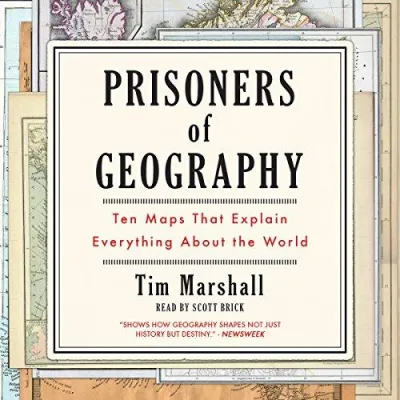
![[Audible and ebook in CDs] Prisoners of Geography](https://img.lazcdn.com/g/p/850f6cd8a56a6712242ec60805bfad24.jpg_400x400q80.jpg_.webp)
Prices are valid at publication and may change. Please refer to the product page for the latest price.
When you listen to these chapters in an audio format, keeping track of these complex borders and topographical features purely by ear can be challenging. A narrator might describe the border disputes between nations in the high altitudes of the Himalayas, but without a visual aid, it is difficult to grasp the exact spatial relationships of the disputed territories. This creates a cognitive friction where you may find yourself pausing the audio to search for a map online, disrupting the flow of your reading experience.
Audiobook publishers address this challenge by providing a supplementary PDF companion document containing the maps from the print edition. However, how you access this document depends entirely on the platform you use. Some audiobook applications embed the PDF directly within the playback screen, allowing you to open it with a single tap. Other platforms require you to log into a desktop web browser to download the file separately, which can be highly inconvenient if you are listening on the go.
Before purchasing the audio version, it is essential to verify the specific features of your chosen platform. Check if the app supports in-app PDF viewing and whether your device has a screen large enough to make these maps legible. If you plan to listen while driving or walking, accessing a digital map booklet is not only difficult but also unsafe, meaning you may have to sacrifice the visual context that makes the book so compelling.
Evaluating the Physical Book Experience
The physical edition of Prisoners of Geography is designed with visual learning in mind. Each chapter begins with a dedicated, detailed map of the region under discussion, highlighting the key geographical features, borders, and strategic choke points mentioned in the text. This layout allows for immediate cross-referencing; as you read about a specific river basin or mountain pass, you can easily glance back at the map at the start of the chapter without losing your place.

For readers who prefer an active study approach, the physical book offers unmatched utility. You can use sticky notes, highlighters, or margin notes to track historical shifts and strategic corridors. Flipping back and forth between chapters to compare different regional maps—such as comparing the map of China with the map of Africa to understand maritime trade routes—is instantaneous and intuitive in a printed volume.
However, the physical book does come with practical trade-offs, particularly depending on your environment. In tropical climates with high humidity, paperbacks require careful storage to prevent pages from warping or developing mold over time. Reading a physical book also requires dedicated lighting and both hands free, which limits your ability to consume the content while performing household chores, exercising, or commuting on crowded trains.
Additionally, carrying a physical book adds bulk to your daily bag. While a standard paperback is relatively light, it is still less portable than a digital device that holds thousands of titles. If your primary reading time occurs during a chaotic daily commute, holding a book open while standing on a moving bus or train can be a frustrating experience.
Evaluating the Audiobook Experience
The audiobook version of Prisoners of Geography shines in its ability to integrate learning into your existing daily routine. If you spend hours each week commuting, doing chores, or working out, the audio format allows you to absorb dense geopolitical history without needing to carve out dedicated sitting time. It transforms passive, otherwise wasted hours into an engaging educational experience.
The success of this format relies heavily on the narrator’s performance. Because the book deals with complex historical timelines, foreign policy terms, and unfamiliar geographical names, the narration must be clear, measured, and well-paced. A good narrator helps maintain your attention through dense passages, making the geopolitical analysis feel like a compelling narrative rather than a dry textbook. You can evaluate this beforehand by listening to the free audio sample provided on your chosen platform, paying close attention to the narrator’s pronunciation and speed.
The most critical step before buying the audiobook is verifying the inclusion of the companion PDF. Not all digital retailers package their audiobooks the same way, and regional licensing differences can sometimes affect whether supplementary materials are attached to your purchase. You should check the product description page on your platform to confirm that the companion PDF or supplementary material is explicitly listed as included.
If you decide on the audiobook, you must also consider how you will integrate the visual maps. Some listeners choose to print out the companion PDF beforehand, keeping a physical folder of maps on their desk to reference while listening at home. Others open the PDF on a tablet or secondary screen while the audio plays on their phone. This hybrid approach offers the best of both worlds but requires a bit of preparation before you start listening.
Format Comparison and Decision Framework
To help you decide which format aligns best with your reading style, lifestyle, and device preferences, consider the key differences outlined in the comparison below.
| Feature | Physical Book | Audiobook (with Companion PDF) |
|---|---|---|
| Map Accessibility | Immediate; printed directly in the chapters | Requires opening a separate digital file or printing |
| Portability | Moderate; requires physical space and light | High; fits entirely on your smartphone or mobile device |
| Multitasking | Low; requires hands-free focus and sitting | High; ideal for commuting, chores, and exercise |
| Study Utility | High; easy to highlight, annotate, and flip pages | Low; difficult to bookmark specific spoken passages |
| Pre-Purchase Check | Verify print quality and edition language | Verify companion PDF inclusion and narrator pacing |
Choose the Physical Book if…
- You are a visual learner who needs to see maps constantly to understand geographical relationships.
- You enjoy annotating, highlighting, and taking physical notes as you read.
- Your primary reading environment is a quiet, stable space like a home desk, library, or air-conditioned room.
- You want to avoid screen fatigue and prefer a completely offline, tactile reading experience.
Choose the Audiobook if…
- Your daily schedule is packed, and your primary consumption window is during commutes, exercise, or chores.
- You are comfortable using a hybrid setup, such as viewing a PDF on your phone or tablet while listening.
- You prefer auditory learning and find that a professional narrator keeps you more engaged than printed text.
- You want to save physical storage space and avoid the risk of paper deterioration in humid tropical climates.
Before making your final purchase, perform a few quick verification steps. If you choose the audiobook, check your platform’s regional availability, as licensing restrictions can sometimes limit access to certain titles in specific countries. Ensure your device has sufficient storage space for high-quality audio files, and verify that your app supports offline playback so your stream does not cut out during areas with weak mobile data coverage. Whether you spend around ₱500 on a physical copy or use a digital subscription credit, selecting the format that matches your daily habits will ensure you fully absorb the fascinating geopolitical insights of this book.
Community discussion
Share your experience or ask a question. Comments are reviewed before publication.