
The Pearl Eliminator offers high adjustability via interchangeable cams, while standard double chain pedals prioritize consistent, out-of-the-box simplicity. For a beginner, selecting your first serious bass drum pedal is a critical milestone that directly shapes your foot technique, speed, and control. While a standard double chain pedal provides a reliable, predictable feel that allows you to focus entirely on timing and muscle memory, the Pearl Eliminator introduces a modular system designed to adapt as your playing style evolves. Understanding how these mechanical differences impact your daily practice is the key to making a smart, long-term investment in your drum kit hardware.
Developing a clean bass drum technique requires hundreds of hours of repetitive practice. During this foundational stage, your gear should act as an extension of your foot rather than an obstacle. By comparing the highly customizable architecture of the Pearl Eliminator with the straightforward design of standard double chain alternatives, you can identify which hardware philosophy aligns with your learning style, physical preferences, and budget.
Core Differences: Pearl Eliminator vs. Standard Double Chain Pedals
To understand what sets the Pearl Eliminator apart, you must first look at the cam. The cam is the curved metal or plastic component at the top of the pedal assembly that guides the chain as you press the footboard down. This shape dictates the acceleration and leverage of the beater during its journey toward the drumhead.
Products mentioned in this guide
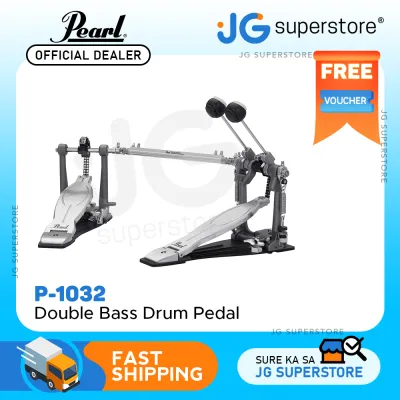
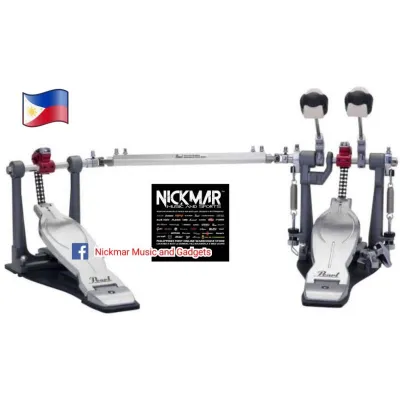
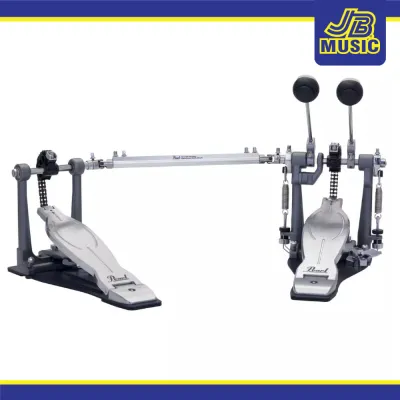
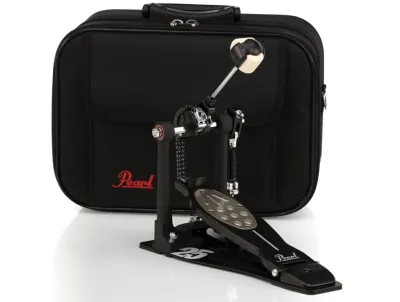
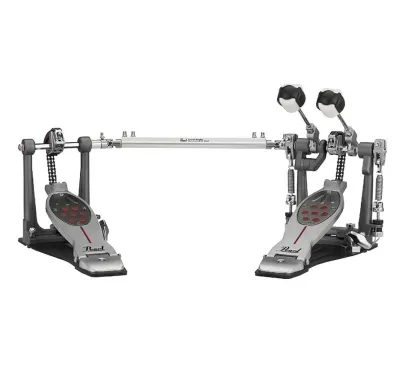
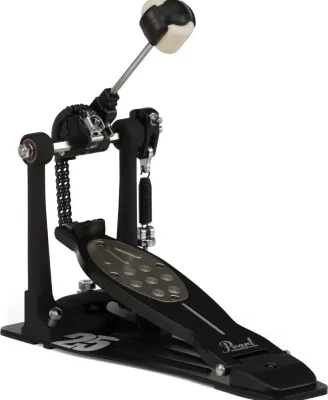
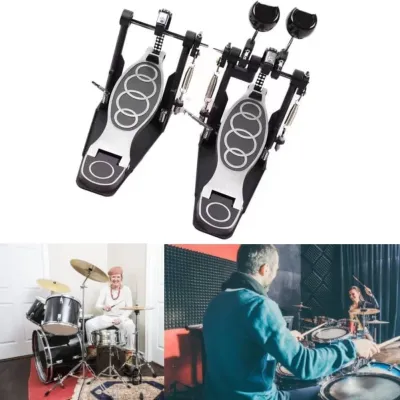
Prices are valid at publication and may change. Please refer to the product page for the latest price.
Standard double chain pedals typically feature a fixed cam, which is permanently cast into the drive shaft. This fixed profile is usually linear (perfectly round) or slightly offset (eccentric). A linear cam delivers a direct, one-to-one relationship between your foot movement and the beater’s travel, offering a highly predictable response. An offset cam accelerates the beater slightly faster at the end of the stroke, providing a bit more punch. Once you buy a standard pedal, you are locked into whichever cam profile the manufacturer selected.
In contrast, the Pearl Eliminator features an interchangeable cam system. This design allows you to clip different color-coded plastic cams onto the metal transmitter. By swapping these cams, you can instantly alter the pedal’s action from a smooth, linear glide to a radical, aggressive acceleration. For a beginner, this means a single pedal can mimic the feel of several different pedal designs, allowing you to experiment with different action profiles without purchasing entirely new hardware.
This mechanical difference directly impacts your learning curve. A fixed-cam pedal provides a stable baseline; your foot learns exactly how much force is required to achieve a specific volume, helping you build consistent muscle memory. The Pearl Eliminator offers this same consistency but adds the option to shift that baseline later. However, the ability to change the cam profile can sometimes tempt beginners to constantly tweak their gear instead of focusing on physical practice, which can occasionally slow down early technique development.
Adjustability vs. Simplicity: What a Beginner Actually Needs
Every bass drum pedal requires some basic adjustments to fit your body. The three primary adjustment points are spring tension, beater angle, and footboard height. Spring tension controls how quickly the pedal rebounds after a stroke, while the beater angle determines how far the beater must travel before striking the head. Footboard height dictates the starting angle of your ankle.

The Learning Curve of Pedal Adjustments
On standard double chain pedals, these adjustments are often linked. For example, changing the beater angle might automatically alter the height of the footboard. While this simplified design limits your customization options, it also makes setup incredibly straightforward. You simply tighten or loosen the spring to find a comfortable resistance, lock the beater in place, and begin playing.
Conversely, the Pearl Eliminator features independent adjustment points. You can raise or lower the footboard without changing the angle of the beater, and vice versa. This level of precision is highly beneficial for players with specific ergonomic needs or those recovering from ankle strain. However, for a true beginner, navigating these independent variables can feel overwhelming. Without a clear understanding of how each adjustment affects the physics of the stroke, you may find yourself lost in a cycle of endless micro-adjustments.
Balancing Customization and Practice Time
To decide which approach is right for you, consider your learning environment. If you are self-teaching at home, a simpler, standard double chain pedal keeps your focus where it belongs: on timing, posture, and basic strokes. The predictable feel of a fixed system ensures that any inconsistencies in your sound are recognized as technique errors rather than hardware settings.
If you are working with a drum instructor who can help you dial in your settings, or if you naturally enjoy mechanical customization, the Pearl Eliminator is an exceptional tool. It provides a platform that can grow with you for a decade. As you transition from basic rock beats to fast double-bass patterns or intricate jazz feathering, you can adjust the pedal’s physical geometry to support those advanced techniques rather than buying an upgraded model later.
Ergonomics and Build Quality for Developing Techniques
Proper foot technique relies heavily on the physical dimensions and stability of your pedal. When evaluating hardware, you must look closely at the footboard design, the stability of the baseplate, and the overall rigidity of the drive system.
Footboard Length and Playing Styles
Most standard double chain pedals, including the Pearl Eliminator, feature a traditional footboard with a separate heel plate. This design is highly versatile, supporting both heel-down playing (ideal for low-volume control and jazz) and heel-up playing (preferred for powerful rock and pop strokes). Some modern pedals feature a “longboard” design, which eliminates the heel plate entirely to provide a longer, continuous surface. While longboards are popular among extreme metal drummers for heel-toe double strokes, a standard footboard length is generally recommended for beginners to help them master foundational ankle control.
Key Build Elements to Verify
- Baseplate Rigidity: Ensure the pedal features a solid metal baseplate rather than wire radius rods. A solid plate keeps the pedal perfectly flat on the floor, preventing the frame from twisting during heavy playing.
- Hoop Clamp Security: Look for a robust hoop clamp that secures the pedal tightly to your bass drum. Side-access adjustment screws are highly preferred, as they allow you to tighten the clamp without reaching awkwardly underneath the footboard.
- Bearing Smoothness: High-quality bearings in the heel hinge and the top drive shaft prevent friction, ensuring that none of your physical energy is wasted.
The Role of the Double Chain
Both the Pearl Eliminator and competing high-quality pedals utilize a double chain drive. A double chain consists of two parallel rows of metal links connecting the footboard to the cam. This design is significantly more robust than a single chain, which can twist or flex sideways under heavy or angled foot pressure. By reducing lateral flex, a double chain ensures that the beater travels in a perfectly straight line. This straight path protects the pedal’s bearings from uneven wear and provides a solid, punchy feel that helps beginners develop a centered, powerful stroke.
Feature and Specification Comparison Matrix
To help visualize how the Pearl Eliminator compares to standard double chain alternatives, review the key specifications below. This matrix highlights the structural differences that influence both performance and long-term value.
| Feature | Pearl Eliminator Series | Standard Double Chain Pedals |
|---|---|---|
| Drive Type | Double Chain (or interchangeable strap) | Fixed Double Chain |
| Cam System | Interchangeable (multiple color-coded profiles included) | Fixed (typically linear or fixed offset) |
| Footboard Adjustment | Independent of beater angle | Often linked to beater angle |
| Heel Plate Hinge | High-precision bearing with customizable grip tape | Standard mechanical hinge |
| Included Accessories | Carrying case, multiple cams, tuning key | Tuning key (carrying case rarely included) |
| Best Suited For | Players who want a customizable, long-term investment | Players seeking plug-and-play simplicity |
Use this matrix as a guide rather than a rulebook. Choose the Pearl Eliminator if you want to experiment with different cam profiles to discover your physical preferences, or if you value having a premium carrying case and independent adjustment points from day one. Choose a standard double chain pedal if you prefer a lower initial investment, value straightforward setup, and want a fixed, reliable feel that keeps your practice sessions focused entirely on physical technique.
How to Verify Fit and Value Before Purchasing
Before finalizing your purchase, it is essential to verify the physical condition and authenticity of the hardware, whether you are shopping in a local music store or browsing authorized online retailers.
In-Store Physical Inspection
If you have the opportunity to test pedals in person at a local music shop, perform a few quick physical checks. Place the pedal on a flat surface and press the footboard down slowly with your hand. Feel for any grinding, clicking, or resistance in the chain and bearings. Next, grab the top of the footboard and gently wiggle it from side to side. A high-quality double chain pedal should exhibit minimal lateral play. Finally, inspect the spring assembly; the lock nuts should hold their position securely without slipping under tension.
Online Buying Checklist
When purchasing from an authorized online music store, pay close attention to the exact model numbers. The Pearl Eliminator family includes several variations, such as the Redline series and the Solo series, as well as single and double-pedal configurations. Ensure the listing matches your intended setup. Additionally, verify the regional warranty terms applicable in the Philippines. High-humidity tropical environments can accelerate rust on steel chains and springs if they are not kept clean and lightly lubricated, so choosing a retailer that offers a clear return policy and official manufacturer support is highly recommended.
Evaluating Long-Term Value
Consider the availability of replacement parts when making your decision. Because Pearl is a globally established brand, finding replacement springs, beaters, and interchangeable cams is relatively easy. Standard, off-brand double chain pedals may save you money upfront, but finding proprietary replacement parts can be difficult if a component wears out. Compare current prices in Philippine Pesos (₱) across multiple authorized local dealers, factoring in shipping costs and included accessories like carrying bags, to ensure you receive the best overall value for your investment.
Community discussion
Share your experience or ask a question. Comments are reviewed before publication.