
Choosing between the Nord Stage and Nord Piano series depends entirely on your primary musical role and workflow. If you are a gigging keyboardist who needs to cover piano, organ, and synthesizer parts simultaneously during a single set, the Nord Stage is designed for your multi-engine performance needs. On the other hand, if your focus is on a dedicated, premium acoustic and electric piano experience with a streamlined interface, the Nord Piano offers a more direct, distraction-free workflow.
Because both series represent significant investments, understanding their core architectural differences is essential before visiting a local music store. Each line caters to distinct performance styles, and the right choice depends on whether you need deep sound design capabilities or a focused, high-fidelity piano instrument.
Core Differences in Sound Engines and Keybeds
The fundamental distinction between these two instruments lies in their sound engine architecture. The Nord Stage is built as an all-in-one performance workstation, combining three independent sound engines: a dedicated piano section, a physical-modeling organ section, and a fully featured synthesizer engine. This multi-engine design allows you to layer or split multiple sounds across the keyboard, making it possible to play a synth lead, an organ pad, and an acoustic piano simultaneously.
Products mentioned in this guide
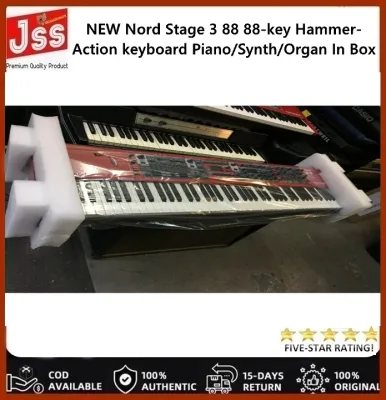
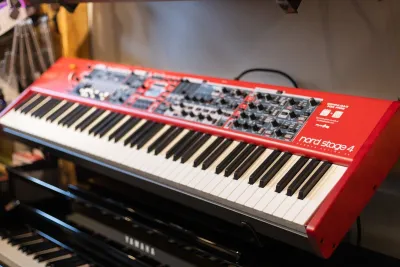
Prices are valid at publication and may change. Please refer to the product page for the latest price.
In contrast, the Nord Piano utilizes a focused dual-engine approach. It prioritizes a dedicated, high-fidelity piano engine alongside a simplified sample synthesizer section. This layout is designed specifically for players who primarily need acoustic and electric pianos, using the sample synth only for basic background layers like strings or pads rather than complex sound design.
Keybed action also varies across these product lines, directly impacting your playing experience. The Nord Piano series generally features fully weighted hammer-action keybeds, often utilizing triple-sensor technology to capture the subtle nuances of classical and jazz performances. The Nord Stage series offers a wider variety of keybed options depending on the specific model, ranging from fully weighted hammer action for piano purists to semi-weighted waterfall keys designed for fast organ runs and synthesizer solos. You should always verify the exact keybed specification of the specific generation you are considering, as keybed feel is highly subjective and varies between models.
The physical interface of each keyboard reflects these design philosophies. The front panel of the Nord Stage is densely populated with real-time knobs, buttons, LED encoders, and physical or digital drawbars, allowing for immediate on-the-fly adjustments during a live set. The Nord Piano features a much cleaner, streamlined layout that minimizes distractions, allowing you to quickly select piano models, adjust basic equalization, and apply simple effects without navigating complex menus.
Evaluating Live Performance and Studio Requirements
When deciding between these two instruments, your primary playing environment—whether on a live stage or in a controlled studio—will heavily influence your choice. For active live performers, the Nord Stage offers significant advantages, such as seamless program transitions that prevent your sound from cutting off when switching patches between songs. Its advanced split and layer capabilities, combined with a dedicated external MIDI section, allow the keyboard to act as the central controller for your entire live rig, including external sound modules or software instruments.

For studio environments, home practice, or straightforward gigging where complex sound layering is unnecessary, the Nord Piano shines. Its simplified workflow allows you to focus entirely on your performance technique without getting bogged down by synthesizer programming or organ drawbar configurations. The focused interface is highly efficient for recording sessions where you need to quickly dial in a pristine grand piano or a classic tine-based electric piano sound.
To prevent workflow bottlenecks, you should map out your most frequently used sound types and the speed at which you need to switch between them. If your setlist requires you to transition instantly from a rotary-speaker organ to a fat analog synth brass sound, the Stage is built to handle those demands. However, if your repertoire consists mainly of solo piano, jazz trio accompaniment, or basic keyboard layers, the streamlined architecture of the Piano will likely feel more intuitive and less overwhelming.
Environmental factors in the Philippines, such as high humidity and tropical temperatures, also make physical portability and setup speed important considerations for local gigging musicians. Depending on the specific model generation, the Nord Piano can sometimes be slightly lighter and easier to transport to venues in congested urban areas compared to the fully loaded Stage models. Evaluating how often you will be transporting the instrument yourself is a practical step in making your final decision.
Comparing Connectivity, Expansion, and Software Integration
Connectivity options differ significantly between the two series, affecting how you integrate the keyboard with external sound systems and studio gear. The Nord Stage typically offers expanded routing options, including four independent audio outputs that allow you to send different instruments—such as routing the organ engine to a rotary speaker simulator and the piano engine to the main mixing console. The Nord Piano generally features a standard stereo output pair, which is perfectly suited for traditional stereo amplification but offers less routing flexibility for complex stage setups.
Pedal inputs and MIDI routing also require careful verification. While both series support standard sustain and control pedals, certain generations of the Nord Piano come packaged with a dedicated triple pedal unit that enables advanced acoustic piano techniques like half-pedaling and pedal noise simulation. You should always check the manufacturer’s official specification sheet for the exact input and output configuration of the specific model you are evaluating to ensure compatibility with your existing gear.
Both instruments integrate seamlessly with the official Nord Sound Manager and Nord Sample Editor software applications. These free tools allow you to customize your keyboard’s internal memory by dragging and dropping sounds from the extensive Nord Piano Library and Nord Sample Library. This means you can completely refresh your acoustic pianos, vintage electric pianos, and synth samples over time, ensuring your instrument remains relevant for years to come.
Before purchasing third-party sound libraries or custom samples, it is crucial to verify the firmware requirements and official format compatibility of your specific keyboard model. Newer generations may support larger sample formats or advanced compression algorithms that older hardware cannot process. Keeping your instrument’s firmware updated to the latest official release is essential for maintaining system stability and ensuring compatibility with newly released sound files.
Specification Checklist and Decision Framework
To help you systematically compare these instruments, the following checklist outlines the critical technical dimensions you must verify on the manufacturer’s official specification sheets for your target models.
| Specification Dimension | Nord Stage Series | Nord Piano Series |
|---|---|---|
| Sound Engines | Piano, Organ, and Synthesizer | Piano and Sample Synth |
| Keybed Options | Fully Weighted Hammer Action, Hammer Action Portable, or Semi-Weighted Waterfall | Fully Weighted Hammer Action (often with Triple Sensor technology) |
| Audio Outputs | Typically 4 assignable outputs | Typically 2 main stereo outputs |
| Real-Time Controls | Extensive physical knobs, buttons, and drawbars | Streamlined, piano-focused control panel |
| Primary Use Case | Complex multi-engine live performance and MIDI routing | Dedicated acoustic/electric piano performance and studio recording |
Use this decision framework to guide your final purchase:
- Choose the Nord Stage if: You are a professional performer who requires deep synthesis, physical organ drawbars, extensive real-time control, and the ability to split and layer multiple diverse sound engines simultaneously.
- Choose the Nord Piano if: Your priority is pure acoustic and electric piano authenticity, a highly responsive weighted keybed, a simplified interface that keeps you focused on playing, and you do not require dedicated organ or advanced synthesizer engines.
- Verify first if: Your specific performance needs fall between these two categories. For instance, if you require a weighted keybed but only need basic string layers occasionally, a Nord Piano may be the more cost-effective and streamlined choice.
Because keybed action and tactile response are highly subjective, it is strongly recommended to test both models in person at an authorized local dealer in the Philippines. Playing the instruments firsthand allows you to evaluate how the weighted action responds to your specific touch and whether the front-panel layout aligns with your natural playing habits. Always review the latest official specifications from the manufacturer before finalizing your purchase, as features, memory capacities, and engine capabilities continue to evolve with each new product generation.
Frequently Asked Questions (FAQ)
Can I use the Nord Piano for live gigs with a band?
Yes, the sound quality and audio outputs of the Nord Piano are fully professional and capable of cutting through a live band mix. However, you should evaluate whether the simplified panel controls and the lack of dedicated organ or advanced synthesizer sections will hinder your specific live setlist requirements. If your band’s repertoire relies heavily on real-time synth modulation or classic drawbar organ sounds, you may find the interface of the Nord Piano limiting compared to the multi-engine capabilities of the Nord Stage.
Are the piano sounds identical on both series?
Both series typically access the same high-quality Nord Piano Library, meaning you can load the exact same acoustic and electric piano samples onto either instrument. However, the final acoustic behavior can still differ depending on the specific model generation you compare. You should verify the specific engine generation, polyphony allocation, and advanced resonance features of each model, as newer hardware generations often feature enhanced processing power that can affect how those piano samples are rendered and sustained.
Which model is better for a beginner?
Both series are professional-grade instruments that carry premium price tags in ₱, representing a significant financial investment. Beginners should carefully consider their long-term commitment and budget before choosing either line. If you decide to invest in one, choose based on your primary learning focus: select the Nord Piano if you want to focus strictly on developing pure piano technique with a realistic weighted action, or consider the Nord Stage if you are interested in learning sound design, synthesis, and multi-instrument performance. Consulting with a local music educator or reviewing official beginner guides can also help clarify your learning path.
Community discussion
Share your experience or ask a question. Comments are reviewed before publication.