
Deciding whether to invest in a premium Mogami guitar cable or stick with a budget-friendly alternative comes down to a clear assessment of your playing environment, your instrument’s electronics, and the physical length of your signal path. While premium cables offer measurable advantages in shielding and capacitance, a beginner practicing in a small room with a short cable may not hear any difference at all. Understanding how these components are built allows you to make an informed decision based on your current gear rather than marketing hype.
For those just starting out, the temptation to buy the cheapest available cable is strong, especially when budget constraints are a primary concern. However, a guitar cable is not merely a passive wire; it is an extension of your instrument’s electronics. The physical construction of the cable directly influences how much of your guitar’s natural tone actually reaches the amplifier. By analyzing the technical specifications and matching them to your specific playing situation, you can avoid overspending on features you do not need, or conversely, avoid the frustration of a noisy, unreliable signal chain.
Key Specifications to Check Before Buying
When evaluating any instrument cable, the manufacturer’s specification sheet is your most reliable tool. Rather than relying on vague product descriptions, look closely at the conductor material and the shielding design. High-quality cables typically use oxygen-free copper (OFC) for the central conductor, which provides a highly conductive path for your weak instrument signal. The purity of the copper helps prevent long-term degradation and oxidation, ensuring the cable maintains its performance over years of use.
Products mentioned in this guide
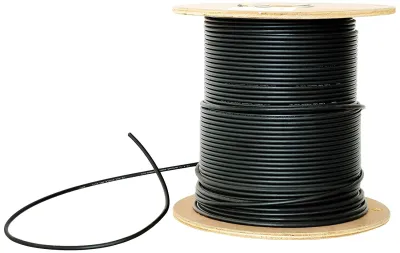
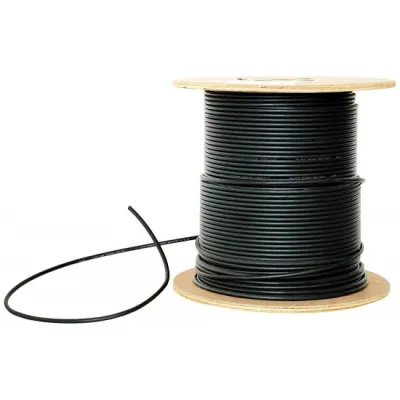
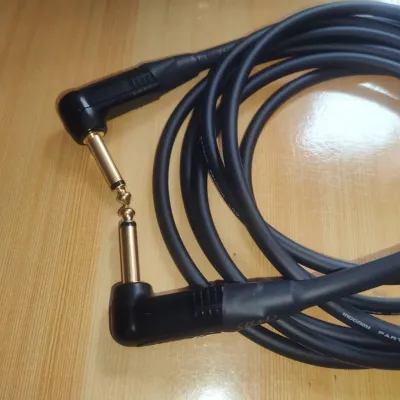
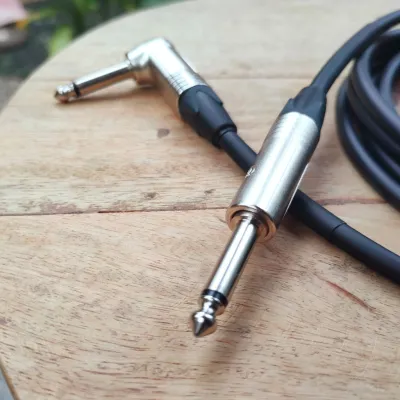
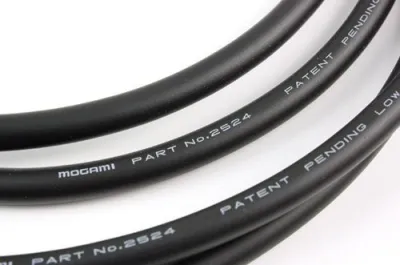
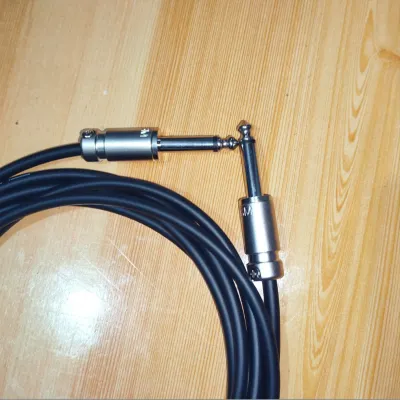
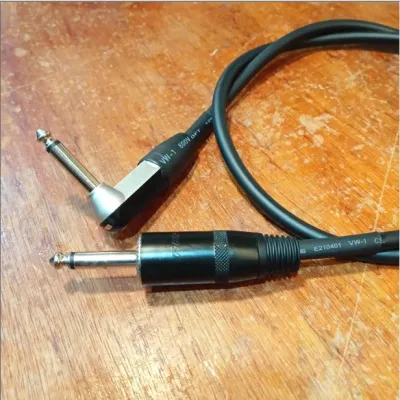
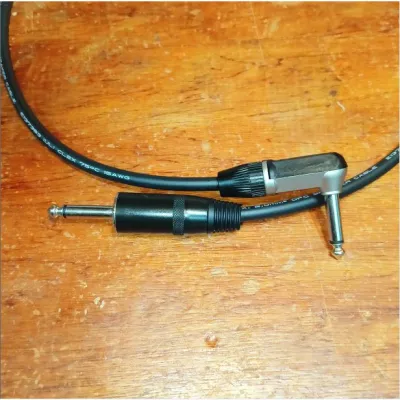
Prices are valid at publication and may change. Please refer to the product page for the latest price.
Shielding is your primary defense against unwanted noise and interference. There are two main types of shielding used in guitar cables: spiral shielding and braided shielding. Spiral shielding consists of copper strands wrapped flat around the inner insulation, offering excellent flexibility and a lower manufacturing cost, though it can stretch and leave small gaps over time. Braided shielding, which is commonly found in premium cables, uses interwoven copper strands to provide maximum coverage and structural integrity. While braided shielding makes the cable stiffer, it offers superior protection against electromagnetic interference in high-noise environments.
Capacitance is another critical electrical specification that directly impacts your tone. Every guitar cable acts as a tiny capacitor, storing and releasing a small amount of electrical charge, which naturally rolls off high frequencies. This specification is usually listed on official spec sheets in picofarads per meter (pF/m) or picofarads per foot (pF/ft). A lower capacitance rating means less treble loss, resulting in a brighter, clearer sound. When comparing cables, always locate this rating on the manufacturer’s website to verify how much high-frequency detail the cable will preserve over longer distances.
Finally, pay close attention to the connector housing and strain relief mechanisms. The point where the flexible cable meets the rigid metal plug is the most common failure zone. Premium cables often feature heavy-duty metal connector shells with integrated rubber boots or heat-shrink tubing that distributes bending stress away from the internal solder joints. Budget cables frequently use molded plastic connectors that cannot be opened or repaired, meaning the entire cable must be discarded if a single internal wire breaks.
Real-World Performance and Signal Integrity
In a practical playing environment, the physical length of your cable plays a massive role in signal degradation. If you are using a short 3-meter (10-foot) cable to connect your guitar directly to a practice amplifier, the total capacitance of the run is incredibly low. In this scenario, even a high-capacitance budget cable will sound virtually identical to a premium low-capacitance cable. The audible difference only becomes apparent as the cable length increases to 6 meters (20 feet) or more, where high capacitance begins to act as a low-pass filter, making your guitar sound muddy and lifeless.

Noise floor considerations are equally important, particularly if you plan to use high-gain amplifiers or a chain of multiple effects pedals. High-gain settings amplify every tiny bit of electromagnetic interference picked up by your cable. If you practice in a room with fluorescent lighting, computer monitors, or older household wiring, a poorly shielded budget cable can introduce a constant, distracting hum. Premium cables utilize dense shielding and conductive polymer sub-shields to minimize handling noise—the crackling sound produced when the cable is moved or stepped on during play.
Physical handling traits also vary significantly between price brackets. In tropical environments with high humidity, the materials used in the outer jacket are put to the test. Cheap PVC jackets can become sticky, stiff, or brittle over time when exposed to heat and moisture. Premium cables generally use specialized rubber or high-grade polymer jackets that remain supple and resist “coil memory,” which is the tendency of a cable to kink and tangle rather than lay flat on the floor. A cable that coils easily and resists twisting is much easier to pack away and will last significantly longer.
Evaluating the Price Premium in the Philippines
In the local market, the price gap between entry-level and premium instrument cables is substantial. Budget cables found in local music stores or online marketplaces typically range from ₱300 to ₱1,000. In contrast, a premium Mogami cable can easily cost between ₱3,000 and ₱7,000 or more, depending on the length and the specific connector options. For a beginner, this price difference represents a significant portion of an overall gear budget.
To put this into perspective, consider the cost-to-benefit ratio relative to your entire setup. If you are playing a budget-friendly starter guitar through a small 15-watt modeling amplifier, spending ₱4,000 on a single cable is highly inefficient. That same amount of money could be better spent on a decent overdrive pedal, a clip-on tuner, or even saved toward a future amplifier upgrade, which would yield a far more noticeable improvement in your overall sound. A budget cable is entirely adequate for bedroom practice where absolute signal purity is not a critical requirement.
However, if you are transitioning into recording music at home using an audio interface, or if you are starting to play live gigs in local venues, the value proposition shifts. In a recording environment, any added noise or high-frequency loss is permanently captured in your tracks, making a low-noise premium cable a worthwhile investment. Furthermore, the reliability of your gear is paramount when performing live; a cheap cable that fails mid-set can ruin a performance, making the durability and lifetime warranty of a premium cable highly valuable for active musicians.
How to Choose the Right Cable for Your Rig
To determine which cable category best suits your needs, evaluate your current playing setup and long-term goals using a few simple criteria. Your choice should align with the physical demands of your environment and the electrical characteristics of your instrument.
Choose a premium cable (such as Mogami) if:
- You are running long cable lengths of 6 meters (20 feet) or more from your guitar to your amplifier or pedalboard.
- Your guitar is equipped with high-impedance passive pickups, which are highly sensitive to cable capacitance and prone to high-frequency loss.
- You require maximum physical durability for frequent travel, rehearsals, and live stage performances.
- You are recording high-fidelity audio directly into an interface where a low noise floor is critical.
Choose a budget alternative if:
- You are practicing exclusively at home with a short cable run of 3 meters (10 feet) or less.
- Your guitar features active pickups (which require a 9V battery), as their low output impedance makes them highly resistant to the tone-dulling effects of cable capacitance.
- You are assembling your very first practice rig and need to allocate your budget toward essential gear like amplifiers or pedals.
Before making any purchase, always verify the physical clearance of your guitar’s output jack. Some instruments, such as those with recessed jack plates or deep-dish input cups, cannot accommodate bulky right-angle connectors or oversized metal housings. Confirming these physical dimensions beforehand ensures your new cable will plug in securely without putting unnecessary leverage on your guitar’s internal jack.
Frequently Asked Questions (FAQ)
Do gold-plated connectors improve guitar tone?
Gold plating does not improve the electrical conductivity or the overall tone of your guitar signal compared to clean nickel or silver connectors. The primary benefit of gold plating is its exceptional resistance to corrosion and oxidation. In humid, tropical climates, standard nickel connectors can tarnish over time, leading to a poor electrical connection that causes crackling or signal dropouts. Gold-plated connectors prevent this oxidation, ensuring a reliable, noise-free connection over years of exposure to moisture.
How can I test a guitar cable for faults?
You can easily test a guitar cable using a digital multimeter set to the continuity or resistance mode. Touch one probe to the tip of the plug on one end, and the other probe to the tip of the plug on the opposite end; the meter should show near-zero resistance, indicating a continuous path. Repeat this test for the outer sleeve of both plugs. Finally, touch one probe to the tip and the other to the sleeve of the same plug; the meter should show infinite resistance (no continuity), confirming there is no internal short circuit between the hot wire and the ground shield.
Community discussion
Share your experience or ask a question. Comments are reviewed before publication.