
To master focus in a highly connected, fast-paced professional landscape, the ultimate starting point is Cal Newport’s foundational concept of deep work, complemented by tactical guides like Atomic Habits, Indistractable, Hyperfocus, and The One Thing. For professionals navigating hybrid work setups, bustling shared offices, or remote roles in the Philippines, maintaining cognitive endurance is a constant challenge. Distractions from messaging apps, household noise, and the mental fatigue of long daily commutes can easily derail productivity.
By studying these curated self-help books, you can build a personalized toolkit to protect your attention, optimize your daily habits, and direct your energy toward high-impact career goals. Rather than treating productivity as a vague aspiration, these texts offer structured, actionable frameworks that help you reclaim your time and produce high-quality work. Understanding how to apply these methodologies to your specific work environment is the first step toward professional mastery.
How to Choose the Right Productivity Book for Your Career
Selecting the right productivity book requires an honest assessment of your current daily workflows and cognitive bottlenecks. If you find yourself constantly reacting to notifications, answering non-urgent emails, or struggling to find uninterrupted time for complex tasks, your primary bottleneck is likely attention management. Identifying whether your distractions are external, such as office noise and digital alerts, or internal, such as procrastination and mental fatigue, will guide you toward the right reading material.
Products mentioned in this guide
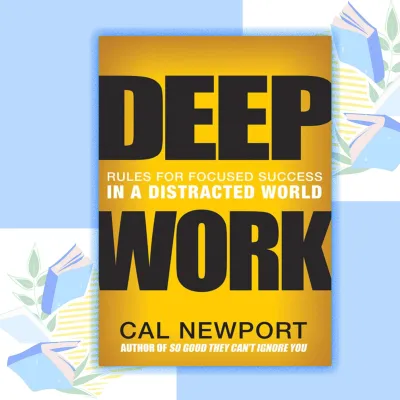
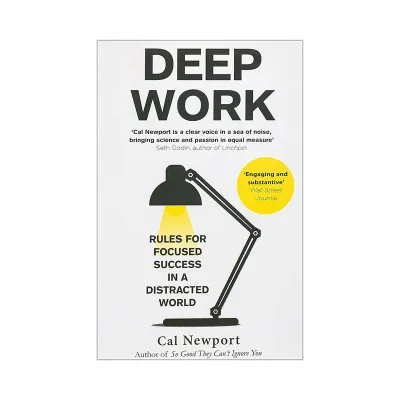
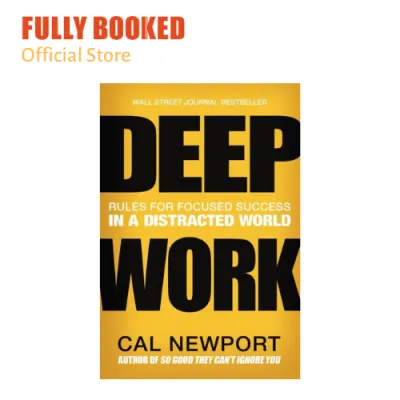
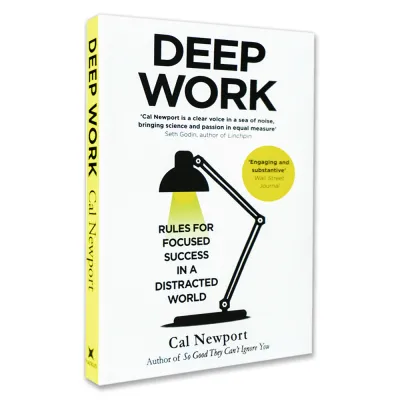
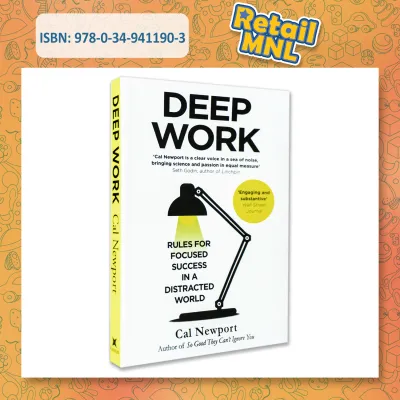
Prices are valid at publication and may change. Please refer to the product page for the latest price.
Your learning preference also plays a significant role in which book will resonate most with your daily routine. Some professionals prefer scientific frameworks backed by cognitive psychology and academic research, which help explain the underlying mechanics of human attention. Others thrive on highly tactical, step-by-step guides that focus on immediate environmental design and habit formation. Recognizing which style keeps you engaged ensures that you will actually implement the strategies you read about.
Finally, you must align your chosen book’s core methodology with your realistic career goals and workplace constraints. A freelance software developer or creative writer has a high degree of control over their schedule, making deep, isolated work blocks highly feasible. Conversely, a corporate manager or client-facing professional must balance availability with focused execution. Choosing a book that acknowledges these structural realities prevents frustration and helps you build sustainable focus habits.
The Foundation: Why Start With the Deep Work Book?
Cal Newport’s Deep Work serves as the baseline for modern focus strategies because it addresses the core currency of the knowledge economy: uninterrupted concentration. Newport defines deep work as professional activities performed in a state of distraction-free concentration that push your cognitive capabilities to their limit. This state creates new value, improves your skill level, and is difficult for others to replicate. In contrast, shallow work consists of non-cognitively demanding, logistical tasks, such as answering routine messages, which are easily automated or outsourced.

To help professionals integrate this practice, Newport outlines four distinct scheduling philosophies, allowing you to choose the approach that best fits your role:
- The Monastic Philosophy: Eliminating or radically minimizing shallow obligations to spend long, uninterrupted periods in isolation.
- The Bimodal Philosophy: Dividing your time between clearly defined periods of deep isolation and normal, highly accessible daily operations.
- The Rhythmic Philosophy: Transforming deep work into a regular, daily habit by scheduling fixed blocks of focus at the same time every day.
- The Journalistic Philosophy: Fitting deep work into your schedule whenever free moments arise, which requires the ability to switch into a high-focus state rapidly.
Applying these foundational concepts in a standard office or remote setup requires deliberate boundary-setting. For instance, remote workers in the Philippines often face unique environmental challenges, such as tropical afternoon heat, noisy neighborhoods, or shared household spaces. Implementing a rhythmic philosophy—such as dedicating the quiet early morning hours before the household wakes up to your most demanding tasks—can help you secure high-value focus time before daily distractions begin.
Top Self-Help Books to Master Focus and Productivity
While Deep Work establishes the philosophical and structural importance of concentration, other productivity books address the practical execution gaps that readers often encounter. Building a complete focus toolkit requires looking at attention from multiple angles, including habit formation, distraction management, and prioritization. The following curated recommendations expand on Newport’s theories, offering highly practical tactics that you can integrate directly into your daily professional life.
Atomic Habits by James Clear
James Clear’s Atomic Habits focuses on the micro-behaviors that build the discipline required for sustained concentration. Clear explains that habits are formed through a continuous four-step loop: cue, craving, response, and reward. To build a habit of deep focus, you must design your environment to make the cues of concentration highly obvious while making the cues of distraction completely invisible. For example, keeping your phone in another room during work hours removes the immediate visual cue that triggers mindless scrolling.
Implementing identity-based habits is another core concept that supports long-term productivity. Instead of focusing solely on outcomes, such as wanting to write a report, Clear suggests shifting your self-perception to align with the desired behavior, such as viewing yourself as a disciplined and focused professional. This internal shift makes resisting distractions a natural expression of who you are, rather than a constant battle of willpower. Over time, these small, daily adjustments compound into significant professional growth.
Indistractable by Nir Eyal
Nir Eyal’s Indistractable addresses the internal and external triggers that break our concentration in a hyper-connected world. Eyal introduces a four-step model designed to help you manage internal discomfort, which is often the root cause of distraction. When we feel bored, anxious, or overwhelmed by a difficult work task, we naturally seek relief by checking social media or chat apps. By recognizing these emotional triggers and learning to sit with the discomfort for just ten minutes, you can break the automatic cycle of distraction.
To protect your attention, Eyal also emphasizes the importance of hacking back external triggers in both digital and physical workspaces. This involves customizing your computer and smartphone notification settings, scheduling dedicated times to check communication channels, and establishing clear physical signals to let colleagues or family members know when you are in a high-focus zone. Managing these external cues ensures that your attention remains directed by your own choices rather than external demands.
Hyperfocus by Chris Bailey
In Hyperfocus, Chris Bailey offers practical tactics for managing your limited attention capacity. Bailey differentiates between two primary modes of attention: hyperfocus and scatterfocus. Hyperfocus is the state of directing your attention toward a single, important task while resisting distractions, which is essential for complex problem-solving. Scatterfocus, on the other hand, is a creative state where you allow your mind to wander intentionally, helping you connect disparate ideas and recharge your cognitive batteries.
Managing your attentional space is crucial for maintaining momentum throughout the workday. Bailey explains that our working memory can only hold a small amount of information at any given time; when we attempt to multitask, we overload this space, leading to errors and mental fatigue. By practicing intentional task switching and keeping your immediate workspace clear of irrelevant stimuli, you can maximize your cognitive efficiency and complete demanding projects with greater ease.
The One Thing by Gary Keller and Jay Papasan
Gary Keller and Jay Papasan’s The One Thing teaches the power of extreme prioritization to ensure your focus is directed at the most impactful tasks. The authors introduce the focusing question: “What is the one thing I can do such that by doing it everything else will be easier or unnecessary?” By asking this question daily, you can cut through the noise of endless to-do lists and identify the single activity that will drive the greatest progress in your career.
This methodology directly challenges the myth of multitasking, which often leads to fragmented attention and mediocre results. Instead, the book advocates for the domino effect, where focusing your energy on a single, highly strategic task creates a positive momentum that naturally simplifies subsequent responsibilities. For professionals looking to advance their careers, mastering this level of prioritization ensures that your deep work hours are spent on tasks that truly matter.
Quick Comparison: Focus Books for Different Work Styles
To help you quickly match your current career challenges with the most suitable book, the table below maps each title to its primary focus area, ideal reader profile, and core methodology.
| Book Title | Primary Focus Area | Ideal Reader Profile | Core Methodology | Expected Time Commitment |
|---|---|---|---|---|
| Deep Work | Cognitive structure and scheduling | Independent professionals, academics, and remote workers | Four scheduling philosophies to protect deep focus blocks | High (requires structural schedule changes) |
| Atomic Habits | Daily routines and environment design | Professionals struggling with consistency and discipline | The four-step habit loop and identity-based habits | Medium (requires small, daily behavioral adjustments) |
| Indistractable | Managing internal and external triggers | Corporate employees and remote workers in busy environments | Managing internal discomfort and hacking back digital alerts | Medium (requires digital and physical boundary-setting) |
| Hyperfocus | Attention capacity and mental recharge | Creative professionals and knowledge workers | Alternating between hyperfocus and scatterfocus modes | Medium (requires active attention tracking) |
| The One Thing | Extreme prioritization and goal setting | Managers, entrepreneurs, and goal-oriented professionals | The focusing question and sequential task execution | Low (requires daily prioritization exercises) |
Where to Buy and What to Check Before Purchasing
When purchasing self-help and productivity books in the Philippines, it is essential to verify several details to ensure you receive an authentic, high-quality copy. Before checking out from online marketplaces or local e-commerce platforms, verify the publisher details, language, and edition completeness. Be cautious of listings with unusually low prices, as these are often unauthorized, low-quality reprints with missing pages, poor binding, or illegible text. Checking customer reviews for real photos of the book’s print quality and paper texture can help you confirm seller credibility.
Choosing the right format depends heavily on your daily routine, commute, and study habits:
- Physical Books: Ideal for distraction-free reading at home or in a quiet cafe, allowing you to highlight key passages and take notes without digital interruptions.
- E-books: Highly portable and convenient for professionals who travel frequently or prefer to read on a dedicated e-reader under various lighting conditions.
- Audiobooks: Perfect for maximizing productivity during long commutes on public transit or while navigating traffic jams in major metropolitan areas.
To ensure you are getting a fair deal, compare prices in ₱ across reputable local bookstores and authorized online retailers. Authentic paperback editions of these popular titles typically range from ₱400 to ₱900, while hardcover editions can exceed ₱1,200 depending on the publisher and import fees. Taking the time to verify these factors ensures that your investment in your professional development is both secure and effective.
Frequently Asked Questions (FAQ)
How long does it take to see results after reading the Deep Work book?
Cognitive adaptation to deep work strategies typically takes between two to four weeks of consistent, daily practice. Because our brains have become accustomed to constant digital stimulation, building the mental stamina required for deep focus is similar to physical training. You can track your progress by keeping a simple log of your daily focus minutes, starting with short, uninterrupted blocks of thirty minutes and gradually increasing the duration as your concentration improves.
If you experience initial workplace friction or team dynamics that demand constant availability, you may need to adjust your scheduling philosophy. For example, instead of attempting long periods of isolation, start with a rhythmic approach by dedicating the first hour of your workday to deep tasks before opening your communication channels. Communicating your focus blocks clearly to your team helps manage expectations and ensures that your productivity efforts do not conflict with collaborative responsibilities.
Can I read these books in any order, or is there a specific sequence?
While you can read these books in any order, starting with a logical sequence based on your immediate productivity bottlenecks can accelerate your progress. If you are struggling with overall career direction and prioritization, starting with The One Thing or Deep Work will help you establish a clear mindset and identify your high-value tasks. Once you have defined your focus areas, reading Atomic Habits or Indistractable provides the tactical, day-to-day tools needed to design your environment and manage daily distractions.
To fit these books into a busy schedule, consider mixing formats to suit different learning contexts. You might listen to the audiobook version of Atomic Habits during your daily commute to grasp the core concepts, and then use a physical copy of Deep Work during the weekend to study the scheduling frameworks in detail. This multi-format approach allows you to integrate valuable productivity lessons into your routine without feeling overwhelmed.
Community discussion
Share your experience or ask a question. Comments are reviewed before publication.