
Choosing the right Tagalog Catholic Bible is a deeply personal decision that shapes your daily spiritual practice, study habits, and participation in parish life. In the Philippines, two primary translations stand out for Catholic readers: the Magandang Balita Biblia (MBB) and Ang Biblia ng mga Katoliko (ABK). While both versions contain the complete Catholic canon, they serve different purposes due to their distinct translation philosophies, language styles, and intended audiences.
The choice between these two translations depends primarily on your reading preference and spiritual goals. The Magandang Balita Biblia generally suits readers looking for contemporary, accessible language for daily devotion, youth ministry, and group sharing. In contrast, Ang Biblia ng mga Katoliko appeals to those who prefer traditional, formal phrasing for in-depth theological study, academic reference, and alignment with liturgical celebrations. By understanding how these translations differ in style, readability, and physical features, you can select the edition that best supports your spiritual journey.
Understanding the Two Tagalog Catholic Bibles
To make an informed choice, it is essential to understand the origins and translation philosophies of both texts. The Magandang Balita Biblia (often abbreviated as MBB) is published by the Philippine Bible Society. It was developed as an ecumenical project with active participation from Catholic scholars and translators, ensuring that the Catholic edition fully conforms to Catholic doctrine. The primary goal of the MBB translation committee was to produce a text that is highly readable and easily understood by modern Tagalog speakers across different age groups and regions.
Products mentioned in this guide
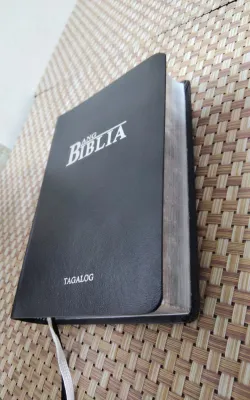
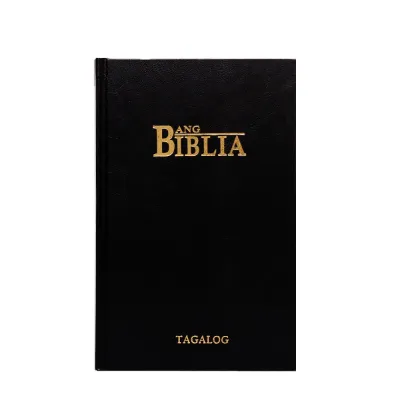
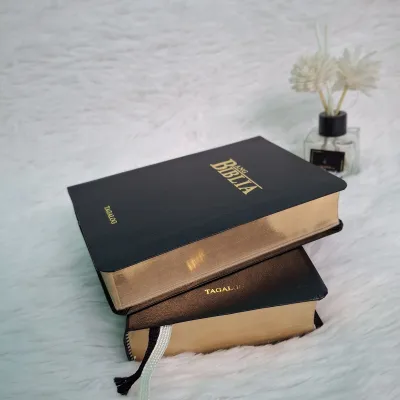
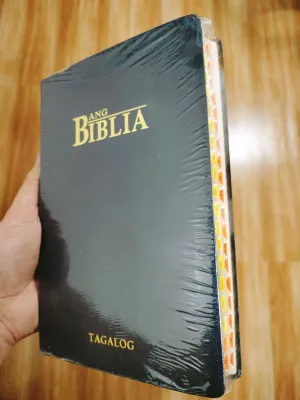
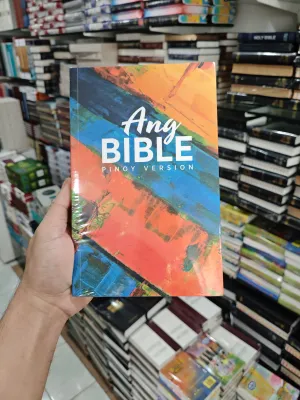
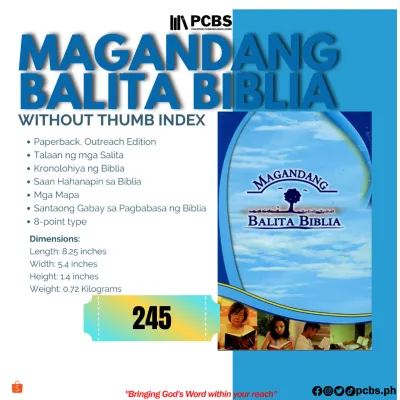
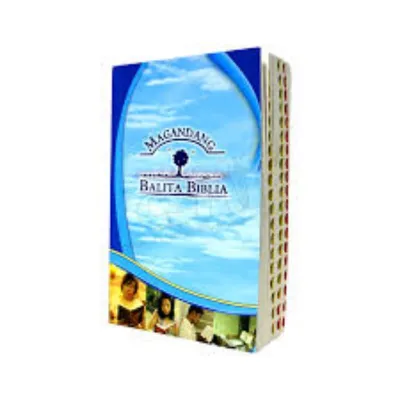
Prices are valid at publication and may change. Please refer to the product page for the latest price.
The translation philosophy behind the Magandang Balita Biblia is dynamic equivalence, also known as functional equivalence or meaning-based translation. Rather than translating the original Hebrew, Aramaic, and Greek texts word-for-word, the translators focused on conveying the exact meaning of the original message in natural, contemporary Tagalog. This approach prioritizes clarity and immediate comprehension, making the text flow naturally like modern spoken and written Tagalog.
On the other hand, Ang Biblia ng mga Katoliko represents a more traditional approach to Catholic scripture in the Philippines. This translation is rooted in formal equivalence, which is a word-for-word translation philosophy. The translators of this version aimed to preserve the literal structure, vocabulary, and sentence patterns of the original biblical languages as closely as possible, while still maintaining grammatical correctness in Tagalog.
Because of this formal equivalence approach, Ang Biblia ng mga Katoliko retains a highly dignified, formal, and traditional tone. It uses classical Tagalog vocabulary and sentence structures that reflect the solemnity of sacred scripture. This makes it a preferred choice for formal study, theological reflection, and liturgical use, as it closely mirrors the language historically used in Catholic liturgy and traditional devotions in Tagalog-speaking dioceses.
Translation Style and Readability
The difference in translation philosophies directly impacts how each Bible reads on a daily basis. In the Magandang Balita Biblia, the vocabulary is deliberately chosen to reflect contemporary Tagalog usage. Archaic words are replaced with modern equivalents that are easily understood by readers of all ages, including children and young adults. The sentence structures are generally shorter and more direct, which helps prevent confusion when reading complex theological passages.

This modern approach makes the MBB exceptionally well-suited for oral reading, family devotions, and small-group Bible sharing. When reading historical narratives in the Old Testament or the parables in the Gospels, the text reads like a story, allowing the reader to focus on the narrative flow and practical application without getting tripped up by unfamiliar vocabulary.
Conversely, Ang Biblia ng mga Katoliko employs a vocabulary that is rich, formal, and deeply traditional. It preserves classical Tagalog terms that carry significant theological weight and historical resonance. For readers who grew up attending the Tagalog Mass, the phrasing in this version will feel instantly familiar, as it aligns closely with the liturgical texts, prayers, and responses used by the Church in the Philippines.
The formal tone of Ang Biblia ng mga Katoliko is particularly evident in the poetic books, such as the Psalms, and the doctrinal letters of Saint Paul. In the Psalms, the formal equivalence approach preserves the poetic imagery and parallelisms of the original Hebrew, offering a majestic and contemplative reading experience. However, the complex sentence structures and classical vocabulary may require a higher level of reading comprehension and slower, more meditative reading to fully grasp the meaning.
When comparing how both versions handle different literary genres, the MBB excels in making historical narratives and complex epistles accessible and engaging. In contrast, Ang Biblia ng mga Katoliko excels in preserving the solemnity, poetic beauty, and literal accuracy of liturgical readings and poetic prayers. Your preference between these two styles will determine which Bible feels more natural and inspiring during your personal prayer time.
Study Features and Physical Editions
Beyond the translation style, the physical format and supplementary study features of a Bible are critical factors in your decision. When purchasing a Catholic Bible, the first step is to verify the presence of essential Catholic elements. A complete Catholic Bible must include the Deuterocanonical books (such as Tobit, Judith, Wisdom, Sirach, Baruch, and 1 and 2 Maccabees) integrated into the Old Testament or placed in a dedicated section. Additionally, you should check the copyright page for the Imprimatur and Nihil Obstat, which are official ecclesiastical declarations indicating that the book is free from doctrinal or moral error and is approved for Catholic use.
Standard editions of both Bibles offer varying levels of study aids. The Magandang Balita Biblia often comes in editions that include helpful cross-references, brief section introductions, a basic word list or glossary, and simple maps of biblical lands. Some editions also feature practical guides for daily reading or group sharing. Because it is widely distributed by the Philippine Bible Society, you can find MBB editions with specialized features, such as youth-focused study guides or parallel editions that place the Tagalog text alongside an English translation.
Editions of Ang Biblia ng mga Katoliko are typically designed with a focus on traditional study and liturgical preparation. They often feature more extensive footnotes that explain theological concepts, historical contexts, and literal translations of specific Greek or Hebrew words. These study notes are invaluable for readers who want to delve deeper into Catholic theology and understand how specific passages relate to Church teachings and tradition.
Physical specifications are also highly important, especially given the tropical climate of the Philippines. High humidity can cause thin Bible paper to cockle or stick together, and it can accelerate the wear and tear of cover materials. When evaluating physical editions, look for publishers that use high-quality, opaque paper that minimizes ink bleed-through. Binding durability is another key consideration; sewn bindings generally hold up much better over years of daily use than glued bindings. For cover materials, genuine leather or high-grade imitation leather (leatherette) offers better resistance to humidity and frequent handling compared to standard paperback covers.
How to Choose the Right Version for Your Needs
To choose the right Tagalog Catholic Bible, you should evaluate your specific reading habits, spiritual goals, and how you plan to use the text. A condition-based decision framework can help guide your choice.
You should choose the Magandang Balita Biblia if you prefer contemporary, easy-to-understand language that makes daily scripture reading a seamless part of your routine. This version is ideal if you are involved in youth ministry, catechism classes, or parish Bible study groups where participants have varying levels of reading comprehension. It is also an excellent choice for personal devotions, journaling, and casual reading, as the modern Tagalog phrasing allows you to focus on the practical and emotional application of the text.
On the other hand, you should choose Ang Biblia ng mga Katoliko if you prefer traditional phrasing that maintains a formal, reverent tone. This version is highly recommended if your primary goal is deep theological study, academic research, or preparing homilies and parish lectures. It is also the ideal choice if you want a Bible that aligns perfectly with the readings, responses, and prayers you hear during the Tagalog Mass, allowing you to meditate on the liturgical texts before or after attending church.
Before making your final decision, verify your specific physical and accessibility requirements. If you have difficulty reading small print, look specifically for a large-print edition of your chosen translation. If you plan to carry your Bible to parish meetings, daily Mass, or travel, a compact edition with a durable, zippered cover may be the most practical choice to protect the pages from dust and moisture.
Where to Buy and What to Verify Before Purchasing
To ensure you receive an authentic, complete Catholic edition, it is crucial to follow a careful verification process before completing your purchase. First, always check the International Standard Book Number (ISBN), the publisher’s name, and the edition year. This information is typically found on the copyright page and helps you confirm that you are getting the exact translation and edition you want.
Second, always verify the inclusion of the Deuterocanonical books. Because some publishers print ecumenical or Protestant editions of the Magandang Balita Biblia that omit these books or place them in a different order, you must check the table of contents. Ensure that books like Tobit, Judith, Wisdom, Sirach, and Maccabees are present. A true Catholic edition will clearly state “with Deuterocanonicals” or “May Deuterocanonico” on the cover or title page.
Third, rely on authorized and reputable sources to guarantee authenticity. In the Philippines, you can find genuine Catholic Bibles at authorized religious bookstores operated by Catholic congregations, such as Paulines Media Centers, St. Pauls Bookstores, Word & Life Center, or directly from the Philippine Bible Society. Many of these organizations also operate official online stores on major ecommerce platforms. Purchasing from these official channels ensures that you are supporting authorized publishers and receiving a high-quality, complete text free from printing defects or unauthorized alterations.
Frequently Asked Questions (FAQ)
Is Magandang Balita Biblia approved for Catholic use?
Yes, the Magandang Balita Biblia is fully approved for Catholic use, provided you purchase the Catholic Edition. This edition contains the complete Catholic canon, including the Deuterocanonical books. To verify its official approval, look at the copyright page for the Imprimatur (the official permission to print granted by a Catholic bishop) and the Nihil Obstat (the declaration by a church censor that the text contains nothing contrary to faith or morals).
Do both versions include the Deuterocanonical books?
Both translations have editions that include the Deuterocanonical books, but you must verify this before buying. While Ang Biblia ng mga Katoliko is inherently a Catholic translation and almost always includes these books, the Magandang Balita Biblia is published in both Protestant editions (which omit these books) and Catholic editions (which include them). Always check the cover, title page, or table of contents to ensure the Deuterocanonical books are included.
Community discussion
Share your experience or ask a question. Comments are reviewed before publication.