
Quick Answer: Which Macbeth Version Fits Your Reading Goal?
Choosing the right version of William Shakespeare’s Macbeth depends entirely on your primary reading objective, your comfort level with historical English, and how you intend to use the text. If your goal is to analyze the play for an academic course, appreciate the original poetic rhythm, or study historical literary devices, the original English text is your best option. Conversely, if you want to focus on the dramatic narrative, experience the intense emotional weight of the tragedy without linguistic barriers, or explore localized theatrical adaptations, a Tagalog translation is highly recommended.
For many readers in the Philippines, a dual-reading approach—using a Tagalog translation to master the plot and character motivations alongside the original English text for deep textual analysis—offers the most comprehensive and rewarding literary experience. This method allows you to appreciate the complexity of the original work without getting lost in archaic vocabulary.
Key Differences Between the English and Tagalog Editions
Language Proficiency and Reading Flow
Reading Shakespeare in his original Early Modern English presents a distinct set of challenges that can significantly impact your reading speed and comprehension. The vocabulary of the early 17th century includes numerous archaic words, such as “wherefore,” “anon,” and “coign,” which are no longer in common usage. Furthermore, the sentence structures are frequently inverted to maintain poetic meter, placing verbs before subjects or adjectives after nouns. For example, a line like “Goes Fleance with you?” requires a modern reader to mentally translate the phrasing to “Is Fleance going with you?” before fully processing the meaning. This syntax requires modern readers to constantly translate the phrasing in their minds, creating a high cognitive load that often necessitates keeping a glossary or dictionary close at hand.
Products mentioned in this guide
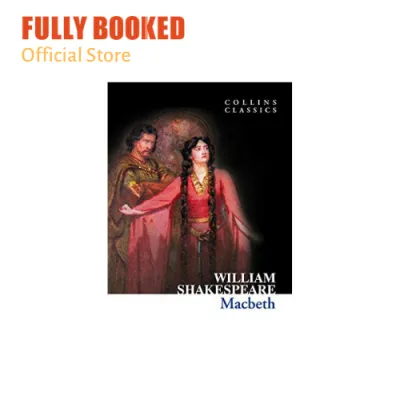
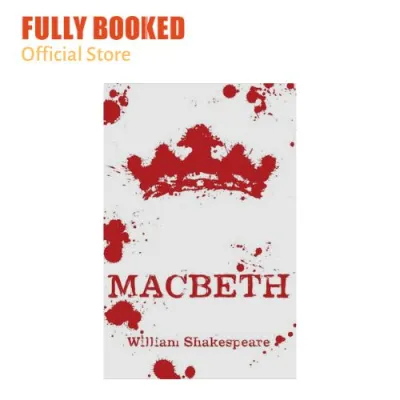
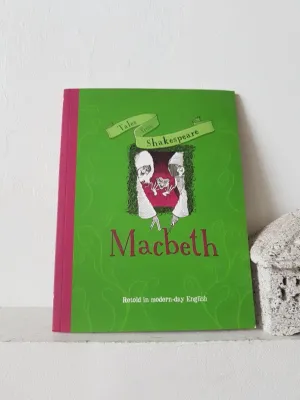
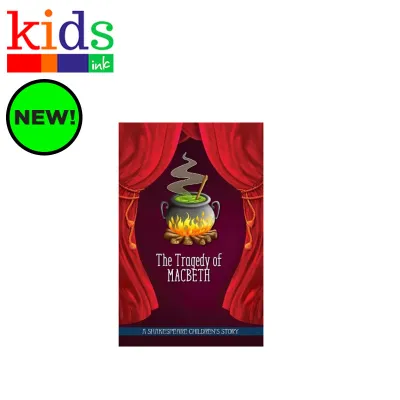
Prices are valid at publication and may change. Please refer to the product page for the latest price.

In contrast, a Tagalog edition of a macbeth book uses modern linguistic patterns and familiar vocabulary that match the natural spoken flow of Filipino readers. By bypassing the archaic syntax of Elizabethan English, you can follow the rapid descent of Macbeth into madness and ambition without pausing to decipher sentence structures. This smoother reading flow allows for immediate comprehension of pivotal scenes, such as the witches’ prophecies or Lady Macbeth’s sleepwalking sequence. The reduction in cognitive strain lets you focus entirely on the dramatic tension, making the tragedy feel immediate, intense, and emotionally accessible.
Literary Experience and Poetic Nuance
The primary trade-off when choosing a translation over the original text lies in the preservation of literary style and poetic nuance. Shakespeare wrote much of Macbeth in blank verse—unrhymed iambic pentameter that mimics the natural cadence of English speech while maintaining a deliberate, rhythmic heartbeat. His writing is also densely packed with double meanings, intricate wordplay, and specific rhetorical devices designed for an Elizabethan audience. These elements are deeply tied to the phonetics and historical context of the English language, making them incredibly difficult to replicate in translation.
When these poetic structures are translated into Tagalog, the translator must make significant structural compromises. Tagalog is a highly polysyllabic language, meaning that words generally require more syllables to express the same concept as their English counterparts. Consequently, fitting Tagalog words into a strict ten-syllable iambic pentameter line is nearly impossible without losing the original meaning. Most Tagalog translators choose to prioritize narrative clarity, emotional resonance, or local theatrical delivery over strict metrical adherence. This often results in a shift from structured verse to expressive dramatic prose or traditional Filipino poetic meters, which fundamentally alters the stylistic feel of the play.
How to Choose Based on Your Purpose
For Academic Study and Literature Classes
If you are a student or educator in the Philippines preparing for high school world literature modules, university English courses, or academic examinations, the original English version of the macbeth book is typically mandatory. Academic curricula require students to analyze Shakespeare’s specific use of language, including his metaphors, soliloquies, and character-specific speech patterns. Because literary essays, exams, and thesis papers require direct quotation and close reading of the source material, relying solely on a translation can lead to analytical gaps or misunderstandings of the required academic material.
However, this does not mean a Tagalog translation has no place in an academic setting. In fact, using a Tagalog version as a supplementary study aid can be an incredibly effective learning strategy. Reading a scene in Tagalog first allows you to grasp the core plot points, character dynamics, and thematic conflicts quickly. Once you have a clear mental map of what is happening in the scene, you can return to the original English text with greater confidence. This dual-text approach reduces the frustration of deciphering the language, allowing you to focus your intellectual energy on the deeper literary analysis required by your instructors.
For Casual Reading and Cultural Connection
For general readers, theater enthusiasts, and those seeking personal enrichment, the Tagalog version of Macbeth offers a deeply engaging and culturally resonant experience. Free from the academic pressure of analyzing meter and syntax, casual readers can fully immerse themselves in the play’s psychological depth, exploring universal themes of ambition, guilt, moral decay, and fate. Reading these intense human struggles in Tagalog can evoke a stronger, more visceral emotional response, as the dialogue uses the vocabulary of your everyday thoughts and feelings.
Additionally, localized translations and theatrical adaptations often frame the story’s power struggles and supernatural elements in ways that align with Filipino cultural concepts. The manipulative dynamics between Macbeth and Lady Macbeth, the corrupting influence of power, and the haunting presence of the supernatural find natural parallels within local folklore and societal structures. For anyone looking to enjoy Macbeth as a gripping psychological thriller rather than an academic chore, a high-quality Tagalog translation provides an accessible, culturally rich, and highly entertaining gateway into Shakespeare’s dark world.
What to Verify Before Buying a Tagalog Translation
Before purchasing a Tagalog translation of Macbeth, it is essential to perform several targeted verification checks to ensure the edition matches your specific reading needs and preferences. Because translations of classic plays vary widely in their intent, style, and completeness, buying the first copy you find can lead to disappointment.
First, examine the book’s copyright page, back cover, and product description to determine the exact nature of the text. You need to verify whether the book is:
- A faithful, line-by-line translation: This attempts to translate the entire play scene-by-scene, preserving the full structure of the original work.
- A prose adaptation: This converts the play into a standard novel or short-story format, removing the script structure entirely.
- A localized stage play script: This is written specifically for theatrical performance, often adapting names, settings, and cultural references to a Filipino context.
- A simplified summary or student guide: This provides a condensed version of the plot, often intended for quick review rather than deep reading.
Second, verify the credentials and background of the translator or adapter. Translations produced by university presses or established literary scholars tend to focus on academic rigor, linguistic precision, and historical context. Conversely, translations written by local playwrights or theater directors are often optimized for dramatic delivery, modern slang, and emotional impact on stage. Knowing the translator’s background will help you align the book’s style with your personal reading goals.
Third, check the physical or digital format of the edition. If you are purchasing a physical paperback or hardcover, consider the storage conditions in your home. In the humid, tropical climate of the Philippines, inexpensive paperbacks with low-quality glue and highly acidic paper are highly susceptible to yellowing, warping, and mold over time. If you prefer a digital e-book, make sure the file format (such as EPUB or PDF) is fully compatible with your specific e-reader, tablet, or smartphone, and that the formatting of the play’s dialogue lines remains clean and readable on your screen.
Finally, whenever possible, read sample pages or excerpts provided by the publisher or online retailer. Checking a few pages allows you to evaluate the vocabulary level, the natural flow of the translation, and the formatting of the text. This hands-on check ensures that the translation style resonates with you before you commit to a purchase.
Final Decision Framework: English or Tagalog?
To help you make the right choice for your library, use this straightforward decision framework based on your current reading goals, proficiency, and academic requirements.
- Choose the English version if:
- You are studying Macbeth for a school or university literature course where direct textual analysis is required.
- You want to write academic essays, complete exams, or participate in discussions that rely on quoting the original text.
- You are highly comfortable with Early Modern English and want to experience Shakespeare's original poetic meter, wordplay, and historical metaphors.
- You are a collector who values owning the classic, unaltered text of the tragedy.
- Choose the Tagalog version if:
- You are reading for personal enjoyment and want a smooth, fast-paced, and highly engaging reading experience.
- You want to understand the plot, character arcs, and thematic elements without the cognitive fatigue of translating archaic English.
- You prefer experiencing dramatic dialogue in your native language to achieve a deeper, more visceral emotional connection.
- You are a theater student, actor, or director interested in how Shakespearean drama is adapted for local stages.
- Verify first if:
- You plan to use a Tagalog edition as a study aid for an academic course. Always confirm with your teacher or professor whether translated texts are permitted in class, and verify that your chosen edition is a faithful, complete translation rather than a loose adaptation or a highly abridged summary.
Frequently Asked Questions (FAQ)
Are there bilingual Macbeth editions available in the Philippines?
True side-by-side bilingual (English-Tagalog) editions of Macbeth are relatively rare in mainstream retail bookstores across the Philippines. However, readers can frequently find annotated English editions that feature comprehensive glossaries, explanatory footnotes, and modern English translations alongside the original text. To find specialized dual-language study companions or specific Filipino translations, it is best to check major national book retailers, local university presses (such as the University of the Philippines Press or Ateneo de Manila University Press), or dedicated online literary distributors that specialize in local theatrical scripts and academic publications.
Does the Tagalog version keep the original Shakespearean poetic meter?
No, most Tagalog versions of Macbeth do not preserve the original iambic pentameter. Replicating Shakespeare’s strict ten-syllable rhythmic structure is linguistically impractical in Tagalog due to the language’s polysyllabic nature, which requires more syllables to convey the same meaning. Instead, translators typically adopt one of three approaches: they translate the text into highly expressive dramatic prose to maintain emotional clarity, utilize traditional Filipino poetic forms that rely on different syllable counts and rhyming schemes, or adapt the dialogue specifically for the rhythm of modern theatrical performances on the local stage.
Community discussion
Share your experience or ask a question. Comments are reviewed before publication.