
Choosing the right string setup is one of the most critical decisions you will make for your acoustic guitar. A low action setup—where the strings sit close to the fretboard—is highly sought after because it makes the instrument significantly easier to play. However, this comfort comes with distinct acoustic compromises. While a low setup minimizes finger strain and allows for faster transitions, it also increases the risk of fret buzz and can reduce the overall volume and resonance of your guitar. Understanding these trade-offs is essential before you modify your current instrument or purchase a new one.
In tropical climates like the Philippines, managing string action requires extra attention. High relative humidity and seasonal shifts cause the wood of an acoustic guitar to expand and contract constantly. This environmental volatility directly affects the neck relief and top board height, meaning a low action setup that plays perfectly one week might buzz or feel too high the next. Balancing playability with the physical realities of your environment is the key to maintaining a great-sounding instrument.
Understanding String Action and How to Identify a Low Setup
String action refers to the physical distance between the top of the frets and the bottom of the strings. This measurement determines how much physical effort you must exert to press a string down to make a clean note. If the action is too high, the guitar becomes painful and tiring to play; if it is too low, the strings will rattle against the frets when plucked.
Products mentioned in this guide
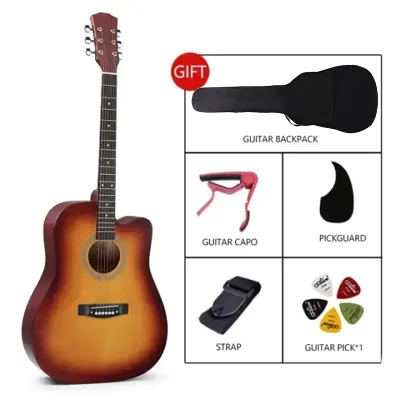
2,841 Lazada user ratings
🎧Sound Quality:9/10 🏗️Build Quality:8/10 Low action makes it comfortable to play, Comes with a full set of accessories, Beautiful design and …Read full reviewShow less
🎧Sound Quality:9/10 🏗️Build Quality:8/10 Low action makes it comfortable to play, Comes with a full set of accessories, Beautiful design and color options, Easy to play for beginners, Perfect for both male and female players, Semi-closed knob adds a touch of elegance, Thank you seller sobrang happy naman ang brother ko at nakakatuwa pa kasi sobrang fast delivery talaga siya pagka place ko ng order kinabukasan ay dumating nadin kaagad maganda ang guitar sakto lang sa mga naguumpisa palang sa pag gigitara medyo may umbok nga lang siya ng kaunti sa body Niya nauntog siguro sa byahe pero okay naman siya Hindi naman nakakaapekto sa tunog Niya ingatan lang din salamat po ulit sulit nadin sa presyo♥️
super ganda. complete item at sobrang nSurprice anak ko.. first, responsive si seller.. they answer all my questions before placing my order…Read full reviewShow less
super ganda. complete item at sobrang nSurprice anak ko.. first, responsive si seller.. they answer all my questions before placing my order. second, secured Ang packaging, nkabubble wrap okay Ang packaging at Wala g deform Ang box. third, okay Ang delivery..bukod sa mabilis lang naship Yung item, they handled it carefully. lasty, the item was perfect, walang damage..bagong bago at sobrang worth it. I will definitely recommend this shop. thank you so much and for buyers Po sa Inyo.
okay na sya for it's price, pasok sa expectations maayos naman at walang sira may mga dents lang na maliliit, pero all in all, I'm satisfied
💰Price:ok 🎧Sound Quality:ok 🏗️Build Quality:okHigh-quality basewood fingerboard,
The item is good I give you five stars I received the guitar two weeks ago
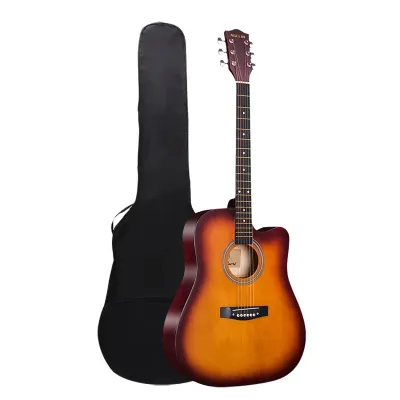
298 Lazada user ratings
The product is good for you guys. Keep up the good work. There is something you can do to help me with the group. Smile coz you want to be h…Read full reviewShow less
The product is good for you guys. Keep up the good work. There is something you can do to help me with the group. Smile coz you want to be happy and you know it clap your hands.
Dku expect malaki HAHAHAHAH, pero good quality goods din kasi may accessory bag nalang kulang satisfied gandaaa
solid sya guys, maganda appearance,maganda din Yung tunog tsaka easy to care Kasi may kasamang bag
Nice sound quality, Good value for money, Sturdy construction, more than what I have expected.

399 Lazada user ratings
okay naman siya. problem is lagi mo siyang itotono kasi loose yung panghigpit niya ng strings..
good condition. complete orders. thank you seller and delivery rider
Excellent value for the price, Great sound quality!, gusto Ng anak.
Perfect for beginners, The black color looks sleek and stylish,
Ok ang quality kaso pagdating sakin basag ang kaha

69 Lazada user ratings
The guitar looks great 👍, The sound of the guitar is good, affordable, cost-effective, with many accessories and exquisite workmanship. It i…Read full reviewShow less
The guitar looks great 👍, The sound of the guitar is good, affordable, cost-effective, with many accessories and exquisite workmanship. It is highly recommended to purchase 😁😁😁
The quality was good and complete items delivered.
May discoloration pero ok na rin
Perfect size for beginners,
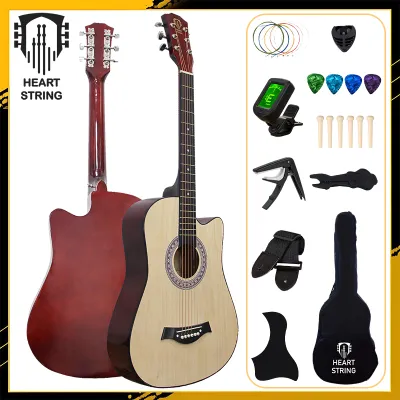

16 Lazada user ratings
nareceive kuna po kailangan nga lang etuno maganda sya legit din poGood packaging, Great sound quality,Fast shipping, nakatono na kaso pag n…Read full reviewShow less
nareceive kuna po kailangan nga lang etuno maganda sya legit din poGood packaging, Great sound quality,Fast shipping, nakatono na kaso pag nag straming kana kilangan pang dalh8n sa marunong mag set up
Good packaging, High gloss finish, Adjustable truss rod, tanK u, order received 😍♥️ anG ganDa😍♥️
may crack po siya sa likod ng gitara normal lang po ba to?
maganda na gustuhan ng anak ko thank you Lazada and kuya
Pagdating dito may crack siya
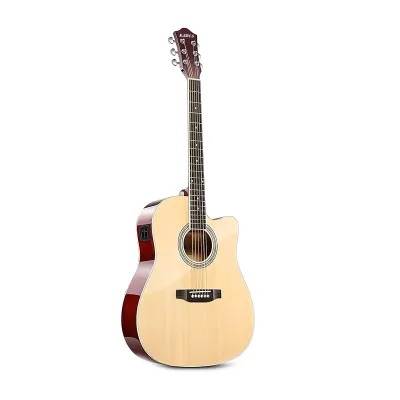
1,089 Lazada user ratings
Beautiful design and finish., High-quality materials used., Comfortable to play for long periods., Quality: good 💰Price: affordable 🔨Durabil…Read full reviewShow less
Beautiful design and finish., High-quality materials used., Comfortable to play for long periods., Quality: good 💰Price: affordable 🔨Durability: good Price: cheaper than other brands 🔌Compatibility: good
The product is not good for me, medyo mataas yung action, WALANG TRUST ROD, goods yung freebies, manipis yung tela, good for the price but c…Read full reviewShow less
The product is not good for me, medyo mataas yung action, WALANG TRUST ROD, goods yung freebies, manipis yung tela, good for the price but could be better
Super fast delivery. seller shipped it right away. arrived in very good condition and all accessories complete. quality is nice. looks very …Read full reviewShow less
Super fast delivery. seller shipped it right away. arrived in very good condition and all accessories complete. quality is nice. looks very sharp.
gift ko sa panganah ko at nagustohan nya maganda daw pati ung tunog..inprder oo na djn sya ng tools Para incase Capitol string kaya nya pali…Read full reviewShow less
gift ko sa panganah ko at nagustohan nya maganda daw pati ung tunog..inprder oo na djn sya ng tools Para incase Capitol string kaya nya palitan...
Perfect for beginners and experienced players alike., Beautiful design and finish., Comfortable to play for long periods.,
Prices are valid at publication and may change. Please refer to the product page for the latest price.
To identify a low setup objectively, you should avoid visual guesses and use precise measurement tools. The standard point for measuring action is at the 12th fret, which is the midpoint of the string’s vibrating length. Guitarists typically use a specialized string action gauge or a set of precision feeler gauges to measure this gap. Measurements are taken from the top of the 12th fret wire to the bottom of the string.
While personal preferences vary, manufacturers generally provide baseline specifications for what constitutes low, standard, and high action. For a typical steel-string acoustic guitar, a measurement of approximately 2.0 millimeters (5/64 inches) on the low E string and 1.5 millimeters (4/64 inches) on the high E string at the 12th fret is widely considered a low setup. You should check your specific instrument manufacturer’s manual to verify their recommended limits, as structural designs dictate how low a guitar can safely go.
Playability Benefits of a Low Action Setup
The primary reason players opt for a low action setup is the immediate improvement in playability. Because the distance between the string and the fret is minimized, you need far less finger pressure to fret notes cleanly. This reduction in required force significantly decreases finger fatigue, making long practice sessions much more comfortable.

For beginners who have not yet developed calluses or hand strength, a low action setup can prevent early discouragement. It allows new players to focus on finger placement and chord transitions rather than struggling against high string tension. Even experienced players benefit from the reduced physical strain, especially when playing complex barre chords that require even pressure across all six strings.
Technical playing styles also thrive on a low setup. If your style involves fast lead runs, intricate fingerpicking, quick slides, or frequent string bends, a lower action allows your fingers to glide across the fretboard with minimal resistance. In warm, humid tropical environments where fingers can become soft or sweaty, the ease of a low setup helps maintain playing accuracy and speed without causing excessive friction against the strings.
Tonal Trade-offs and Drawbacks of Low Action
While the physical benefits of low action are clear, they come at the expense of the guitar’s acoustic performance. An acoustic guitar relies entirely on the physical vibration of its strings to project sound. When you pluck a string, it vibrates in an elliptical pattern; a low action setup restricts this movement because the string quickly encounters the physical barrier of the nearby frets.
This restricted vibration clearance often results in fret buzz, a metallic rattling sound that occurs when a vibrating string repeatedly strikes a fret wire. Fret buzz ruins the clarity of your notes and is especially noticeable when playing open chords or executing strong, expressive strums. To avoid buzz on a low setup, you are forced to play with a lighter touch, which limits your expressive range.
Furthermore, low action generally leads to a loss of volume, dynamic range, and sustain. Because the strings cannot vibrate as widely, they transfer less kinetic energy through the saddle and bridge to the guitar’s wooden soundboard. This results in a quieter overall sound and a thinner tonal profile. The rich, deep bass response and long-lasting sustain characteristic of high-quality acoustic guitars are often diminished, leaving the instrument sounding somewhat flat or choked.
How to Diagnose and Manage Fret Buzz
If you experience fret buzz on a low-action guitar, you must systematically diagnose the cause before attempting any adjustments. Fret buzz is rarely uniform; identifying where the buzz occurs on the neck will tell you which component of the guitar setup needs attention.
If the buzz occurs only on the first few frets (frets one through five), the issue is often insufficient neck relief, meaning the neck is too straight or back-bowed. If the buzz occurs primarily on the higher frets (from the 12th fret upward), the saddle is likely too low. Buzzing on open, unfretted strings usually points to a nut slot that has been filed too deep. If the buzz occurs on a single, specific note while adjacent notes play cleanly, you are likely dealing with an uneven or high fret wire.
To manage these issues, start by checking the neck relief. You can perform a simple check by pressing down the low E string at the first fret and the 14th fret simultaneously. Look at the gap between the bottom of the string and the top of the 6th fret; there should be a tiny, business-card-thin clearance. If the string is touching the fret, you need to adjust the truss rod to add relief. Turning the truss rod counter-clockwise adds relief (creates a slight forward bow), while turning it clockwise flattens the neck.
Another non-invasive way to manage fret buzz on a low setup is to experiment with string gauges. Switching to a slightly heavier string set increases the overall tension on the neck. This extra tension pulls the neck forward slightly, naturally raising the action, and the heavier strings vibrate in a tighter, narrower arc, which physically reduces their chances of hitting the frets.
When to Stop DIY Adjustments and Consult a Luthier
While basic truss rod adjustments are safe to perform at home if done in small, quarter-turn increments, other action adjustments carry a high risk of permanent damage. You should stop immediately and consult a professional luthier if your setup issues require modifying the physical structure of the guitar.
Sanding down a bridge saddle or filing nut slots requires specialized files, precise measuring tools, and experienced hands. If you file a nut slot too deep or sand a saddle too low, you cannot easily undo the mistake; you will have to replace the entire component. Similarly, addressing uneven frets requires professional fret leveling, crowning, and polishing, which are highly technical tasks that can ruin a fretboard if done incorrectly.
Environmental factors also dictate when to seek professional help. In the Philippines, extreme humidity shifts can warp a guitar neck or cause the top soundboard to swell or sink. If your guitar’s action changes drastically due to weather, a luthier can assess whether the instrument requires structural stabilization, a neck reset, or specialized humidification treatment rather than a simple mechanical adjustment.
Deciding if a Low Action Guitar Is Right for You
Deciding on the ideal action height depends entirely on your personal playing style and musical preferences. If you are a gentle fingerstyle player or a beginner focusing on light chord transitions, a low action setup is highly beneficial and unlikely to cause severe buzzing. However, if you are a heavy strummer, a bluegrass flatpicker, or someone who performs live without amplification, you will need a medium to high action setup to preserve your volume and dynamic range.
When shopping for a new guitar or testing one in-store, use a physical checklist to evaluate the setup. Play every single note up and down the fretboard to check for dead spots or localized buzzing. Strum the guitar at your normal performance volume to see if the strings rattle under pressure. Measure the action at the 12th fret using a gauge to ensure it matches your comfort level without being so low that it compromises the tone.
Finally, weigh the cost and convenience of your purchase. Some guitars come from the factory with a relatively low setup, but many require post-purchase adjustments to perform their best. Budgeting approximately ₱1,500 to ₱3,000 for a professional luthier setup is a wise investment. A professional can tailor the action specifically to your playing style and local climate, ensuring your acoustic guitar plays comfortably while retaining its full, resonant voice.
Frequently Asked Questions (FAQ)
Can I lower the action on any acoustic guitar?
Most acoustic guitars allow for action adjustments, but structural limitations dictate how low you can safely go. The neck angle, bridge height, saddle height, and overall fret levelness all determine the physical limits of your setup. If a guitar has a poor neck angle or uneven frets, attempting to lower the action will result in severe, unplayable fret buzz. In these cases, structural repairs or professional fret work must be completed before the action can be lowered successfully.
Does low action affect acoustic guitar volume?
Yes, a low action setup generally reduces the overall volume and dynamic projection of an acoustic guitar. Because the strings sit closer to the frets, they have less physical space to vibrate. This restricted movement limits the amount of kinetic energy transferred through the saddle to the guitar’s top soundboard, which acts as the instrument’s natural amplifier. Consequently, the guitar will sound quieter and may lose some of its low-end warmth and sustain.
How do I know if my fret buzz is normal?
A small amount of fret buzz can be normal depending on how hard you play. If you only hear a faint buzz when strumming very aggressively, and the buzz does not come through when playing at normal volumes, it is generally considered acceptable. However, if the buzz occurs during light or moderate playing, cuts your notes short, causes dead spots where no clear pitch sounds, or is highly audible to your audience, your setup is too low and requires adjustment.
Community discussion
Share your experience or ask a question. Comments are reviewed before publication.