
Choosing between the Lekato mini guitar amp and other budget-friendly mini amplifiers comes down to how and where you plan to practice. While these compact devices all promise portability and convenience, they differ significantly in their power delivery, control layouts, and physical designs. To make the right choice, you must match your daily playing habits—whether that involves quiet bedroom sessions in a humid tropical climate or mobile jamming outdoors—with the specific technical limitations of each model.
Defining Your Practice Environment and Goals
Your physical surroundings dictate the type of mini amplifier that will serve you best. For instance, a quiet bedroom practice setup in a suburban home or a high-rise condominium in Manila requires different features than an outdoor busking session or travel jamming along the coast. In indoor spaces, control over low-volume dynamics and a reliable headphone output are paramount to avoid disturbing family members or neighbors.
When transitioning to outdoor environments, the availability of reliable off-grid power becomes the primary concern. Tropical climates in the Philippines, characterized by high humidity and sudden weather shifts, mean your gear must be easy to pack away quickly. An amplifier that relies solely on an AC wall adapter limits your mobility to indoor spaces with accessible electrical outlets, whereas battery-powered units offer the freedom to play anywhere.
Products mentioned in this guide
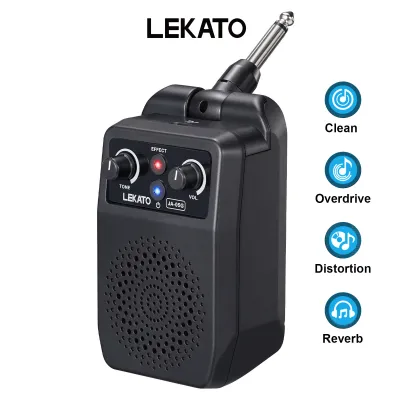
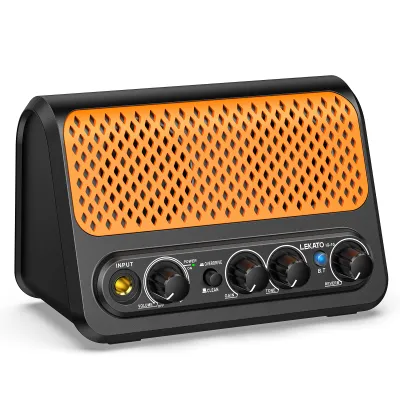
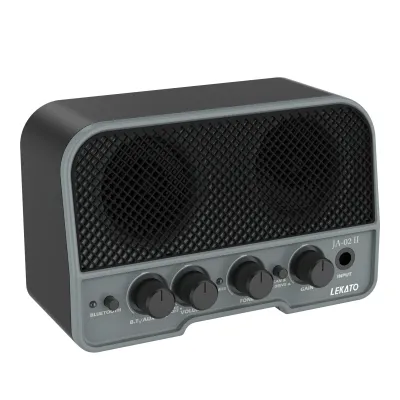
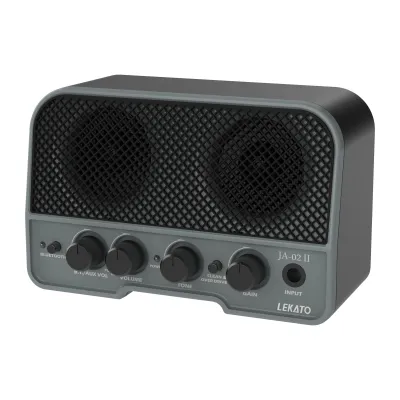
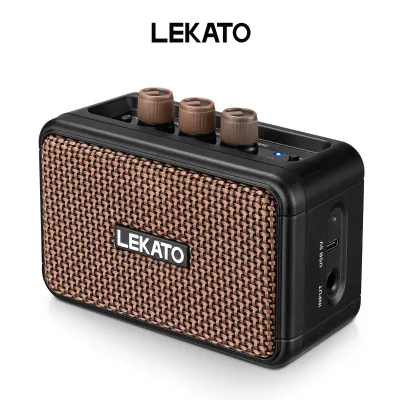
Prices are valid at publication and may change. Please refer to the product page for the latest price.
Physical space also influences how sound waves travel from a small speaker to your ears. Mini amplifiers naturally have limited projection and volume compared to full-sized practice combos. Understanding the acoustic limitations of your practice area helps you set realistic expectations for volume, ensuring you do not push a tiny speaker past its clean threshold and into unwanted, harsh distortion.
Core Specifications to Check Before Buying
Before committing to any budget mini amplifier, you must carefully review the manufacturer’s technical specifications. The wattage rating and speaker size are the first indicators of an amplifier’s performance. Generally, mini amps range from 3 to 10 watts, paired with speakers measuring between 2 and 5 inches. A larger speaker diameter typically provides a slightly fuller low-end frequency response, preventing your guitar from sounding excessively thin or boxy.

Power configurations require close inspection to match your lifestyle. Some mini amplifiers feature built-in rechargeable lithium-ion batteries, which can be charged via standard USB ports or power banks. Others utilize standard AA or 9V alkaline batteries, which are easy to replace on the go but can accumulate significant long-term costs. If you plan to use the amplifier primarily at a desk, verify whether the package includes a compatible AC adapter or if you must purchase one separately.
Connectivity options expand how you can use the amplifier for learning and silent practice. A standard 3.5mm headphone jack is essential for private sessions, but you should check the manual for impedance compatibility to ensure your headphones perform well. Auxiliary inputs or Bluetooth connectivity allow you to stream backing tracks or metronome apps directly through the amplifier speaker, turning the unit into a functional playback device.
Finally, evaluate the built-in effects and tone-shaping capabilities. Many budget models offer a simple clean and overdrive toggle, along with basic delay or reverb controls. If you rely heavily on external effects pedals, you must verify how well the amplifier’s input stage handles pedal signals, as some ultra-compact solid-state circuits can compress or distort unpredictably when boosted by overdrive or modulation pedals.
Assessing the Lekato Mini Guitar Amp
The Lekato mini guitar amp is designed with a focus on streamlined portability and modern power convenience. Its physical form factor is highly compact, often featuring a lightweight plastic chassis that can easily sit on a desktop, bookshelf, or even clip onto a guitar strap or belt. This makes it highly appealing for players who move frequently from room to room or need a minimal footprint on a crowded desk.
A defining feature of the Lekato model is its reliance on an internal rechargeable battery, typically charged via a USB-C cable. This setup eliminates the need to constantly buy disposable batteries or stay tethered to a wall outlet. When reviewing the official user manual, pay close attention to the stated battery life and charging times, keeping in mind that playing at maximum volume or using high-gain settings will drain the battery faster than quiet, clean practice.
In terms of control, the Lekato mini amp generally provides straightforward knobs for volume, tone, and gain, alongside a channel selector to switch between clean and distorted sounds. Some variations also include basic delay controls or Bluetooth integration for wireless audio streaming. This layout is optimized for quick adjustments, allowing you to plug in and start playing without navigating complex menus or digital sub-menus.
This specific configuration makes the Lekato mini amp highly suitable for beginners, travelers, and casual players who prioritize quick setup and rechargeable convenience. However, its compact speaker size and lightweight enclosure mean it is engineered for personal near-field monitoring rather than filling a large room with deep, resonant bass frequencies.
What to Expect from Other Budget Mini Amps
When exploring alternative budget mini amplifiers in the Philippine market, you will encounter several distinct design philosophies. Some competing brands utilize angled speaker cabinets, which direct the sound upward toward your ears when the amplifier is placed on the floor or a low table. This simple structural variation can make a small speaker sound significantly clearer and louder without actually increasing the wattage.
Signal routing and channel design also vary widely among budget competitors. While some models use a single channel with a gain knob to transition from clean to dirty tones, others feature completely independent clean and overdrive channels with dedicated physical switches. You may also find models that offer digital modeling technology, allowing you to cycle through simulated amplifier types, though these often require a steeper learning curve and more menu navigation than analog-style knobs.
In the local market, budget mini amps typically range from ₱1,500 to ₱4,000, making them highly accessible entry-level options. To ensure a reliable purchase, always verify the build quality, warranty terms, and authorized seller status when shopping through local music stores or online marketplaces. Checking for official local warranties ensures you have access to support or replacements if the charging port or input jack encounters issues.
It is crucial to avoid assuming that a famous brand name automatically guarantees superior tone in a mini format. Many legacy amplifier brands produce budget mini models that rely heavily on their brand reputation but may lack modern features like USB-C recharging or Bluetooth connectivity. Always compare the exact technical specifications of the specific model rather than relying on brand prestige alone.
Decision Framework: Making Your Final Choice
To make your final decision, you must weigh your physical practice requirements against the specific feature sets of these compact units. Choose the Lekato mini guitar amp if your primary goal is a highly portable, rechargeable desktop companion that requires no external batteries or power bricks. Its straightforward control layout and built-in Bluetooth make it an excellent tool for quick, fuss-free practice sessions alongside backing tracks.
Conversely, you should opt for a budget alternative if your playing style demands specific physical or electronic features. For example, if you prefer a more traditional aesthetic, require an angled cabinet for better projection, or want a model that runs on standard AA batteries for easy replacement during extended trips away from electricity, an alternative brand may serve you better.
Before finalizing your purchase, verify your accessory compatibility. Ensure your existing headphones have the correct jack size and that the amplifier can handle the signal if you plan to run a pedalboard into the input. If you intend to record your practice sessions directly, check if the amplifier features a dedicated line-out or USB audio interface capability.
Keep in mind that neither the Lekato nor its budget competitors are designed to replace full-sized amplifiers. If your goals include playing alongside a live drummer, performing on stage without a house PA system, or achieving high-fidelity acoustic reproduction, you will need to look beyond the mini category and invest in a larger, higher-wattage practice or performance amplifier.
Frequently Asked Questions (FAQ)
Can I use a mini guitar amp for live performances?
Mini guitar amplifiers are generally not suitable for standalone live performances in typical venues due to their low wattage and small speaker size. They lack the decibel output and wide sound dispersion required to cut through the volume of a live band, especially when competing with acoustic drums. However, you can use a mini amp on stage if you place a microphone in front of its speaker and run that signal through the venue’s main PA system, or if you use it strictly as a personal, low-volume stage monitor.
Do mini amps work well with acoustic-electric guitars?
While you can physically plug an acoustic-electric guitar into a mini amp, the results may vary depending on the amplifier’s design. Small speakers struggle to reproduce the full, deep low-end and sparkling high-end frequencies characteristic of acoustic instruments, often resulting in a somewhat boxy or mid-range-heavy sound. For the best acoustic performance, look for a mini amp that features a dedicated acoustic channel, high clean headroom, and flat-response EQ settings to preserve the natural tone of your instrument.
Community discussion
Share your experience or ask a question. Comments are reviewed before publication.