
Choosing between the Laney LFR and traditional entry-level amplifiers requires understanding how you plan to generate your guitar tones. The Laney LFR operates primarily as a Full Range Flat Response (FRFR) active cabinet, designed to cleanly amplify digital modelers and multi-effects processors without coloring the sound. In contrast, standard entry-level guitar amplifiers feature built-in preamps and speakers that actively shape your tone with specific analog characteristics.
To determine which path suits your budget, you must evaluate your existing gear, your primary playing environment, and your long-term setup goals. If you already own a multi-effects pedal with amp modeling, an FRFR cabinet like the Laney LFR offers a highly compatible solution. However, if you prefer a plug-and-play setup that does not require external processors, a traditional modeling or solid-state practice amp may serve you better.
This comparison breaks down the essential specifications, physical build considerations, and practical value factors to help you make an informed decision. By focusing on verifiable features rather than subjective sound claims, you can select the equipment that best fits your musical workflow in the Philippines.
Products mentioned in this guide
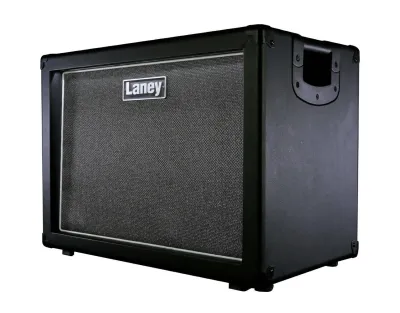
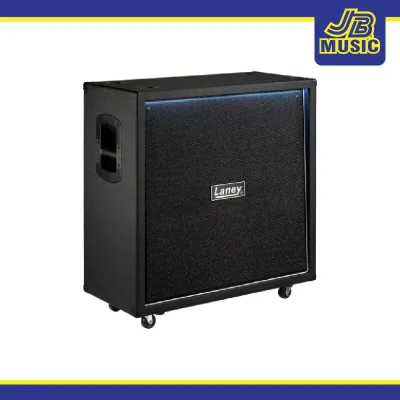
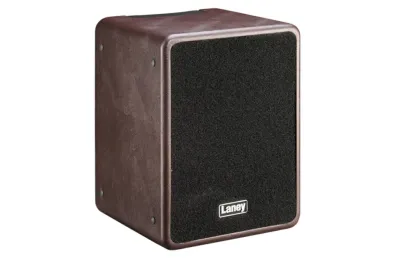
Prices are valid at publication and may change. Please refer to the product page for the latest price.
Defining the Entry-Level Amp Category and Your Needs
Entry-level amplification generally spans compact solid-state combos, basic digital modeling amplifiers, and entry-level active FRFR cabinets. Each type serves a distinct purpose depending on whether you are practicing in a bedroom, joining small jam sessions, or setting up a basic home recording space.
For bedroom practice, low-wattage units or cabinets with dedicated headphone outputs are essential for keeping volume levels manageable. In these tight spaces, physical footprint and low-volume performance matter far more than raw power. If your goal is to play along with backing tracks, look for units that feature auxiliary inputs or wireless audio streaming capabilities.
Small jam sessions require more projection, typically demanding higher wattage or larger speaker configurations to cut through the acoustic volume of a drum kit. Traditional entry-level solid-state amps often struggle to maintain clean headroom at high volumes, resulting in harsh clipping. An active cabinet, when paired with a capable modeler, can offer cleaner high-volume projection if its rated power output is sufficient.
Recording setups prioritize clean signal routing and low noise floors. Budget-friendly amplifiers often introduce noticeable hiss when connected directly to an audio interface. Understanding these limitations helps you set realistic expectations for what a budget-friendly setup can achieve before you invest your hard-earned money.
Core Specifications to Verify on the Laney LFR
To evaluate the Laney LFR accurately, you must consult its official product manual and physical spec sheet. Start by checking the rated wattage and speaker configuration. The wattage determines the clean headroom available before the internal power amplifier begins to distort, while the speaker size influences the bass response and overall projection.

Next, examine the input and output panel. A versatile active cabinet or amplifier should feature balanced XLR inputs, standard quarter-inch instrument jacks, and a dedicated pass-through or direct output. These connections allow you to route your signal to a front-of-house mixing console or an audio interface without needing an external direct box.
Look for built-in tone-shaping controls on the physical chassis. Many FRFR cabinets feature a high-frequency trim switch or a cabinet simulation toggle. These physical switches allow you to quickly adjust the high-end response to compensate for bright room acoustics or to emulate the roll-off of a traditional guitar speaker cabinet.
Finally, verify the impedance ratings if you plan to connect the unit to other passive gear. Because the Laney LFR is an active, powered cabinet, it contains its own internal amplifier and should never be connected to the speaker output of another guitar amplifier head. Doing so can cause catastrophic damage to both units, highlighting the importance of verifying connection types beforehand.
Key Comparison Dimensions Against Alternatives
When comparing the Laney LFR to traditional entry-level amplifiers, sound-shaping capability is the primary differentiator. Traditional practice amps feature built-in preamps with dedicated gain, bass, middle, and treble controls, alongside onboard digital effects like delay, chorus, and reverb. The Laney LFR, as an FRFR system, relies entirely on your external pedals or modelers to shape the tone, offering a flat frequency response that reproduces your input signal exactly as it is.
Build quality and physical portability are critical factors, especially under tropical conditions. Check the cabinet material, as medium-density fiberboard (MDF) and plywood react differently to high humidity and temperature fluctuations. A robust vinyl covering and reinforced corner protectors help shield the cabinet from physical wear during transport.
Weight and dimensions dictate how easily you can move the unit between your home and a rehearsal space. A heavier cabinet may offer deeper bass resonance but can become a burden if you rely on public transportation or frequent travel. Compare the physical dimensions of the Laney LFR against alternative compact combo amps to ensure it fits your storage and transport limits.
External compatibility determines how well the unit integrates with your existing gear. If you use a complex pedalboard with time-based effects, a traditional amp with an effects loop is highly desirable. For those using modern digital modelers, the flat response and balanced inputs of an FRFR cabinet prevent the double-EQ effect that often occurs when plugging a modeler into the front input of a standard guitar amplifier.
Evaluating Price and Value in the Philippines
Assessing the value of the Laney LFR requires verifying its current retail price in ₱ across authorized local distributors and reputable online marketplaces. Avoid relying on international price listings, as local shipping fees, import duties, and distributor markups can significantly alter the final cost. Comparing local prices ensures you are evaluating the unit within its true local price bracket.
Factor in the total cost of ownership by identifying necessary accessories that may not be included in the box. Because the Laney LFR requires an external signal source to function effectively, you must budget for high-quality instrument cables, balanced XLR cables, or a compatible multi-effects processor if you do not already own them. Additionally, consider the cost of a reliable heavy-duty power cable and a basic surge protector to safeguard your electronics.
In tropical climates, electrical grids can experience voltage fluctuations that pose a risk to sensitive audio equipment. Verifying the manufacturer’s power specifications on the rear label is crucial before plugging the unit into a local wall outlet. Investing in a voltage regulator or a high-quality surge protector can prevent costly damage to the internal power supply.
Lastly, research the warranty terms and after-sales support offered by local retailers. A reliable local warranty provides peace of mind, ensuring you can access authorized repair services and replacement parts without shipping the unit overseas. Check if the distributor has a physical service center in your region to expedite any potential maintenance needs.
Decision Framework: Choosing the Right Amp for Your Setup
To make your final choice, apply a conditional decision framework based on your current gear and musical goals. Choose the Laney LFR if you already own a digital guitar modeler or multi-effects processor and want to hear your programmed presets exactly as intended. Its flat frequency response ensures that your cabinet simulations and microphone models are reproduced accurately without interference from a traditional guitar speaker’s natural EQ curve.
Opt for a traditional entry-level combo amplifier if you prefer a simple, self-contained setup. If you want to plug your guitar directly into the amplifier and immediately access overdrive, EQ, and modulation effects without configuring external menus or buying extra pedals, a standard modeling amp is the more practical choice. This path minimizes setup time and reduces the number of cables you need to manage.
Verify the physical space and volume constraints of your primary practice area before purchasing. If you live in a shared space or an apartment where high volume is prohibited, ensure the unit you choose performs well at low volumes or features a high-quality headphone output. An active cabinet with high wattage may have more power than necessary if you only intend to practice at whisper-quiet levels.
Ultimately, compatibility with your existing instruments must guide your decision. Check the input impedance of the amplifier or active cabinet to ensure it matches the output of your guitar’s pickups, whether active or passive. By matching your technical requirements to the specific design of the Laney LFR or its alternatives, you can secure a reliable setup that supports your musical development.
Frequently Asked Questions (FAQ)
Can I use the Laney LFR for both electric guitar and bass?
To determine if the Laney LFR can handle bass frequencies, you must check the frequency response range and speaker excursion limits specified in the manufacturer’s manual. While FRFR cabinets generally offer a wider frequency range than traditional guitar amplifiers, low-end bass frequencies require significant speaker cone movement and power. If the manual does not explicitly state support for bass instruments, using it at high volumes for bass may risk damaging the speaker suspension or causing audible distortion.
Do entry-level amps require a specific type of power outlet or voltage stabilizer?
You should always check the power input label on the back of the amplifier to verify its voltage compatibility, typically 220V for standard outlets in the Philippines. Because local power grids can experience voltage sags and surges, using a basic surge protector or a dedicated voltage stabilizer is highly recommended to protect the internal solid-state circuitry. Avoid using ungrounded adapters or worn-out extension cords, as a stable electrical ground is essential for minimizing background hum and ensuring safe operation.
How do I safely connect external effects pedals to a budget amplifier?
When connecting external pedals, always turn down the amplifier’s volume control before plugging or unplugging cables to prevent loud pops that could damage the speaker. Connect your guitar to the input of your pedal chain, and route the output of your final pedal to the amplifier’s main input jack using high-quality shielded instrument cables. If you are using high-output digital pedals or preamps, verify that the input level matches the amplifier’s expected input impedance to avoid clipping the input stage.
Community discussion
Share your experience or ask a question. Comments are reviewed before publication.