
Choosing between the Laney LFR and other beginner-friendly guitar amps depends on whether you plan to use a digital multi-effects modeler or prefer a simple, all-in-one plug-and-play combo amplifier. The Laney LFR operates as a Full Range Flat Response (FRFR) powered cabinet, meaning it is designed to faithfully reproduce the cabinet simulations of digital processors rather than shaping your guitar’s raw signal on its own. For beginners in the Philippines navigating humid tropical climates and compact living spaces, understanding this fundamental difference is key to avoiding a mismatched setup.
Many aspiring guitarists mistake FRFR cabinets for traditional guitar amplifiers, leading to confusion when they plug a guitar directly into the unit and find the tone flat or lifeless. Traditional beginner amplifiers color your sound with a built-in preamp and a speaker voiced specifically for electric guitars, which provides that familiar warmth and crunch right out of the box. By contrast, the Laney LFR acts as a blank canvas, requiring an external modeling pedal or software to shape the tone before the sound is amplified.
Evaluating your current gear setup, your long-term musical goals, and your daily practice constraints will help you determine which path to take. Whether you choose the high-fidelity accuracy of an FRFR system or the straightforward convenience of a traditional modeling combo, verifying the technical specifications and regional compatibility of your equipment ensures a seamless learning experience.
Products mentioned in this guide
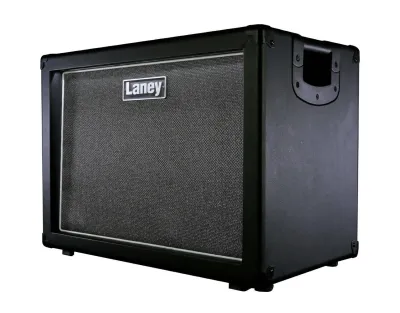
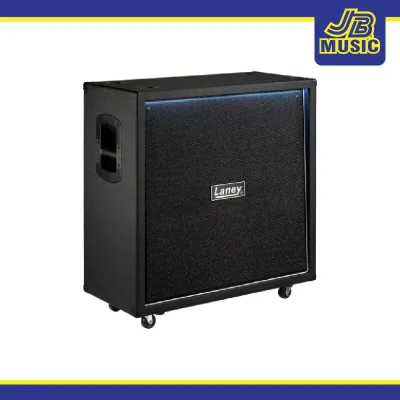
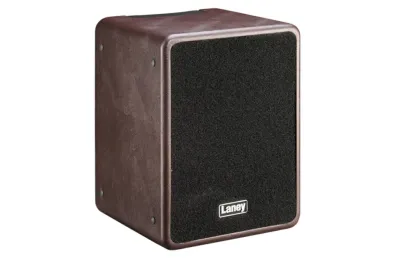
Prices are valid at publication and may change. Please refer to the product page for the latest price.
Understanding the Laney LFR and Entry-Level Amp Alternatives
To make an informed decision, you must first understand what makes an amplifier truly beginner-friendly. For most beginners, a great practice tool offers simplicity, intuitive controls, and essential connectivity options like a headphone jack and an auxiliary input. These features allow you to practice silently at any hour and play along with backing tracks from your phone or tablet.
Traditional analog-style entry amps and digital modeling competitors represent two distinct design philosophies. Traditional solid-state combo amps feature straightforward knobs for gain, bass, middle, treble, and volume, offering a highly tactile and immediate plug-and-play experience. Digital modeling amps, on the other hand, use onboard computer processors to simulate dozens of different classic amplifiers and effects, giving you a massive library of sounds to explore within a single physical box.
The Laney LFR introduces a third philosophy: the powered FRFR cabinet. Instead of coloring your guitar’s tone with its own preamp, it is engineered to deliver a flat, neutral frequency response that accurately projects the output of digital multi-effects processors, amp modelers, or profiling units. If you plug a guitar directly into an LFR without a modeler in between, you will miss the essential preamp shaping that makes an electric guitar sound natural.
Because product lineups evolve and regional variations exist, it is critical to check the exact model variant and specifications before purchasing. Wattage ratings, speaker configurations, and input options can vary significantly between different production batches. Always verify whether the unit you are looking at is an active cabinet (which has its own built-in power amplifier) or a passive cabinet (which requires an external power amp to run).
Key Specifications to Compare Before You Buy
When comparing these amplification options, several technical specifications directly impact your daily practice experience and should be evaluated carefully.

Power and Speaker Size An amplifier’s wattage determines its volume potential, while speaker diameter influences low-end response. For home practice in typical residential settings, a traditional solid-state amp rated between 10 to 30 watts is usually sufficient. Speakers smaller than 8 inches can sound thin, whereas 10-inch or 12-inch speakers provide a fuller bass response. Active FRFR cabinets like the Laney LFR feature higher wattage ratings to ensure clean headroom, reproducing dynamic digital signals without distorting.
Channels and EQ Controls Traditional beginner amps typically offer at least two channels: a clean channel for pristine tones and an overdrive or dirty channel for rock and metal sounds. These are adjusted using basic tone-shaping knobs, usually a three-band EQ consisting of bass, middle, and treble controls. In contrast, an FRFR cabinet like the Laney LFR generally features minimal onboard EQ controls, such as a simple high-frequency trim or a global feedback control. This is because the cabinet assumes you will perform all your tone-shaping, equalization, and channel switching on your external modeling pedalboard or software interface.
Built-in Effects and Connectivity Onboard effects like reverb, delay, chorus, or tremolo can make practice sessions much more engaging for beginners. Many digital modeling combo amps come packed with these effects, allowing you to experiment with different sounds without buying individual pedals. When looking at the Laney LFR, you must remember that it does not include built-in guitar effects. However, you should compare the physical connectivity options of all candidate units. Look for essential inputs and outputs, such as a 3.5mm auxiliary input for backing tracks, a dedicated headphone output for silent practice, and an XLR direct output if you plan to send your signal directly to a PA system or recording interface.
Matching the Amp to Your Practice Environment
Your physical surroundings and daily playing habits should play a major role in determining which amplifier setup is right for you.
Bedroom and Apartment Practice For many guitarists in the Philippines, practicing in close proximity to family members or neighbors is a daily reality. In dense residential areas or shared apartments, managing your volume is essential to maintaining peace. If silent practice is your highest priority, look for amplifiers with high-quality headphone outputs that emulate the sound of a real speaker cabinet. Some digital modeling amps and multi-effects units paired with the Laney LFR offer excellent cabinet simulation through headphones, ensuring your silent practice sessions still sound inspiring and dynamic.
Jamming and Small Rehearsals If you plan to step out of the bedroom to jam with friends or rehearse with a band, your volume requirements will change dramatically. To compete with the natural volume of an acoustic drum kit and a bass guitar, you will generally need a traditional solid-state amp of at least 50 watts or a highly efficient active cabinet. The Laney LFR series is well-suited for this transition, as its active power section is designed to project clearly at higher volumes, allowing your digital amp models to cut through a live mix without losing clarity or definition.
Portability Needs Consider how often you will need to transport your gear. If you are a student moving between dorms, or a musician who enjoys busking outdoors, a heavy, bulky cabinet might become a burden. Traditional practice amps are often compact and lightweight, with some ultra-compact models even running on batteries for ultimate portability. While the Laney LFR is designed to look and feel like a traditional guitar cabinet, its physical size and weight mean it is best suited for semi-permanent setups or players who have reliable transport for their gear. Additionally, tropical humidity and sudden rain showers mean you should look for rugged cabinet construction and durable vinyl covering to protect your investment during transport.
Decision Framework: Which Amp Should You Choose?
To finalize your purchase decision, use this conditional framework to match your current gear, budget, and musical preferences to the right amplification style.
Choose the Laney LFR if: You already own a high-quality digital modeling pedalboard, multi-effects processor, or software-based guitar rig and want to hear your presets reproduced exactly as they were programmed. The Laney LFR is an excellent choice if you appreciate a traditional cabinet aesthetic on stage or in your room but want the flat-response performance of a high-fidelity monitor. Always verify the exact input connections and power requirements of the specific LFR model you are considering to ensure it integrates perfectly with your existing processor.
Choose a Digital Modeling Alternative if: You want a simple, self-contained, and cost-effective solution that does not require any external pedals or processors to sound great. A digital modeling combo amp is ideal for beginners who want to explore a wide variety of musical genres, amp styles, and effects with a single purchase. This setup minimizes cable clutter, takes up less physical space, and allows you to start playing immediately with minimal configuration.
Choose an Ultra-Compact/Battery Amp if: Your primary goals are absolute portability, spontaneous outdoor playing, or practicing in spaces where wall outlets are not easily accessible. These highly compact units are perfect for casual jamming, travel, and low-volume bedroom practice, though they sacrifice the deep bass response and high-volume capabilities of larger cabinets.
Verify First if: You are uncertain about the power grid compatibility of the unit you are purchasing. In the Philippines, electrical outlets standardly deliver 220V at 60Hz. Some imported amplifiers or active cabinets may be configured for 110V systems, which will cause severe damage if plugged directly into a local outlet without a step-down transformer. Always check the voltage label near the power input jack before turning on your new gear.
Where to Buy and What to Verify in the Philippines
Purchasing musical equipment requires careful verification to ensure you receive an authentic product with reliable local support.
When shopping in the Philippines, compare prices in ₱ across authorized physical music retailers and reputable online marketplaces. While online platforms can offer convenience, visiting a physical store allows you to plug in your guitar, test the controls, and hear the amplifier in person before committing to a purchase. Be cautious of deals that seem unusually low, as they may indicate parallel imports that lack official local warranty coverage.
Always check for official distributor stickers on the packaging or the unit itself. A valid local warranty is crucial for active electronics like powered cabinets and digital modeling amps, protecting you against manufacturing defects or power-related failures. Ask the retailer about their specific return policies and the duration of their after-sales service support.
Upon receiving your amplifier, perform a thorough physical inspection. Check the cabinet corners, grille cloth, and control panel for any signs of cosmetic damage sustained during transit. Plug in your instrument and test every input jack, headphone output, and control knob to ensure they operate smoothly without static or intermittent signal loss. Finally, confirm that the included power adapter or power cable fits securely and matches the local electrical standards.
Frequently Asked Questions (FAQ)
Can I use a beginner guitar amp for a live gig?
Yes, you can use a beginner guitar amp for a live gig, but its effectiveness depends on the venue’s setup. In small, intimate settings, a 15-watt to 30-watt practice amp might provide enough volume on its own, though it may struggle to stay clean at high volumes. For larger venues, sound engineers typically place a specialized instrument microphone in front of the amplifier’s speaker to send your sound directly to the main PA system. If you are using an active FRFR cabinet like the Laney LFR, you can often use its dedicated XLR direct output to send a clean, balanced signal straight to the mixing console, eliminating the need for a microphone.
Do I need to buy a separate effects pedal with the Laney LFR?
Yes, you will generally need an external digital modeler, multi-effects processor, or preamplifier pedal to use the Laney LFR effectively. Because the LFR is a Full Range Flat Response cabinet, it does not contain the built-in preamps, overdrive circuits, or modulation effects found in traditional guitar amplifiers. If you plug an electric guitar directly into the LFR, the sound will be very quiet, flat, and clean, lacking the characteristic warmth and sustain of an electric guitar tone. To get the best results, you should pair the LFR with a digital processor that simulates both the amplifier head and the speaker cabinet.
Community discussion
Share your experience or ask a question. Comments are reviewed before publication.