
To keep your guitar safe from costly falls, scratches, and finish damage, a high-quality guitar stand must provide three essential elements: physical stability through a well-engineered base, secure cradles that match your instrument’s unique geometry, and chemically safe contact padding that will not react with your guitar’s finish. Choosing the wrong stand can lead to catastrophic neck fractures or permanent chemical burns on your instrument’s wood. In tropical climates like the Philippines, where high humidity and ambient heat can accelerate chemical reactions between finishes and stand plastics, selecting the right support system is even more critical.
Every guitar has its own physical profile, weight distribution, and chemical makeup. A stand that perfectly cradles a standard acoustic guitar might fail to support an offset electric guitar or could chemically melt the delicate lacquer of a vintage instrument. By understanding how your guitar’s design interacts with a stand’s structural features, you can make an informed decision that protects your investment during practice sessions, gigs, and long-term storage.
Assessing Your Guitar's Specific Requirements
Before browsing online marketplaces or visiting local music shops, you must evaluate the physical characteristics of your specific instrument. The body shape and center of gravity play a massive role in how a guitar sits in a stand. Standard symmetrical guitars, such as traditional dreadnought acoustics or double-cutaway electrics, distribute their weight evenly across a standard lower cradle. However, offset body shapes, asymmetrical electric guitars, and instruments with radical body points require specialized support because their lower edges do not sit level. If placed on a standard symmetrical stand, these instruments can lean precariously to one side, risking a tip-over at the slightest vibration.
Products mentioned in this guide
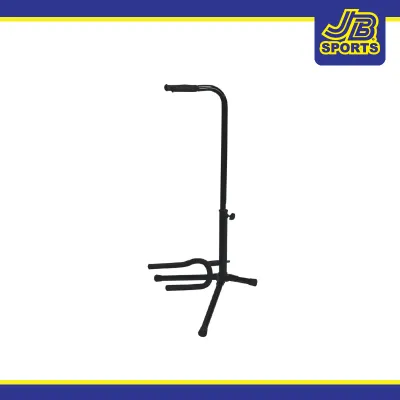
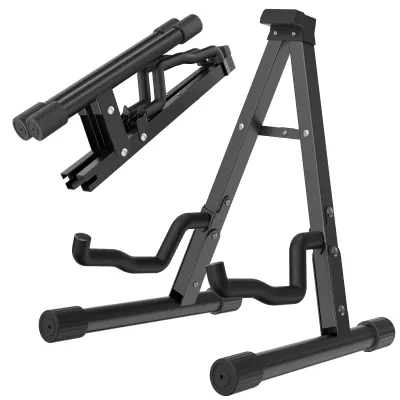
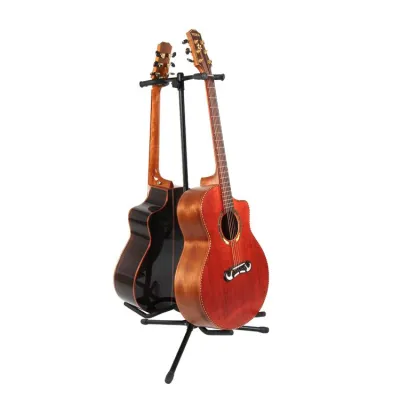
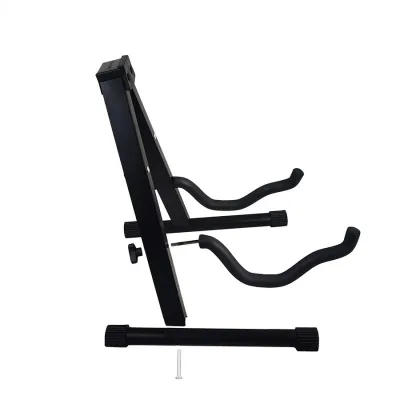
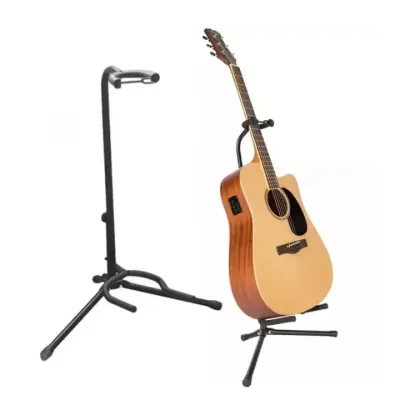
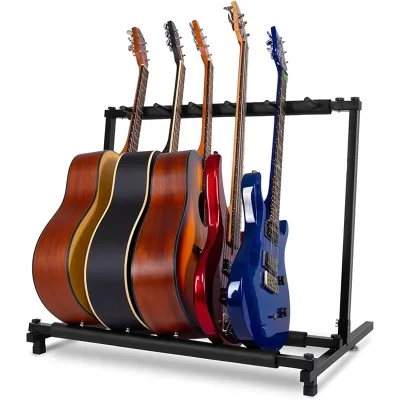
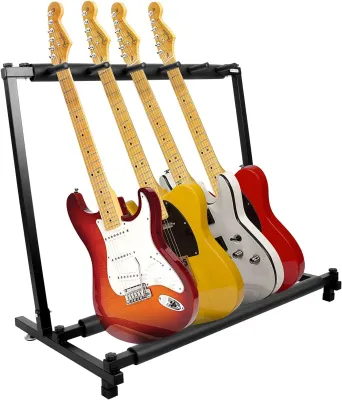
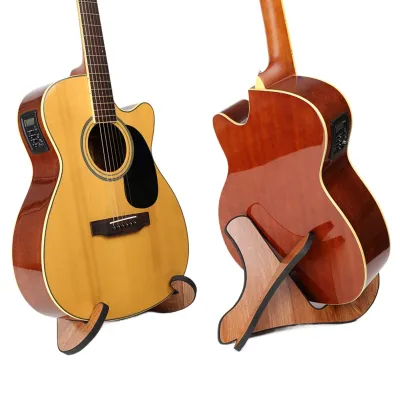
Prices are valid at publication and may change. Please refer to the product page for the latest price.
Headstock weight and neck design also dictate your stand requirements. Instruments with heavy headstocks, such as twelve-string guitars, baritones, or those equipped with heavy locking tuners, have a higher center of gravity. These guitars are inherently top-heavy and require a stand with a taller neck support or a hanging yoke design to prevent them from tipping forward. Conversely, headless guitars lack a traditional headstock altogether, meaning they cannot be hung from a neck-suspension stand and must rely entirely on a secure base cradle.
The chemical composition of your guitar’s finish is another critical factor that determines the type of padding your stand must have. Most modern mass-produced guitars feature a durable polyurethane or polyester finish, which is highly resistant to chemical reactions. However, high-end, vintage, or custom-shop instruments often use a traditional nitrocellulose lacquer finish. Nitrocellulose is a highly volatile, porous organic compound that easily reacts with the petroleum-based rubbers, plastics, and plasticizers found on cheap stand padding, leading to permanent discoloration, softening, or melting of the finish.
Finally, you must measure your instrument’s physical dimensions to ensure a proper physical fit. Take note of the lower bout width, the body thickness, and the neck profile. Acoustic guitars have deep bodies that require wide lower cradles, whereas thin electric guitars can slide around if the cradle is too deep. Similarly, classical guitars and seven-string electrics have exceptionally wide necks that may not fit into narrow neck yokes, while thin-necked instruments might slip through a yoke that lacks a proper gate or locking mechanism.
Critical Design Features for Stability and Protection
When evaluating a guitar stand’s structural integrity, the base footprint is your first line of defense against accidental tip-overs. A wide, low-profile base distributes the weight of the instrument over a larger surface area, making the entire setup highly resistant to side impacts. Weighted bases or heavy-duty steel construction add ballast to the bottom of the stand, lowering the overall center of gravity. If you plan to place your stand on carpeted floors, look for feet with textured rubber grips that bite into the fibers; for smooth tile or polished wooden floors common in tropical homes, soft rubber feet prevent the stand from sliding when bumped.

The neck yoke and its associated support mechanisms provide the secondary point of contact that keeps the guitar upright. Auto-grip systems use the weight of the guitar to automatically close protective gates around the neck when the instrument is placed in the yoke, offering excellent security against forward falls. Manual locking mechanisms, such as rubber straps or rotating gates, require you to secure the neck manually but provide reliable, fail-safe protection if used consistently. Additionally, adjustable height ranges on the neck support allow you to position the yoke at the optimal height for your specific instrument, ensuring the neck is supported just below the headstock joint.
The overall build quality and hardware of the stand must be inspected closely to prevent physical scratches during daily use. Examine the stand for any exposed metal edges, sharp screws, or loose joints that could come into contact with your guitar’s body or neck. High-quality stands feature recessed hardware, smooth welds, and protective plastic caps over all exposed metal ends. Loose joints or flimsy adjustment knobs can slip under the weight of a heavy instrument, causing the stand to collapse, so look for heavy-duty locking pins or robust threaded collars that lock the telescoping sections securely in place.
Contact Materials and Finish Compatibility
The material used to pad the contact points of a guitar stand is just as important as its structural stability. As mentioned, nitrocellulose lacquer finishes are highly susceptible to chemical reactions known as “plasticizer migration.” When nitrocellulose comes into direct contact with standard neoprene, surgical rubber, or cheap foam padding, the plasticizers in the rubber migrate into the lacquer, softening it and leaving permanent, dark, sticky scars on the neck and bottom of the guitar. This damage often requires professional refinishing to repair, which can significantly reduce the value of a vintage or premium instrument.
To protect your instrument, you must carefully read product labels and manufacturer specifications for explicit “nitro-safe” or “lacquer-safe” claims. Reputable manufacturers use specially formulated, non-reactive foam, silicone, or natural felt padding that has been tested against lacquer finishes. However, even when a stand is labeled as safe, environmental factors like high humidity and elevated temperatures can still trigger reactions over extended periods. If you live in a warm, humid climate, it is wise to exercise extra caution and monitor the contact points regularly.
If you own a nitrocellulose-finished guitar and cannot verify the safety of a stand’s padding, you can use aftermarket protective covers or simple DIY barriers. Wrapping the stand’s foam contact points with clean, undyed 100% cotton cloth, flannel, or real leather sleeves creates an effective physical barrier that prevents chemical migration. Avoid using synthetic microfiber or dyed fabrics, as the dyes and synthetic fibers can also react with or stain sensitive finishes. Several manufacturers sell pre-made velvet or cotton booties designed specifically to slip over standard stand yokes and cradles.
Comparing Common Guitar Stand Configurations
Different guitar stand designs distribute weight and occupy floor space in distinct ways, making certain configurations better suited for specific environments. When choosing a configuration, you must balance the need for absolute stability with your space constraints and portability requirements. A stand that is perfect for a crowded stage might be impractical for a small bedroom, while a highly stable studio stand may be too heavy and bulky to transport to weekly gigs.
Single Tubular and A-Frame Stands
Single tubular tripod stands are among the most popular options for individual instruments due to their excellent balance of stability and height adjustment. These stands feature a three-legged base, a lower cradle to support the body, and a tall vertical neck that supports the instrument’s neck. The tripod design naturally conforms to uneven floors, and the neck support prevents the guitar from tipping sideways. Some premium variations utilize a quadrapod (four-legged) base, which offers even greater stability against tipping but occupies a slightly larger footprint on the floor.
A-frame stands, on the other hand, are highly compact, low-profile, and collapsible, making them the preferred choice for traveling musicians and tight stage setups. Because they lack a tall neck support, they rely on a low center of gravity and a deep cradle to hold the guitar at a backward angle. While A-frame stands are incredibly easy to fold up and pack into a gig bag, they are inherently less stable than tripod stands if bumped from the side or rear. They are best suited for quick use on flat, stable surfaces where foot traffic is minimal.
Multi-Guitar Racks and Cases
For musicians who own multiple instruments, multi-guitar racks offer an efficient way to store several guitars safely within a single, compact footprint. These racks hold the guitars side-by-side, either perpendicular or at a slight angle to the frame, keeping them easily accessible during practice or recording sessions. Because the instruments are grouped together, the overall weight of the rack increases, making it highly stable and virtually impossible to tip over accidentally. However, you must ensure the rack has adequate spacing between slots to prevent the guitars from knocking against each other when being retrieved or replaced.
Enclosed multi-guitar cases, often referred to as casket-style or flight-case stands, combine the storage capacity of a rack with the protective shell of a road case. These units fold out into a padded multi-guitar rack but can be closed up into a rugged, latching suitcase for secure transport. The enclosed design provides excellent protection against dust, accidental bumps, and minor environmental fluctuations. While they are heavier, bulkier, and more expensive than open racks, they offer the ultimate level of protection for gigging bands and touring musicians who need to set up a secure guitar station on stage.
Safe Placement and Routine Maintenance Checks
Even the most stable guitar stand can fail to protect your instrument if it is placed in a high-risk area. Avoid positioning your stand in high-traffic pathways, near doorways, or in tight corners where people, pets, or vacuum cleaners are likely to bump into it. Additionally, keep your stand away from direct sunlight, air conditioning vents, and electric fans. In tropical regions, rapid changes in temperature and humidity caused by direct sunlight or localized drafts can warp the wood, crack the finish, and cause the guitar to go out of tune rapidly.
Routine maintenance of your guitar stand is just as important as maintaining the instrument itself. Over time, the foam or rubber padding on your stand can degrade due to exposure to sweat, oils, dust, and humidity. Inspect the padding regularly for signs of stickiness, hardening, cracking, or tearing; if the foam begins to crumble or feel tacky, replace the stand or wrap the contact points immediately to prevent finish damage. Dust and grime can also accumulate on the padding, acting as an abrasive that can scratch your guitar’s finish, so wipe the contact points down periodically with a dry, clean cloth.
You must also inspect the mechanical components of your stand to ensure they remain secure. Regularly check all adjustable joints, telescoping collars, and locking pins for signs of wear or slippage. Tighten any loose screws or bolts using the appropriate tools, and ensure that auto-grip mechanisms or manual neck gates operate smoothly without sticking. If a locking mechanism feels loose or fails to hold its position under pressure, discontinue using the stand until it can be repaired or replaced, as a sudden mechanical failure can drop your guitar directly onto the floor.
Building Your Pre-Purchase Verification Checklist
To ensure you select a stand that is perfectly compatible with your instrument, compile a pre-purchase checklist before making your final decision. First, cross-reference the stand’s stated weight capacity with the actual weight of your guitar. While most standard electric and acoustic guitars weigh between 3 and 5 kilograms, heavy instruments like solid-body bass guitars, double-neck guitars, or heavy mahogany electrics can exceed these limits, requiring a heavy-duty stand with reinforced joints and a wider base.
Next, verify the return and exchange policies of the retailer or online marketplace before completing your purchase. Because guitar shapes and neck profiles vary wildly, there is always a small chance that your specific instrument will not sit perfectly in the stand’s cradles. Having a flexible return policy allows you to test the physical fit in your own home and exchange the stand if the neck yoke is too narrow, the lower cradle is too shallow, or the stand’s angle of lean feels unstable.
Finally, if you own a guitar with a sensitive finish, never rely on vague product descriptions. If a product listing does not explicitly state that the padding is “nitro-safe” or lacquer-compatible, consult the user manual or contact the manufacturer directly to verify the materials used. If you cannot get a clear, definitive answer, assume the padding is not safe for long-term contact and plan to use cotton covers or look for an alternative model that provides certified finish compatibility.
Frequently Asked Questions (FAQ)
Is it safe to leave my guitar on a stand long-term? (FAQ)
While a high-quality stand is excellent for quick access during daily practice, leaving a guitar on a stand long-term exposes it to environmental hazards. In highly humid tropical climates, open-air storage can expose the wood to moisture fluctuations, leading to neck bowing, fret sprout, and hardware corrosion. Additionally, dust accumulation can settle into the electronics and finish. For long-term storage or when the instrument will not be played for several weeks, keeping your guitar inside a high-quality hardshell case with a dedicated humidity control pack is the safest option.
Can I use a standard stand for a bass guitar or an unusually shaped instrument? (FAQ)
Standard stands can sometimes accommodate bass guitars, but you must verify the stand’s weight limits and physical dimensions first. Bass guitars are typically longer and heavier than standard electric guitars, which can make them top-heavy on short stands or cause the bottom of the body to drag on the floor. For offset, asymmetrical, or unusually shaped instruments, a hanging stand that supports the guitar by the headstock is highly recommended, as it allows the body to find its own natural, gravity-centered equilibrium without relying on a symmetrical lower cradle.
Community discussion
Share your experience or ask a question. Comments are reviewed before publication.