
The Core Verdict: Is 'Thinking in Bets' Right for You?
Making choices in an unpredictable environment often feels like navigating a stormy sea without a compass. For anyone trying to make sense of career moves, financial investments, or major life transitions, Annie Duke’s Thinking in Bets offers a transformative framework. The book argues that we must stop viewing decisions as either purely right or wrong, and instead treat them as bets placed against an uncertain future.
If you are a professional seeking to reduce cognitive biases and make more rational choices, this book is highly recommended. It shifts your mindset from a desperate search for absolute certainty to a comfortable acceptance of probabilistic thinking. This guide is particularly valuable for corporate professionals, entrepreneurs, and individuals facing high-stakes life choices who want to stop letting regret dictate their next steps.
Key Concepts That Change How You Make Decisions
At the heart of the book is the concept of probabilistic thinking. Most people naturally default to black-and-white reasoning, classifying outcomes as either total successes or complete failures. This binary view is comforting because it simplifies a complex world, but it ultimately leads to poor decision-making. By learning to think in probabilities, you begin to assign rough percentages to different potential outcomes, acknowledging that even the best-laid plans carry a risk of failure.
Products mentioned in this guide
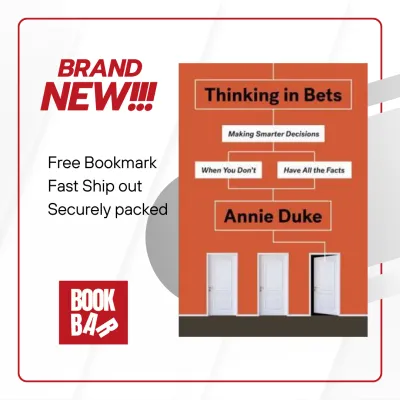
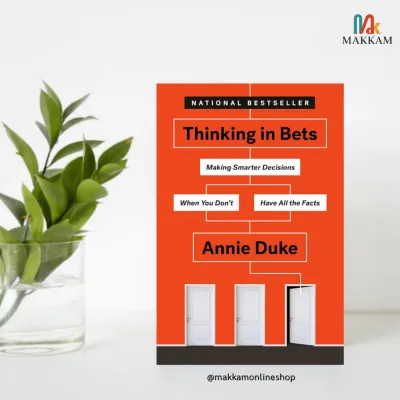
Prices are valid at publication and may change. Please refer to the product page for the latest price.

Another critical concept is “resulting,” which is the dangerous habit of judging the quality of a decision solely by its outcome. If you make a risky financial move and it happens to pay off, resulting leads you to believe you made an excellent decision. Conversely, if you make a well-researched, highly calculated choice that fails due to an unpredictable external event, resulting makes you blame yourself for a bad decision. This bias blinds us to the role of chance and prevents us from learning from our actual mistakes.
To make better choices, you must learn to separate luck from skill in your past personal and professional experiences. When things go well, it is easy to attribute the success entirely to your talent and hard work. When things go poorly, we often blame bad luck. Thinking in Bets challenges readers to audit their past decisions honestly, distinguishing between the variables they could control and the random external factors they could not. This honest self-assessment is the first step toward building a more resilient decision-making process.
Applying 'Thinking in Bets' to Career and Life in the Philippines
Navigating life in a dynamic, rapidly evolving environment requires a high tolerance for uncertainty. From sudden weather disruptions that impact daily business operations to shifting economic landscapes, local professionals and families constantly adapt to factors beyond their control. Applying these abstract frameworks to everyday scenarios helps bridge the gap between theory and practice.
Evaluating Career Risks and Workplace Transitions
When considering a major career move, such as leaving a stable corporate job in a bustling business district like Makati or BGC to join a growing startup, the traditional approach is to seek a guarantee of success. However, in a fluctuating job market, guaranteed outcomes do not exist. Instead of asking whether a transition is perfect, you should assess the probabilities of various outcomes, such as skill acquisition, networking opportunities, and financial stability.
If you previously made a career transition that did not pan out—perhaps the new company faced restructuring or the role did not match the initial description—it is vital to avoid outcome bias. Do not automatically label the decision to leave your old job as a mistake. If you gathered all available information, weighed the risks, and made a logical choice based on your goals at the time, the decision itself was sound. The unfavorable outcome was simply a realization of one of the negative probabilities you could not entirely eliminate.
When negotiating new roles or planning industry shifts, scenario planning becomes your most valuable tool. Instead of preparing for a single path, outline multiple scenarios: a best-case scenario, a moderate-case scenario, and a worst-case scenario. Determine how you will react in each situation, what your financial safety net looks like, and how long you can sustain the transition. This structured preparation reduces anxiety and ensures you are never caught completely off guard.
Navigating Personal and Financial Uncertainties
Applying a betting framework to personal finance changes how you view major purchases and long-term commitments. Whether you are deciding to purchase a condominium, finance a family vehicle, or invest ₱100,000 in a local business venture, every choice is essentially a bet. You are wagering your hard-earned capital today against a future payoff that is subject to market fluctuations, interest rate changes, and personal life events.
Reviewing past financial outcomes requires a sober acknowledgment of external factors and luck. If a retail business you started struggled during an unexpected economic downturn or a period of high inflation, it is easy to fall into despair and question your entrepreneurial capabilities. However, recognizing that macroeconomic shifts are external variables helps you separate your strategic execution from sheer bad luck. This perspective allows you to pivot objectively rather than giving up entirely.
To reduce emotional decision-making, treat your financial choices as bets with both known variables and unknown risks. Write down the reasons for your investment, the expected return, the potential downside, and the signs that indicate it is time to cut your losses. By externalizing these factors before emotions take over, you protect your savings from impulsive reactions driven by market panic or temporary setbacks.
Limitations and Who Should Skip This Book
While the book offers powerful mental models, it is important to recognize its limitations before purchasing. This is not a step-by-step manual or a concrete financial formula book. If you are looking for a highly structured, mathematical guide to asset allocation or a direct career roadmap with specific templates, you may find the conceptual nature of this book frustrating. It teaches you how to think, not exactly what to do in every specific scenario.
Additionally, actively unlearning deep-seated cognitive biases requires significant mental effort. Shifting away from the comfort of certainty and embracing a world of probabilities can feel exhausting. If you prefer straightforward, black-and-white answers to life’s complex questions, or if you are not ready to challenge your own past decision-making patterns, the cognitive demands of this book might not align with your current reading goals.
Finally, readers seeking highly localized, region-specific case studies should be prepared to do some translation. The book relies heavily on examples from professional poker, corporate boardrooms, and sports coaching. While these examples are highly illustrative, you will need to actively apply these concepts to your own context, whether that involves managing a local family business, navigating the specific nuances of the local job market, or planning personal investments within the domestic economy.
What to Verify Before Buying Your Copy
Before purchasing your copy of Thinking in Bets, take a moment to verify several key details to ensure you get the best reading experience. First, check the publication year and edition. While the core concepts remain consistent, newer editions or special prints may include updated prefaces, author notes, or revised chapters that offer deeper insights into applying these models in a rapidly changing digital world.
If you prefer listening to books during your daily commute or workout, verify the audiobook details. Check the total running time, listen to the narrator’s sample to ensure their tone and pacing suit your preferences, and confirm that the file format is compatible with your preferred audio player or digital subscription service. Some platforms offer companion PDFs for charts and diagrams, which are highly useful for visualizing the decision-making matrices discussed in the text.
For digital readers, confirm that the e-book file format matches your device. Whether you use a dedicated e-reader or a mobile reading app on your tablet, ensuring compatibility with formats like ePub or proprietary digital formats will prevent formatting issues. Pay close attention to how tables and diagrams render on smaller screens, as these visual aids are crucial for understanding some of the book’s core frameworks.
Lastly, if you prefer a physical copy to highlight and annotate, compare delivery times and return policies across different online marketplaces and local book distributors. Physical books shipped from overseas may take several weeks to arrive and could be exposed to high humidity during transit, which can affect paper quality. Verifying the seller’s packaging standards and return policy for damaged items ensures your book arrives in pristine condition.
Frequently Asked Questions (FAQ)
Is 'Thinking in Bets' too technical for casual readers?
No, the book is highly accessible. While the concepts are grounded in behavioral psychology and decision theory, the author uses engaging real-world anecdotes, sports analogies, and personal stories to explain them. You do not need a background in statistics or psychology to fully grasp and apply the mental models presented.
Can I apply these concepts if I don't gamble or play poker?
Absolutely. The author uses poker simply as a metaphor for decision-making under uncertainty, where you must make choices with incomplete information and a mix of skill and luck. The core principles apply directly to everyday decisions, such as choosing a daily commute route, deciding when to buy a home, managing personal relationships, or navigating career advancements.
Community discussion
Share your experience or ask a question. Comments are reviewed before publication.