
Walk into any major bookstore in Manila, and you are highly likely to find Daniel Kahneman’s Thinking, Fast and Slow prominently displayed on the self-help and business best-seller shelves. Because of this prominent placement, many readers purchase it expecting a light, motivational guide filled with actionable life hacks and morning routines. However, this expectation often leads to frustration. While the book is a foundational masterpiece for understanding human decision-making, it is fundamentally a dense work of cognitive psychology and behavioral economics, not a traditional step-by-step self-help manual.
If you are looking for quick habit hacks, daily checklists, or immediate productivity boosts to streamline your workday, this book is not the right tool. It does not offer prescriptive formulas for success. Instead, it is a diagnostic tool that explains the underlying mechanics of how the human brain processes information and makes systematic errors. It is the perfect choice if you want to deeply understand the “why” behind your cognitive biases and choices. However, it is a complete mismatch if your current priority is immediate, easy-to-apply advice.
What 'Thinking, Fast and Slow' Actually Offers
To determine if this book aligns with your goals, it is essential to understand its core premise. Kahneman, a Nobel laureate in Economics, structures the book around the interaction of two metaphorical systems that drive our thoughts: System 1 and System 2. System 1 operates automatically, fast, and with little or no conscious effort. It is the system that allows you to instantly detect anger in someone’s voice or instinctively dodge an obstacle while walking down a busy street in Makati. System 2, on the other hand, is slow, deliberate, and analytical. It is recruited when you must perform complex mental calculations, such as computing 17 times 24 or carefully reviewing a legal contract.
Products mentioned in this guide
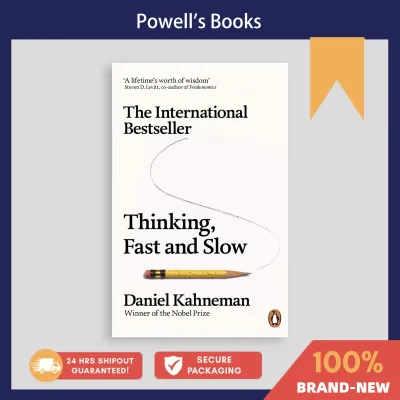
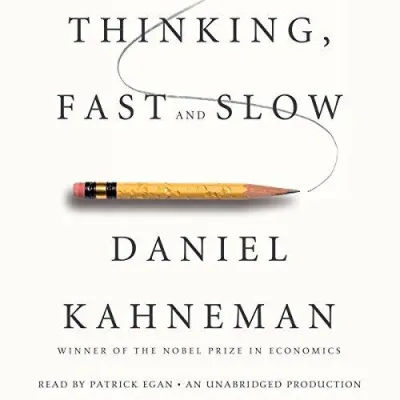
Prices are valid at publication and may change. Please refer to the product page for the latest price.
The book explores how these two systems interact and, more importantly, where they clash. Because System 2 requires significant mental energy, our brains naturally rely on System 1 to take shortcuts, known as heuristics. While these shortcuts are highly efficient for daily survival, they frequently lead to predictable cognitive biases and logical fallacies. Kahneman details these biases extensively, covering concepts like anchoring, availability heuristics, and loss aversion—the psychological reality that the pain of losing is twice as powerful as the pleasure of gaining.
Crucially, the text is descriptive rather than prescriptive. It excels at diagnosing the systematic errors in human judgment, but it leaves the practical application of these insights largely up to the reader. The tone is strictly academic and analytical. You will find yourself reading detailed explanations of classic psychological experiments, statistical probabilities, and behavioral research. It reads more like a university textbook than a standard personal development guide, requiring active intellectual engagement from start to finish.
Self-Diagnosis: Is This Book the Right Fit for You?
Deciding whether to invest your time and money in this 500-page volume depends heavily on your current learning objectives, reading habits, and patience for academic prose. In the Philippines, where a quality paperback edition typically costs between ₱600 and ₱900, and hardcovers can exceed ₱1,500, making an informed decision before purchasing is highly practical.

Signs You Will Benefit from the Deep Dive
This book is an exceptional fit for readers who prefer deep, paradigm-shifting concepts over superficial quick fixes. If you want to fundamentally upgrade your critical thinking skills and are willing to invest the mental effort required to do so, you will find immense value in Kahneman’s work. It is particularly beneficial for professionals who make high-stakes decisions under uncertainty, such as corporate managers, financial planners, entrepreneurs, and long-term investors navigating volatile markets.
You will appreciate this book if you enjoy understanding the root causes of human behavior. Rather than simply telling you to “be more rational,” the text shows you exactly why rationality is so difficult to maintain. If you have a natural curiosity for science, psychology, and data-driven insights, and you do not mind a slower, more deliberate reading pace, the dense chapters will feel like a rewarding intellectual journey rather than a chore.
Signs You Should Look for a More Actionable Guide
Conversely, if you are currently experiencing mental fatigue from a demanding work schedule and simply need practical, immediate solutions, this book is highly likely to end up half-read on your shelf. Readers seeking step-by-step frameworks, motivational encouragement, or lightweight daily habit models will find the academic rigor of this text bogging them down.
If you find yourself easily frustrated by detailed descriptions of statistical experiments, control groups, and academic jargon, the reading experience will feel incredibly tedious. When your primary personal growth goal is to fix a specific daily routine, improve your time management, or find immediate emotional regulation techniques, a traditional, action-oriented self-help book is a much more appropriate choice. Forcing yourself through academic literature when you need practical tools can lead to unnecessary reading burnout.
How to Read It Without Getting Overwhelmed
If you decide that the deep insights of Thinking, Fast and Slow are exactly what you need, you must approach the book with a deliberate strategy to avoid overwhelm. Treating this book like a light novel or a weekend read is a recipe for abandonment. Instead, treat it as a self-paced study course.
Establish a Paced Reading Schedule Commit to reading just one short chapter or even five to ten pages a day. This slow, steady approach allows your brain to digest the complex psychological concepts without causing cognitive fatigue. Reading a chapter during a quiet morning or during a long commute gives you ample time to reflect on the ideas throughout the day.
Maintain an Active Reading Journal To bridge the gap between academic theory and daily life, keep a notebook or digital journal nearby. Whenever Kahneman describes a cognitive bias, write down a personal example of when you fell victim to that specific bias. For instance, note how the “anchoring effect” influenced your negotiation during a recent purchase, or how “loss aversion” made you hold onto a failing project or investment longer than you should have.
Give Yourself Permission to Skim You do not need to read every single word with equal intensity. If a chapter dives into highly technical statistical formulas or granular details of a decades-old experiment that do not interest you, feel free to skim those sections. Focus on the core findings and the conceptual explanations. The book also includes detailed appendices that reproduce Kahneman’s original academic papers; unless you are studying behavioral economics academically, you can safely bypass these entirely.
Pair Your Reading with Discussion Discussing the concepts with others can significantly enhance your understanding. Consider reading the book alongside a friend, joining a local book club, or participating in online discussion forums. Explaining the concepts of System 1 and System 2 to someone else is one of the most effective ways to solidify your own comprehension.
Practical Alternatives for Action-Oriented Readers
If your self-diagnosis suggests that the full, academic text of Thinking, Fast and Slow is not the right fit for your current needs, you do not have to miss out on its valuable insights. There are several practical pathways to gain this knowledge without committing to a dense 500-page read.
Utilize High-Quality Summaries and Media Before buying, consider exploring high-quality book summaries, animated video essays, or podcast interviews with Daniel Kahneman. These digital formats distill the core concepts of System 1 and System 2, cognitive biases, and heuristics into highly digestible, 15-minute overviews. This allows you to grasp the foundational ideas quickly and apply them to your life immediately, without the academic friction.
Choose Applied Behavioral Science Books If you prefer a full-length book but want something highly actionable, look for titles that translate behavioral economics into practical daily habits and decision-making frameworks. Books focused on applied behavioral design, habit stacking, or environmental design are excellent alternatives. These authors take the scientific principles established by researchers like Kahneman and package them into step-by-step guides for personal change, showing you exactly how to restructure your environment to make good decisions effortless.
Verify Editions and Sources Before Purchasing When shopping for these alternative books or Thinking, Fast and Slow itself, always verify the edition, format, and authorized source. In the Philippine market, online marketplaces are often flooded with cheap, unauthorized physical reprints that suffer from missing pages, poor binding, and illegible text. Whether you prefer a physical paperback, a durable hardcover, or a digital e-book, purchasing from reputable, authorized local bookstores ensures you receive a complete, high-quality edition that provides a comfortable reading experience.
Frequently Asked Questions (FAQ)
Is 'Thinking, Fast and Slow' too difficult for a beginner to psychology?
While the book is written for a general audience and does not require a formal degree in psychology, its academic tone and heavy reliance on statistical concepts can be challenging for beginners. The sheer volume of scientific studies and detailed methodologies can feel overwhelming. If you are new to cognitive psychology, start by reading the introduction and the first few chapters to gauge your comfort level with Kahneman’s writing style before committing to the entire book.
Can I just read a summary instead of the full book for personal growth?
Yes, if your primary goal is to acquire actionable personal growth insights and practical decision-making tips, a comprehensive summary or a well-reviewed companion guide is often sufficient. A summary will efficiently outline the core cognitive biases and the differences between System 1 and System 2 thinking. The full book is best reserved for readers who genuinely enjoy exploring the detailed scientific experiments, historical context, and nuanced research that support those concepts.
Community discussion
Share your experience or ask a question. Comments are reviewed before publication.