
Deciding whether Alexander Kotov’s classic Think Like a Grandmaster is a worthy addition to your bookshelf depends entirely on what you expect to gain from it. If you are searching for a general self-help guide to improve your business decisions, career planning, or daily productivity, this highly technical manual will likely lead to frustration. It is not a collection of broad philosophical maxims or motivational anecdotes. Instead, it is a demanding, structured training manual designed specifically for competitive chess players.
However, if you already possess a solid foundation in chess and want to build rigorous, systematic analytical habits, Kotov’s work remains a foundational text. The disciplined mental habits required to navigate his exercises can indirectly sharpen your cognitive focus, patience, and ability to evaluate complex scenarios. By understanding the book’s true nature, you can make an informed decision on whether to invest your time and money into this challenging work, or if alternative titles would better serve your personal development goals.
Understanding the Core Focus: Chess Calculation vs. Life Strategy
At its heart, Think Like a Grandmaster is a deep dive into the mechanics of chess calculation. Kotov introduces highly structured methodologies, most notably the concept of “candidate moves” and the construction of “analysis trees.” To apply this method, a player must identify all plausible moves in a given position before calculating any of them in depth. Once these candidates are established, the player must systematically analyze each branch of the decision tree one by one, without backtracking or jumping erratically between lines.
Products mentioned in this guide
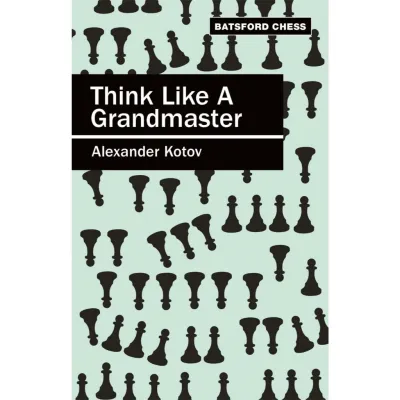
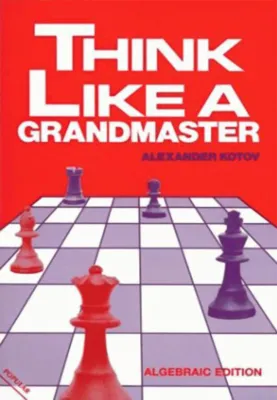

Prices are valid at publication and may change. Please refer to the product page for the latest price.
This process is incredibly rigorous and demands intense mental discipline. It is a far cry from the abstract, high-level strategic thinking often discussed in corporate boardrooms. Kotov’s exercises require active, hands-on practice. You cannot simply read this book passively on a crowded commute or while relaxing in a local cafe. To gain any real benefit, you must sit down with a physical chessboard or an interactive digital interface, carefully setting up the positions and working through the complex variations yourself.
Furthermore, the book has strict prerequisites. If you do not understand standard algebraic chess notation (such as Nf3, exd5, or O-O) or lack a firm grasp of basic tactical patterns like forks, pins, and skewers, the material will be virtually incomprehensible. The text assumes you can already visualize board movements several steps ahead. Without these fundamental skills, the detailed annotations and branching variations will look like an impenetrable wall of code, offering little to no value for your daily decision-making.
Who Benefits Most: Matching Your Skill Level to the Material
The ideal reader for Think Like a Grandmaster is an intermediate chess player, typically someone who has moved past basic rules and casual play and is now participating in local club tournaments or competitive online matches. At this stage, players often struggle with “blunder loops”—making impulsive moves under pressure or failing to calculate the opponent’s replies. Kotov’s structured approach is specifically engineered to break these bad habits, teaching players how to organize their thoughts systematically and manage their clock time more effectively during tense games.

While the book’s primary goal is to improve your chess rating, the intense mental discipline it fosters can have indirect benefits for your broader analytical habits. Working through Kotov’s structured trees teaches you the value of objective evaluation. In chess, as in life, wishing a move will work does not make it so; you must analyze the concrete reality of the position. This practice builds a high level of cognitive patience, training you to resist the urge to make quick, emotional decisions when faced with complex problems.
However, you must be realistic about the time commitment required to absorb this material. This is not a book you can finish in a few sittings. Truly studying Think Like a Grandmaster requires dozens of hours of active, focused effort. In a warm, tropical climate where outdoor distractions are plentiful, finding the quiet, air-conditioned space needed for this level of concentration can be a challenge in itself. If you are not prepared to treat this book as a serious academic course, the investment of your time and money may not yield the results you hope for.
The Limits of Chess Logic for Real-World Business Strategy
A common misconception is that mastering chess naturally translates into mastering real-world business or life strategy. This idea, often referred to by cognitive scientists as “far transfer,” is largely unsupported by modern educational psychology. The primary reason for this limitation lies in the fundamental difference between the nature of chess and the nature of real-world decision-making.
Chess is a closed system. It features perfect information, where both players can see the entire board at all times, and the rules never change. There is no element of luck, no hidden variables, and no unexpected external disruptions. Real-world strategy, whether you are managing a local business or planning a career transition, operates in an open system. You must constantly deal with incomplete information, unpredictable human psychology, market fluctuations, and sudden regulatory changes. Applying a rigid, branching decision tree to an open-system problem can easily lead to analysis paralysis, as the number of real-world variables is virtually infinite.
For non-players or beginners who purchase the book hoping to find inspiring metaphors for leadership or marketing, the deeply technical nature of the annotations will likely cause immediate frustration. When budgeting anywhere from ₱800 to ₱2,000 for imported specialty books in the Philippines, ensuring you get the correct edition is essential to avoid wasting your hard-earned money. Older prints may use descriptive notation (such as “P-K4” instead of “e4”), which can be incredibly confusing for modern readers. Additionally, verify the quality of the translation, as some older English editions can feel dry and overly academic, making an already difficult subject even harder to digest.
Better Alternatives for General Decision-Making and Strategy
If your primary goal is to improve your strategic thinking, decision-making, and cognitive discipline in daily life, several other book categories offer a much higher return on investment. Rather than struggling through complex chess diagrams, you will find more practical, actionable frameworks in the fields of behavioral economics, game theory, and cognitive psychology. These disciplines are specifically designed to help you navigate uncertainty and make better choices when you do not have all the facts.
For instance, literature on behavioral economics explores how human beings actually make decisions, highlighting the common cognitive biases that lead us astray. Books on game theory provide structured ways to analyze competitive situations where the outcome depends on the actions of other independent agents—a concept that is highly applicable to business negotiations and career planning. These resources offer a much gentler learning curve than Kotov’s manual, allowing you to quickly apply their concepts to your professional and personal life without needing to memorize chess opening theory.
Before purchasing any strategy book, it is wise to run through a quick pre-purchase checklist to ensure you get the most out of your investment:
- Verify the Edition and Language: Ensure the book is a modern edition with updated language and clear formatting.
- Choose the Right Format: Consider whether a physical paperback or a digital e-book suits your study style. Physical books are excellent for tactile reading and highlighting, especially if you enjoy studying away from screens, while digital versions offer portability and searchability.
- Check for Visual Aids: For books that rely on diagrams, charts, or tables, ensure your reading device can display them clearly without formatting errors.
- Confirm Authorized Sources: Purchase from reputable local bookstores or authorized online distributors to ensure you receive a complete, high-quality print rather than a poorly scanned copy.
Frequently Asked Questions (FAQ)
Do I need to know how to play chess to understand this book?
Yes, a solid understanding of chess is absolutely mandatory to get any value from Think Like a Grandmaster. You must be fully comfortable with chess rules, basic tactical concepts, and algebraic notation. The book is filled with complex board diagrams and long sequences of moves that you must be able to visualize or play out on a board. Without this foundational knowledge, the core lessons on calculation and decision-making will be entirely inaccessible.
How should I choose the right format for studying chess diagrams?
Choosing between a physical book and a digital edition depends on your study environment and personal preferences. A physical book is highly recommended if you prefer setting up a real chessboard to work through the positions, as it keeps you away from screen distractions and allows for easy flipping between pages. However, if you travel frequently or have limited space, a digital e-book on a high-resolution tablet can be incredibly convenient, provided the file format displays the chess diagrams clearly. If you choose a digital format, verify that your device is compatible with the file type and that the diagrams do not become distorted when you adjust the text size.
Community discussion
Share your experience or ask a question. Comments are reviewed before publication.